The big idea
Wildfire is weather, terrain, fuel, and fire working together.
A wildfire is not just a line of flames moving across a map. It is a changing event shaped by dry vegetation, wind, slope, humidity, heat, roads, canyons, homes, embers, and firefighting access. Conditions can change quickly.
Firefighters read wildfire like a moving puzzle: where the fire is, where the wind is pushing it, what fuel is ahead, how steep the ground is, where people are, and where crews can work safely.
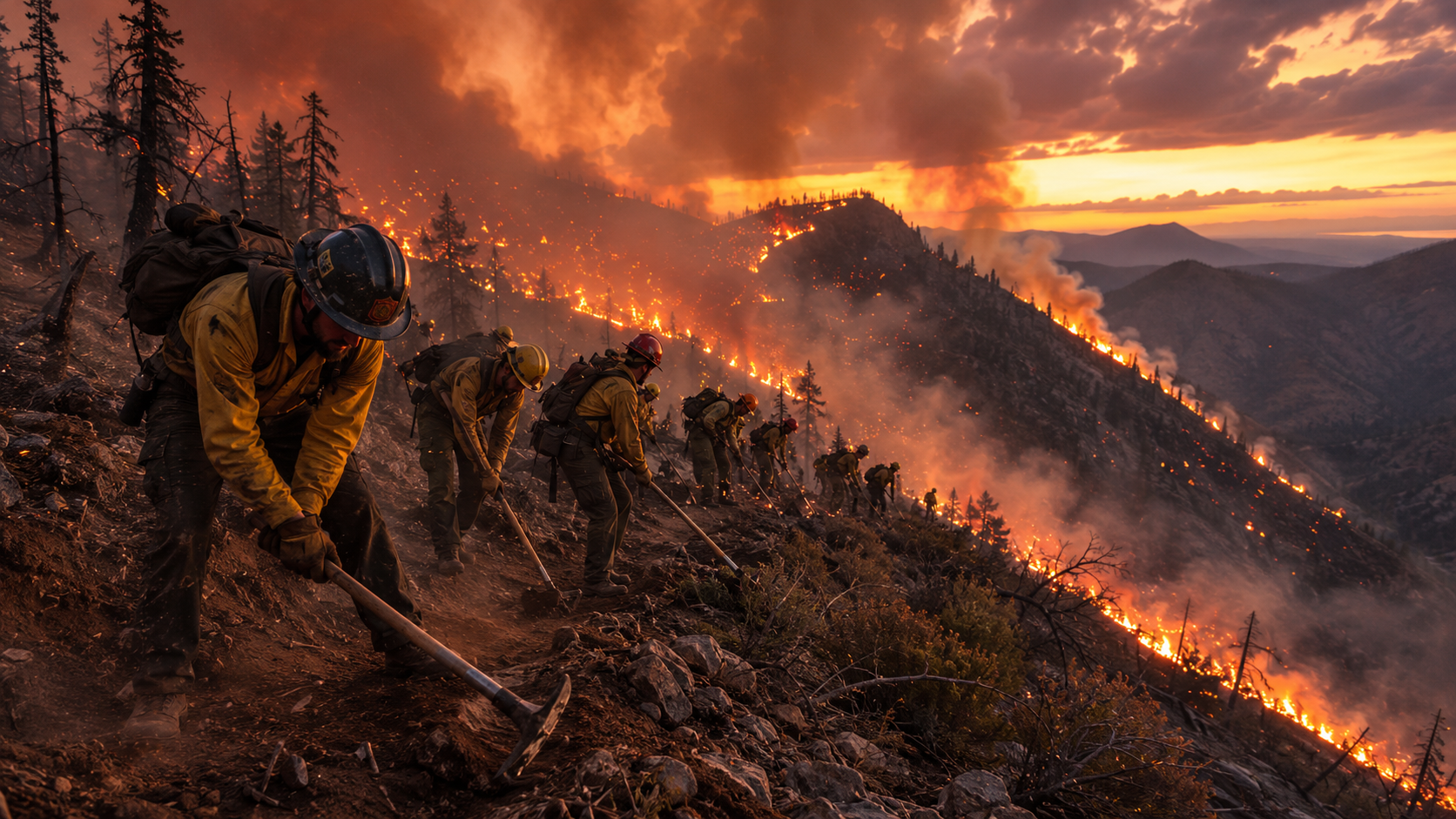
Wildfire is landscape-scale fire behavior.
Wind, slope, fuels, roads, ridges, homes, and evacuation routes all matter.
Fuel: what burns
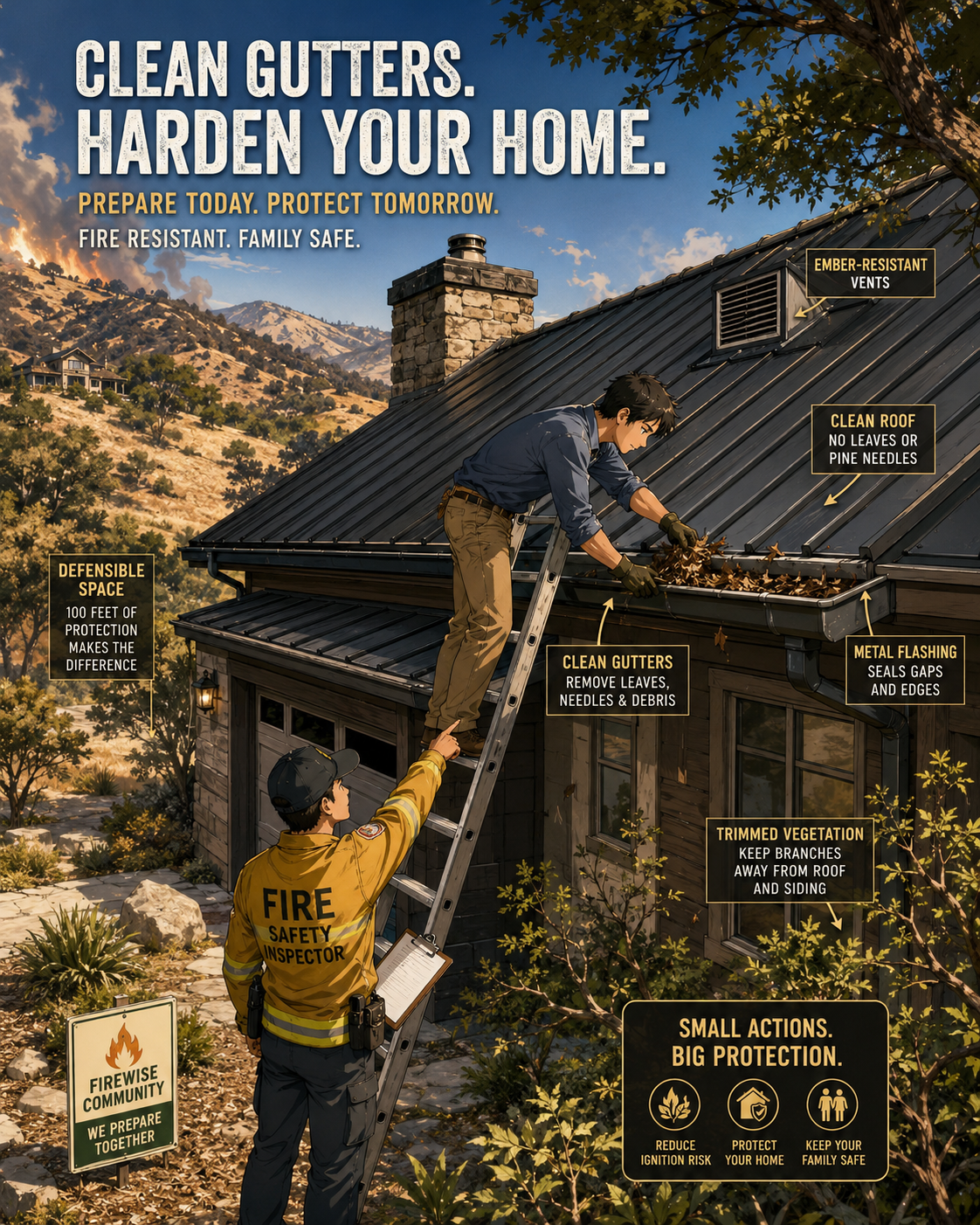
Wildfire fuel includes grasses, brush, leaves, pine needles, dead branches, trees, fences, decks, mulch, wood piles, sheds, outdoor furniture, and debris in gutters. Fuel amount, dryness, spacing, and arrangement all affect fire behavior.
Fuel control is the idea behind defensible space, brush clearance, roof cleaning, and home hardening.

Dry fuels
Dry grass, brush, and debris can ignite and spread fire quickly.
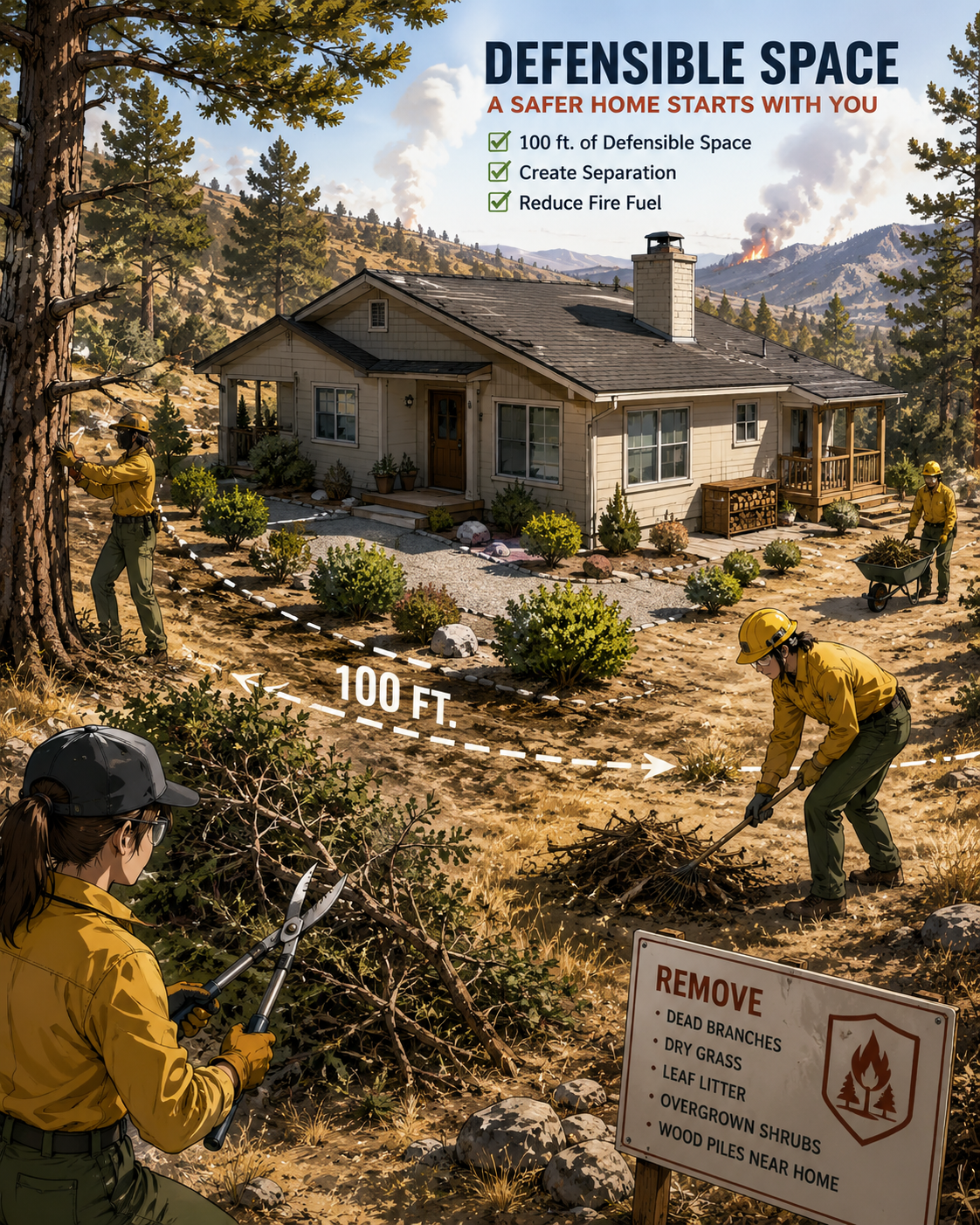
Fuel reduction
Managing vegetation and combustible materials can reduce fire intensity near structures.
Defensible spaceWind: the fire accelerator
Wind can push flames, supply oxygen, dry vegetation, carry embers, and make fire direction change. A wind-driven wildfire can move faster than people expect, especially through dry fuel and narrow terrain.
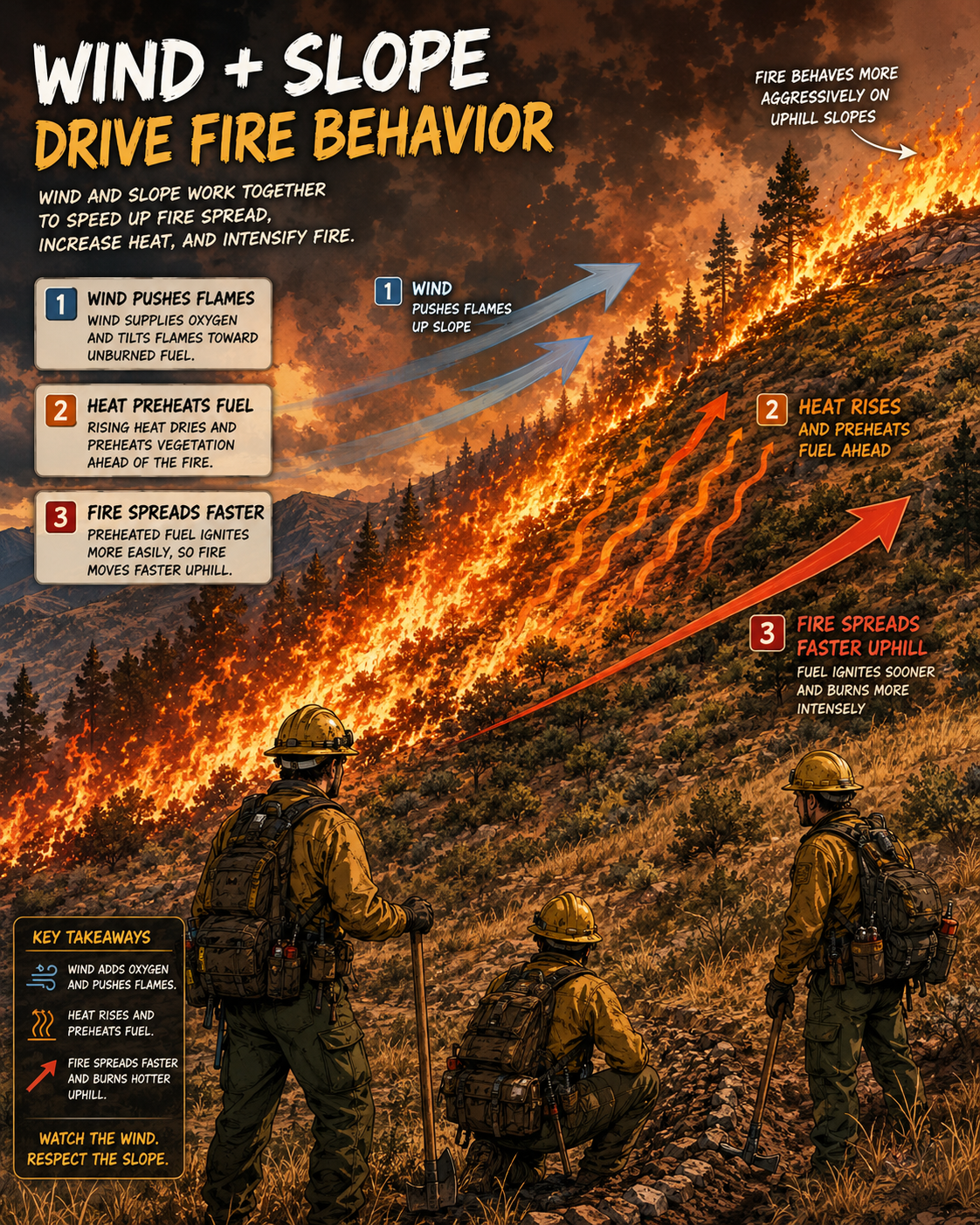
Wind changes the battlefield.
Wind can drive flame, embers, smoke, and spot fires across roads and neighborhoods.
Slope: fire often moves faster uphill
Fire can spread faster uphill because flames and hot gases preheat fuel above the fire. Steep terrain can make access harder for crews and evacuation more complicated for residents.
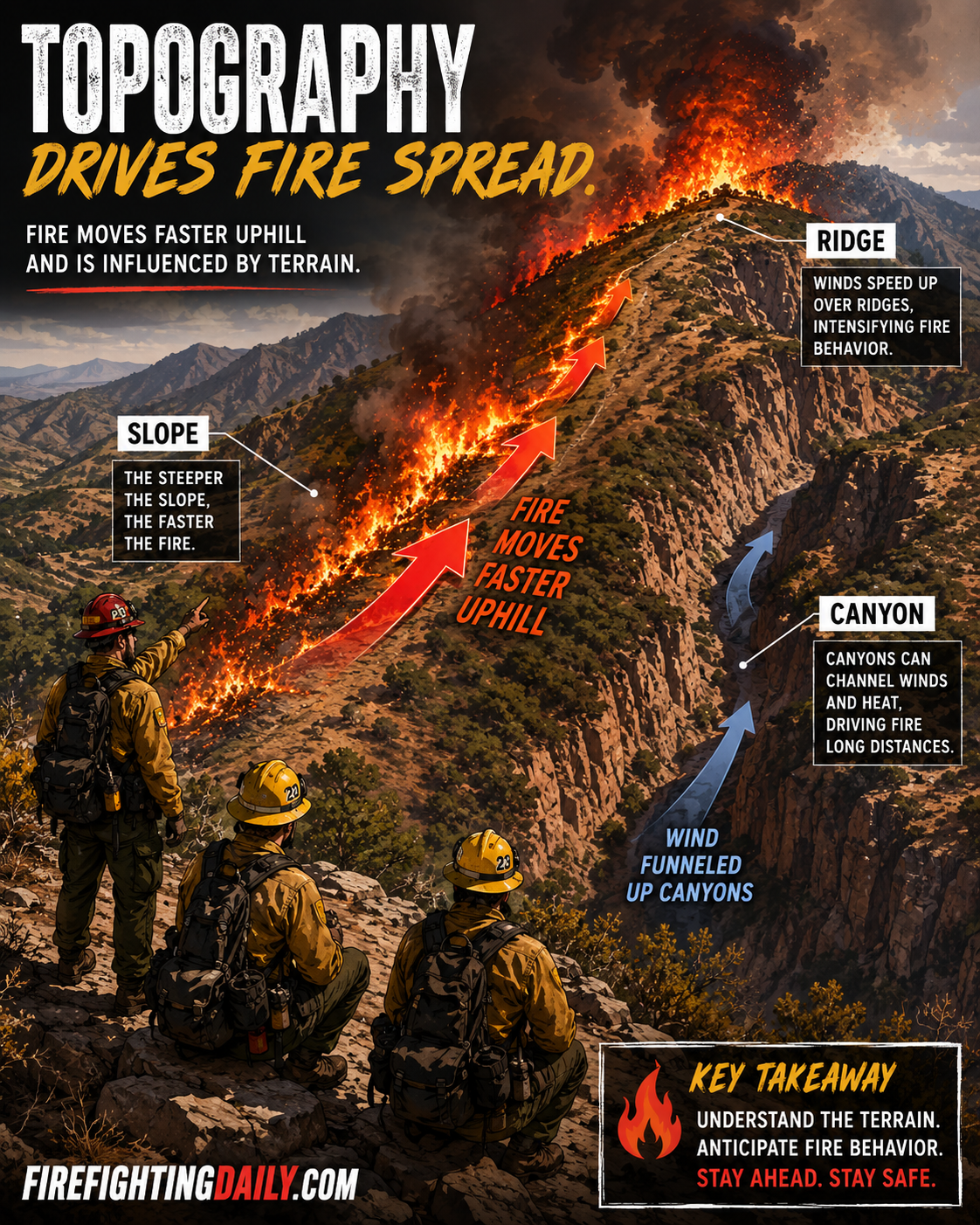
Terrain matters
Canyons, ridges, slopes, roads, and valleys shape wildfire movement.
How fire spreads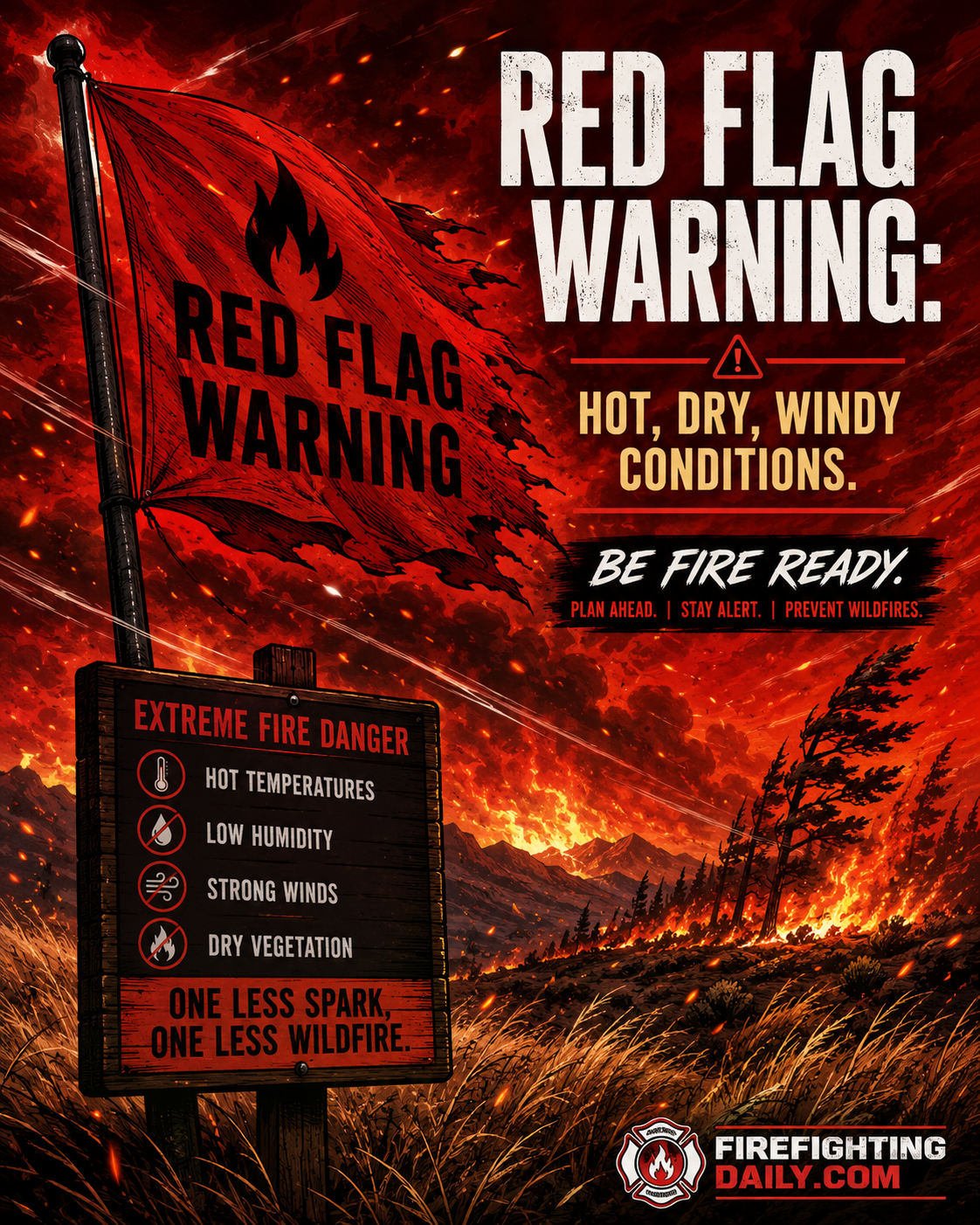
Weather warnings
Hot, dry, windy conditions can create higher fire danger.
Embers: small sparks, big problem
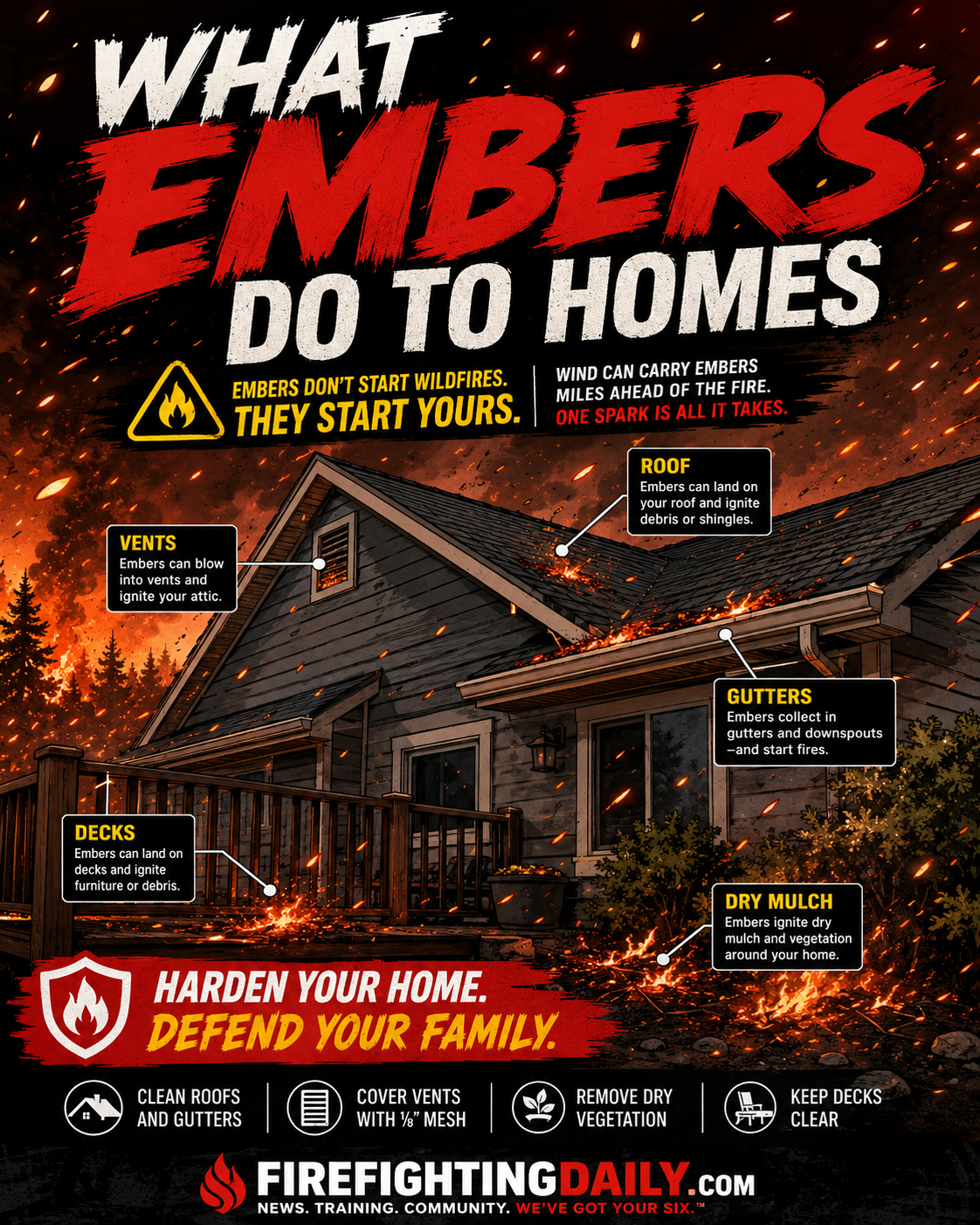
Embers can travel ahead of the main fire. They may land in gutters, vents, mulch, dry leaves, roof valleys, decks, fences, wood piles, or brush. In many wildfire situations, homes can ignite from embers before the main flame front arrives.
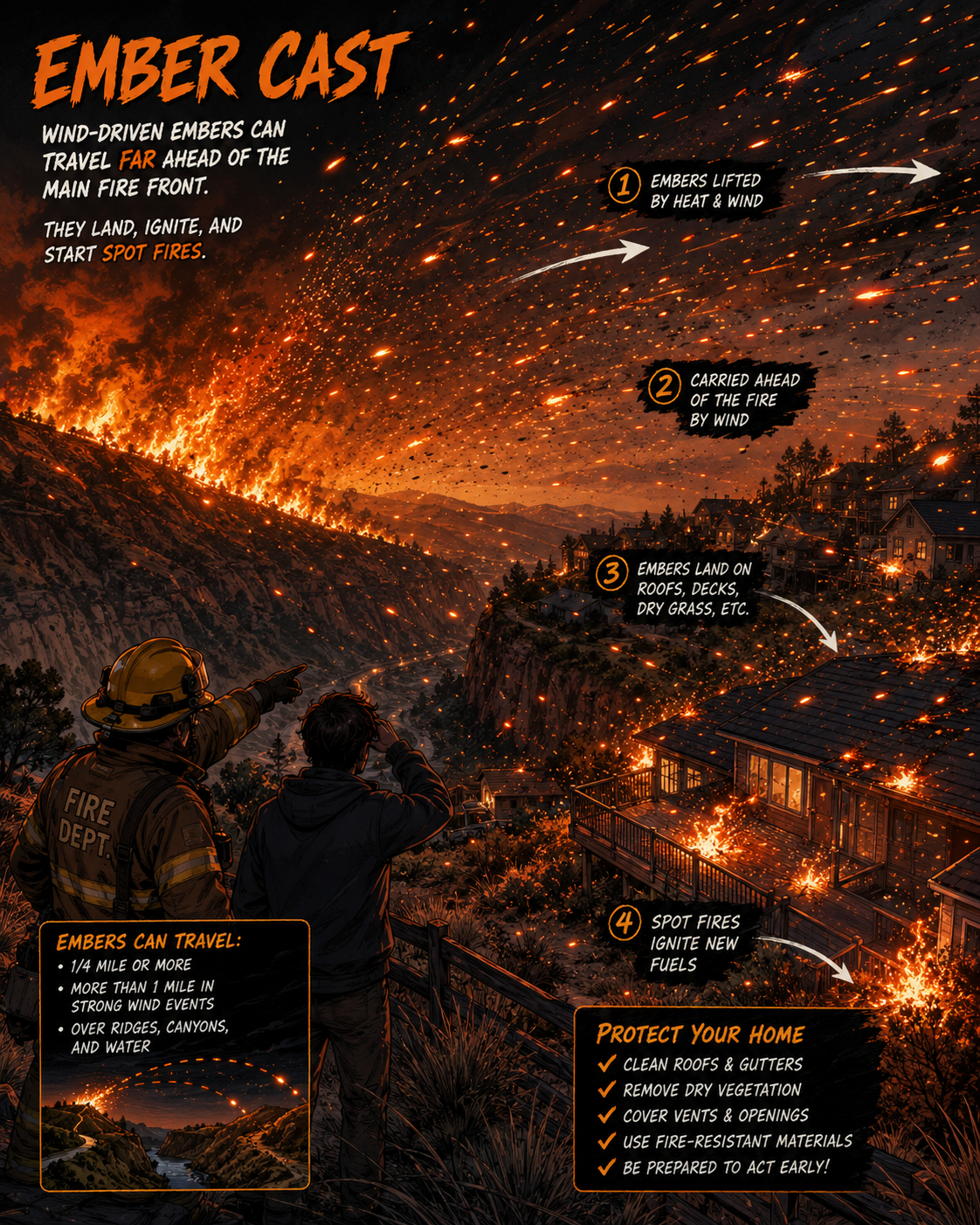
Embers can cross the road before flames do.
That is why roof debris, vents, mulch, fences, and defensible space matter.
Wildfire Dragon memory cue
“The dragon’s breath is wind. Its sparks are embers. Its food is dry fuel.”
Spot fires
A spot fire starts when embers ignite fuel ahead of the main fire. Spot fires can make a wildfire harder to control because new fires appear beyond roads, firelines, or natural barriers.
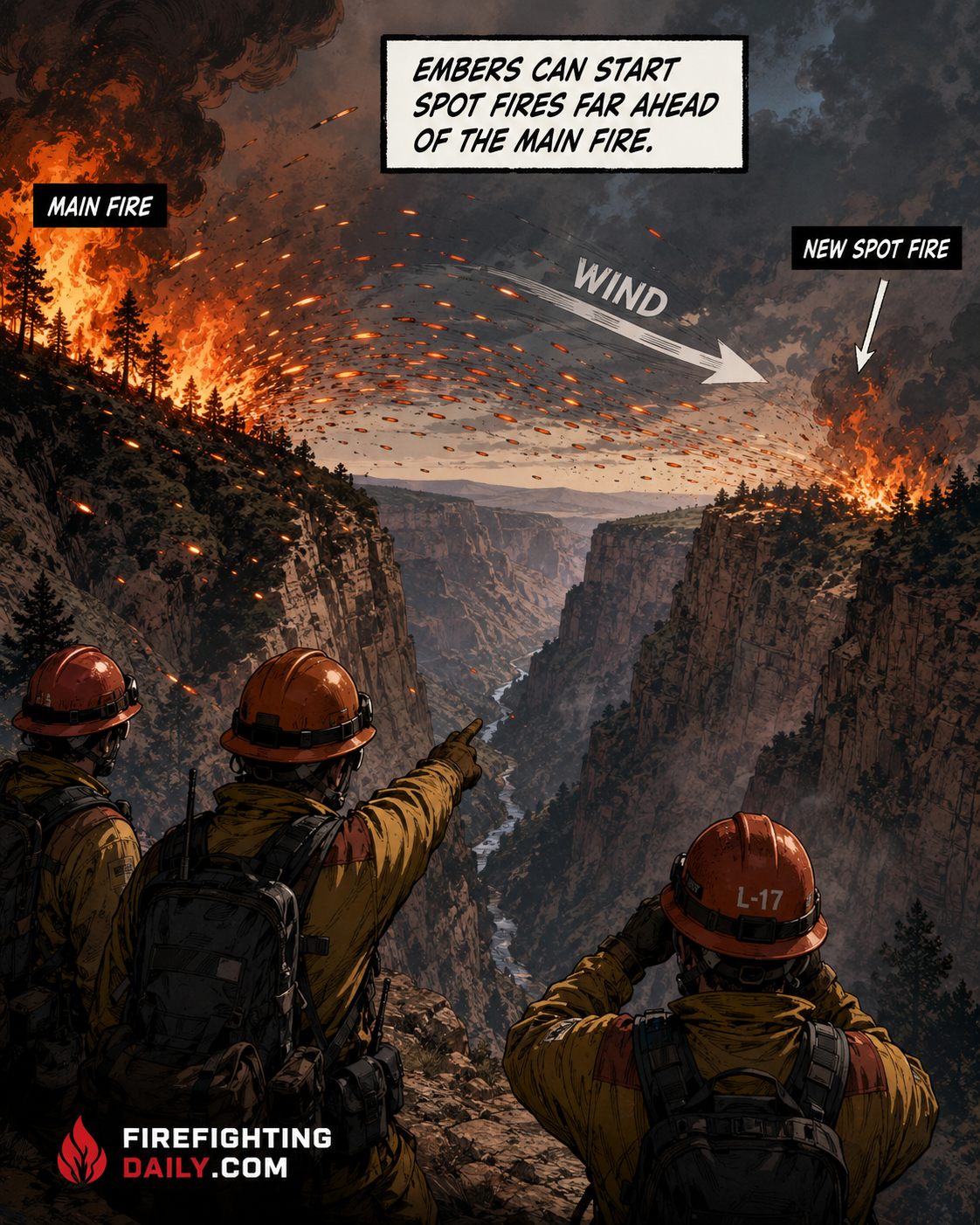
Fire can leap by ember.
The flame front is not the only threat. Flying embers can start new fires in front of it.
Defensible space
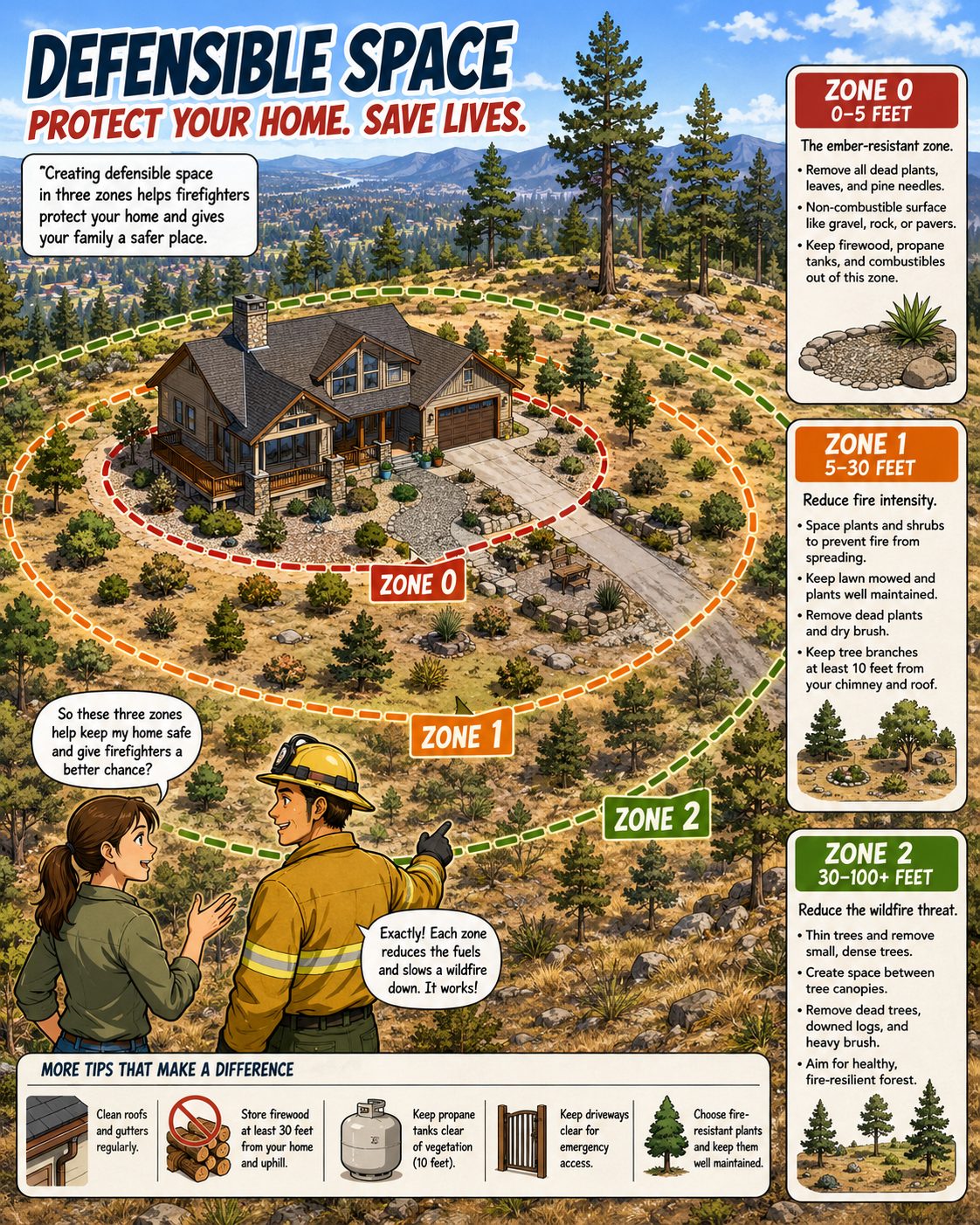
Defensible space is the area around a structure where vegetation and combustibles are managed to reduce fire intensity, slow spread, and give firefighters better working conditions when they can safely defend the area.
Evacuation: leave early when told
Evacuation orders are issued because officials see risk that may not be obvious from your street. Smoke, blocked roads, fast wind shifts, emergency traffic, power lines, and limited exits can make waiting dangerous.
If an evacuation order is issued, leave. Do not wait to see flames. Do not stay to defend property unless properly trained, equipped, legally allowed, and directed by authorities. Most people should focus on getting out safely.

Leave before the road becomes the hazard.
Evacuation is about time, visibility, traffic, smoke, and safe routes.
Go-bags and readiness
A go-bag is a prepared kit that helps people leave faster. It may include documents, medication, chargers, clothing, water, glasses, pet supplies, keys, cash, and other essentials. Exact needs vary by household.
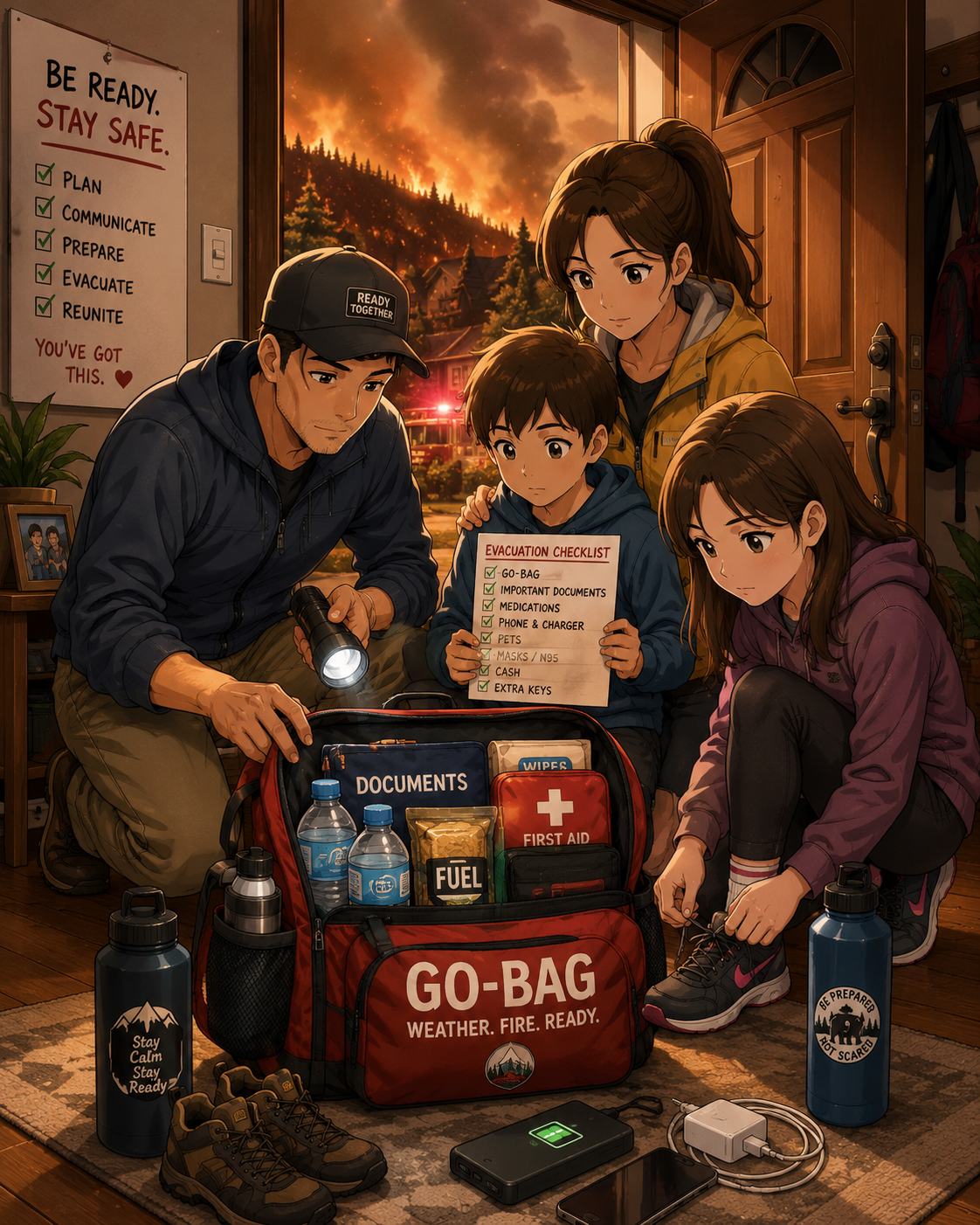
Do not pack under smoke.
Prepare before the warning, so leaving is faster when time matters.
How firefighters fight wildfire
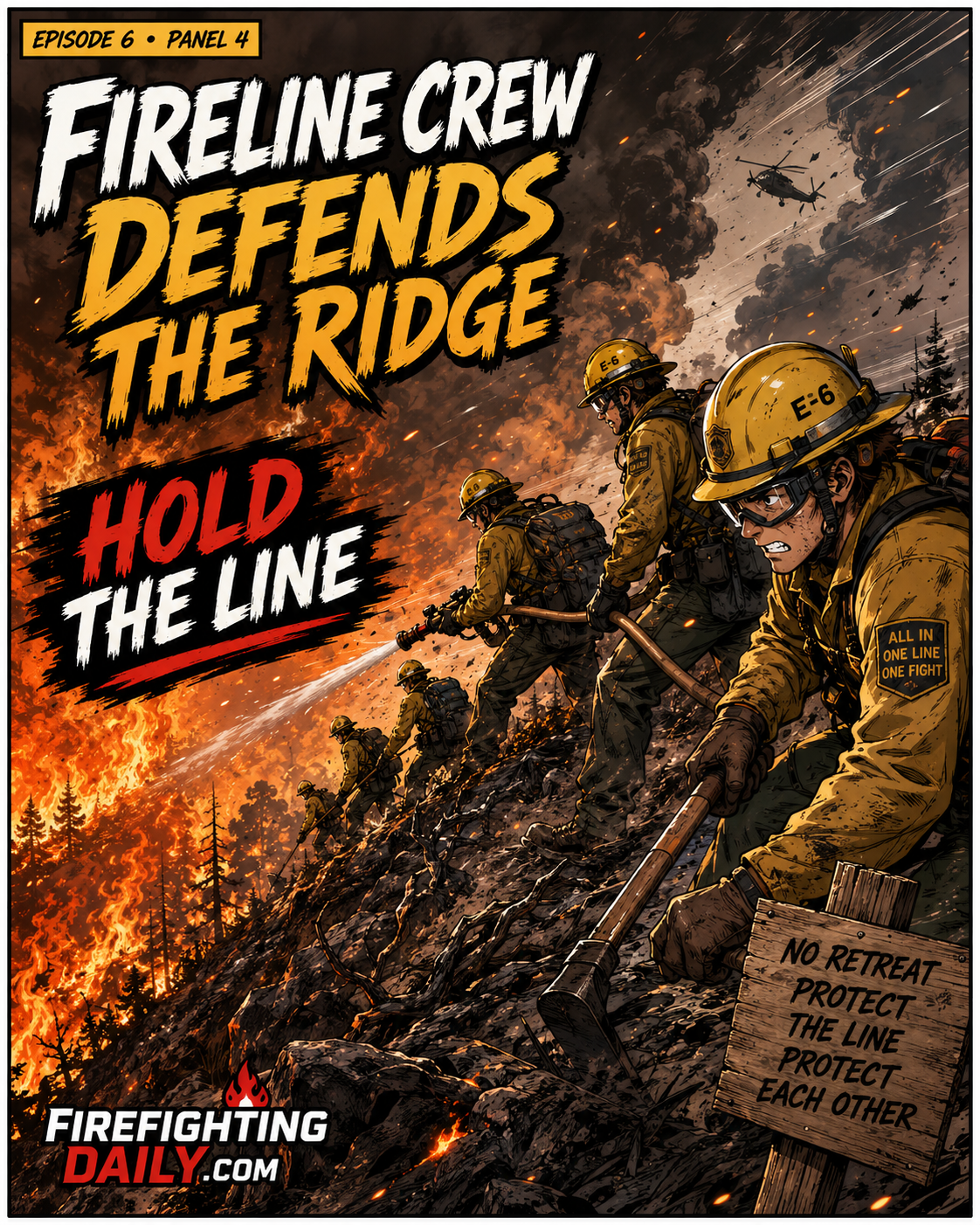
Wildfire response can involve engines, hand crews, dozers, aircraft, command posts, fireline construction, structure defense, hose lays, patrol, evacuation support, and public warnings. Safety zones, escape routes, weather, terrain, and communication are central to wildland firefighting.
Fireline
Crews may remove or separate fuel to slow fire spread where conditions allow.
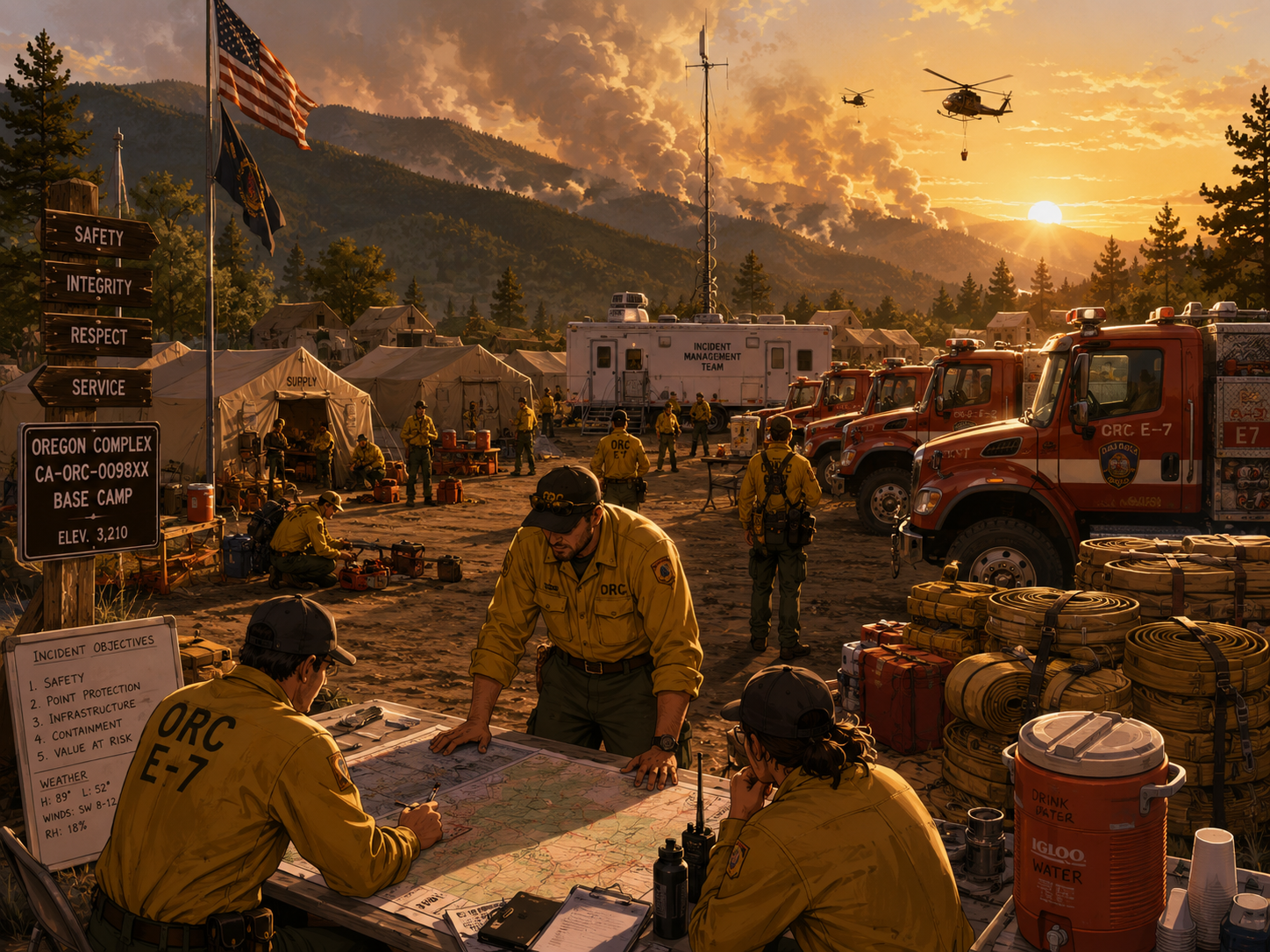
Base camp
Large incidents need logistics, planning, rest, supplies, and coordination.
Wildfire and solar/battery systems
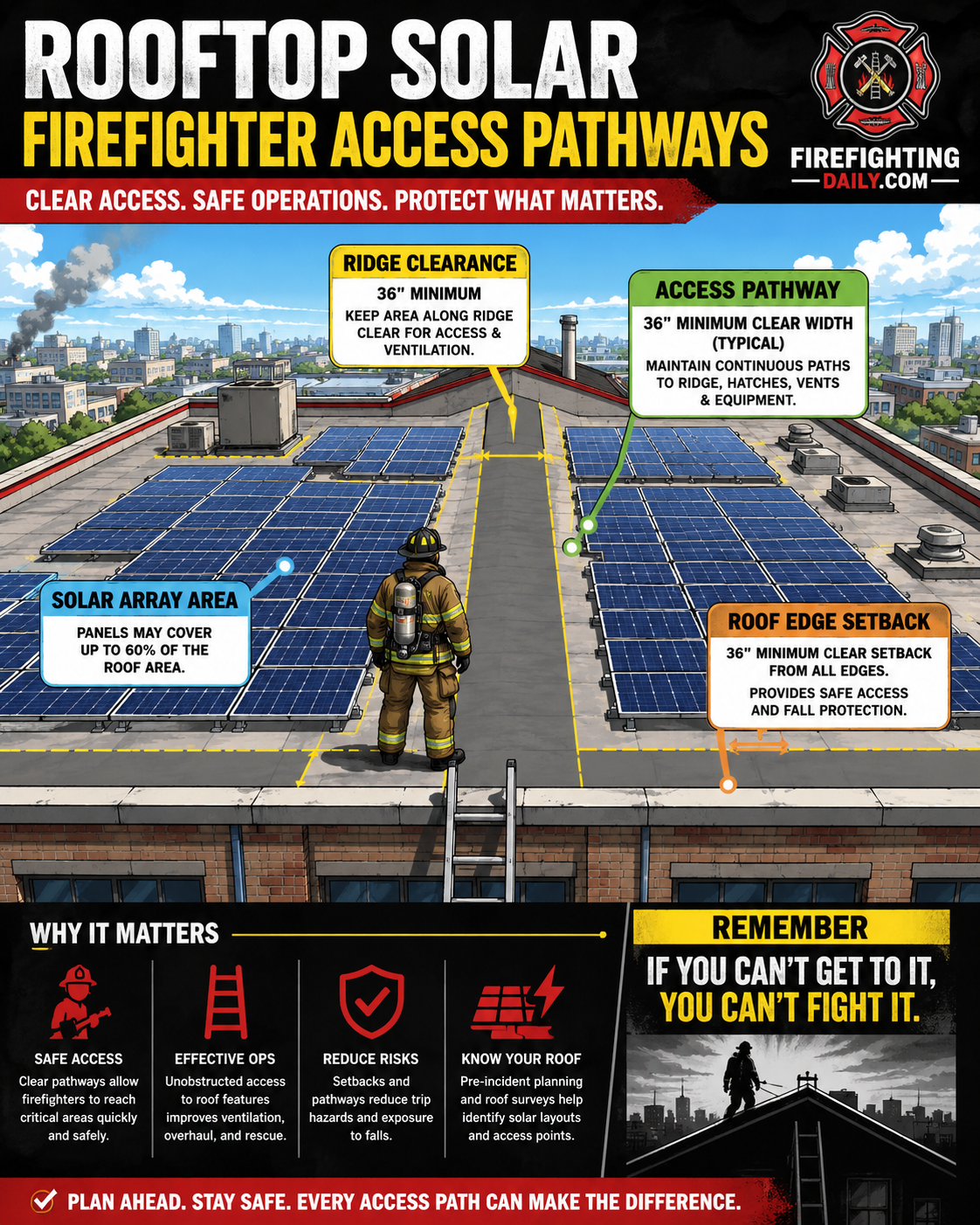
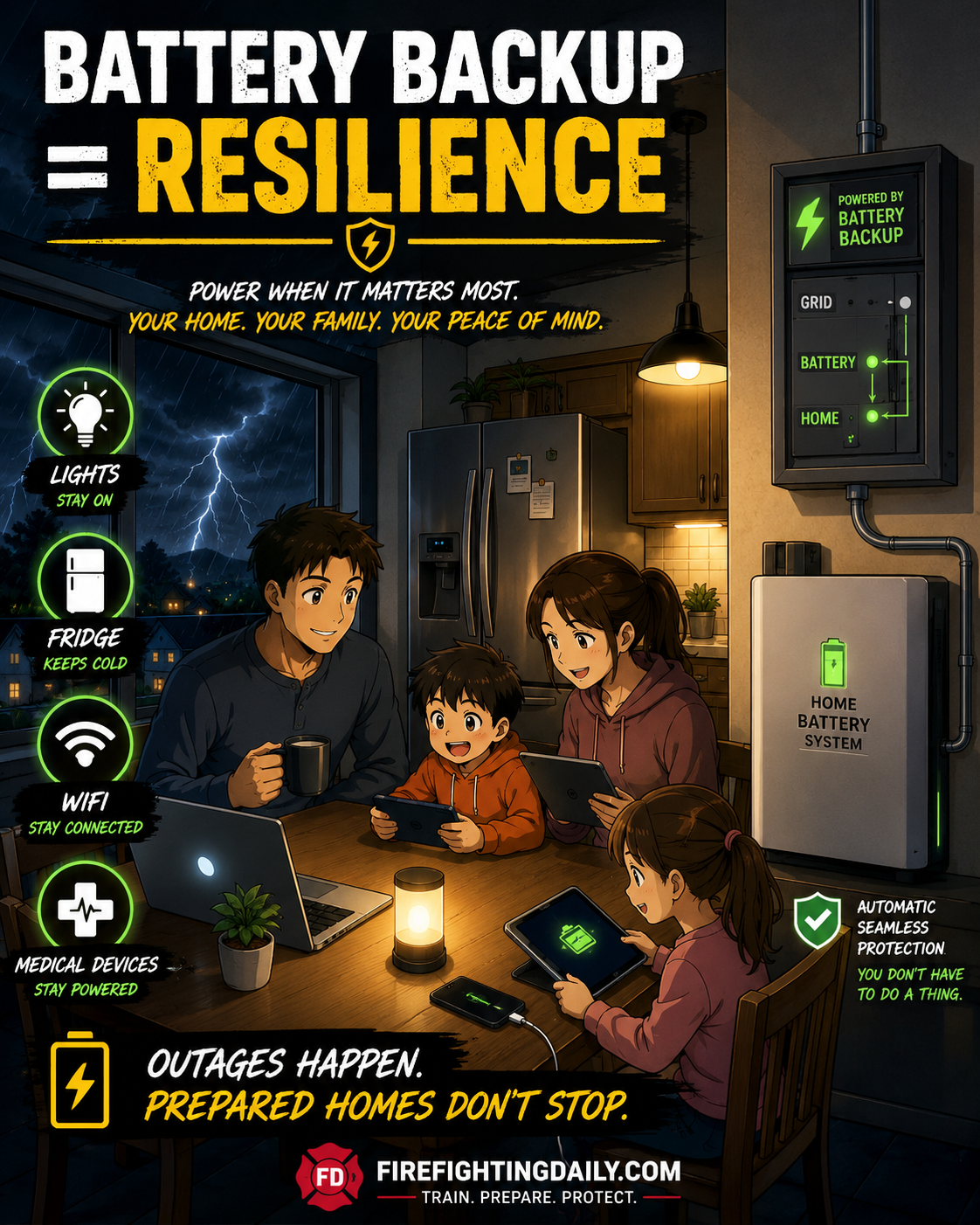
Homes and facilities with solar panels, battery storage, EV chargers, or backup power systems should maintain clear labels, access pathways, shutdown locations, and working space. During wildfire, power may be out, roads may be closed, and responders need clear information quickly.
Backup power
Resilience equipment still needs safety labels, clear access, and proper installation.
Learn moreEpisode connection: The Wildfire Dragon wakes
Episode 6 turns wildfire behavior into a manga lesson. Dry brush and wind awaken the Wildfire Dragon. Embers cross the road. Crews defend a ridge. Home hardening matters. Evacuation orders go out.
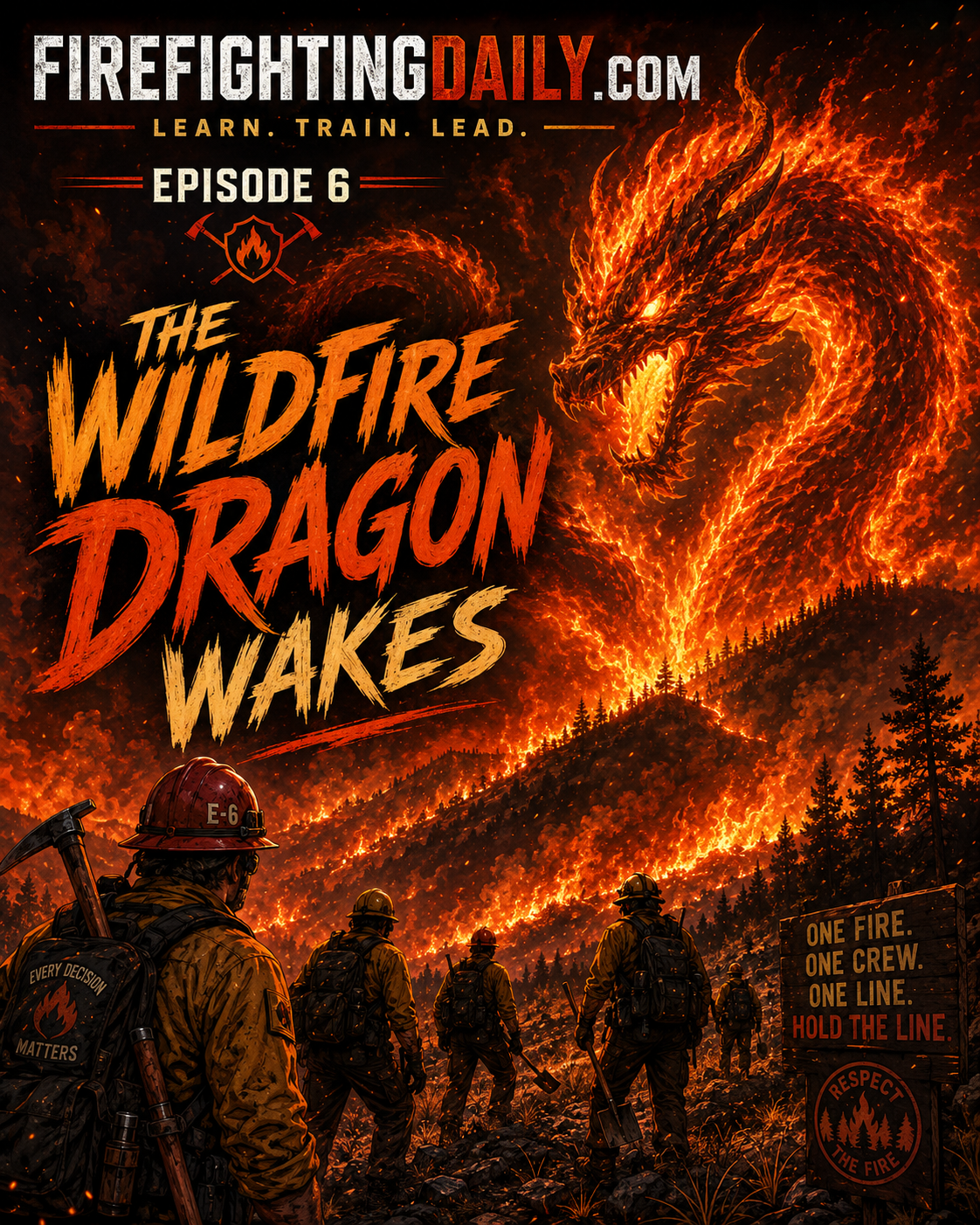
The Wildfire Dragon Wakes
A manga lesson about wind, brush, embers, fireline, and evacuation.
Read episode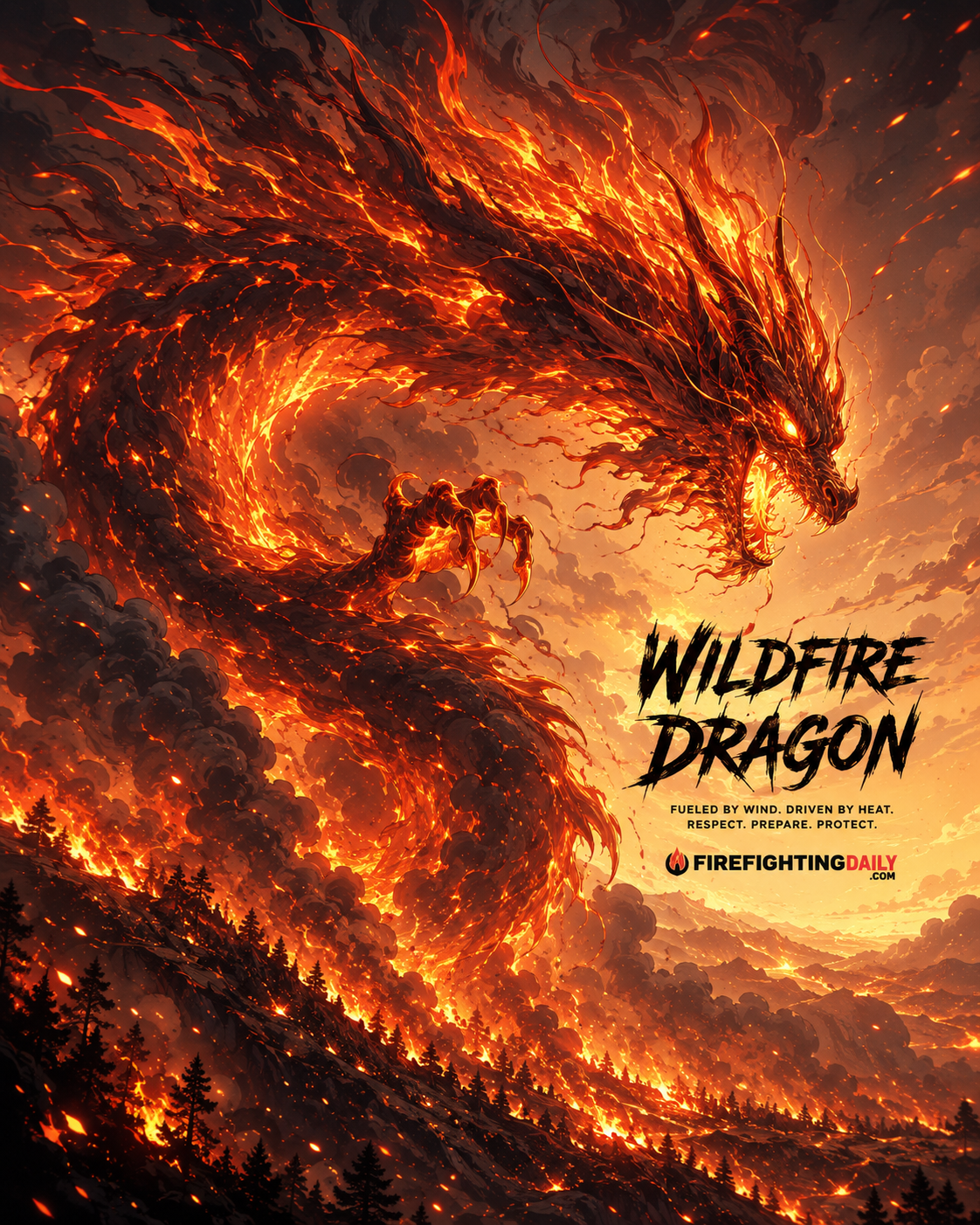
Meet Wildfire Dragon
The character who represents wind-driven wildfire, ember storms, dry brush, and terrain.
Character pageCaptain Ember’s summary
Wildfire is not just flames. It is wind, slope, fuel, embers, weather, access, and time. The safest public choices are preparation before the fire, defensible space where required, early attention to alerts, and immediate evacuation when ordered.