The big idea
Fire engines bring water, hose, people, and tools to the problem.
When people say “fire truck,” they may mean several different kinds of fire apparatus. A fire engine, often called a pumper, is usually built around water delivery. It carries hose, a pump, nozzles, tools, ladders, equipment compartments, and a crew.
Different departments use different rigs for different places: city streets, freeways, industrial sites, wildland roads, narrow hillside neighborhoods, high-rise districts, and rural areas without hydrants.
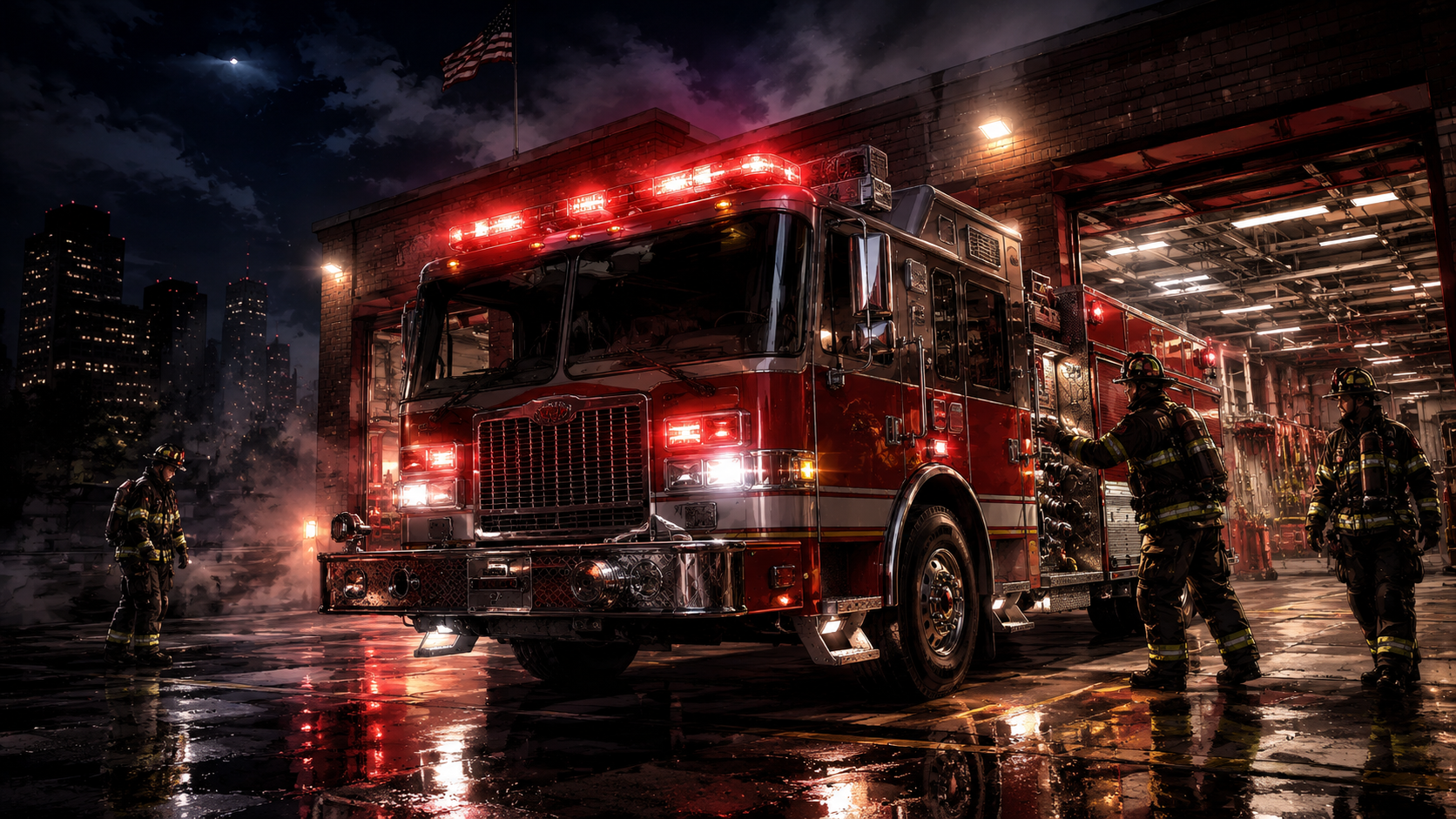
Ready before the alarm.
Apparatus readiness starts at the station: fuel, water, tools, hose, air packs, radios, and equipment checks.
What makes an engine an engine?
A fire engine is commonly designed to pump water. It may carry water in an onboard tank, connect to hydrants, supply hose lines, support sprinkler systems, and provide water for fire attack. It is the fireground’s water-moving workhorse.
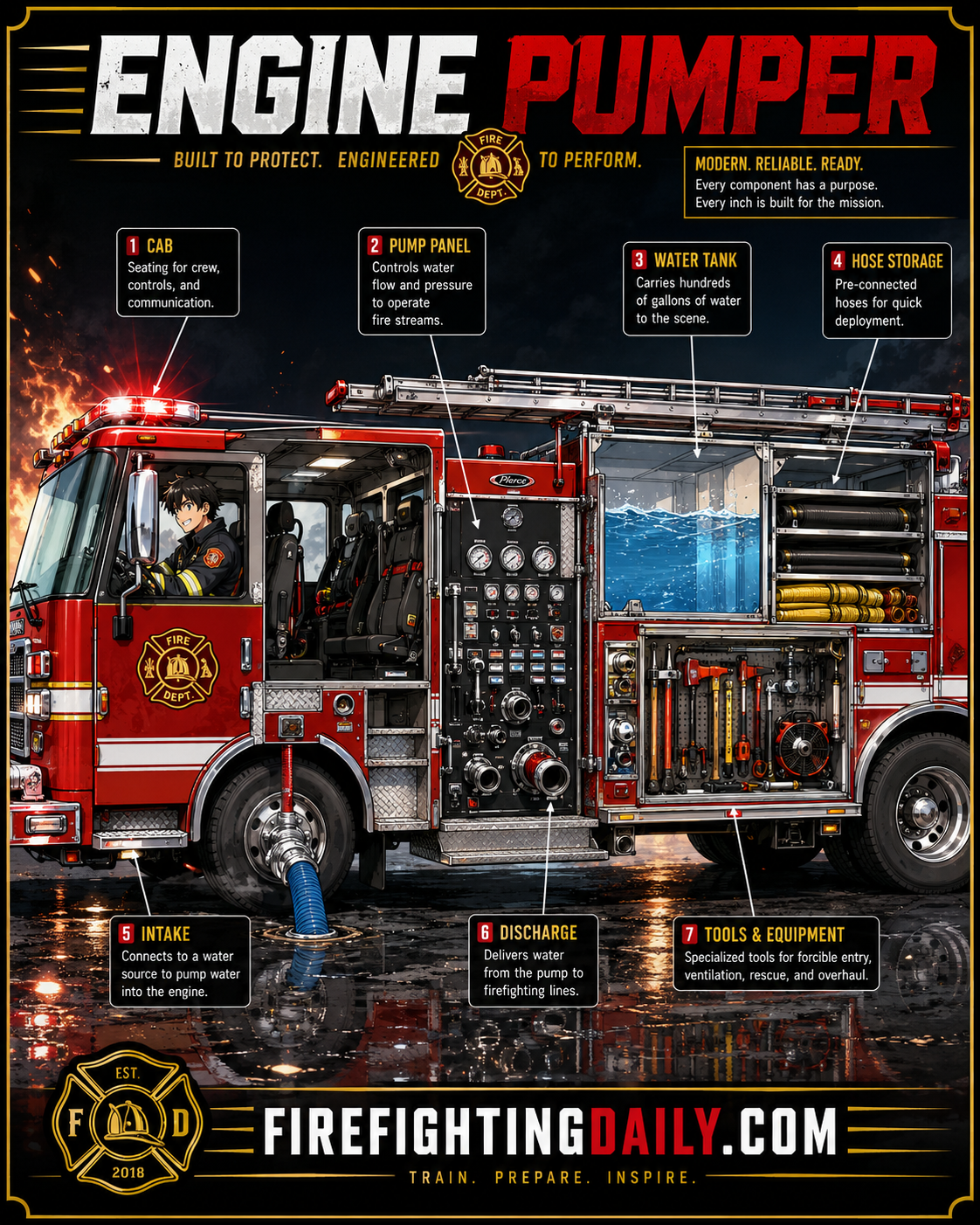
Pumper layout
Engine design organizes tank, pump, hose, tools, ladders, compartments, lights, and crew space.
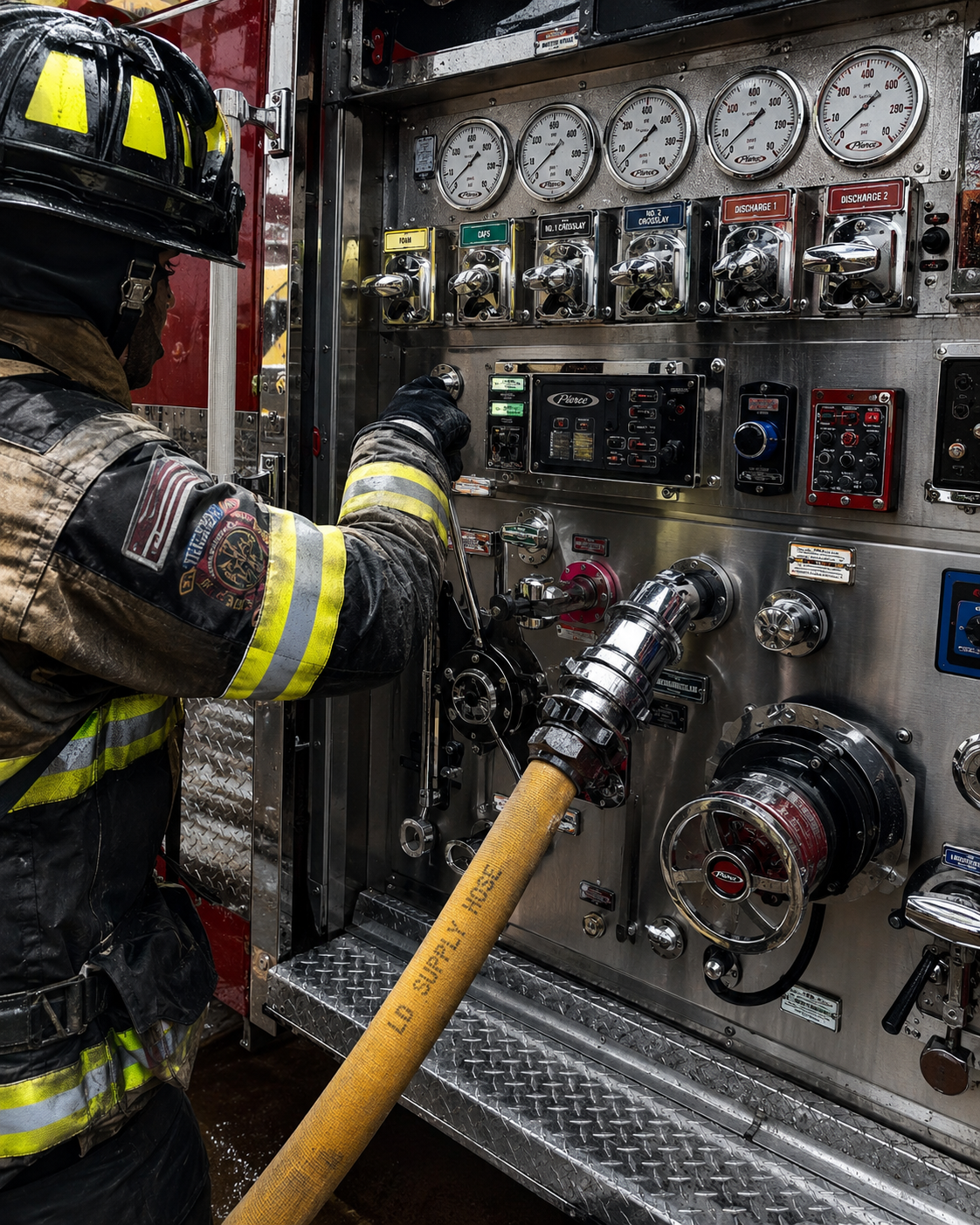
Pump panel
The pump operator manages pressure, flow, water source, gauges, valves, and hose lines.
The pump panel: the engine’s control center
The pump panel is where water flow is controlled. Gauges, valves, levers, pressure controls, intake connections, discharge outlets, and indicators help the operator supply hose lines safely and consistently.
Water supply can come from the onboard tank, a hydrant, another engine, a drafting source, or a relay operation depending on the incident and local equipment.
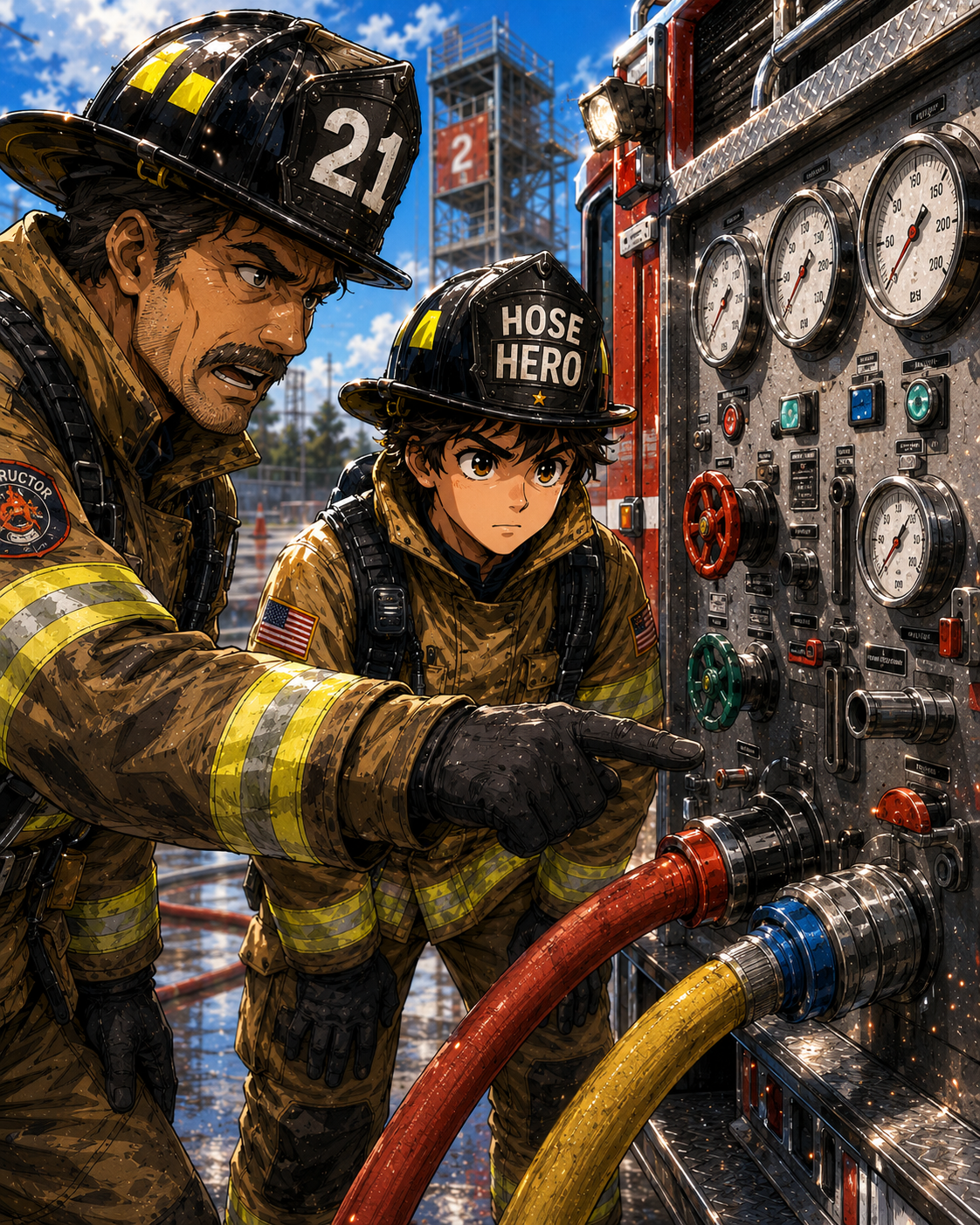
Hose Hero learns the panel.
Pressure is not just power. It must be controlled so hose teams can work safely.
Hose beds and hose lines
Engines carry different sizes and lengths of hose. Some hose is used for fire attack. Some is used to supply the engine from a hydrant. Some is used for larger flows or special operations. How hose is loaded affects how fast and cleanly it can be deployed.
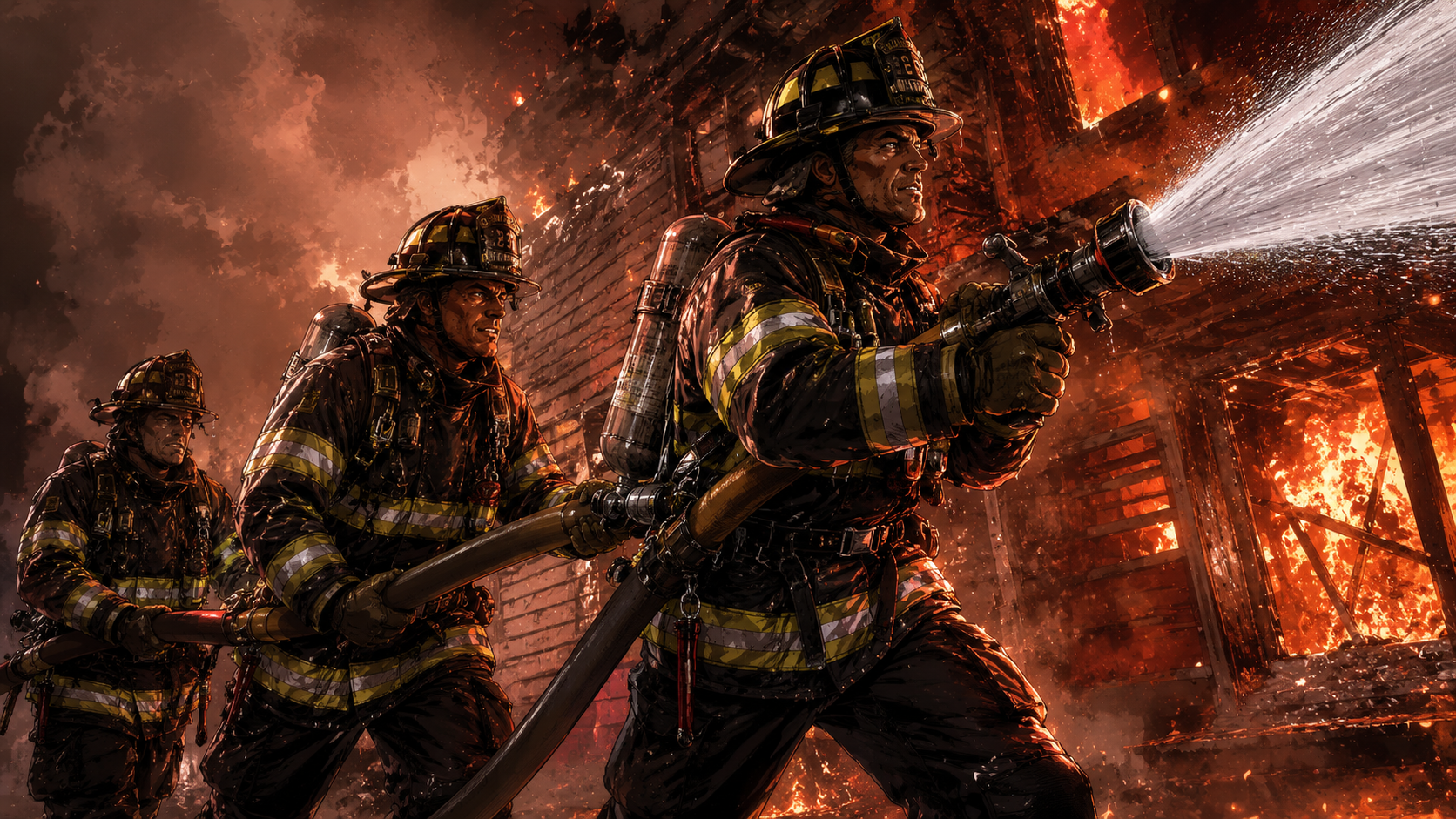
Attack line
A hose line used by a crew to apply water to the fire problem.
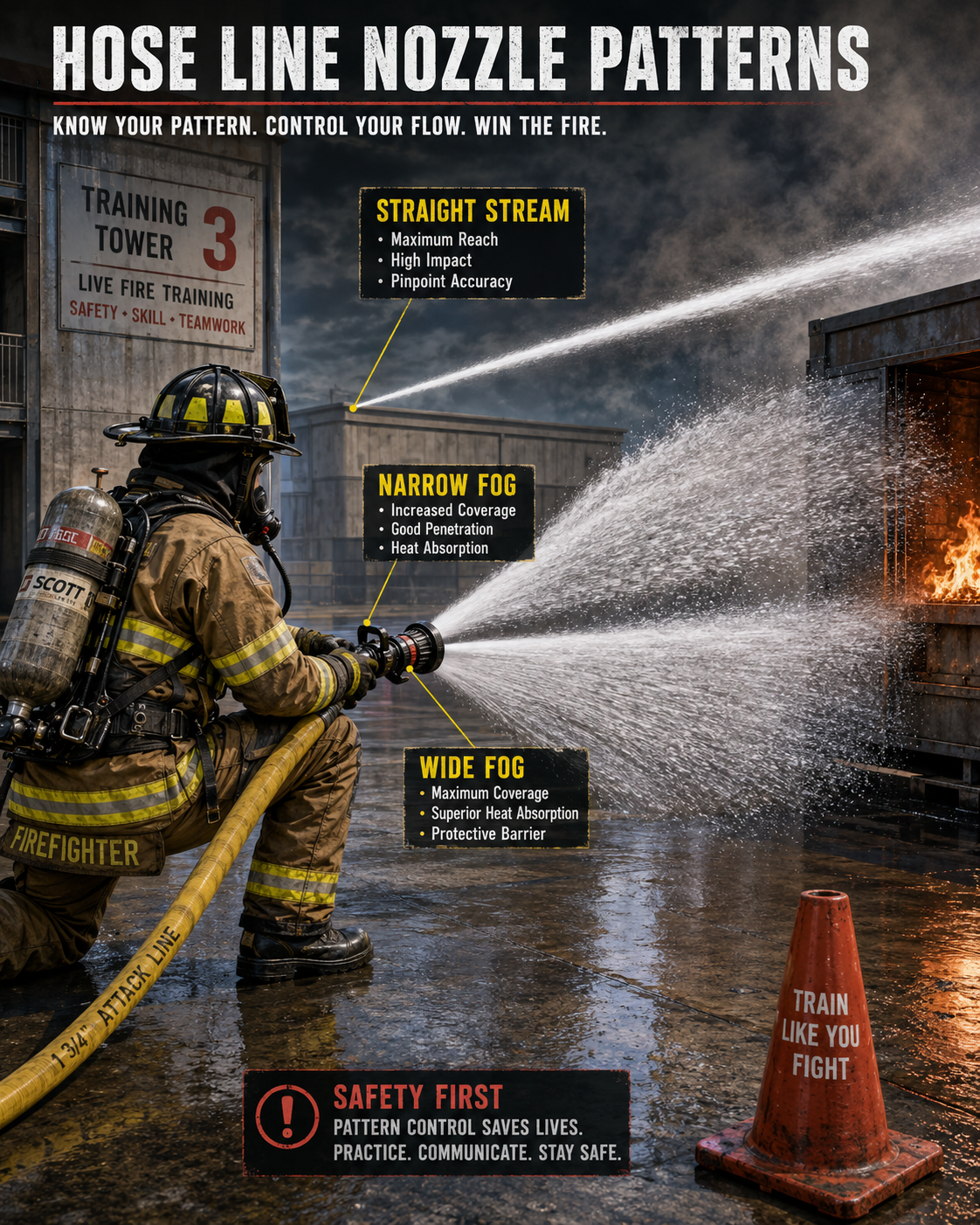
Nozzle patterns
Nozzle selection and stream pattern depend on training, tactics, and conditions.
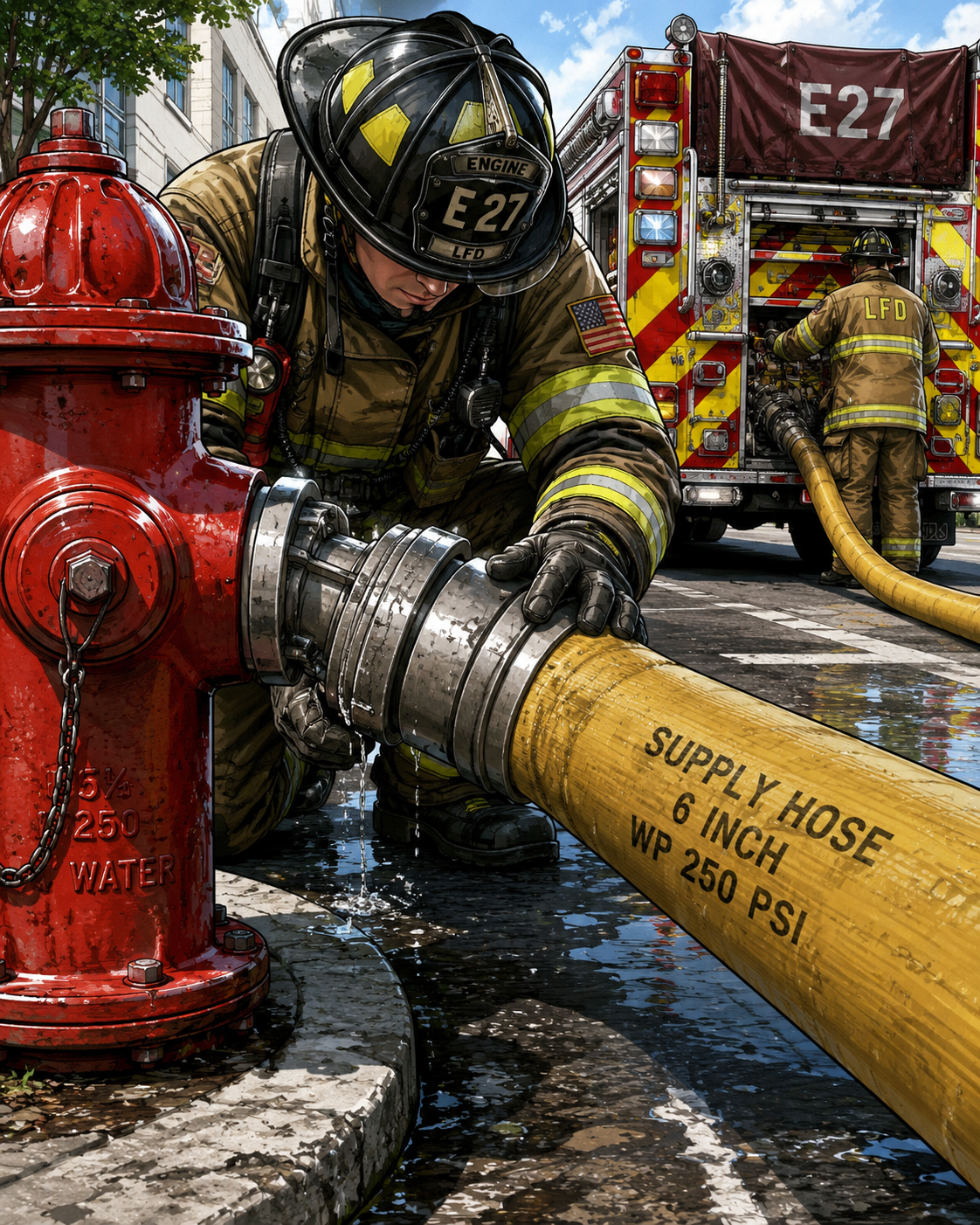
Supply line
Large hose can feed the engine from a hydrant or other water source.
Hydrants and water supply
Engines depend on water. In cities, hydrants are part of the hidden infrastructure behind firefighting. The engine connects to a hydrant, draws water through supply hose, and pumps it to attack lines, master streams, or other operations.
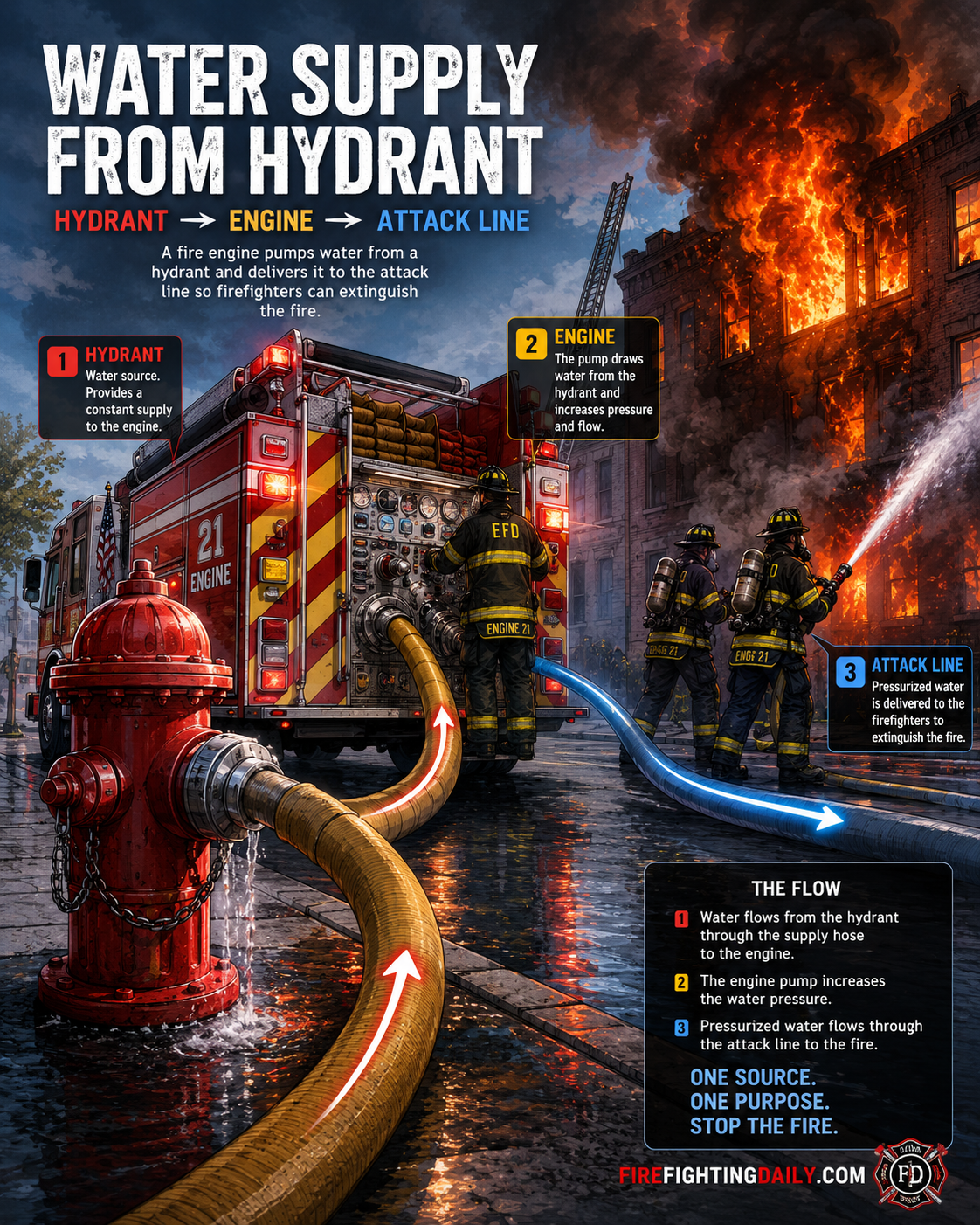
The water system joins the response.
Hydrants, mains, supply lines, pump panels, and crews all become one water-delivery chain.
Engine company and truck company
An engine company often focuses on water supply and hose operations. A truck company often carries ladders, aerial devices, tools, forcible-entry equipment, ventilation tools, rescue equipment, and equipment for access. The terms vary by department, but the teamwork idea is consistent: different apparatus solve different problems.
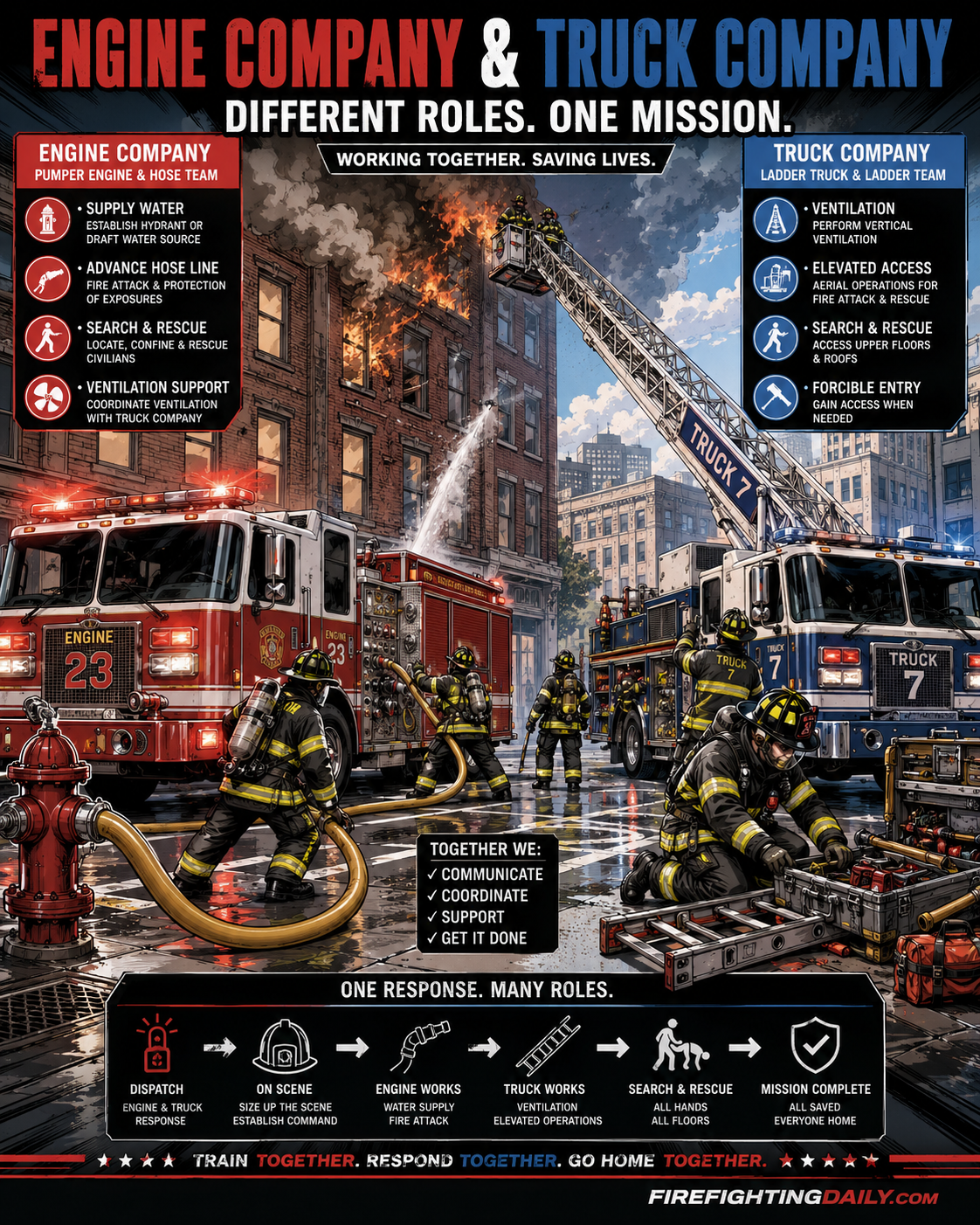
Engine + truck
Water, hose, ladders, tools, access, search, and command must work together.
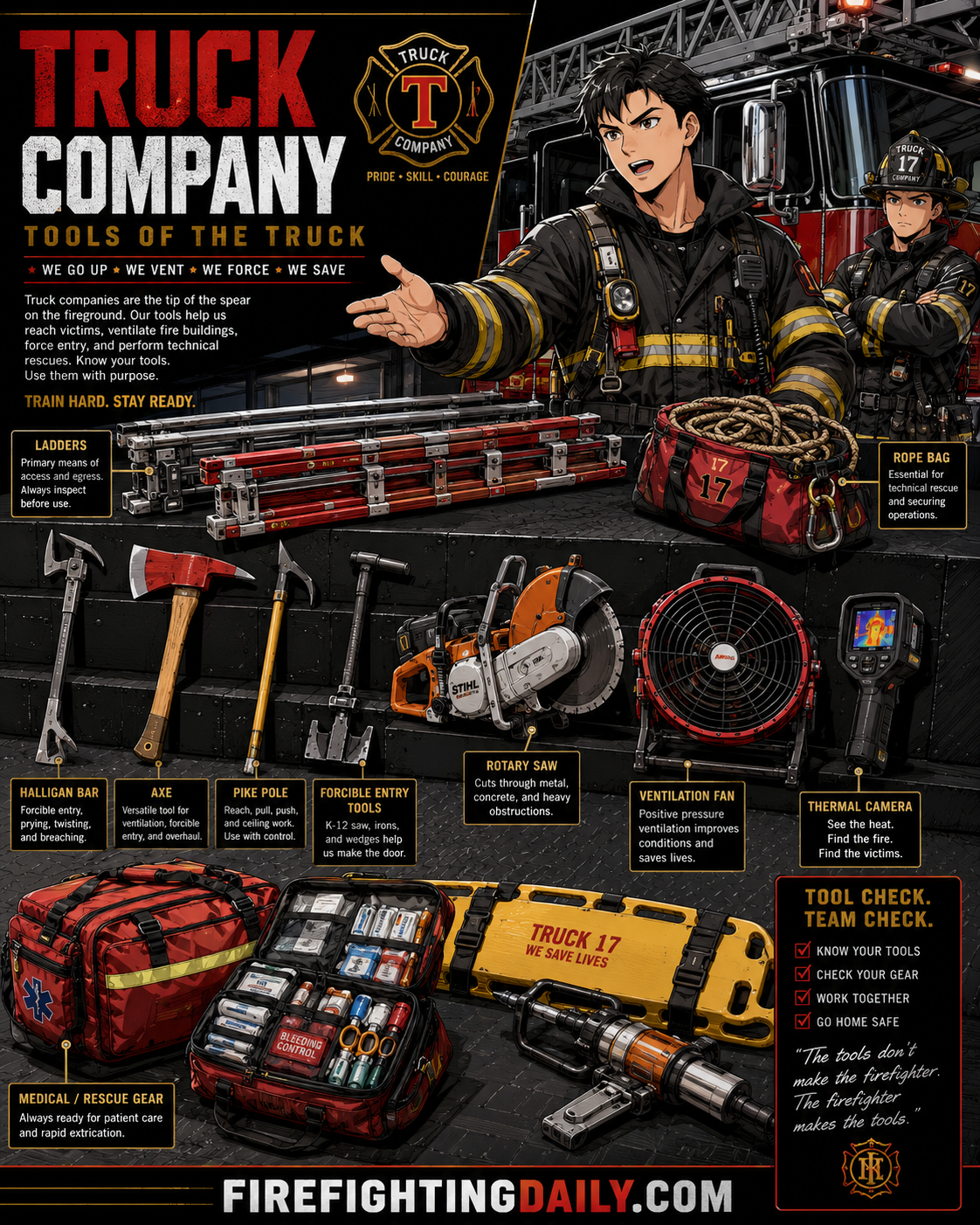
Truck tools
Truck companies often support access, ventilation, search, rescue, and overhaul.
Ladder trucks and aerial operations
Ladder trucks may carry large ground ladder inventories, aerial ladders or platforms, forcible-entry tools, saws, ventilation equipment, and rescue tools. Aerial devices can provide elevated access, rescue options, roof operations support, or elevated water streams depending on the incident.
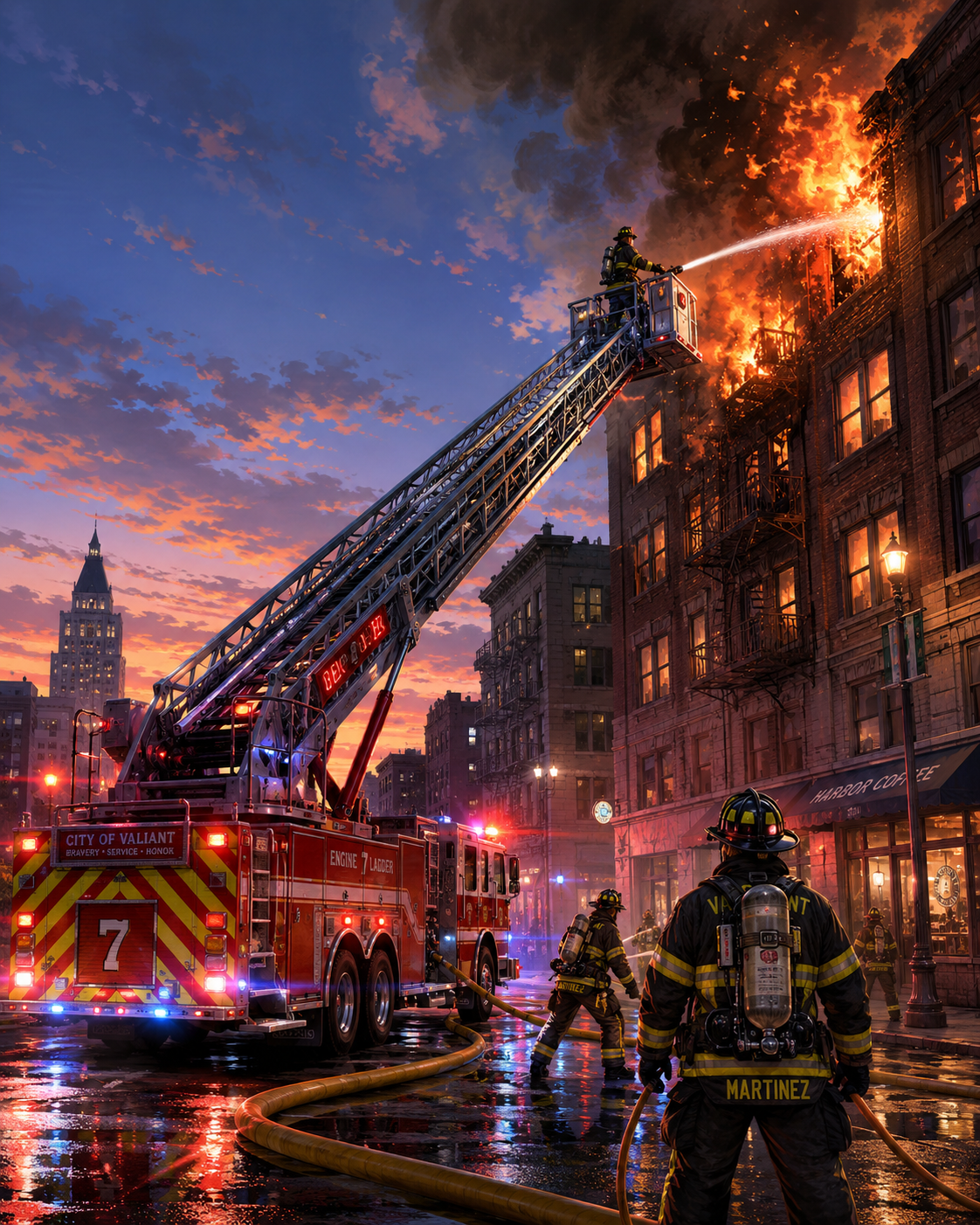
Reach changes the scene.
Aerial apparatus can provide access and water delivery from positions a hand crew cannot reach from the ground.
Brush engines and wildland apparatus
Brush engines are built for wildland and interface conditions. They may be smaller, more maneuverable, and better suited for dirt roads, hillsides, vegetation fires, and structure protection near wildland fuels. They often carry hose, tools, water, pumps, and wildland equipment.
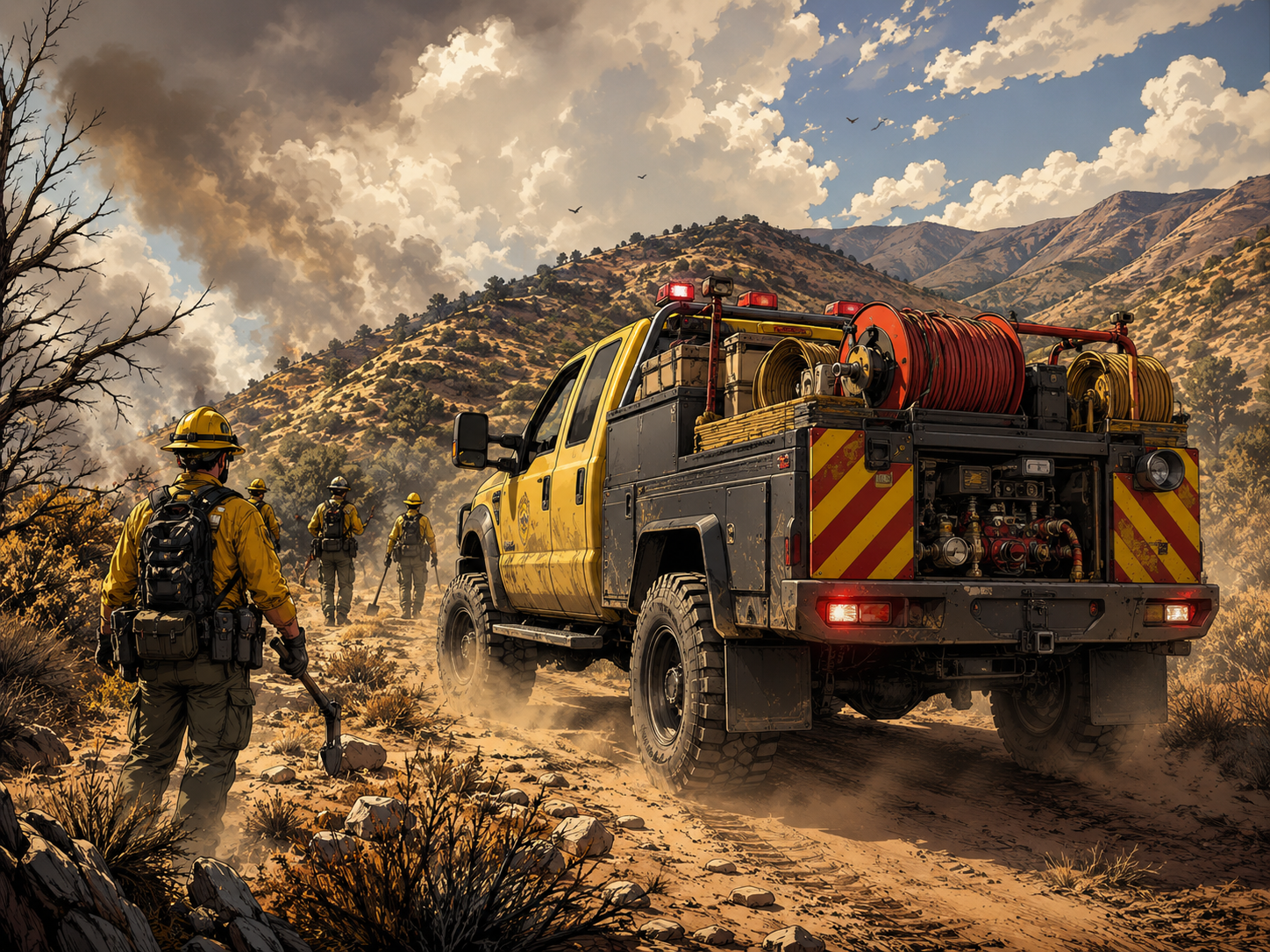
Off-road response
Brush engines help crews reach places a city engine may not handle as easily.
Wildfire basics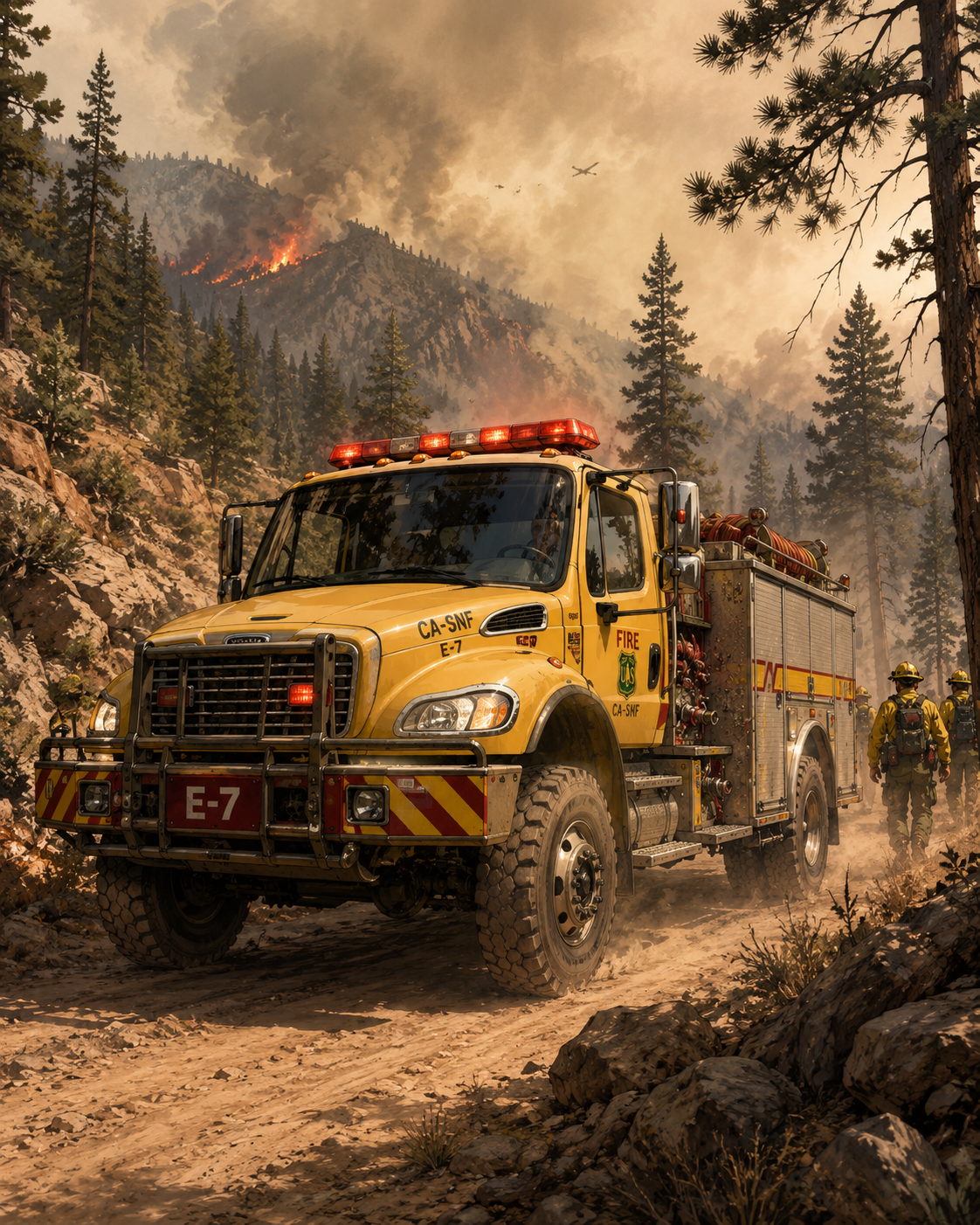
Wildland support
Wildland apparatus supports fireline work, patrol, mop-up, and structure defense.
Learn wildlandWhat engines carry besides hose
Engines may carry medical gear, hand tools, extinguishers, ladders, salvage equipment, forcible-entry tools, lighting, fans, traffic control gear, foam equipment, absorbent material, meters, radios, adapters, fittings, and personal protective equipment.
The exact inventory depends on the department, hazards, geography, staffing, and mission profile.
Common engine functions
- Transport a crew to the incident.
- Carry water and firefighting hose.
- Pump water at controlled pressure.
- Connect to hydrants and water sources.
- Support rescue, medical, and public-safety calls.
- Carry tools for access, search, and basic operations.
- Provide scene lighting, warning lights, and command support.
Why apparatus placement matters
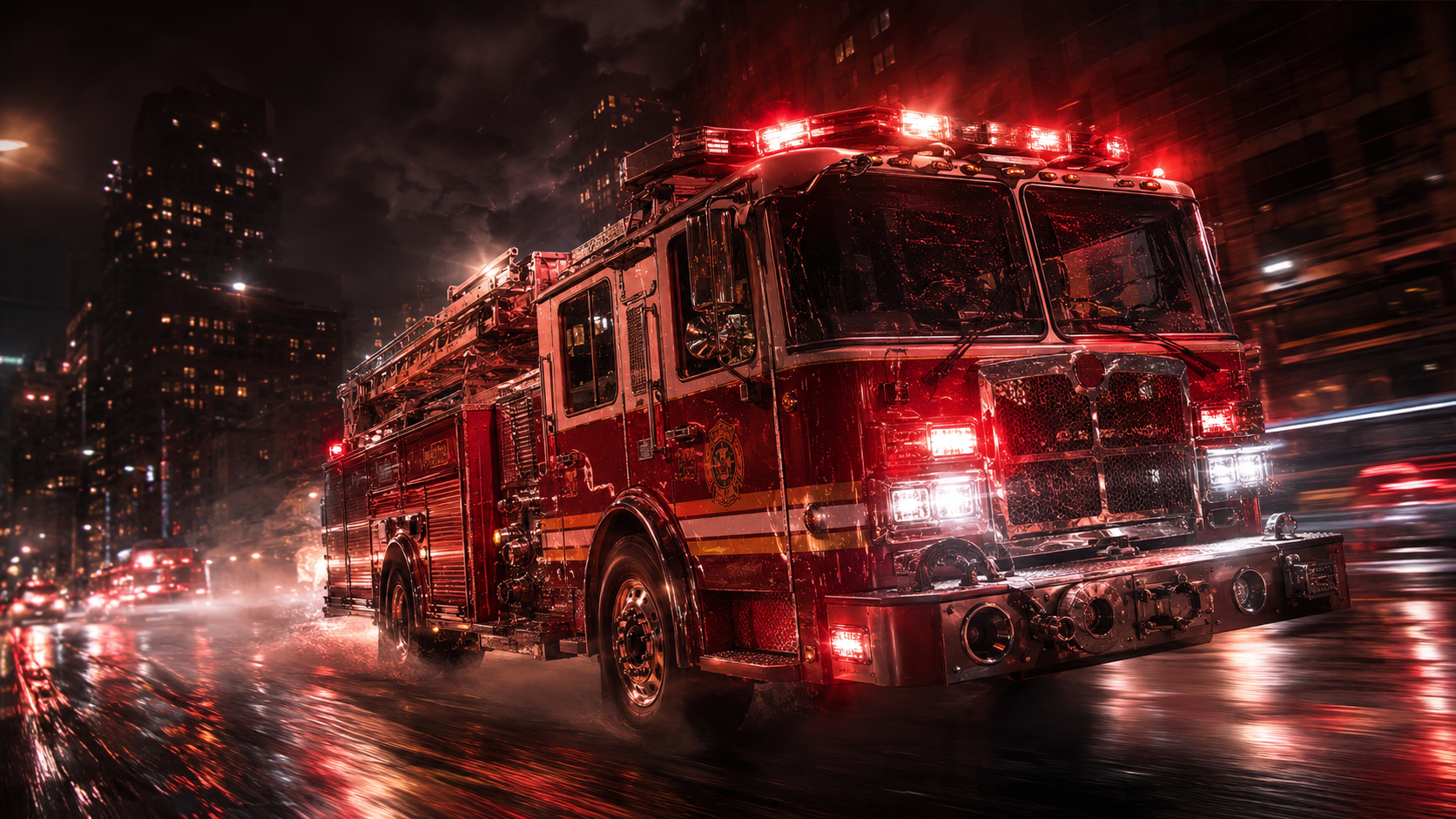
Where a fire engine parks can affect hose deployment, ladder access, hydrant use, scene safety, traffic control, and room for additional apparatus. Crews consider the address, building type, smoke conditions, hydrant location, overhead hazards, road width, slopes, wind, and incoming units.
Getting there is only step one.
The engine must be positioned so the crew, hose, water, and other units can work.
Apparatus safety for the public
Fire apparatus are large, heavy, and often operating around smoke, water, hose, traffic, power lines, and emergency crews. The public should keep distance, never drive over fire hose, follow traffic directions, and keep hydrants and fire lanes clear.
Hydrant Hime’s reminder
“A blocked hydrant can slow the whole water story. Keep the hydrant clear before the alarm ever rings.”
How this connects to solar and batteries
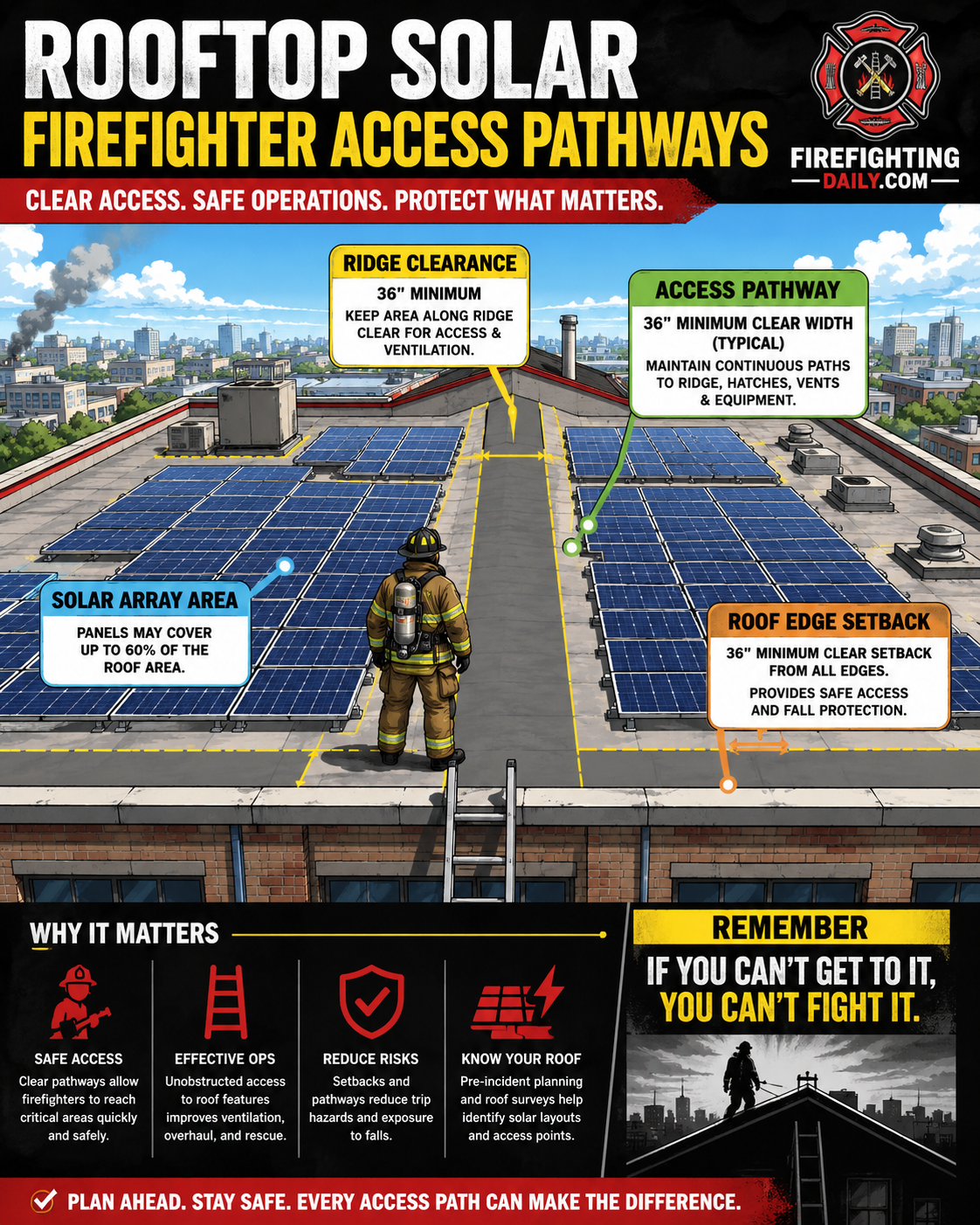
Modern responses may include solar arrays, battery systems, EVs, and backup power equipment. Firefighters need clear access, labels, shutdown locations, and safe working space around electrical equipment. Apparatus placement and access pathways matter even more when roofs, garages, and electrical rooms contain energy systems.
Access pathways
Roof access and clear pathways help crews work around solar arrays.
Solar fire safety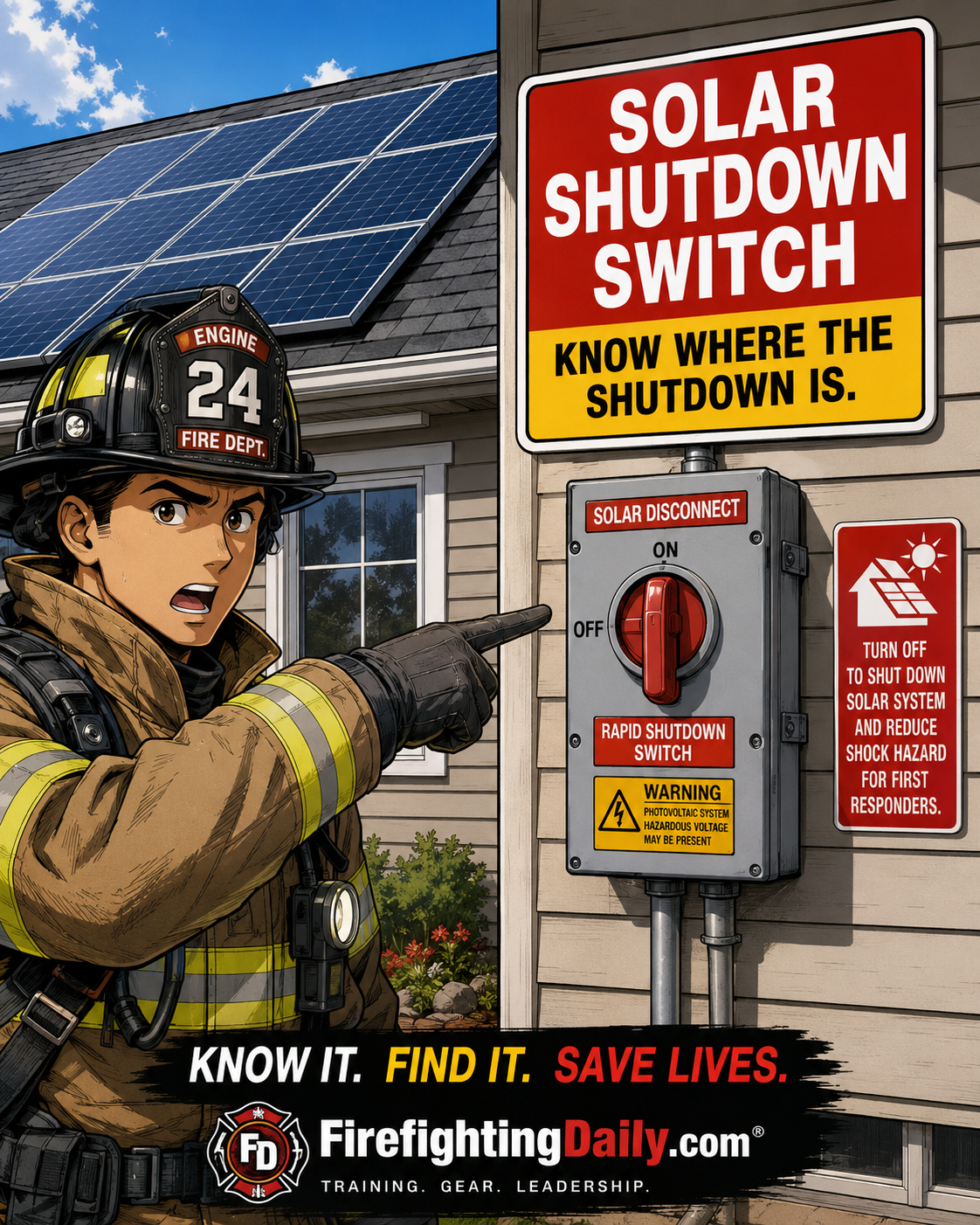
Captain Ember’s summary
Fire engines are not just transportation. They are mobile fireground systems that bring water, hose, tools, lighting, radios, crew capacity, and command support. The truck looks dramatic, but the real power is coordination.