The big idea
Water is simple. Moving it safely is not.
Everyone understands that water can cool many fires. The hard part is delivering enough water, at the right pressure, through the right hose, from the right source, with a crew that can control the line safely.
A fire hose is not a garden hose. Charged hose lines are heavy, powerful, and physically demanding. Nozzle reaction, friction loss, kinks, corners, stairs, heat, smoke, and crew coordination all matter.
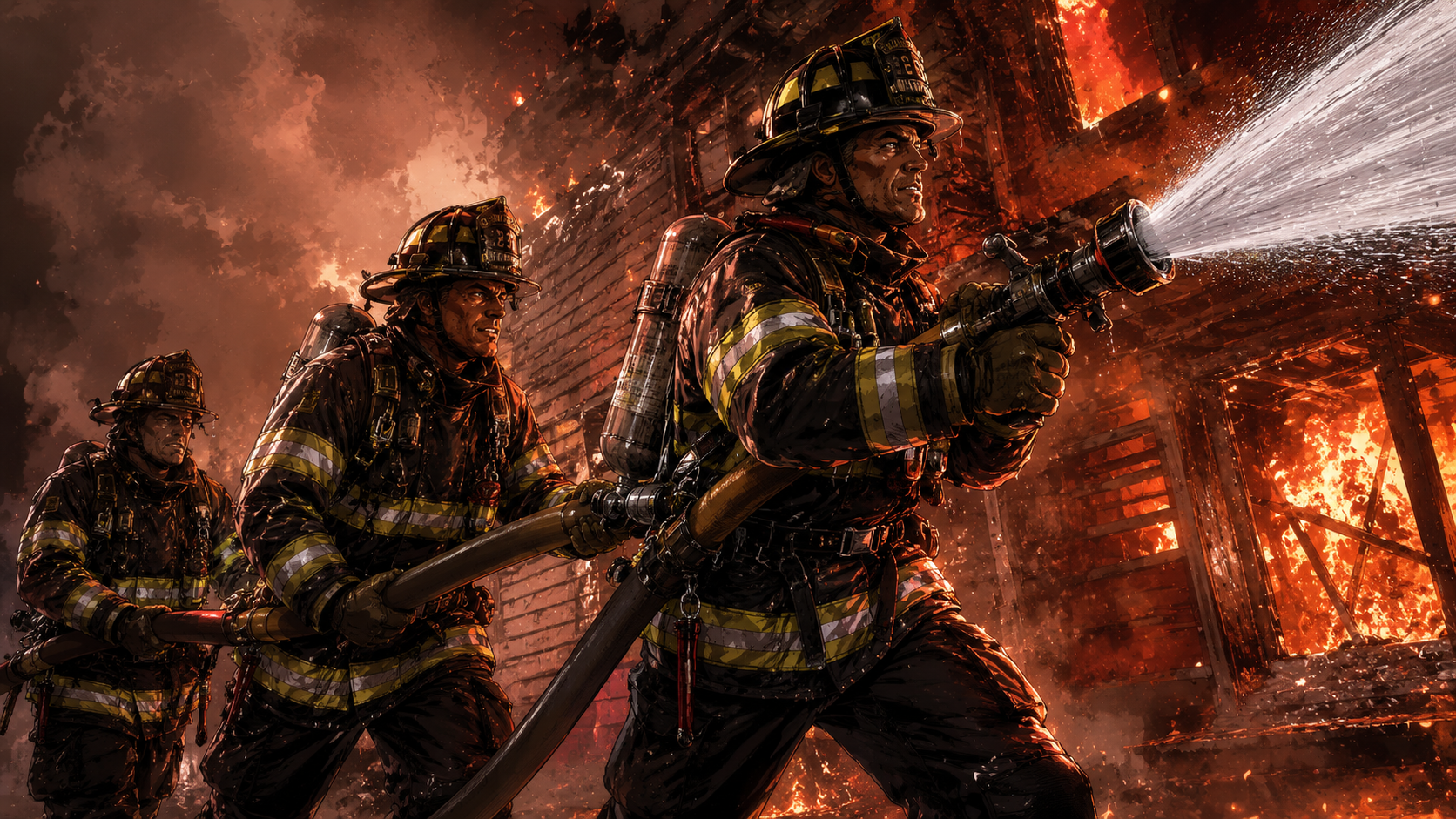
The hose line is a team tool.
One firefighter may hold the nozzle, but the crew moves, supports, feeds, and protects the line together.
The water chain
A fireground water operation often begins with a water source. In many cities, that source is a hydrant connected to a water main. The engine connects to the hydrant with supply hose, the pump operator controls pressure and flow, and attack lines carry water to the crew.
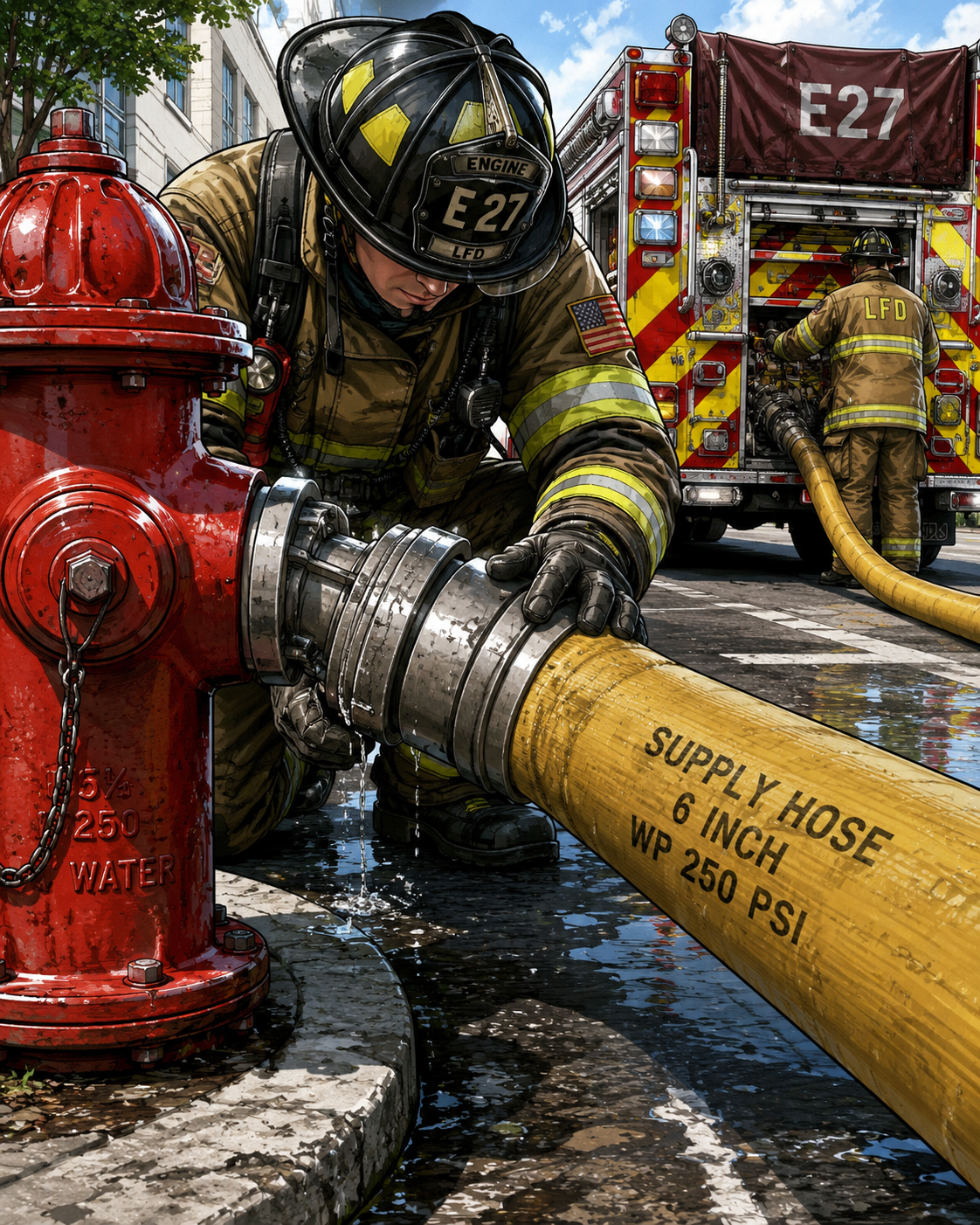
Hydrant
The hydrant is the visible connection to a larger water system.
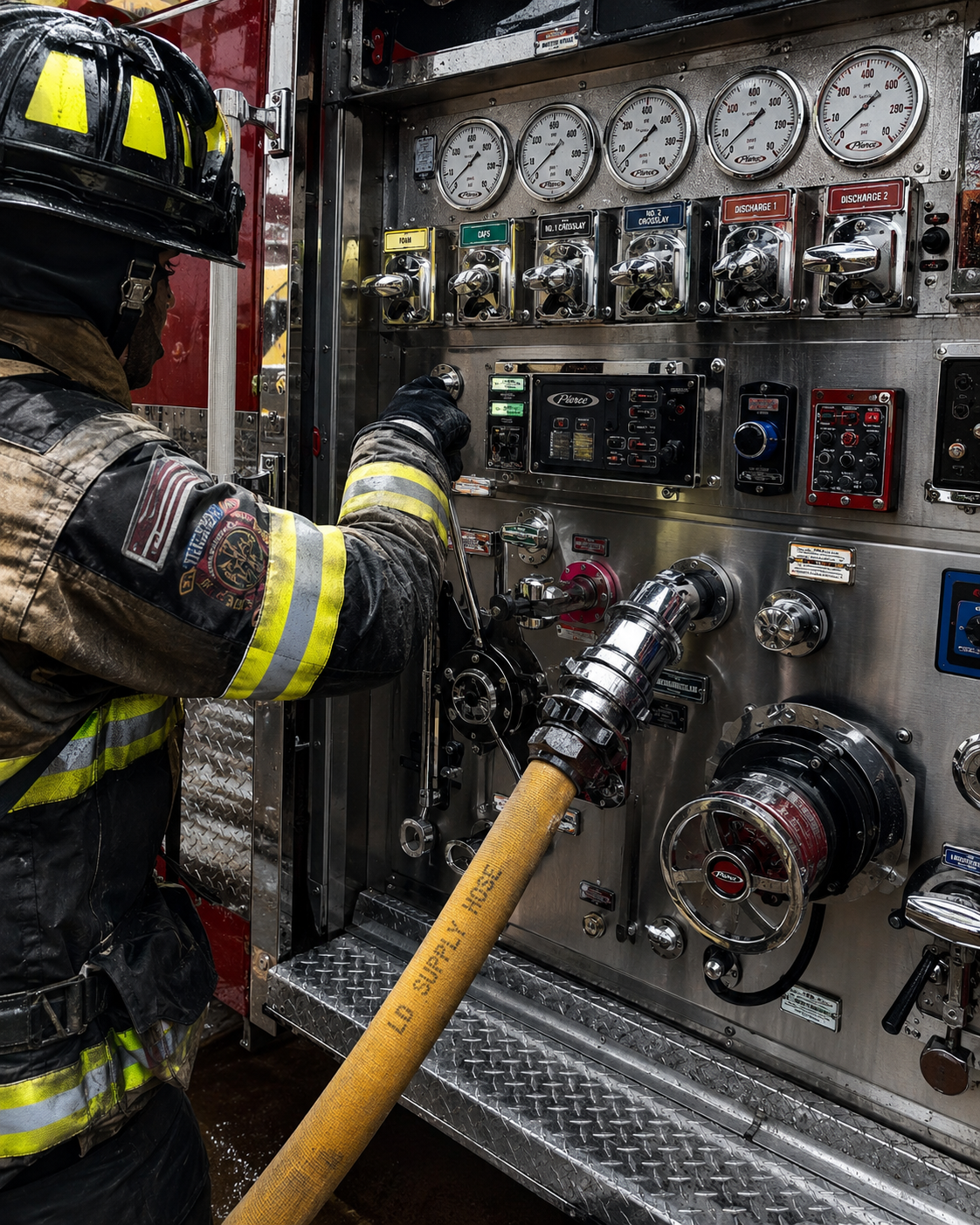
Pump panel
The engine operator manages pressure, water source, valves, and flow.
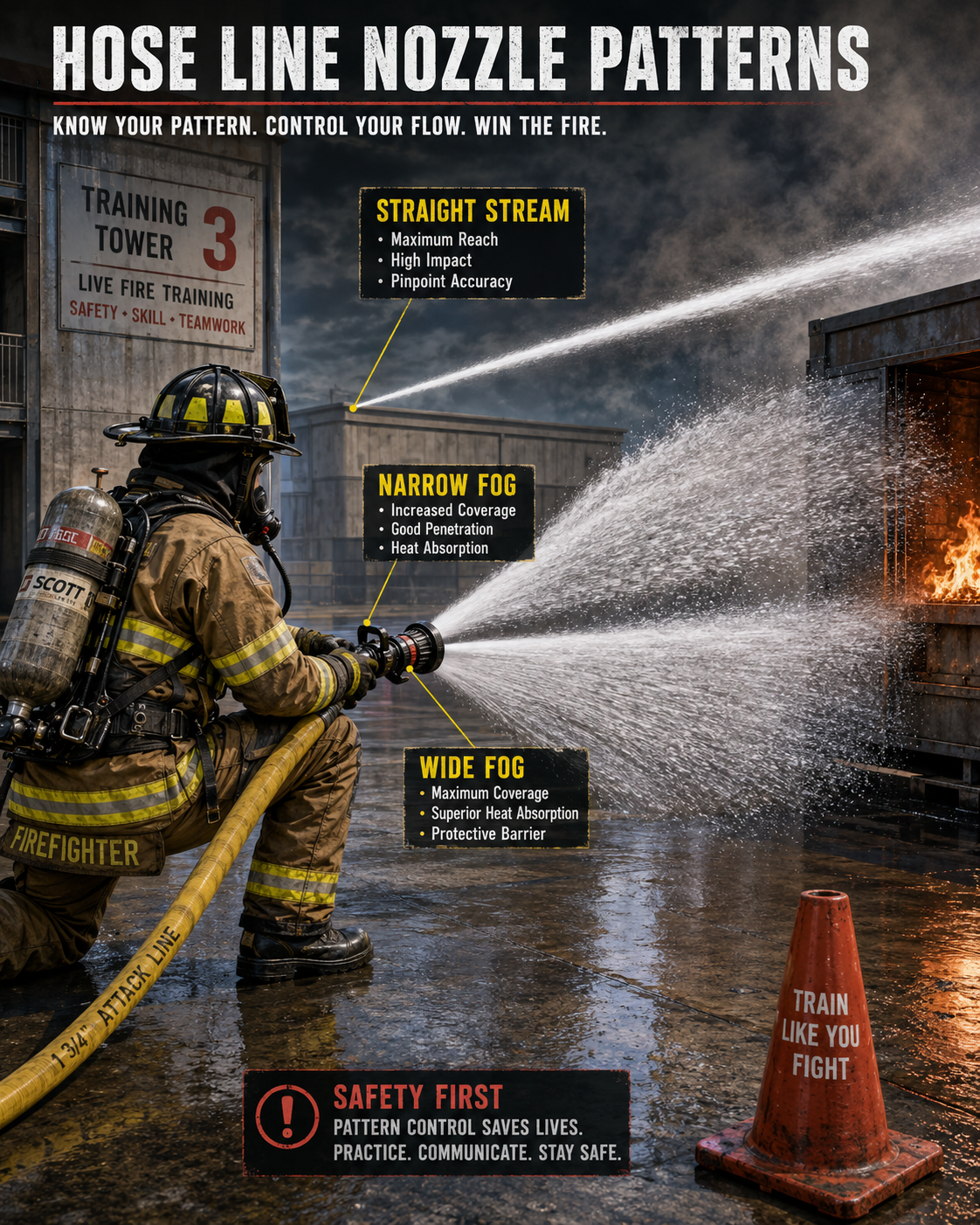
Nozzle
The nozzle controls how water leaves the hose and reaches the fire problem.
Hose sizes and hose jobs
Fire departments use different hose sizes for different jobs. Smaller handlines may be easier for crews to maneuver but carry less water than larger lines. Larger hose may supply engines or flow more water, but it can be heavier and harder to move. The right hose depends on the incident, the building, fire conditions, staffing, and department practice.
Hose Hero says:
“The hose is not just a tube. It is water, weight, pressure, friction, teamwork, and timing.”
Nozzles and stream patterns
Nozzles help shape water into a stream. Firefighters may use a straight stream, fog pattern, or other stream type depending on training, conditions, and tactics. Nozzle use is not random. Stream choice can affect reach, cooling, steam production, visibility, and firefighter movement.
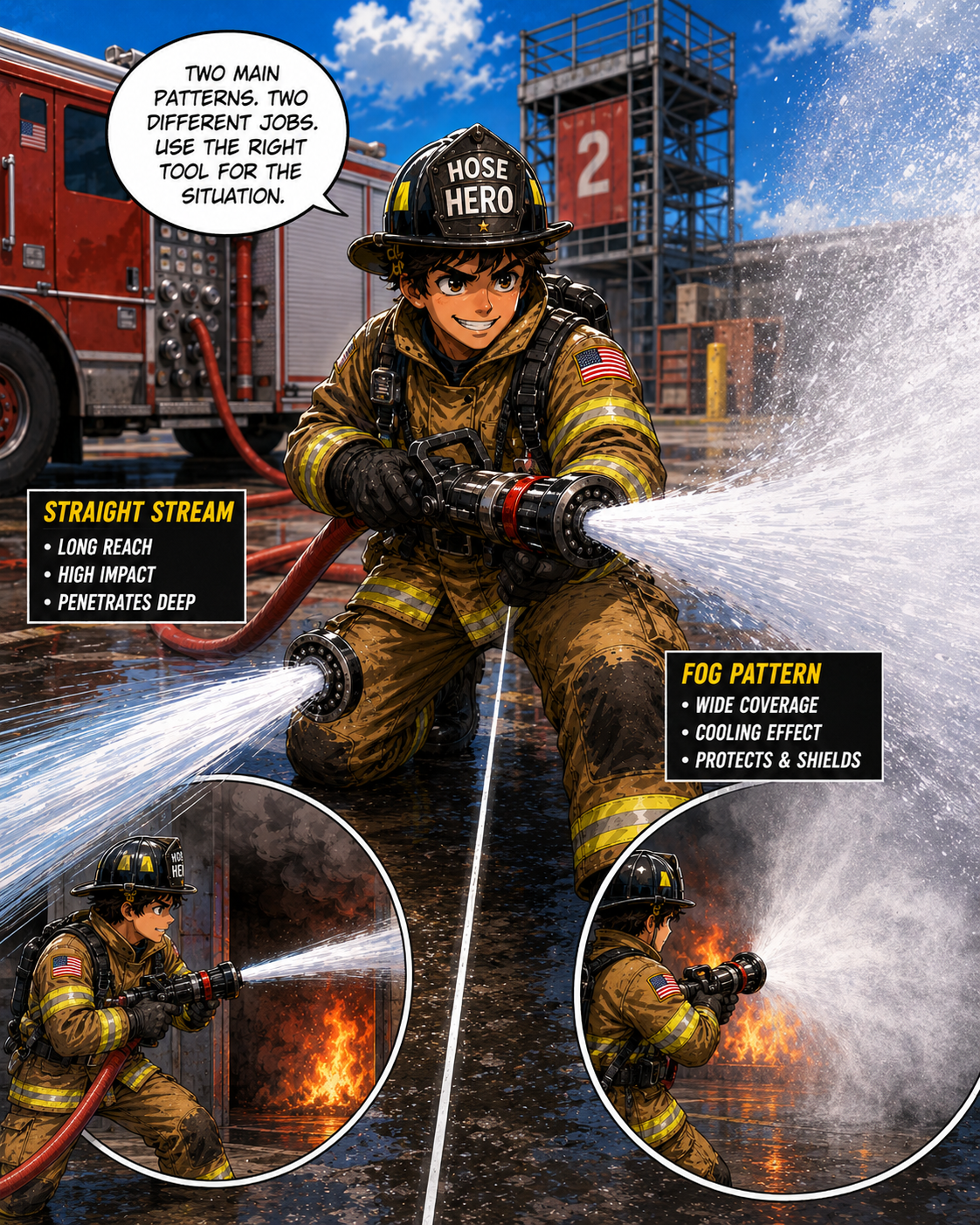
Different patterns, different jobs.
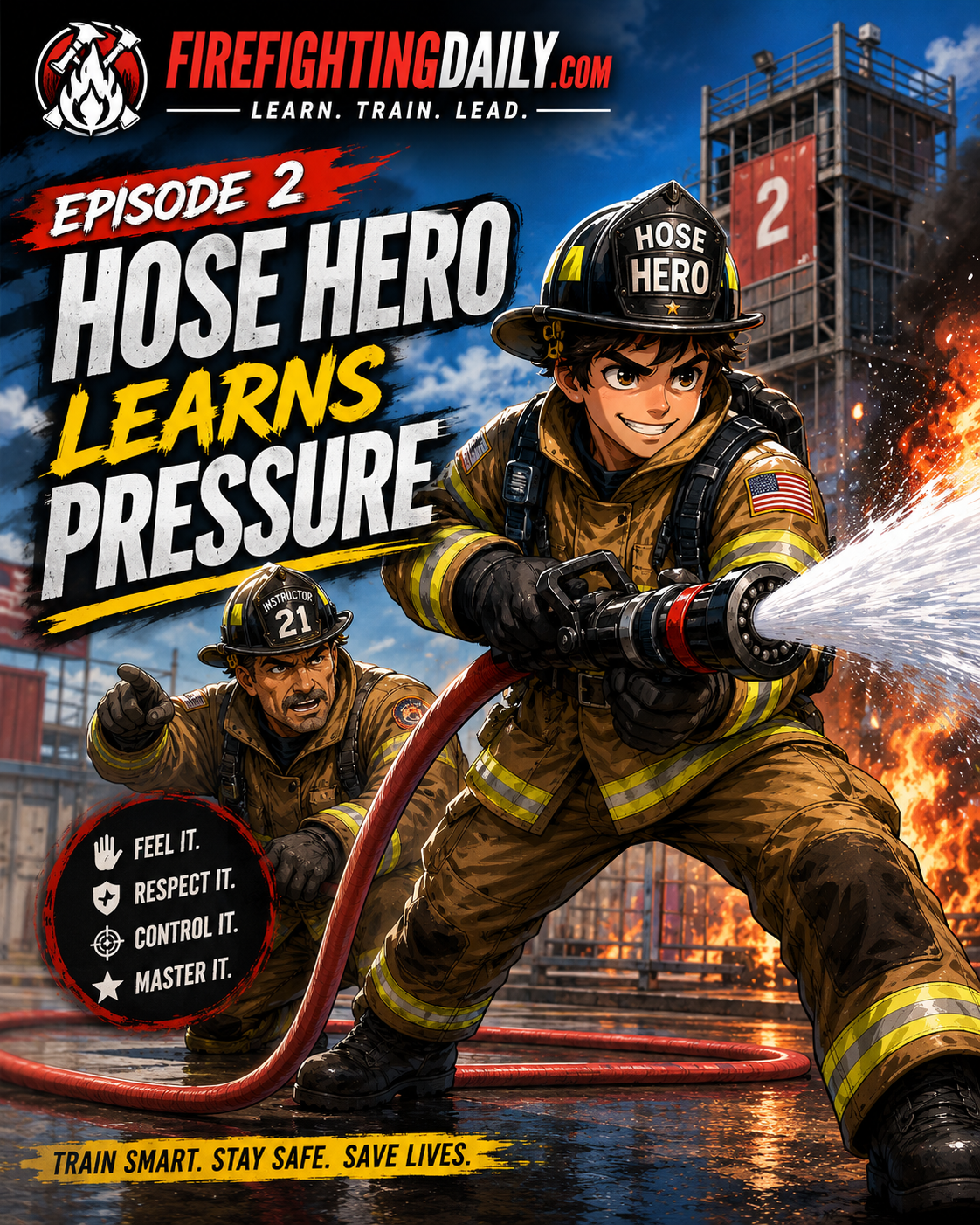
Hose Hero learns that water shape matters, not just water volume.
Nozzle reaction
When water leaves the nozzle, the hose pushes back. That force is called nozzle reaction. It is one reason hose teams use body position, teamwork, communication, and training to control the line. A charged line can move, whip, snag, kink, and fight back.
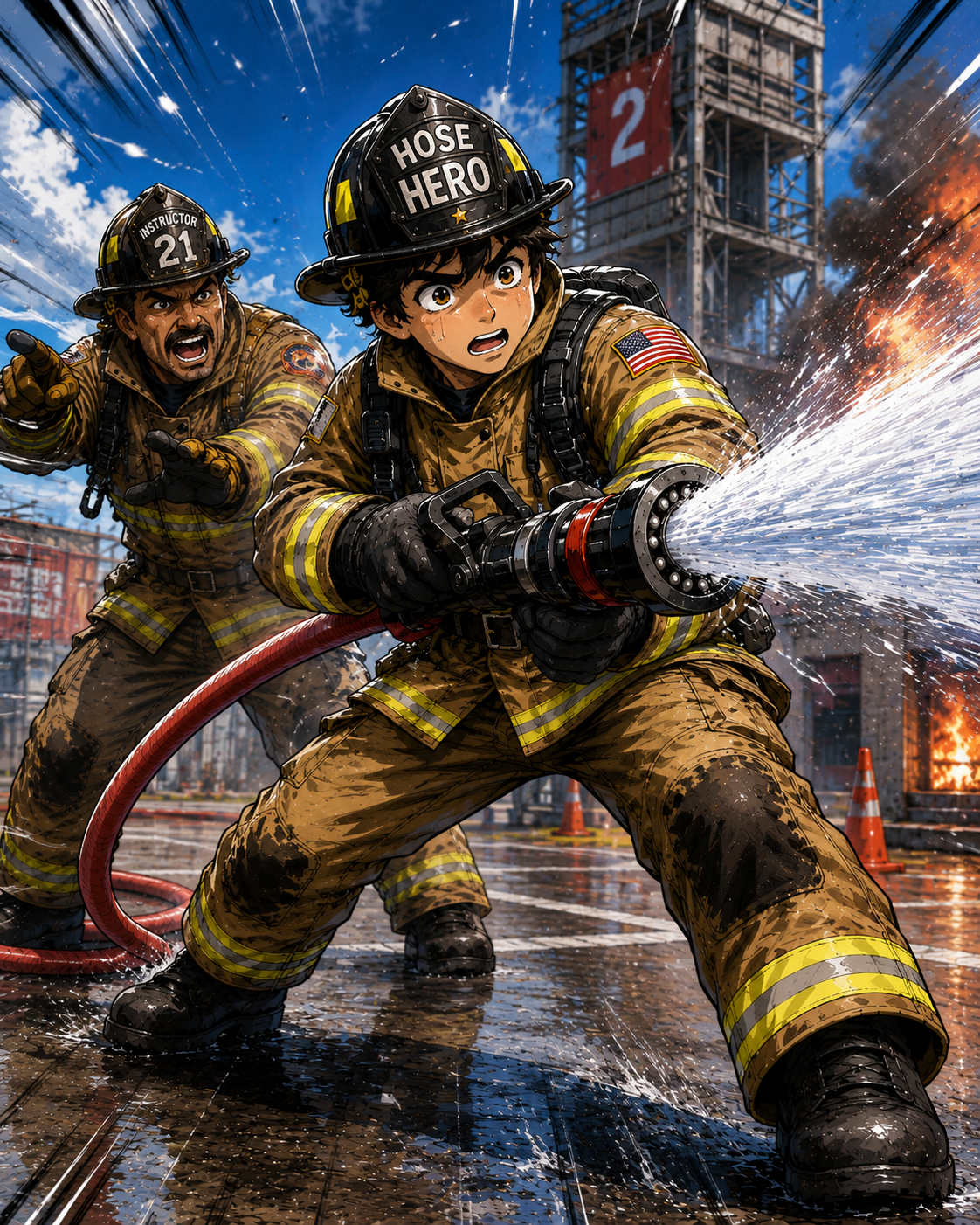
Nozzle reaction
The line pushes back when water flows. Crews train to control that force.
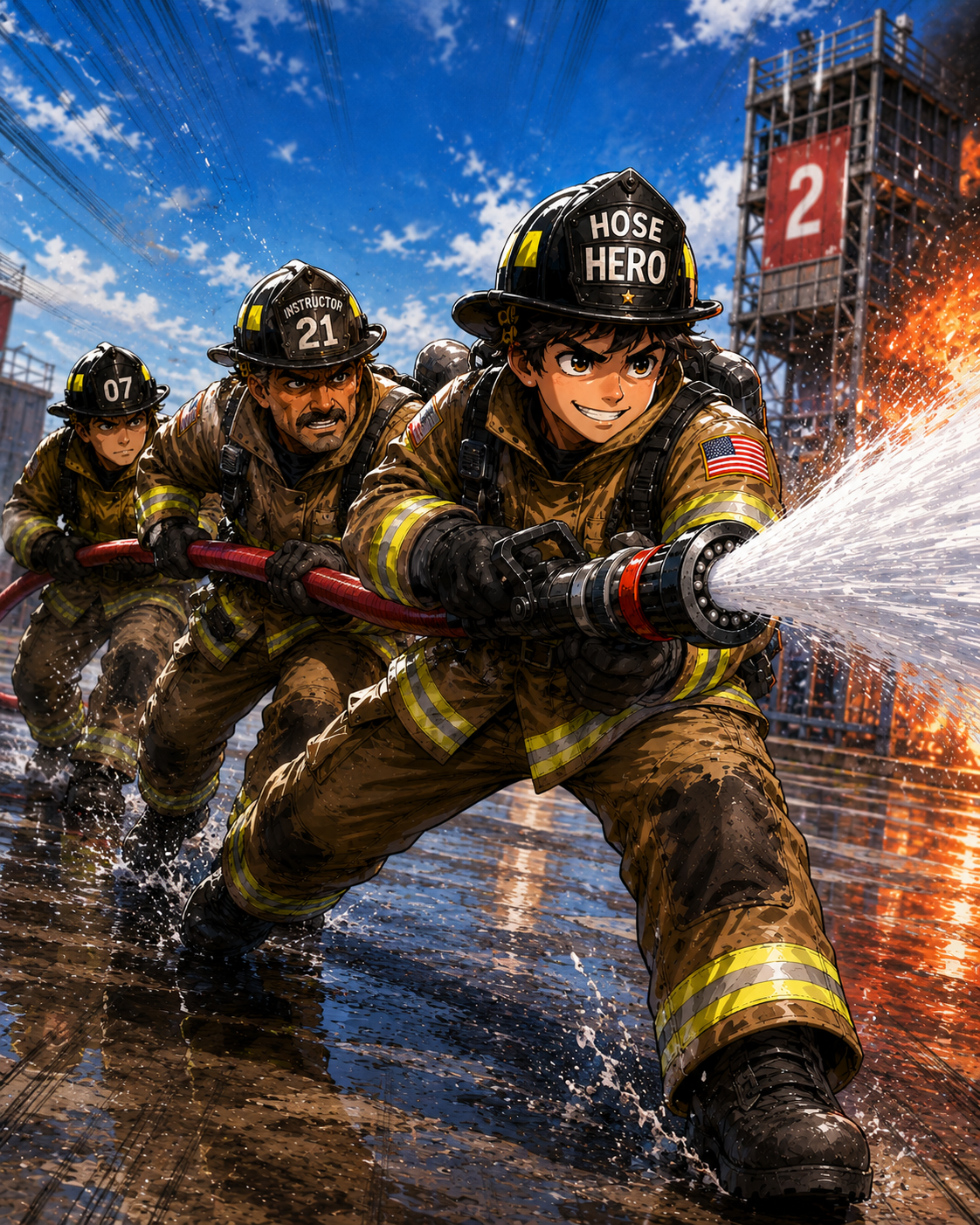
Line advancement
The nozzle firefighter needs backup, hose feed, and crew communication.
Pressure and friction loss
Water moving through hose loses pressure because of friction. Longer hose, smaller hose, higher flow, elevation changes, kinks, appliances, and nozzle type all affect water delivery. Pump operators calculate and adjust pressure so crews receive useful water at the nozzle.
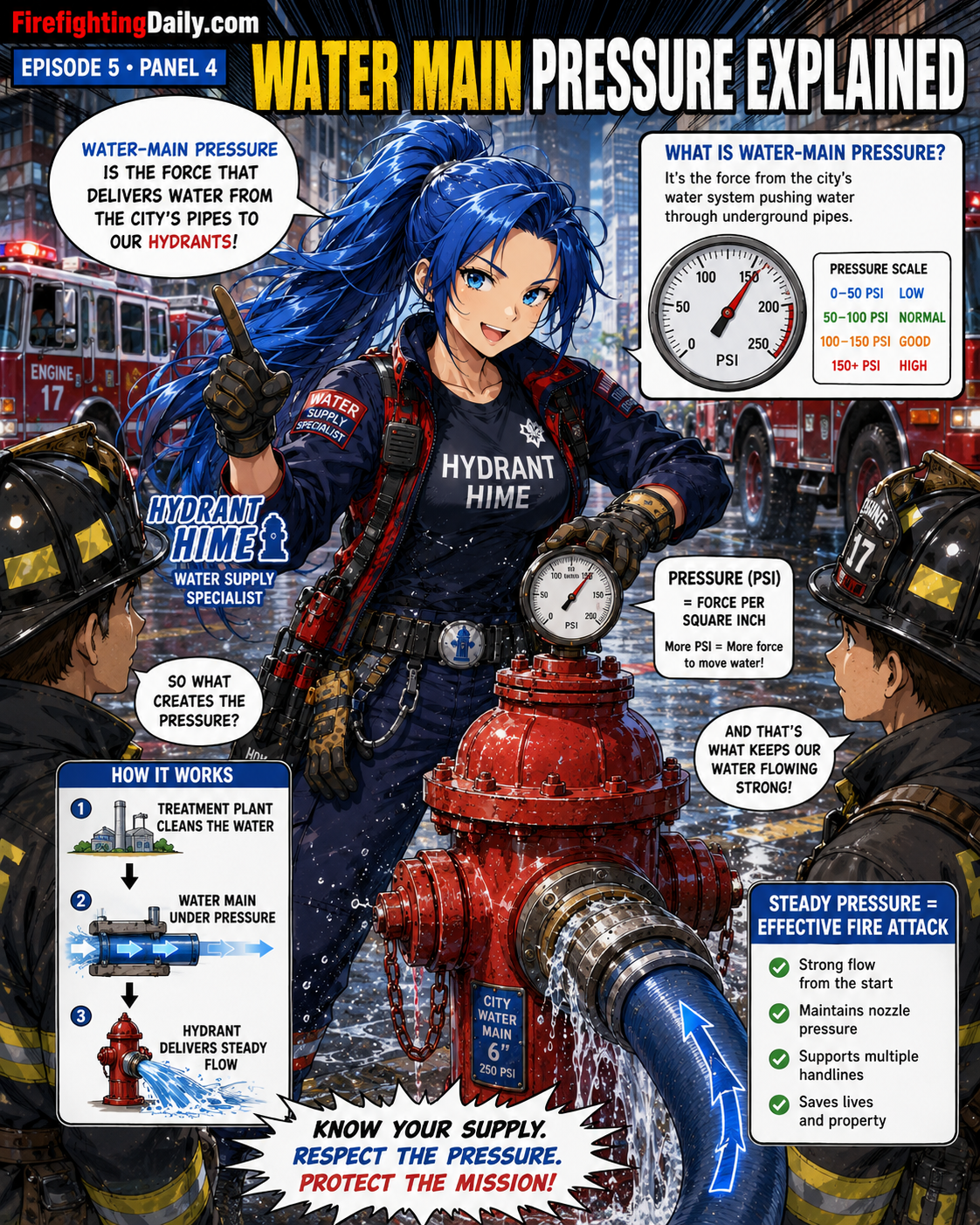
Pressure is part of the story.
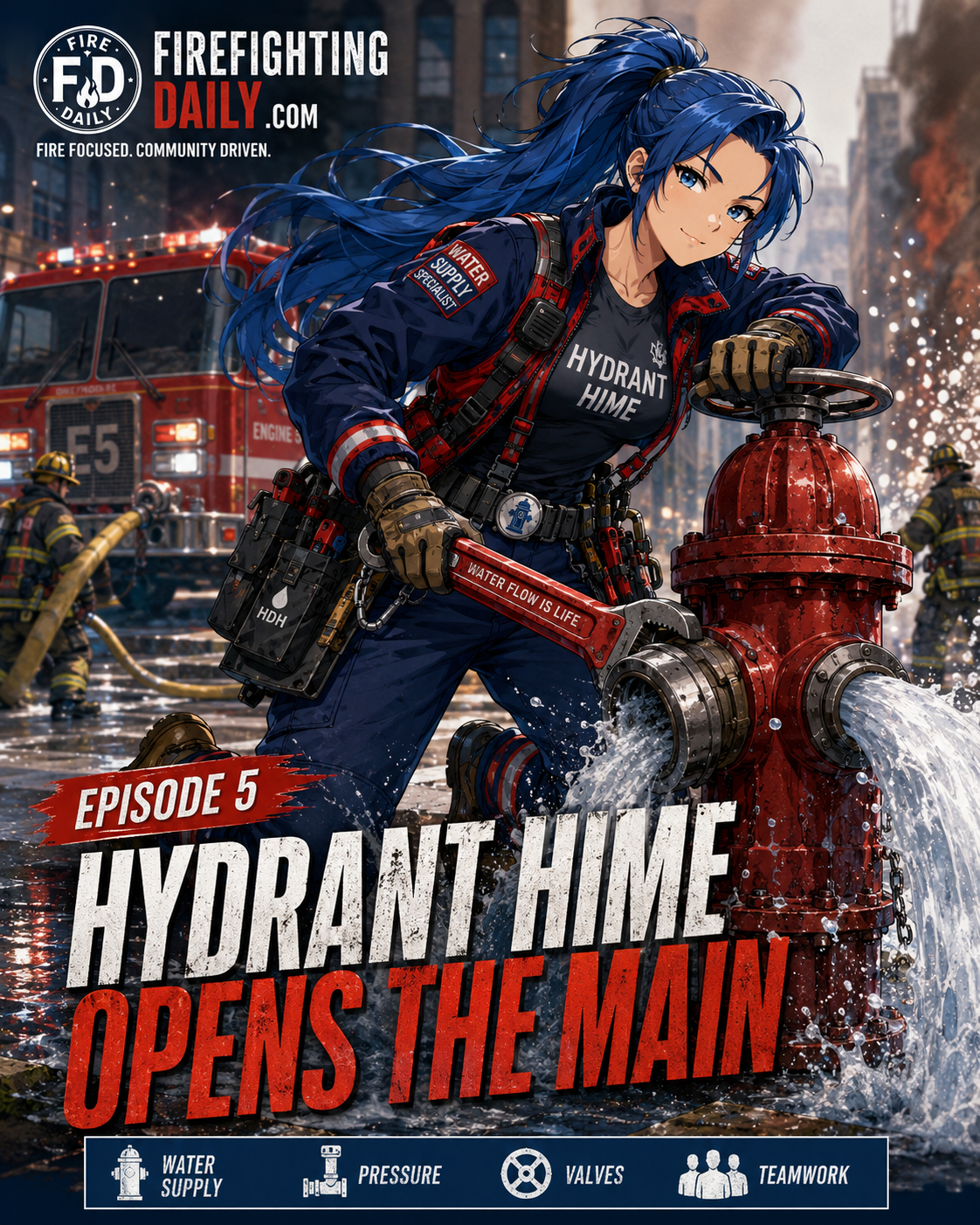
Hydrant Hime explains that the city water system, pump, hose, and nozzle all affect the final stream.
Hydrant supply
Hydrants connect engines to the water system. A hydrant operation may involve removing caps, flushing, connecting hose, opening the hydrant, securing supply lines, and communicating with the pump operator. Keeping hydrants visible and accessible helps firefighters work faster.
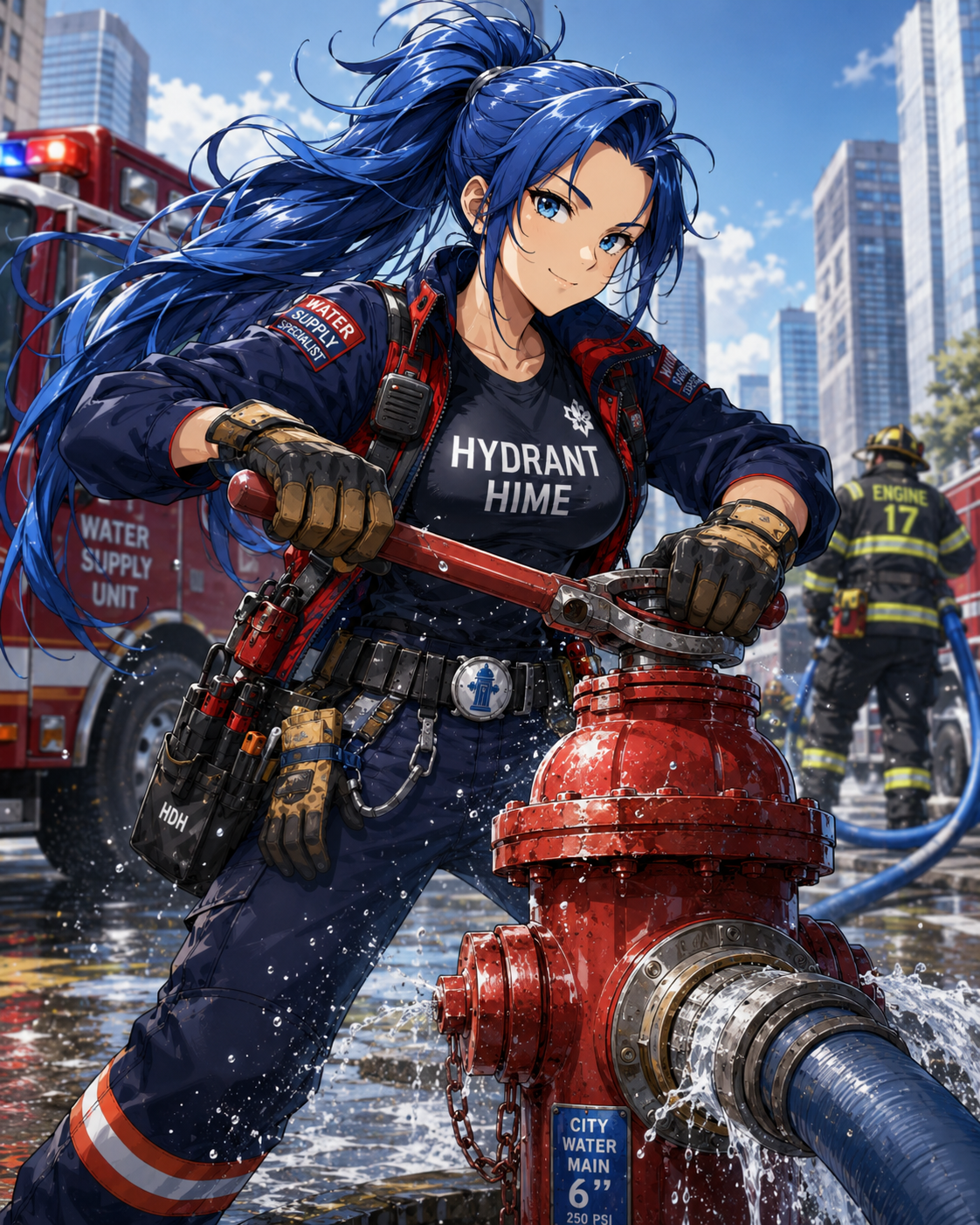
Hydrant Hime
The water-supply expert who knows mains, pressure, hydrants, and hose flow.
Meet Hydrant Hime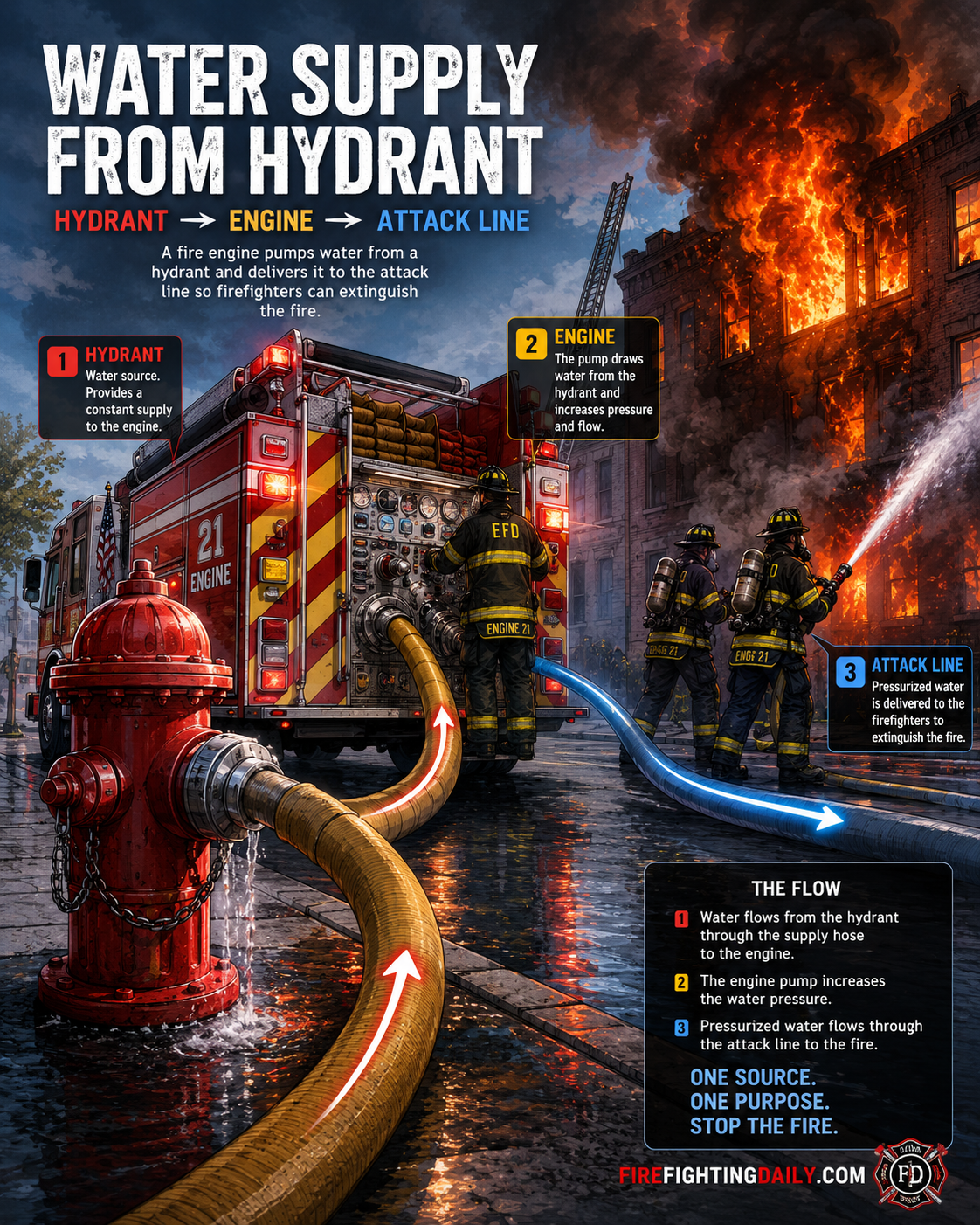
Supply chain
Hydrant to hose. Hose to engine. Engine to attack line. Attack line to crew.
Fire hydrantsEngine tanks and water sources
Engines often carry water in an onboard tank. That tank can provide fast initial water while crews establish a more reliable supply. In rural areas or wildland settings, water may come from tenders, ponds, tanks, drafting points, relay pumping, or portable water systems.
Water supply strategy depends on location. A city block with hydrants is different from a hillside road, a rural driveway, a canyon, or an off-grid facility.
Why water cools fire
Water absorbs heat. When applied appropriately, it can cool burning material, cool hot gases, reduce radiant heat, and slow fire growth. But water must reach the right place, in the right amount, with the right tactics. Some fire types, such as certain electrical, grease, chemical, or battery fires, require special caution and may not be solved by ordinary water use alone.
Important public safety note
Do not use water on a grease fire. Do not fight an electrical fire unless it is safe, small, contained, and you have the right extinguisher and a clear escape route. When in doubt, evacuate and call emergency services.
Hose movement in buildings
Moving a hose through a building is hard work. Corners, stairs, furniture, doors, fences, walls, and debris can all snag the line. Crews may stage hose at entry points, flake hose around corners, call for slack, and keep the line moving while staying oriented.
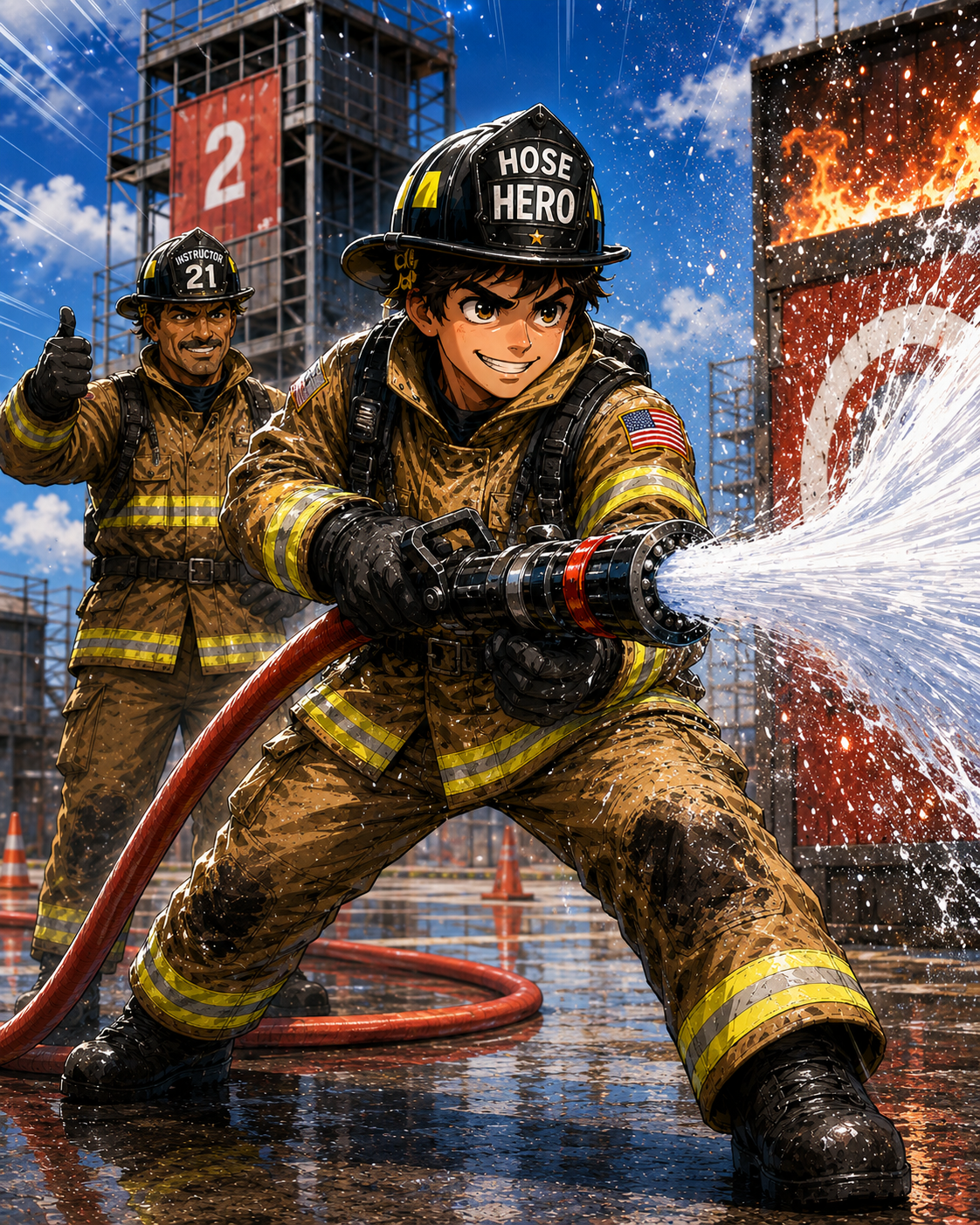
Technique beats panic.
Hose Hero learns that water is powerful only when the crew can deliver it correctly.
Water and wildfire
In wildland firefighting, water may be used from engines, hose lays, aircraft, portable tanks, pumps, or handline support. But wildland fire control also depends heavily on fuel breaks, terrain, weather, structure defense, evacuation, and crew safety. Water alone may not stop a wind-driven wildfire.
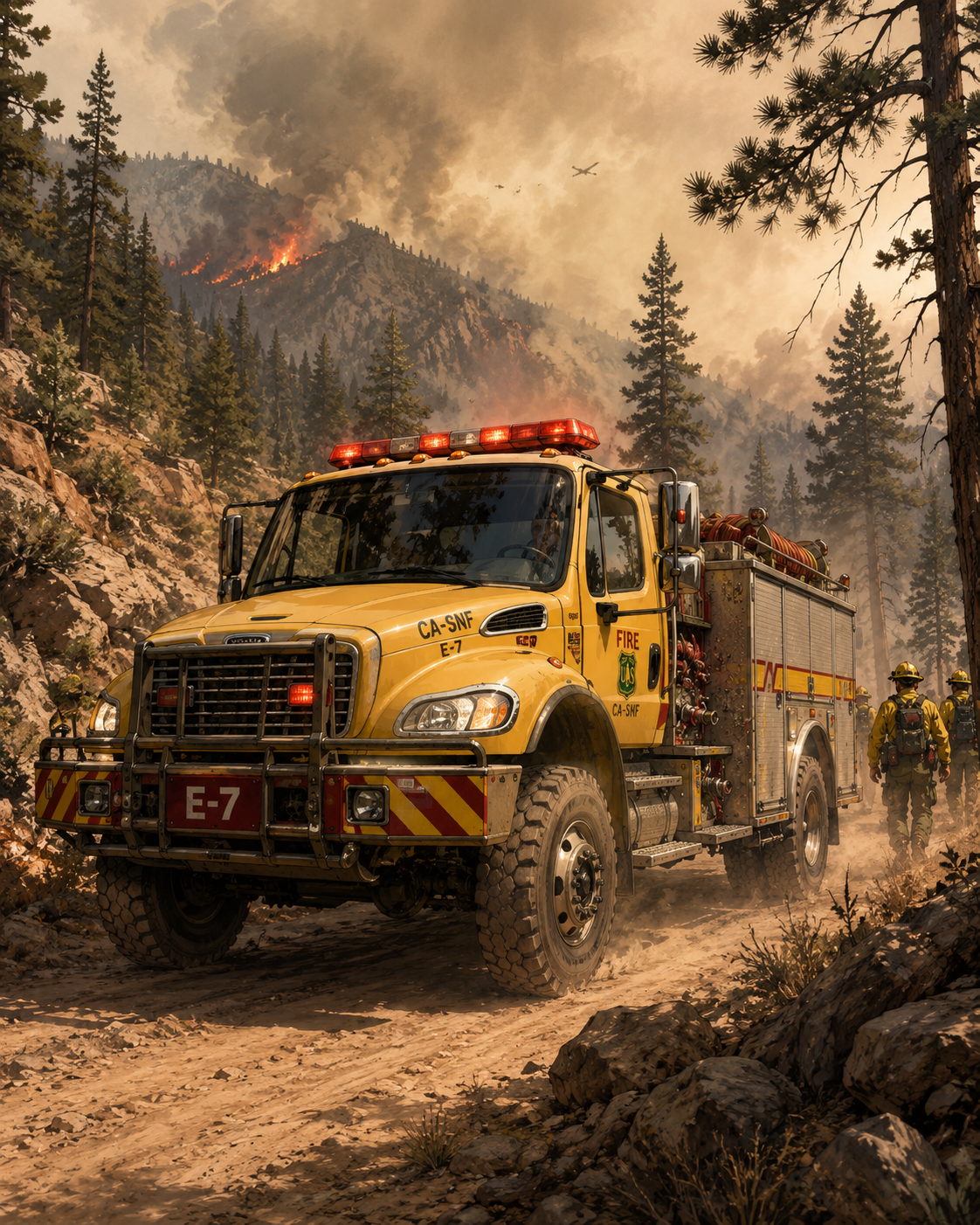
Wildland engines
Brush engines and wildland rigs bring water and hose into rugged areas.
Wildfire basics
Fireline work
Crews combine water, tools, line construction, terrain, and weather awareness.
Learn moreWhy hydrants and access matter to homeowners
The public can help by keeping hydrants visible, clear of brush, snow, trash, landscaping, and parked cars. Fire lanes, driveways, gates, and address numbers matter too. Firefighters need quick access to water, buildings, and safe working space.
Hydrant Hime’s reminder
“The best water supply is the one firefighters can find, reach, connect, and use without delay.”
Episode connection
Episode 2 follows Hose Hero learning pressure, nozzle reaction, stream patterns, and teamwork. Episode 5 brings in Hydrant Hime to explain city water supply, hydrants, mains, and steady water for the engine.
Captain Ember’s summary
Fire hoses and water are not just equipment. They are a system of supply, pressure, flow, teamwork, nozzle control, and tactical timing. The goal is not simply to spray water. The goal is to put the right water in the right place while keeping the crew safe.