The big idea
Gear does not make firefighters invincible.
Firefighter gear is designed to reduce risk, not erase it. It protects against heat, sharp edges, falling debris, smoke exposure, impact, water, weather, and visibility problems. But fire conditions can still become deadly. Gear works best when it is paired with training, communication, command, and good decisions.
That is why firefighters do not simply “suit up and charge in.” They check conditions, communicate, use tools, protect escape routes, monitor air, and work as a crew.
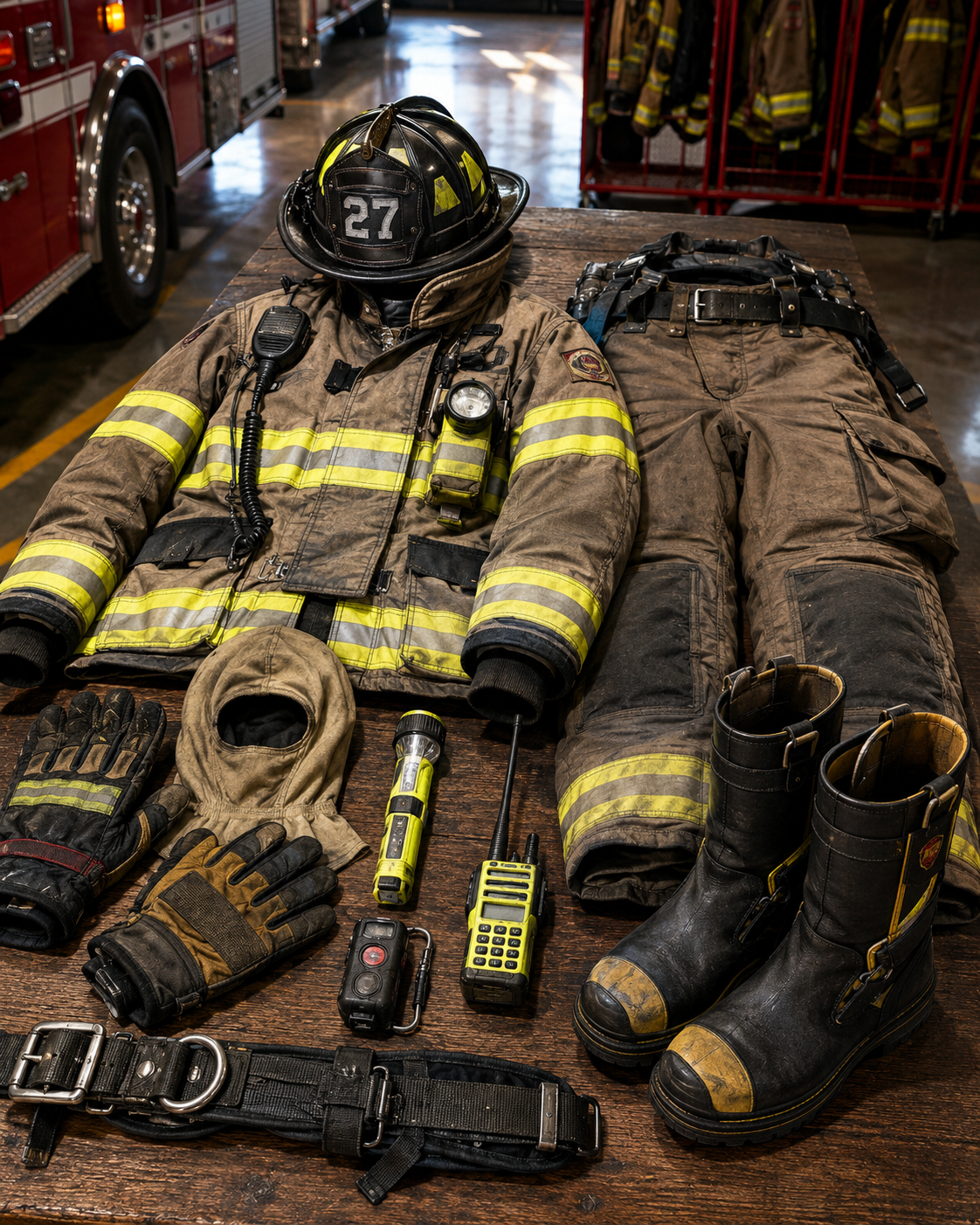
Every piece has a purpose.
Coat, pants, hood, helmet, gloves, boots, air pack, radio, and tools work together as a safety system.
Turnout gear: coat and pants
Turnout gear, sometimes called structural firefighting gear, usually includes a protective coat and pants. The layers are designed to help protect against heat, flame exposure, moisture, abrasion, and physical hazards. Reflective trim helps firefighters remain more visible in dark or smoky conditions.
Turnout gear is heavy and hot. It can protect firefighters from many hazards, but it can also trap body heat. Crews must manage fatigue, heat stress, hydration, and air supply.
Captain Ember says:
“Gear buys time. Training decides how that time is used.”
Helmet, hood, gloves, and boots
The helmet helps protect the head from impact, falling debris, heat exposure, and water. The hood protects areas around the face, ears, and neck not covered by the coat or helmet. Gloves protect the hands while still allowing crews to grip tools, hoses, ladders, and radios. Boots protect feet and lower legs from heat, water, punctures, debris, and rough surfaces.
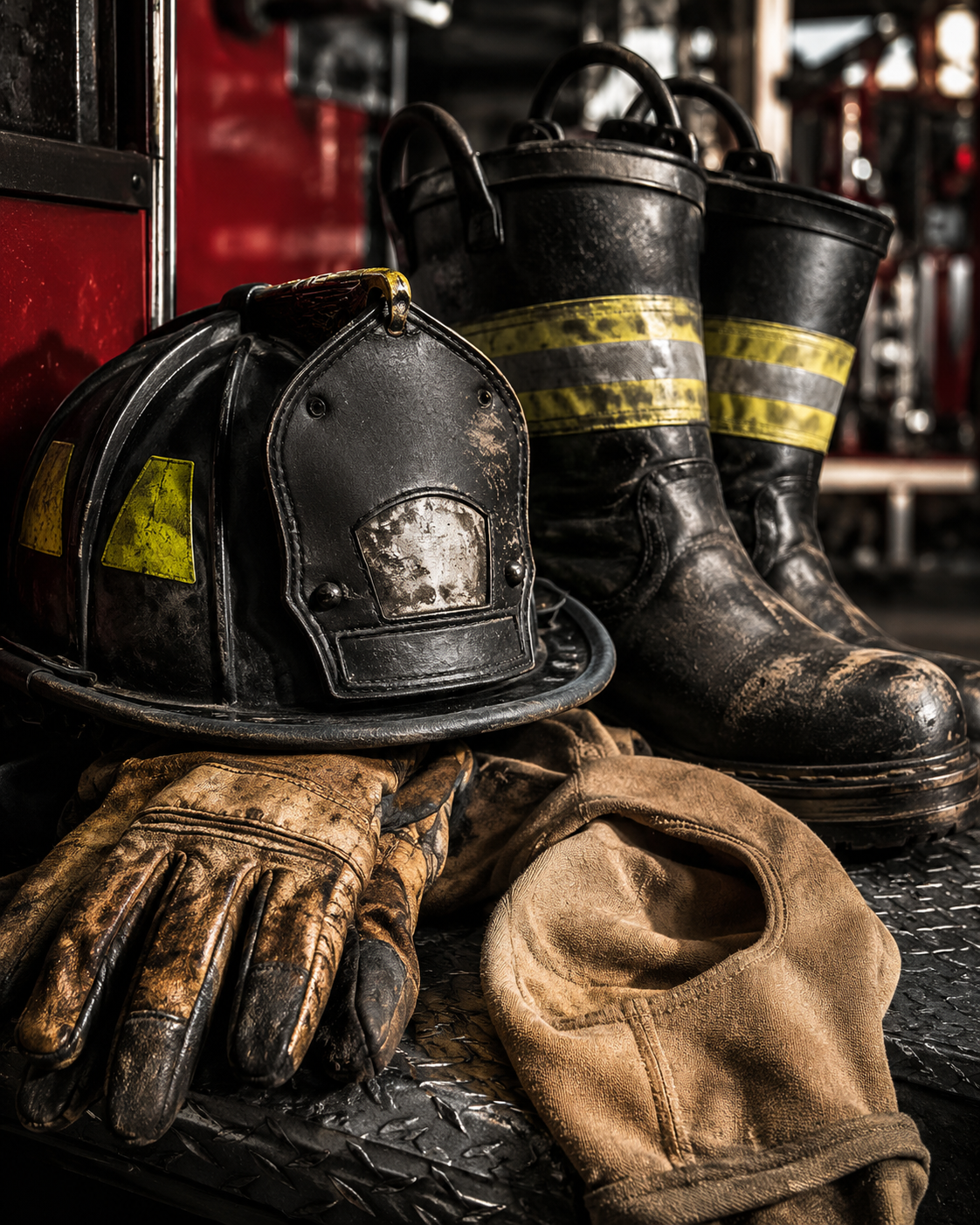
The small pieces matter.
Hands, feet, head, neck, and face need protection because firefighting is physical, hot, wet, sharp, and unpredictable.
SCBA: breathing air in dangerous atmospheres
SCBA stands for self-contained breathing apparatus. It allows firefighters to carry breathable air when smoke, toxic gases, heat, or low oxygen make the atmosphere unsafe. The system includes a cylinder, harness, regulator, mask, pressure indicators, and warning devices.
SCBA is one of the most important pieces of structure firefighting equipment. It also requires discipline. Firefighters monitor air supply, crew location, work time, exit routes, and emergency procedures.
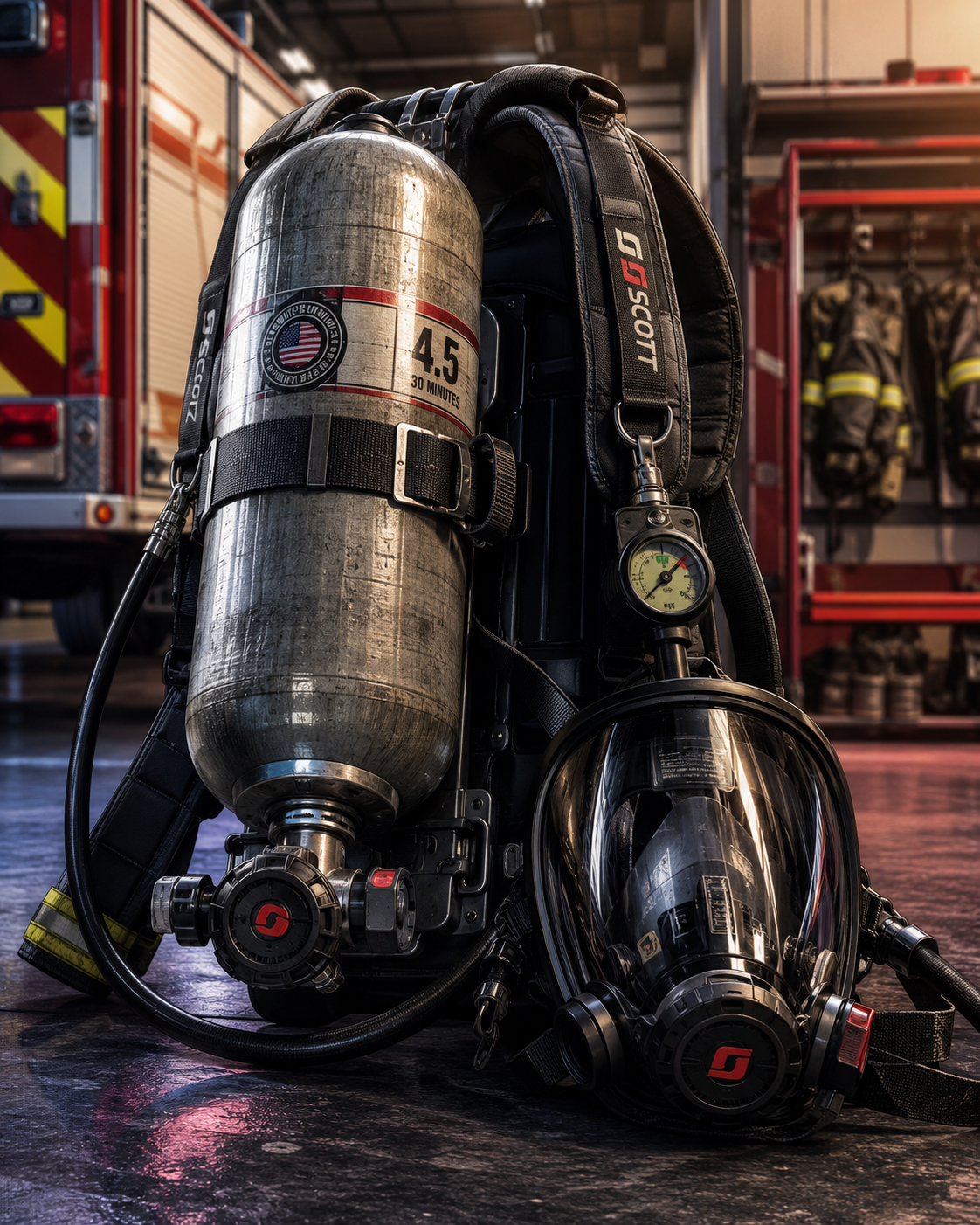
Air supply
SCBA lets firefighters breathe in smoke-filled or contaminated atmospheres for a limited time.
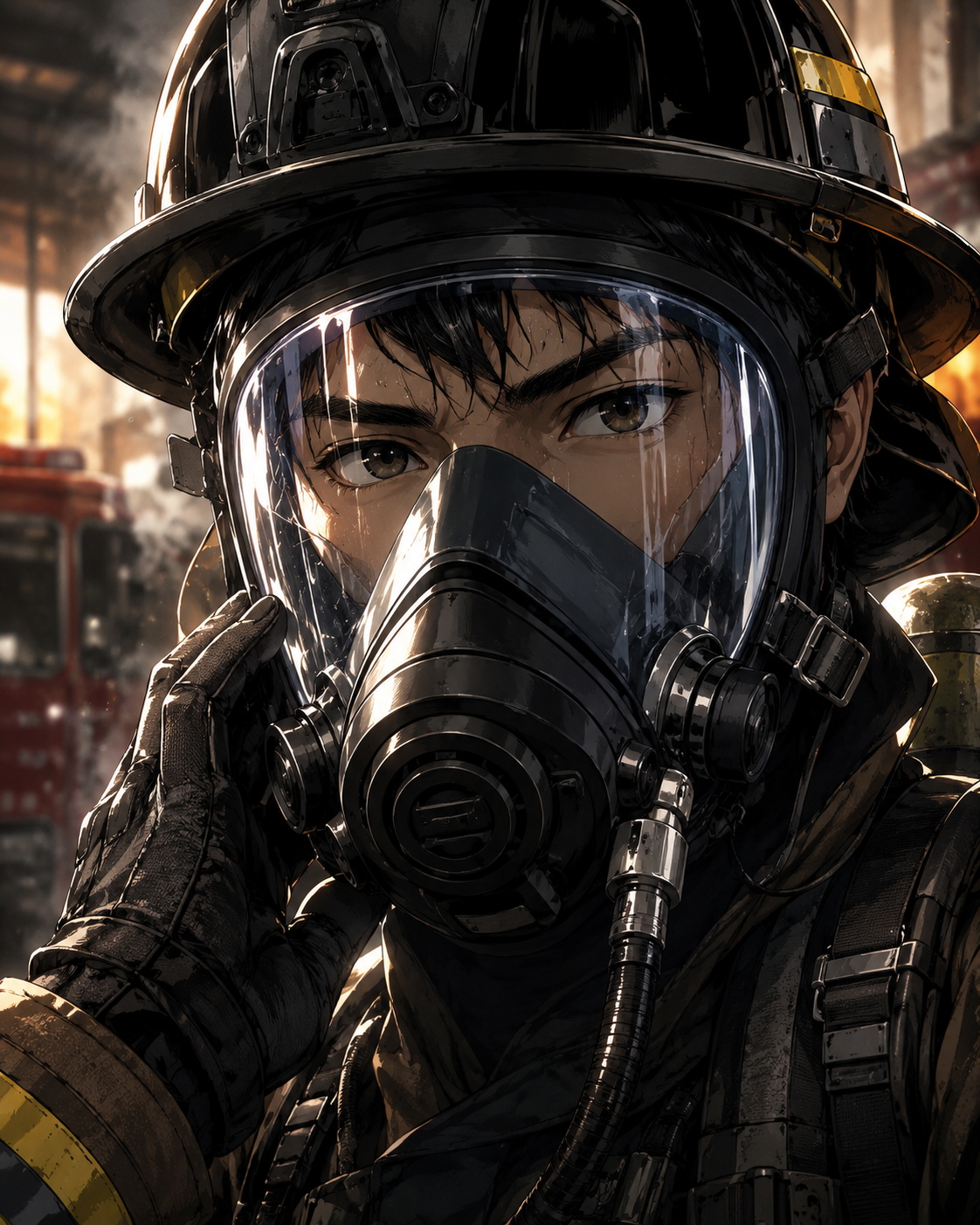
Facepiece
The mask seals to the face and connects the firefighter to the breathing-air system.
Radios and communication
Firefighter radios are essential gear. Crews use radio communication to coordinate entry, report conditions, request water, announce hazards, track location, call for help, and receive orders from command.
In smoke, noise, heat, and confusion, clear communication can be as important as any tool on the engine.
Hand tools
Firefighters use hand tools for access, search, overhaul, ventilation, rescue, and control. Common tools may include axes, halligans, hooks, pike poles, saws, bolt cutters, forcible-entry tools, cribbing, salvage covers, and thermal imaging cameras.
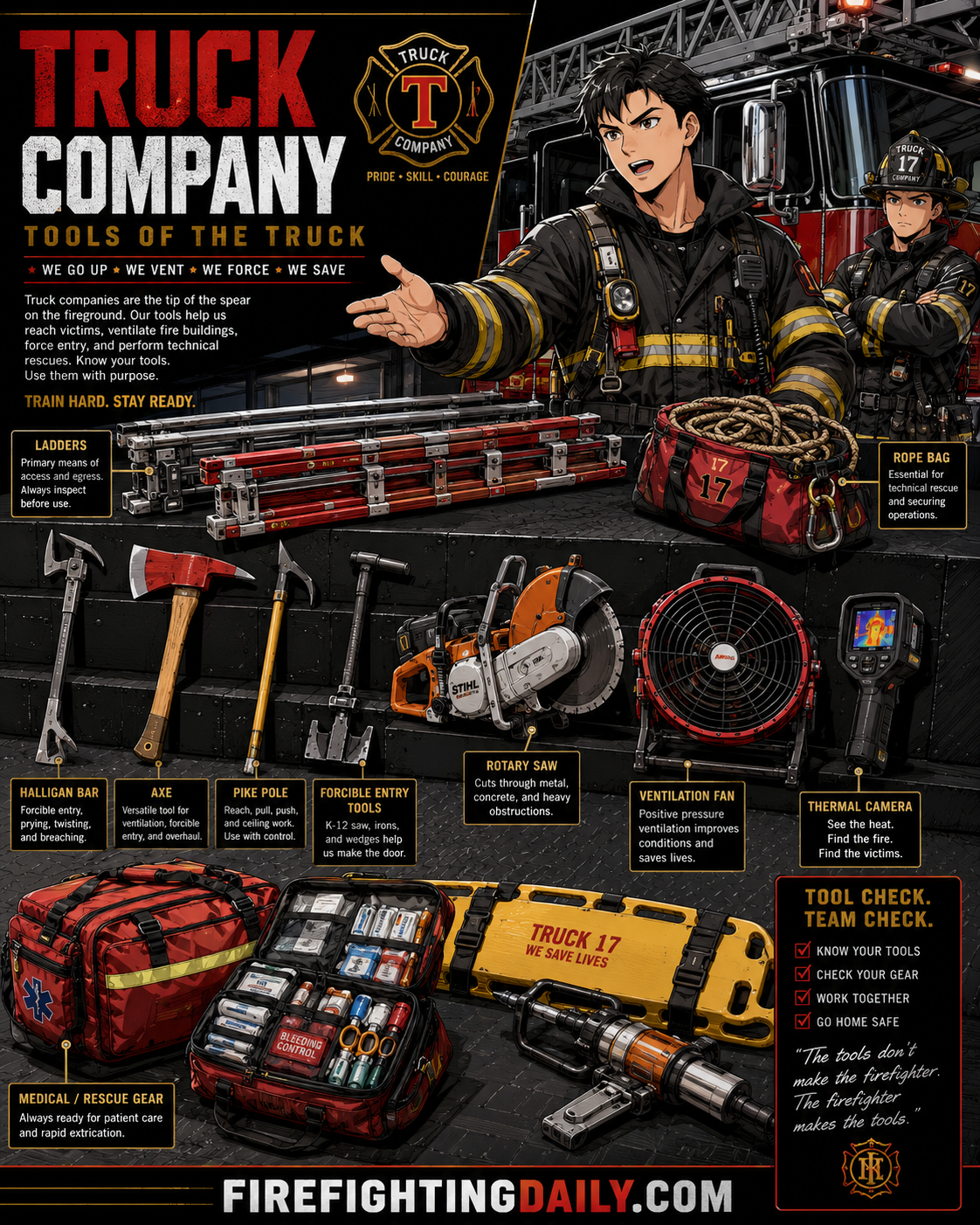
Tools solve problems.
Opening a door, checking a wall, cutting access, searching a space, or moving debris all require the right tool and training.
Hose, nozzles, and water gear
Water delivery is a system: hose, couplings, nozzles, hydrants, pump panels, valves, gauges, and engine operators. Hose lines must be advanced, positioned, charged, controlled, and protected. Nozzles can create different stream patterns depending on the situation and department practice.
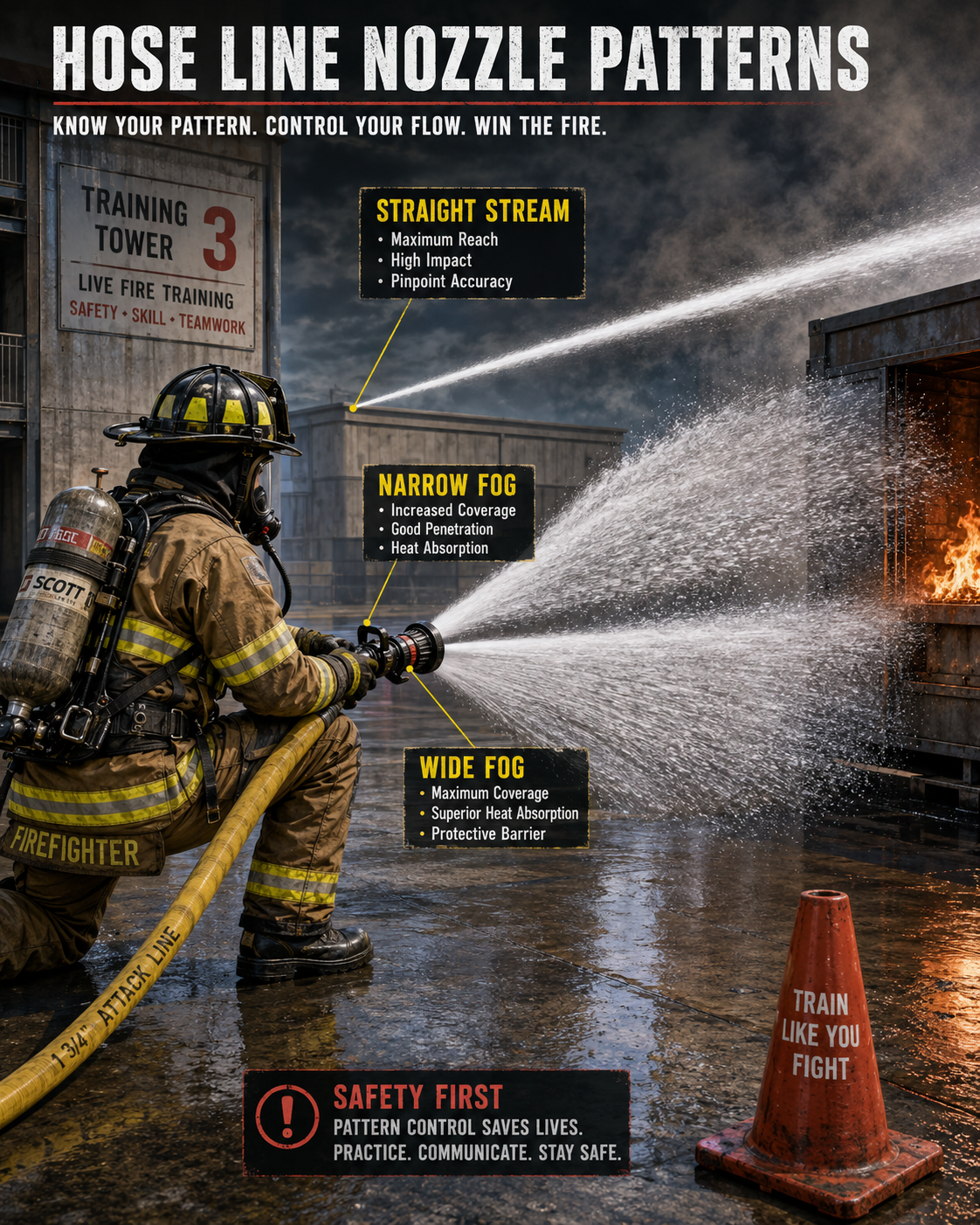
Nozzle patterns
Streams are selected for the fire problem, crew tactics, and department procedure.
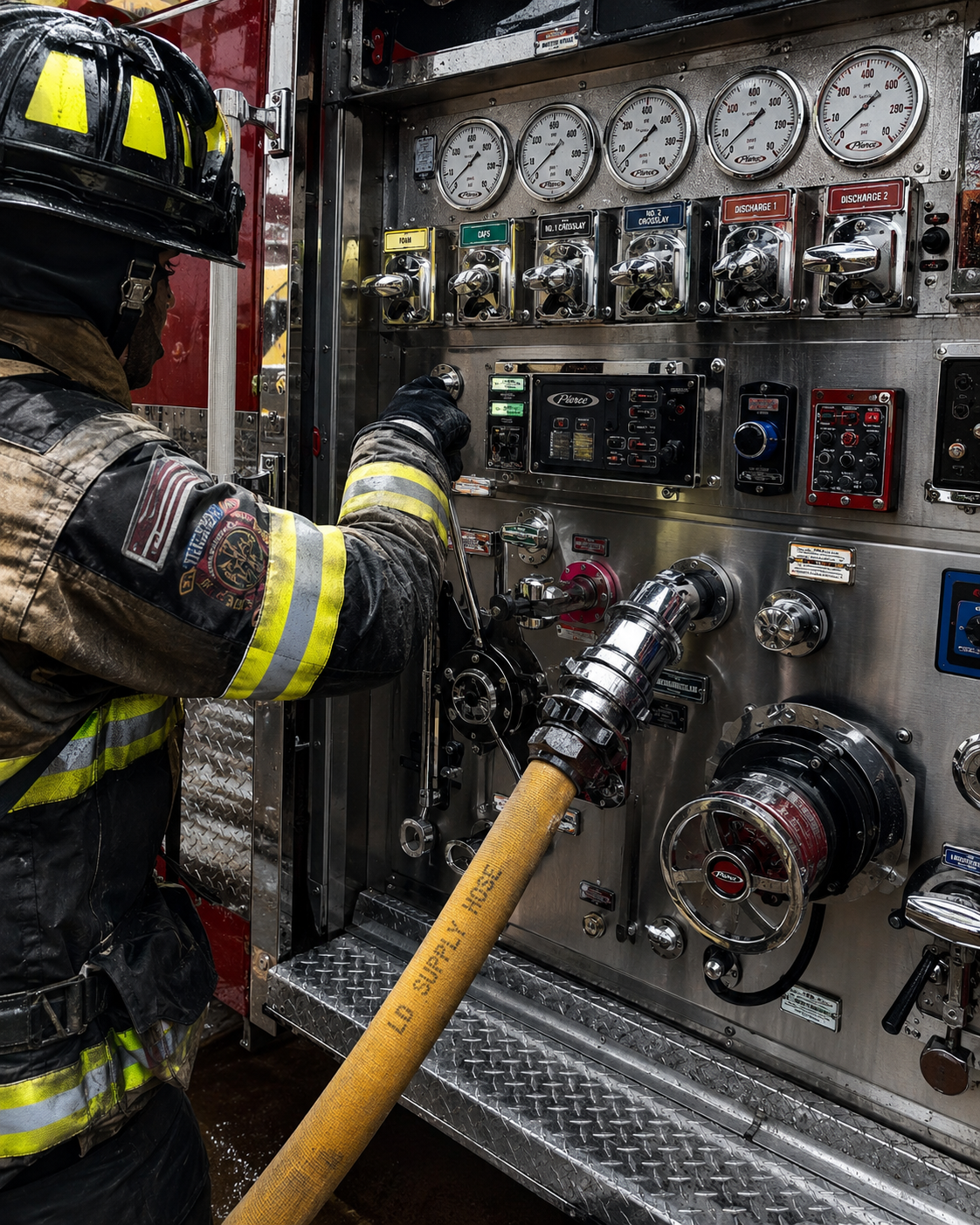
Pump panel
Engine operators manage water pressure, flow, supply, and hose lines.
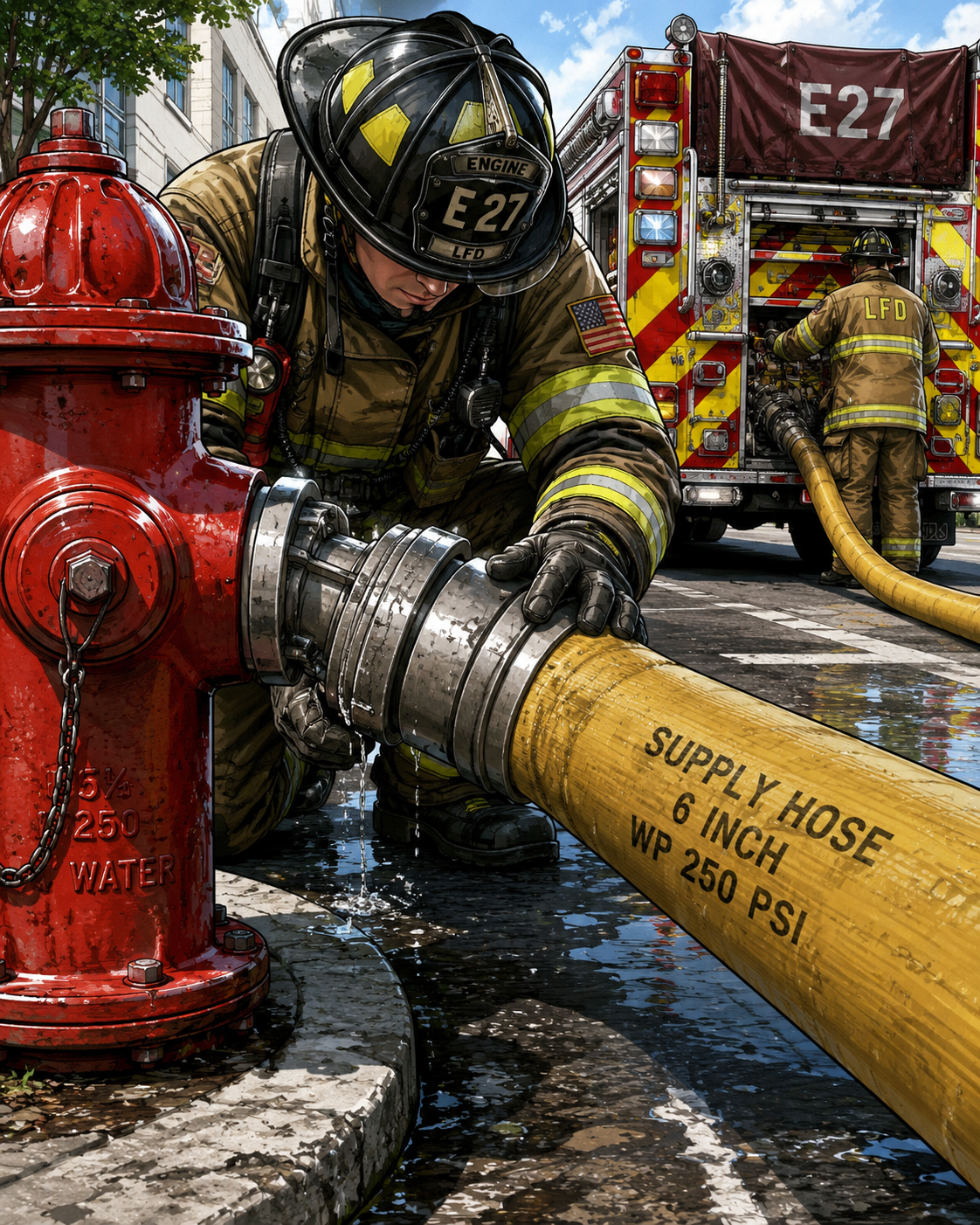
Water supply
Hydrants and large-diameter hose help feed the engine with enough water.
Engine gear vs. truck gear
An engine company often focuses on water, hose lines, pump operations, and fire attack. A truck company often carries ladders, forcible-entry tools, ventilation equipment, rescue tools, and equipment for access and search. Department staffing and terminology vary, but the engine/truck distinction helps explain how different tools support different tasks.
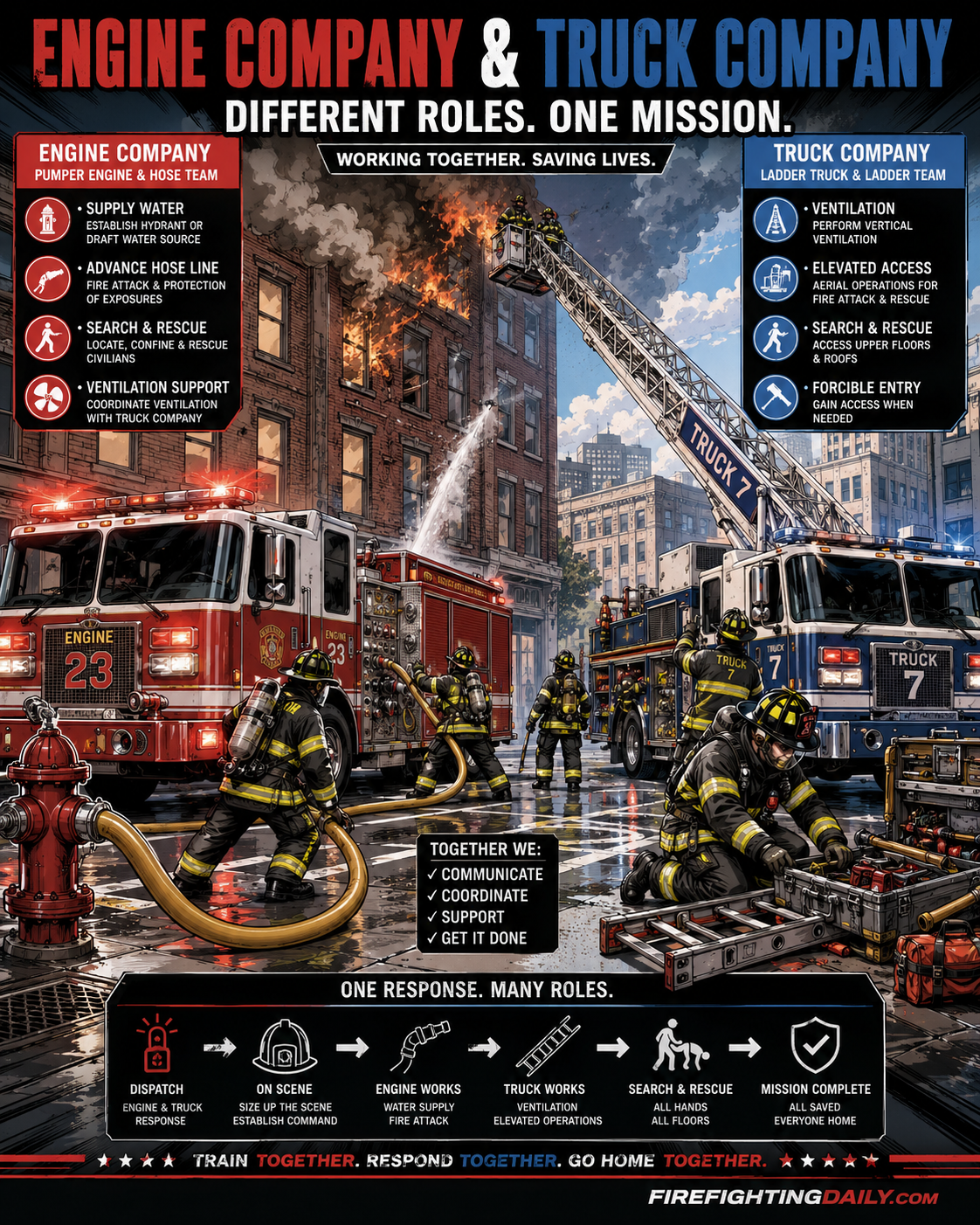
Different rigs, shared mission.
Engines, trucks, and specialty units combine water, access, rescue, command, and support.
Wildland gear is different
Wildland firefighting gear is designed for mobility, heat, terrain, and long-duration outdoor work. Wildland firefighters may use lighter protective clothing, helmets, gloves, goggles, shelters, packs, hand tools, radios, chainsaws, hose packs, and water-handling equipment.
Wildland gear is not the same as structural gear because the mission and environment are different. Crews may hike, cut line, patrol, mop up, defend structures, or work around engines, dozers, aircraft, and command posts.
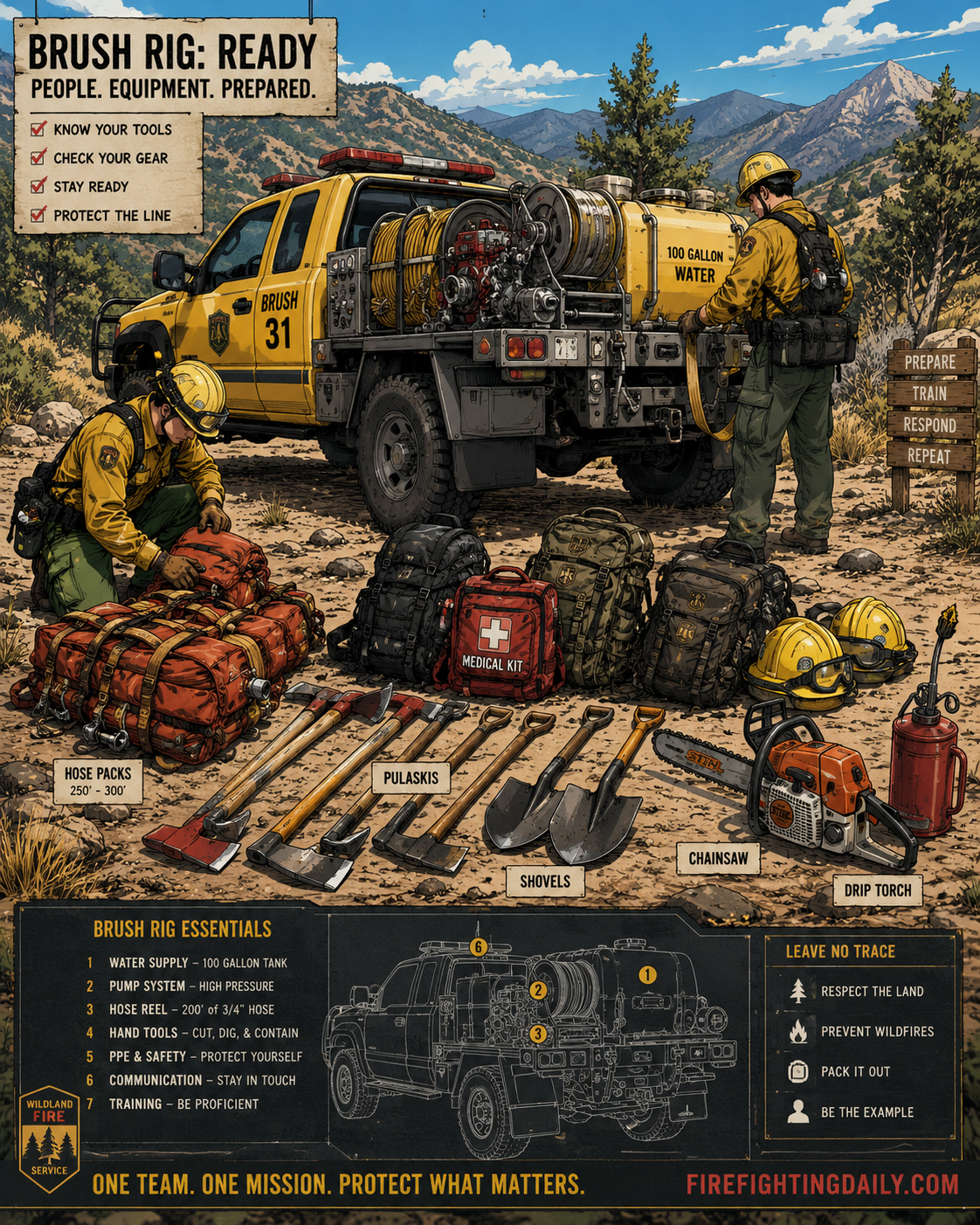
Brush rig equipment
Wildland engines carry tools and hose for off-road fireline support.
Wildfire basics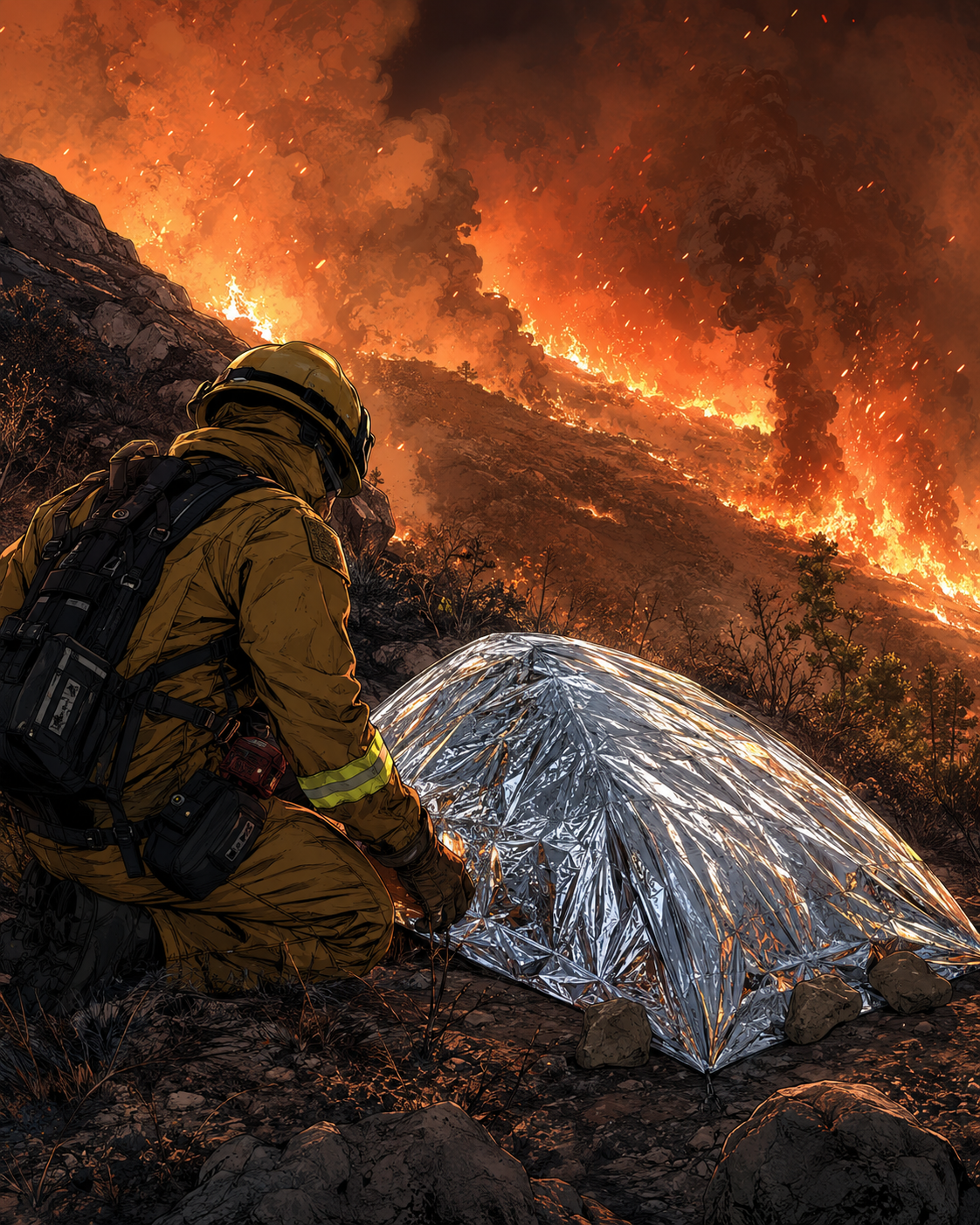
Fire shelter concept
Wildland safety equipment is tied to formal training, escape routes, and last-resort procedures.
Learn wildlandGear checks and readiness
Firefighters inspect, clean, maintain, and stage gear so it is ready before the alarm. Gear readiness is part of the job. Missing gloves, low air, damaged straps, unreadable labels, weak batteries, dirty masks, or misplaced tools can slow the response or create danger.
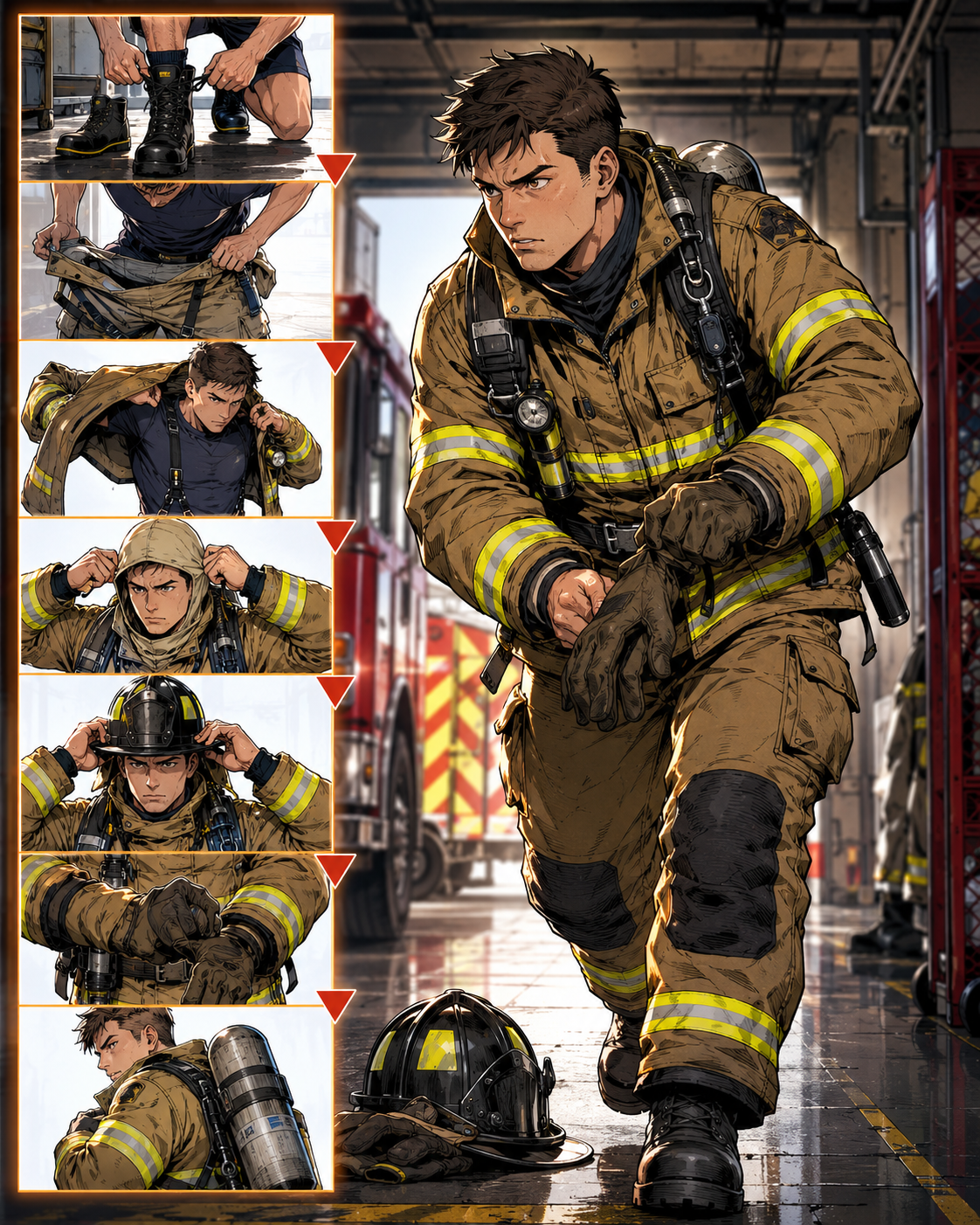
Speed comes from practice.
Firefighters train to don gear quickly and correctly because readiness starts before arrival.
Why gear matters to the public
Understanding firefighter gear helps the public understand why scenes are controlled, why firefighters may need time to set up, why smoke is not safe to enter, why hydrants and access paths must remain clear, and why fire lanes matter.
Public safety reminders
- Do not enter smoke or fire to retrieve belongings.
- Keep hydrants, fire lanes, and access roads clear.
- Make sure address numbers are visible from the street.
- For solar and battery systems, keep shutdown labels and access areas clear.
- Follow evacuation orders and stay out of active incident areas.
Hose Hero’s lesson
Hose Hero learns that gear is not about looking brave. It is about doing the job safely: protecting the body, breathing clean air, communicating with the crew, controlling water, and respecting the fire.
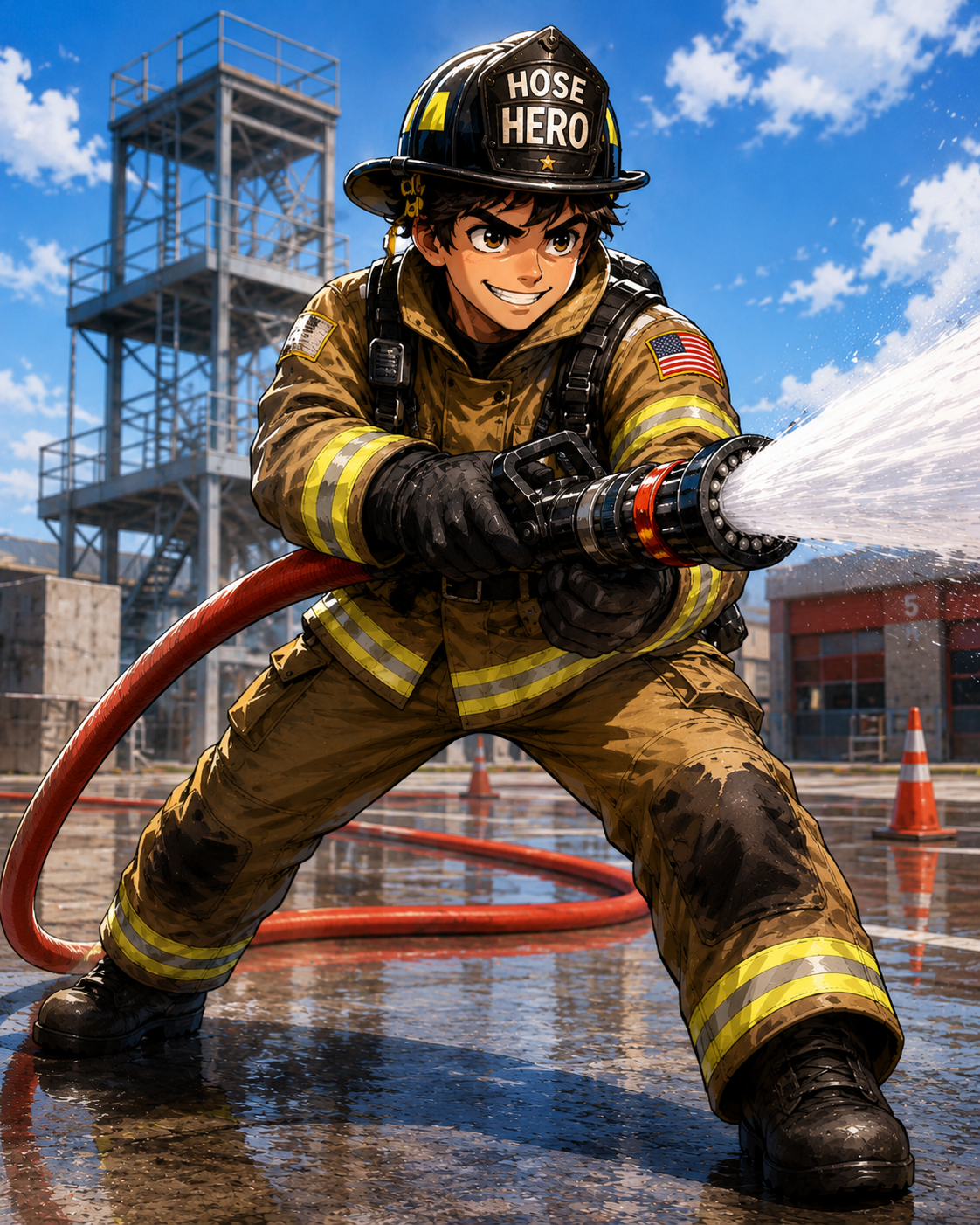
Tools need training.
A nozzle, radio, mask, ladder, or axe becomes useful only when a trained firefighter knows how and when to use it.