The big idea
Alarms buy the one thing fire takes away: time.
Fire can grow quickly, and smoke can spread before flames are visible. A working alarm gives people a chance to act before hallways fill with smoke, before visibility drops, and before confusion takes over.
Fire alarms and smoke alarms do not put out fires. Their job is to warn people early enough to escape.
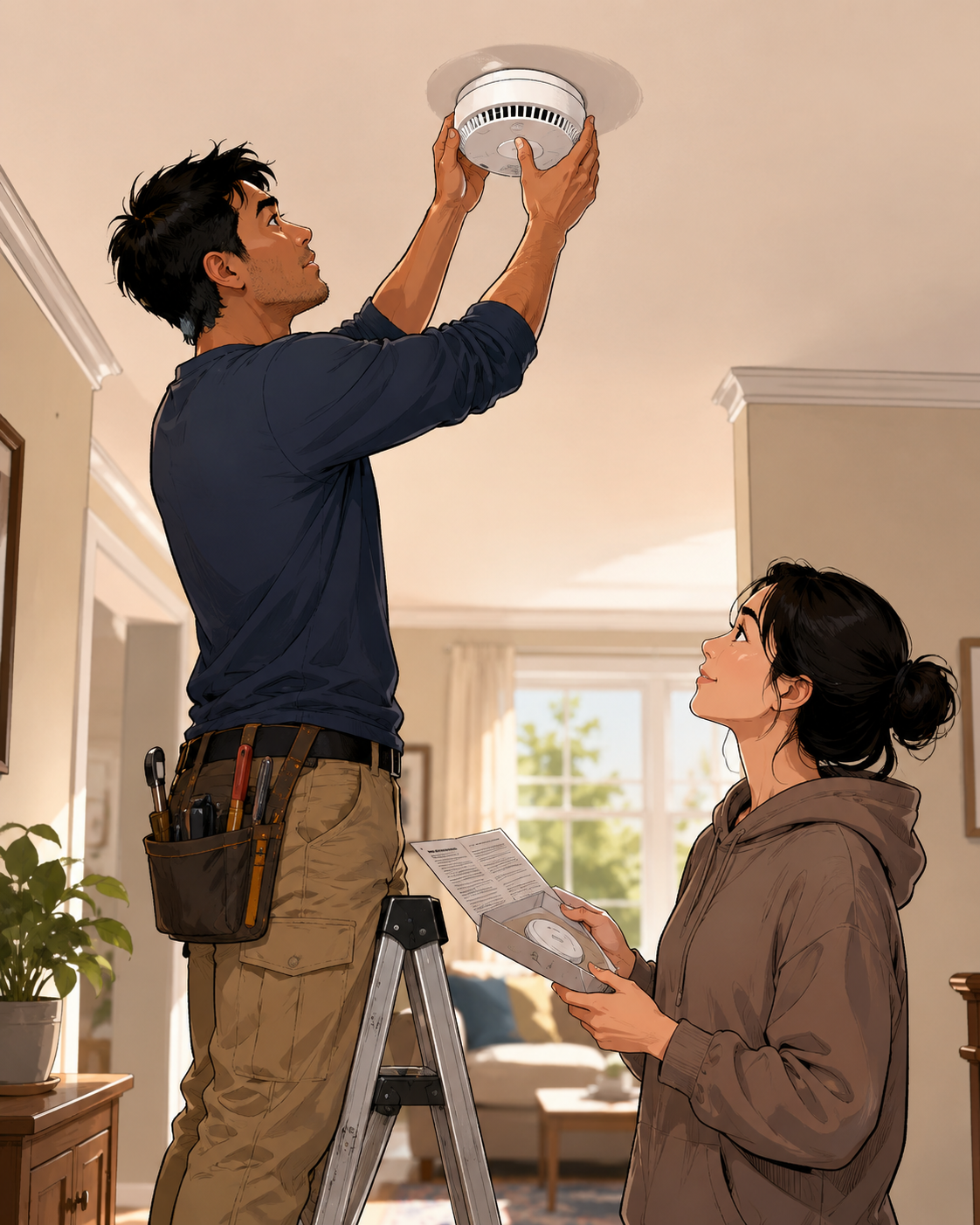
Early warning changes the timeline.
The alarm’s job is not to explain the emergency. Its job is to make you move.
Smoke alarms vs. fire alarm systems
In everyday conversation, people may say “fire alarm” for several devices. A home smoke alarm detects smoke and sounds a local alarm. Larger buildings may have fire alarm systems with pull stations, horns, strobes, detectors, panels, monitoring, sprinklers, or notification devices.
The details vary by building and local requirements, but the public-safety message is the same: take alarms seriously and follow the escape plan.
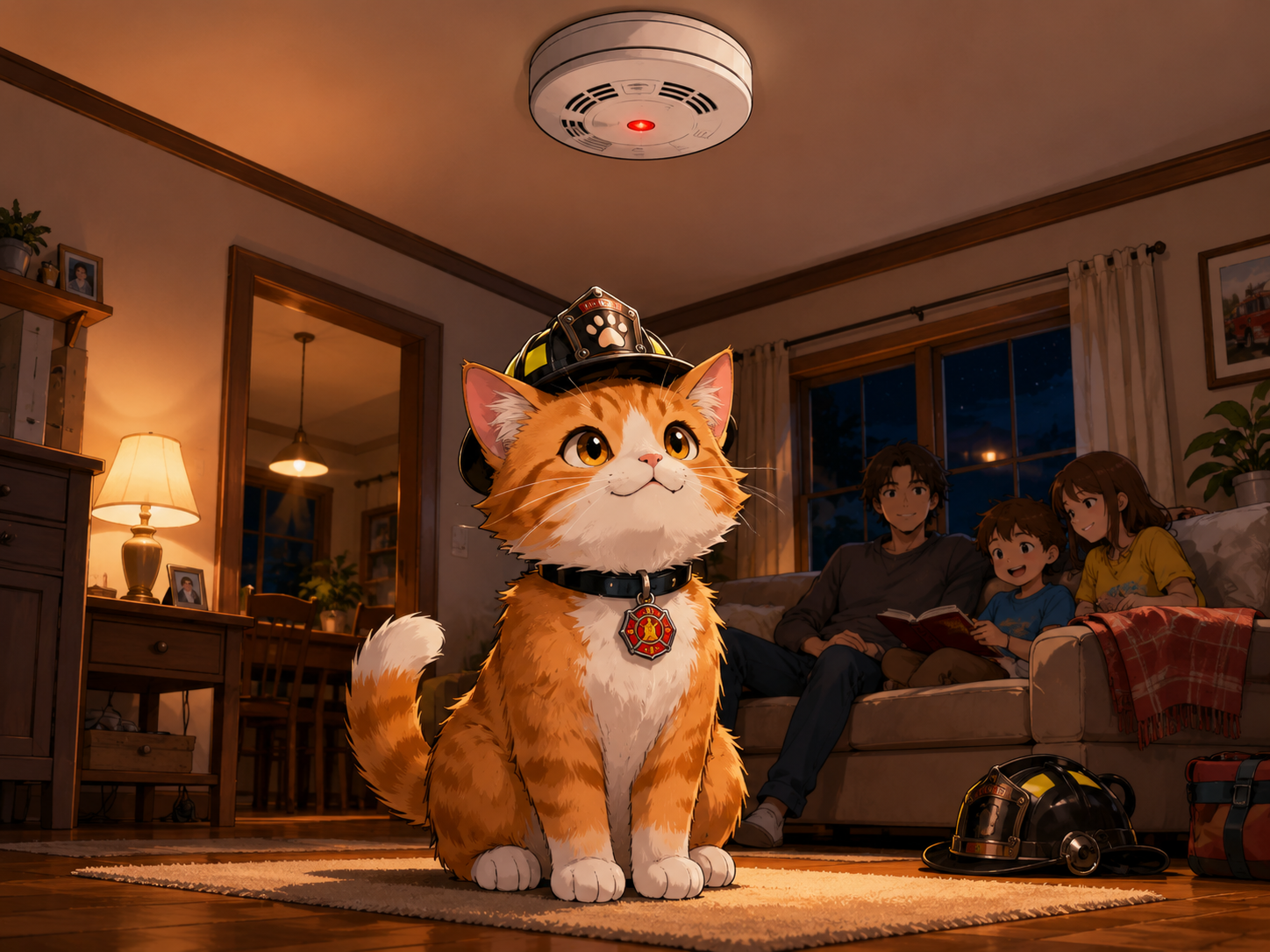
Home smoke alarm
A small device with a big job: warn people before smoke takes over escape routes.
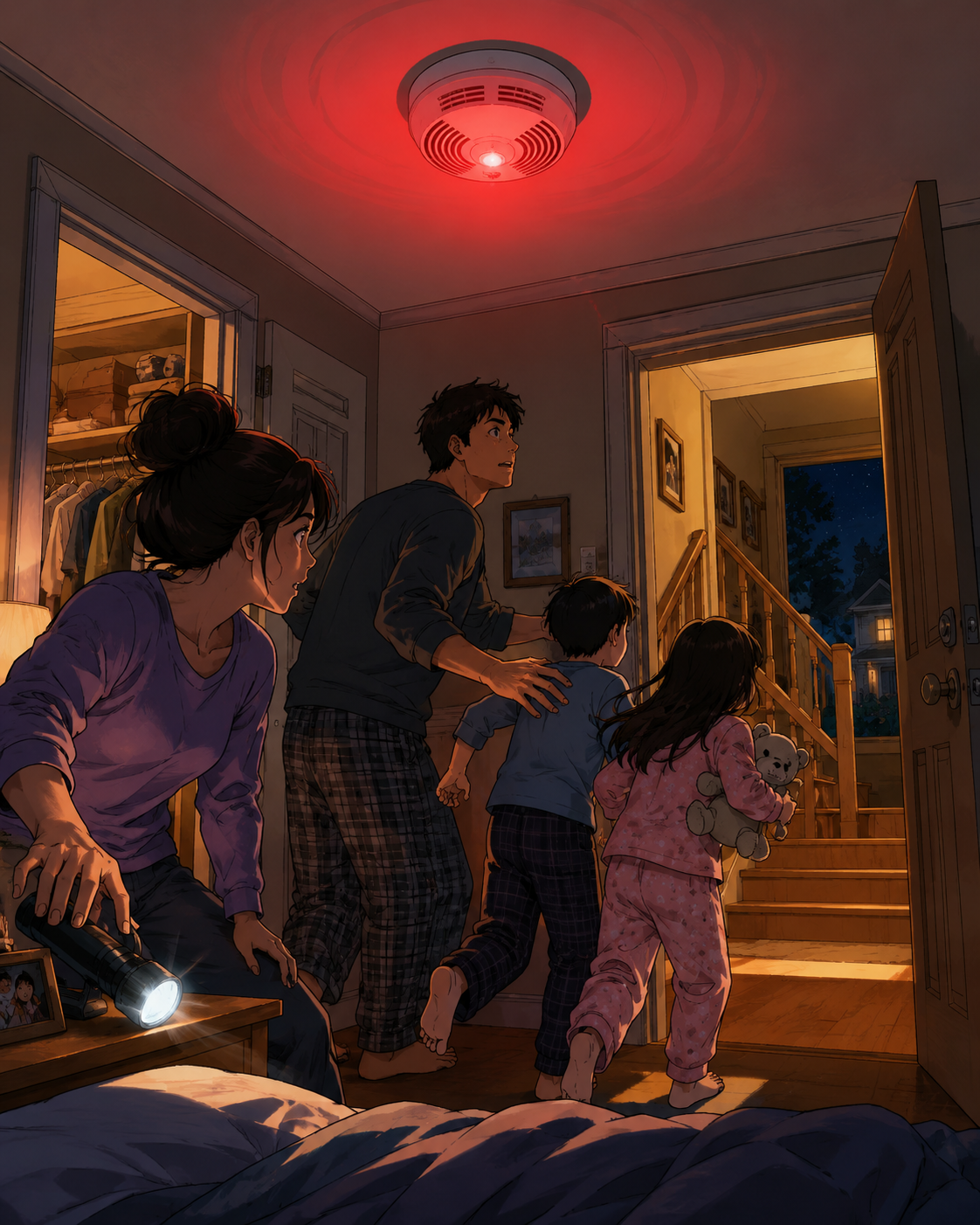
Building alarm
Commercial and public buildings may use larger notification and detection systems.
Why smoke alarms matter at night
Night fires are especially dangerous because people may be asleep. Smoke can spread silently. A working alarm can wake people early enough to leave. That is why bedroom areas, hallways, sleeping levels, and whole-home planning matter.
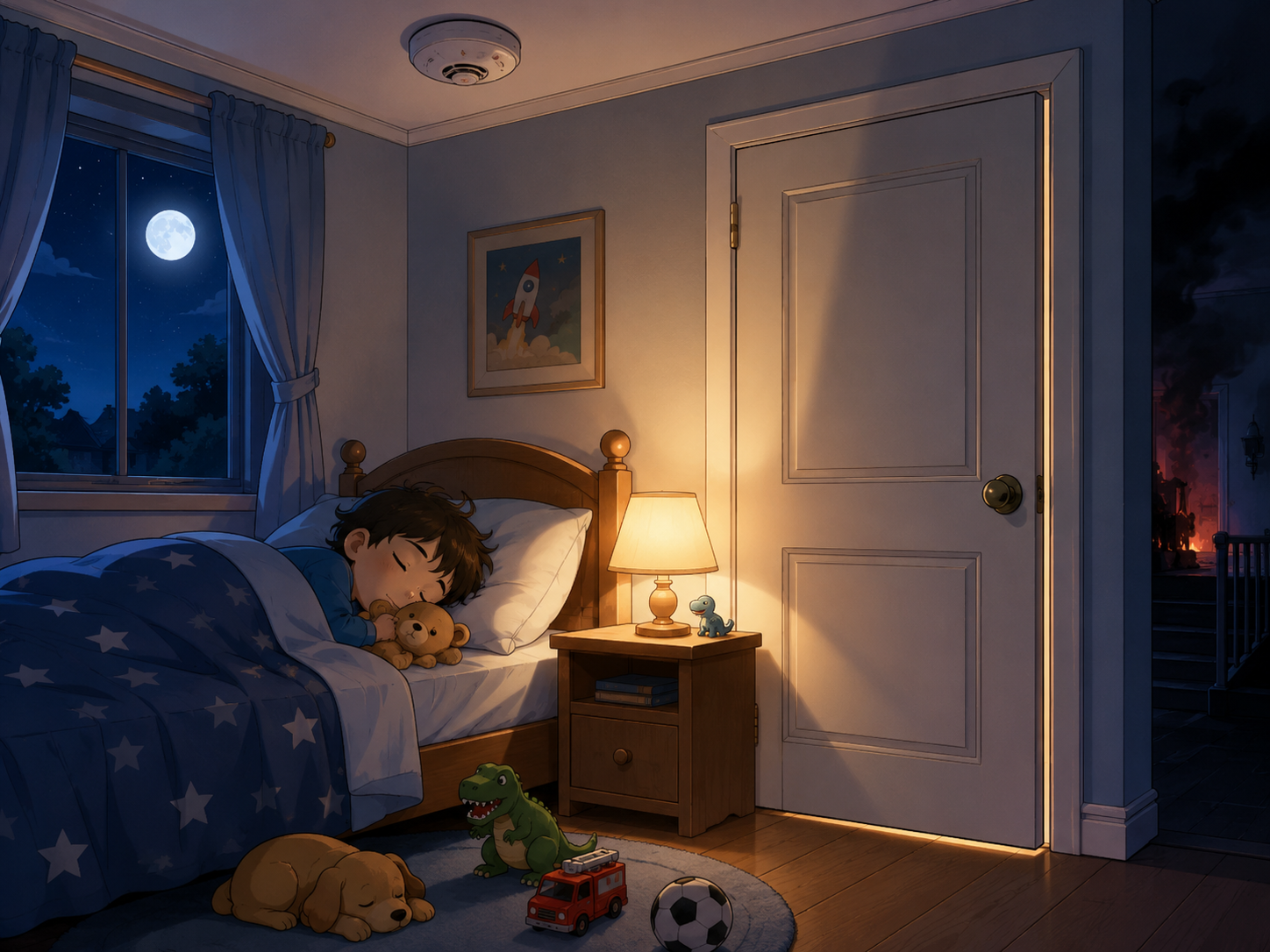
Night safety is escape-time safety.
Working alarms, closed doors, and a known escape plan can work together.
Testing and maintenance
Alarms need care. Batteries, sensors, age, dust, paint, damage, and incorrect placement can all affect performance. Follow the manufacturer’s instructions and local fire authority guidance for testing, cleaning, battery replacement, and replacement age.
Alarm maintenance reminders
- Test alarms according to the manufacturer’s instructions.
- Replace batteries or units as directed.
- Do not paint over alarms.
- Keep alarms free from dust and obstruction.
- Replace old alarms according to manufacturer guidance.
- Use alarms appropriate for the location and hazard.
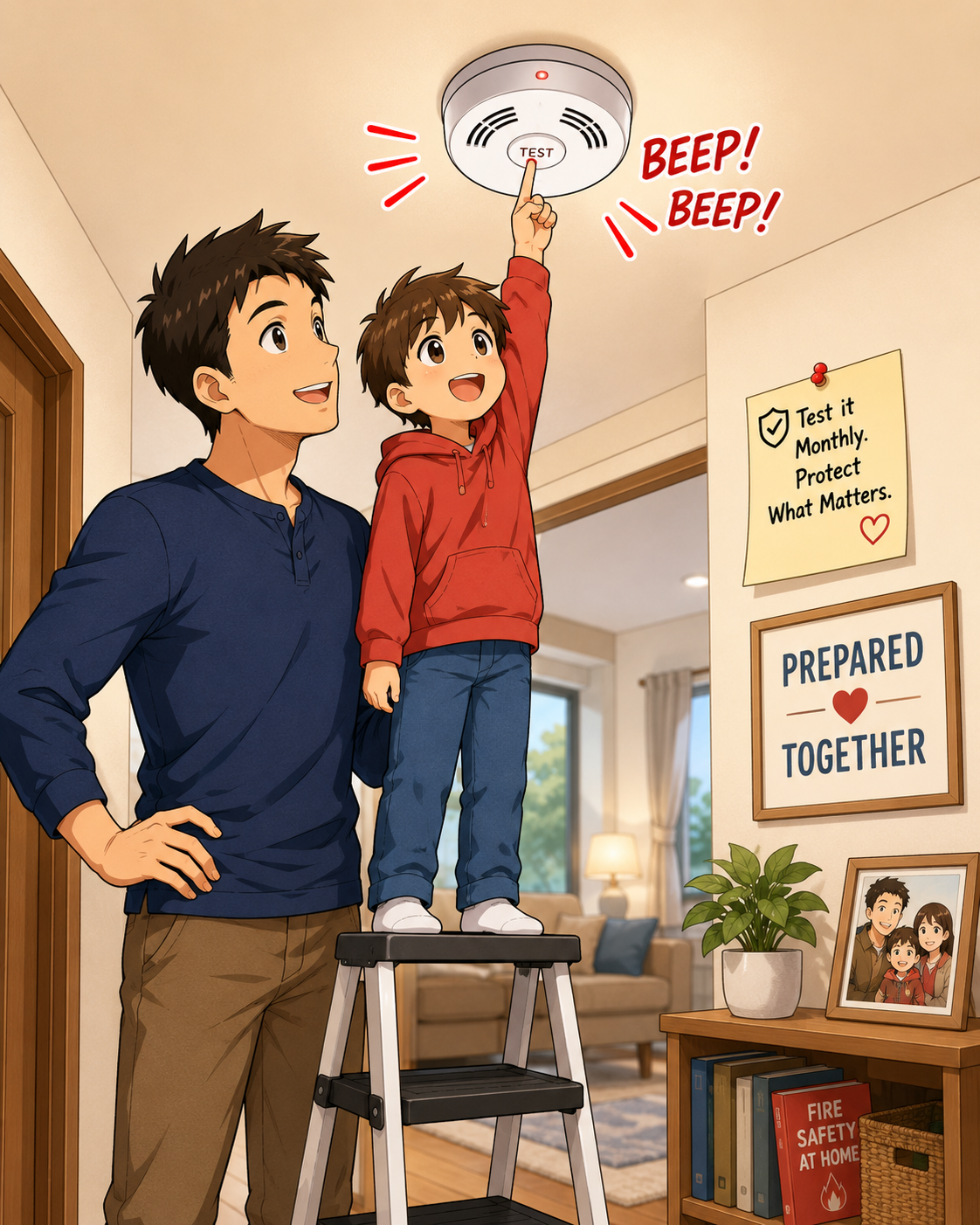
Testing turns hope into habit.
An alarm that has not been tested is a question mark. A tested alarm is part of the plan.
The alarm is only step one
An alarm warns you. The escape plan tells you what to do next. Families should know exits, backup exits when possible, an outside meeting place, and the rule that nobody goes back inside.

Plan exits
Know where to go before smoke or panic makes decisions harder.
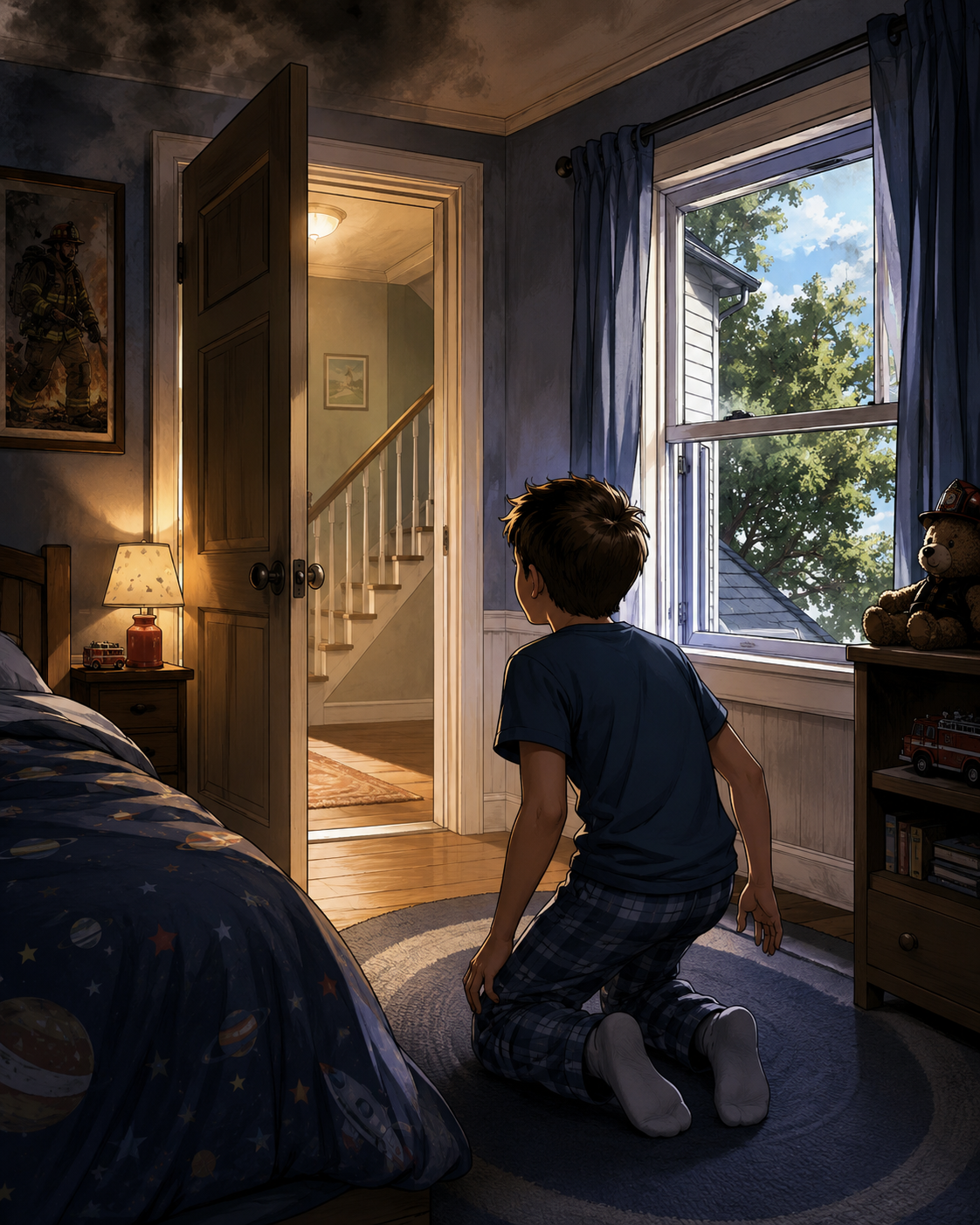
Two ways out
When possible, identify a main exit and a backup exit.

Meet outside
A meeting place helps everyone know who is safe.
What to do when an alarm sounds
If an alarm sounds, do not waste time investigating a possible fire. Alert others as you leave, follow the plan, close doors behind you if safe, meet outside, and call emergency services from outside. Never go back inside for belongings, pets, phones, or documents.
Rescue Cat says:
“The alarm is the starting bell. Outside is the finish line.”
Smoke changes the escape
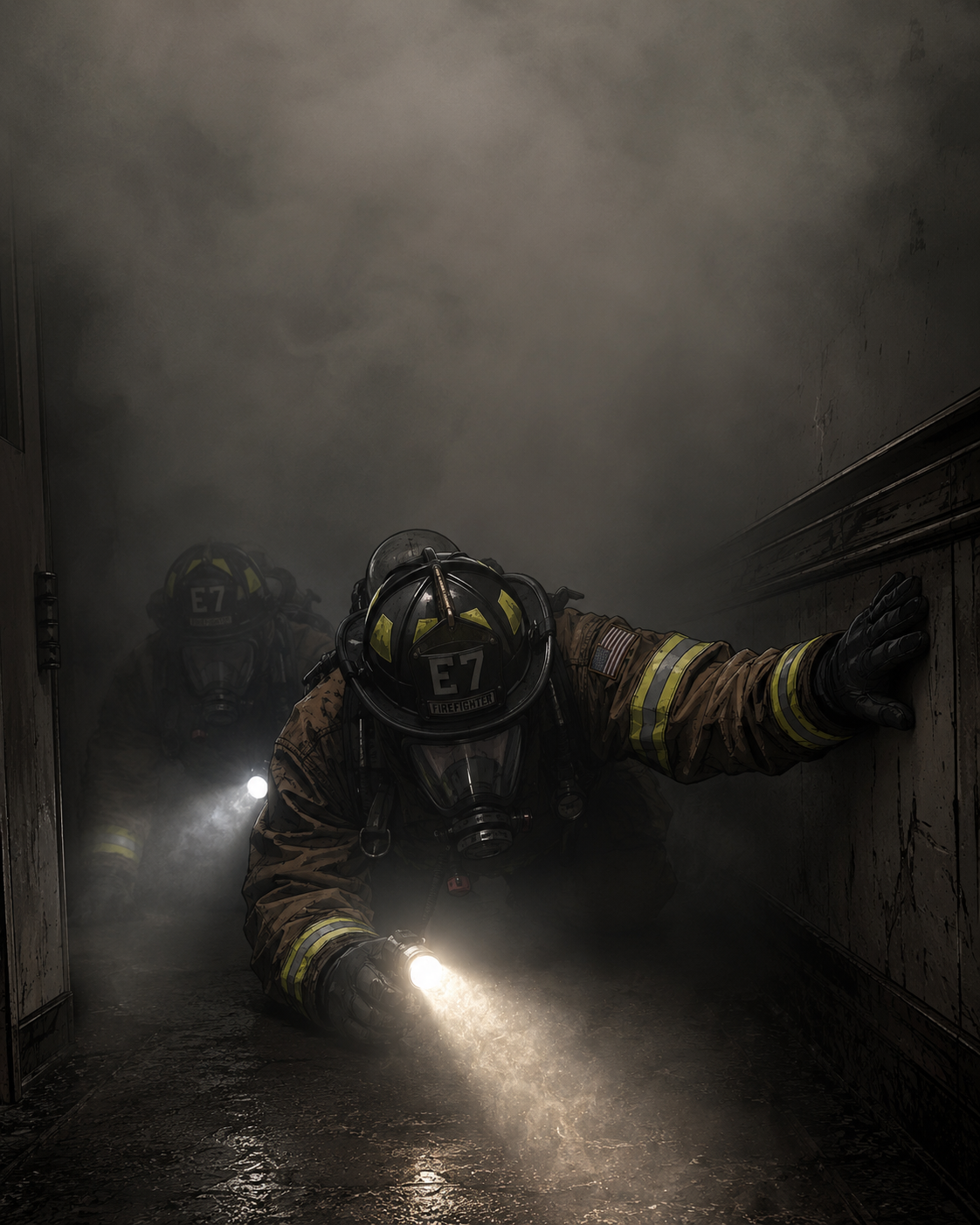
Smoke can hide exits and make normal rooms confusing. That is why alarms need to sound before smoke fills escape paths. If you must move through smoke to escape, stay low, move toward the exit, and get outside quickly.
Alarm placement: follow official guidance
Alarm placement rules and recommendations can vary by jurisdiction, building type, and manufacturer. In general, homes need alarms that can wake sleeping people and warn occupants early. Follow local fire department, building code, and product instructions for exact placement and replacement guidance.
For rental, commercial, school, multifamily, and public buildings, fire alarm systems may be governed by specific codes and maintenance requirements. This site is not code advice.
False alarms and nuisance alarms
Nuisance alarms can make people ignore real alarms. Instead of disabling an alarm, identify the cause and correct it safely. It may be the wrong alarm type for the location, cooking smoke, steam, dust, age, battery condition, or placement. Follow manufacturer guidance or ask the proper local fire authority for advice.
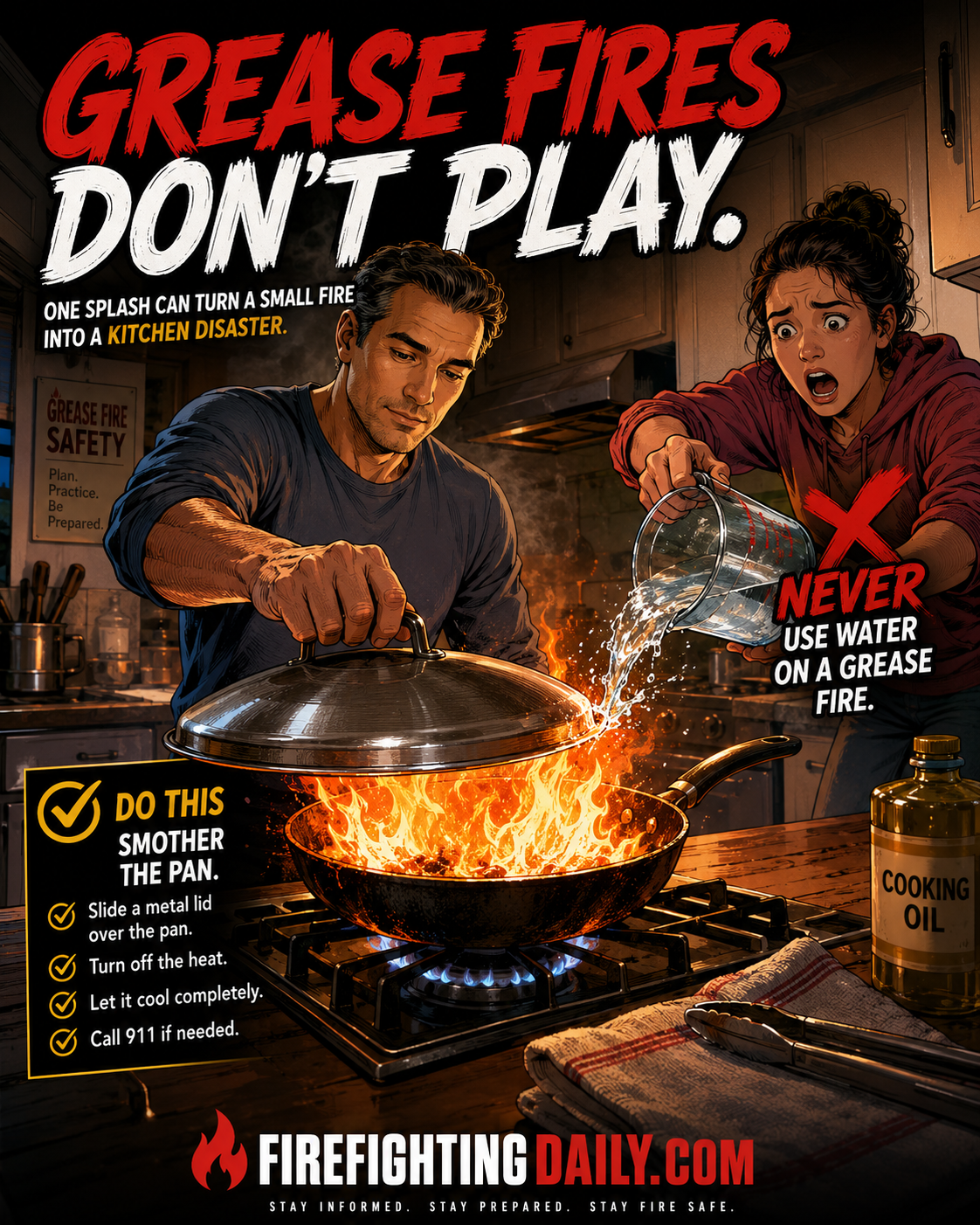
Kitchen alarms are messages.
If cooking triggers alarms often, improve cooking safety and alarm placement guidance. Do not remove protection.
Special situations
People with hearing, vision, mobility, age, medical, or access needs may require special notification devices, help plans, or evacuation support. Households should plan for children, older adults, guests, pets, and anyone who may not wake or move quickly.
Planning questions
- Can everyone hear the alarm while sleeping?
- Does everyone know what the alarm means?
- Can children open doors and reach exits?
- Does anyone need help leaving?
- Where is the outside meeting place?
- Who calls 911 once outside?
Alarms and solar/battery homes
Homes with solar, battery storage, EV charging, or backup power still need normal life-safety planning. Alarms warn occupants. Clear labels, accessible disconnects, and working space help responders. Do not assume backup power means a building is safe during smoke or fire.
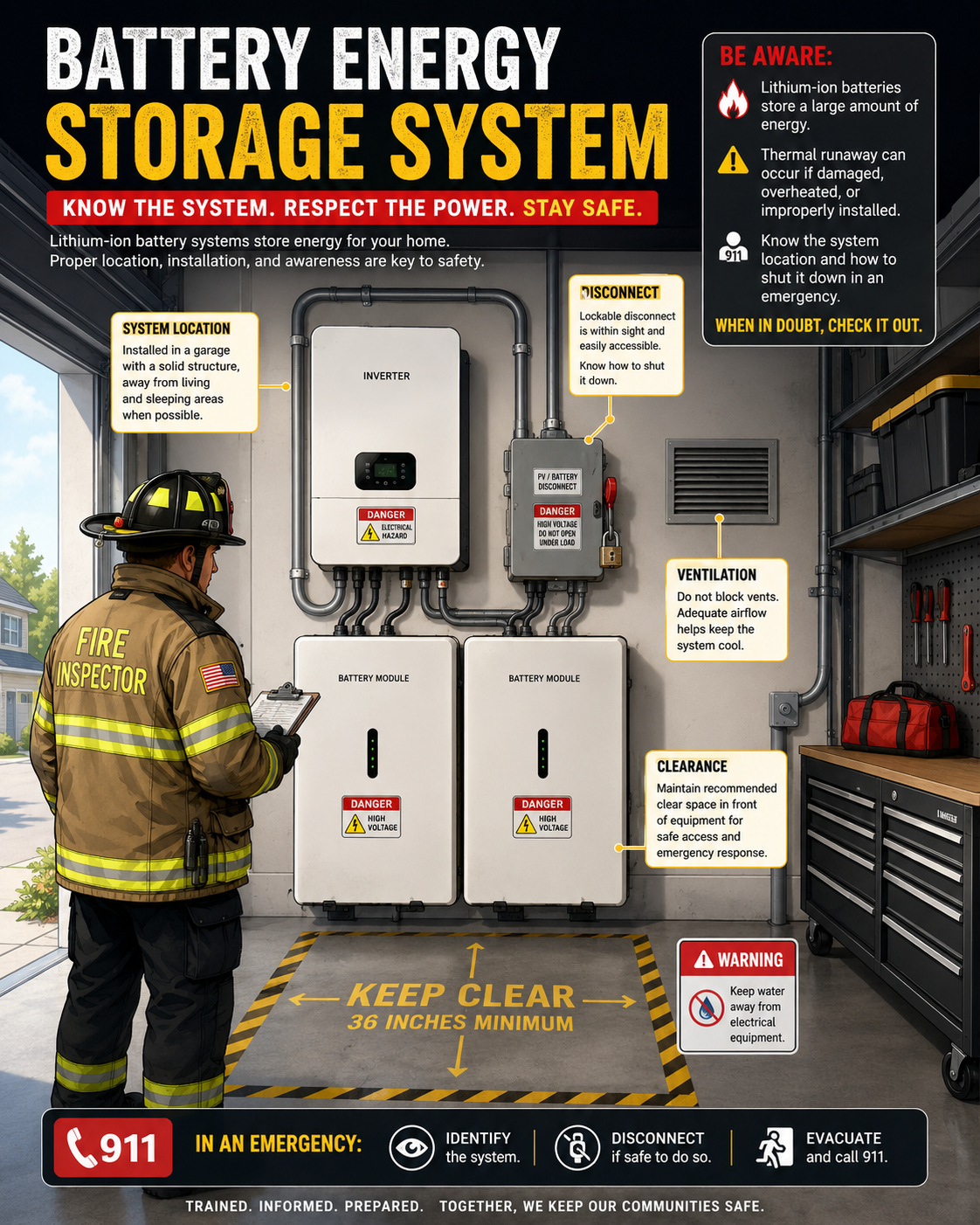
Battery systems
Energy equipment needs proper installation, labels, clear space, and responder awareness.
Solar + battery safety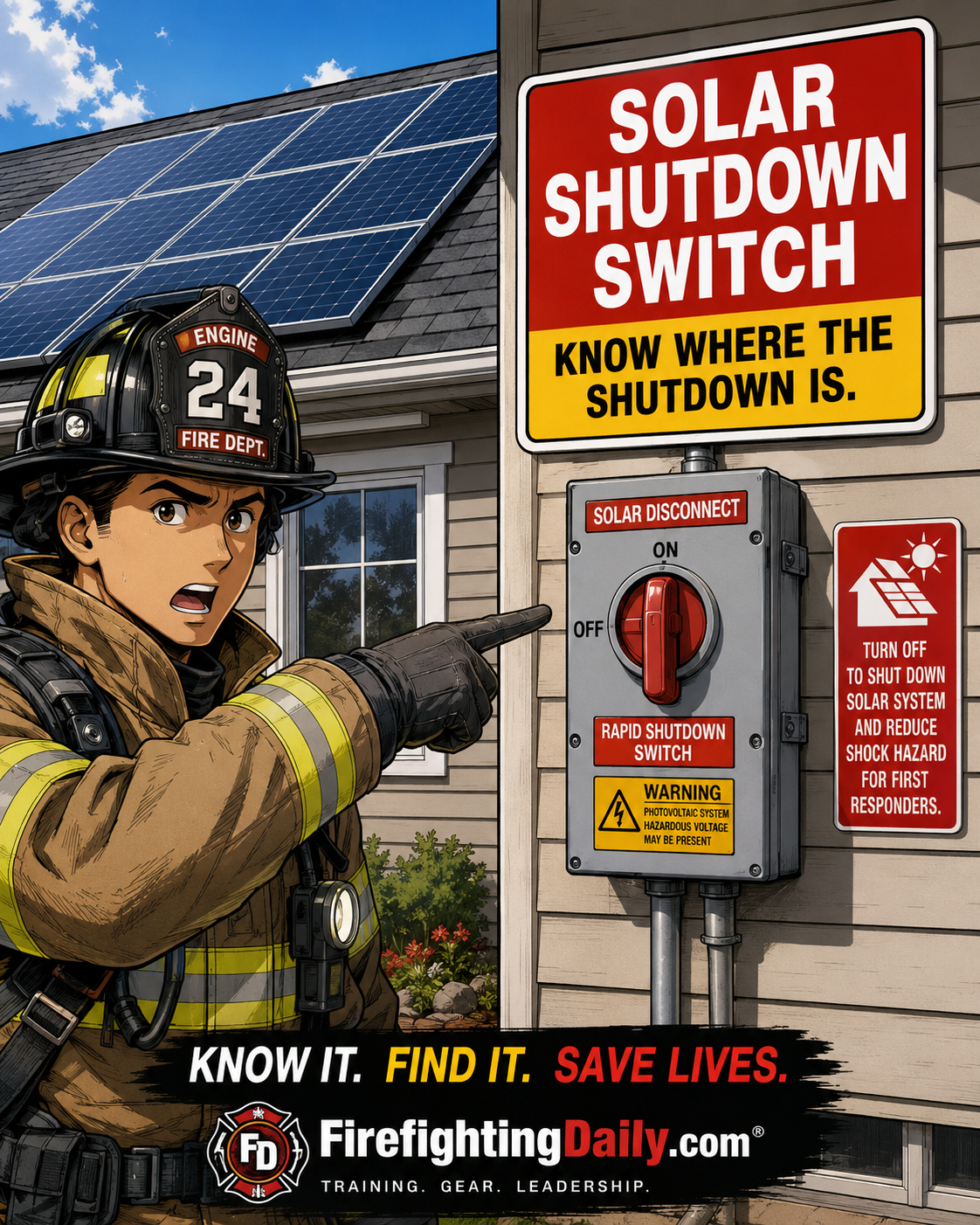
Shutdown labels
Clear labels help responders identify emergency controls and equipment areas.
Learn moreEpisode connection: Rescue Cat finds the safe way out
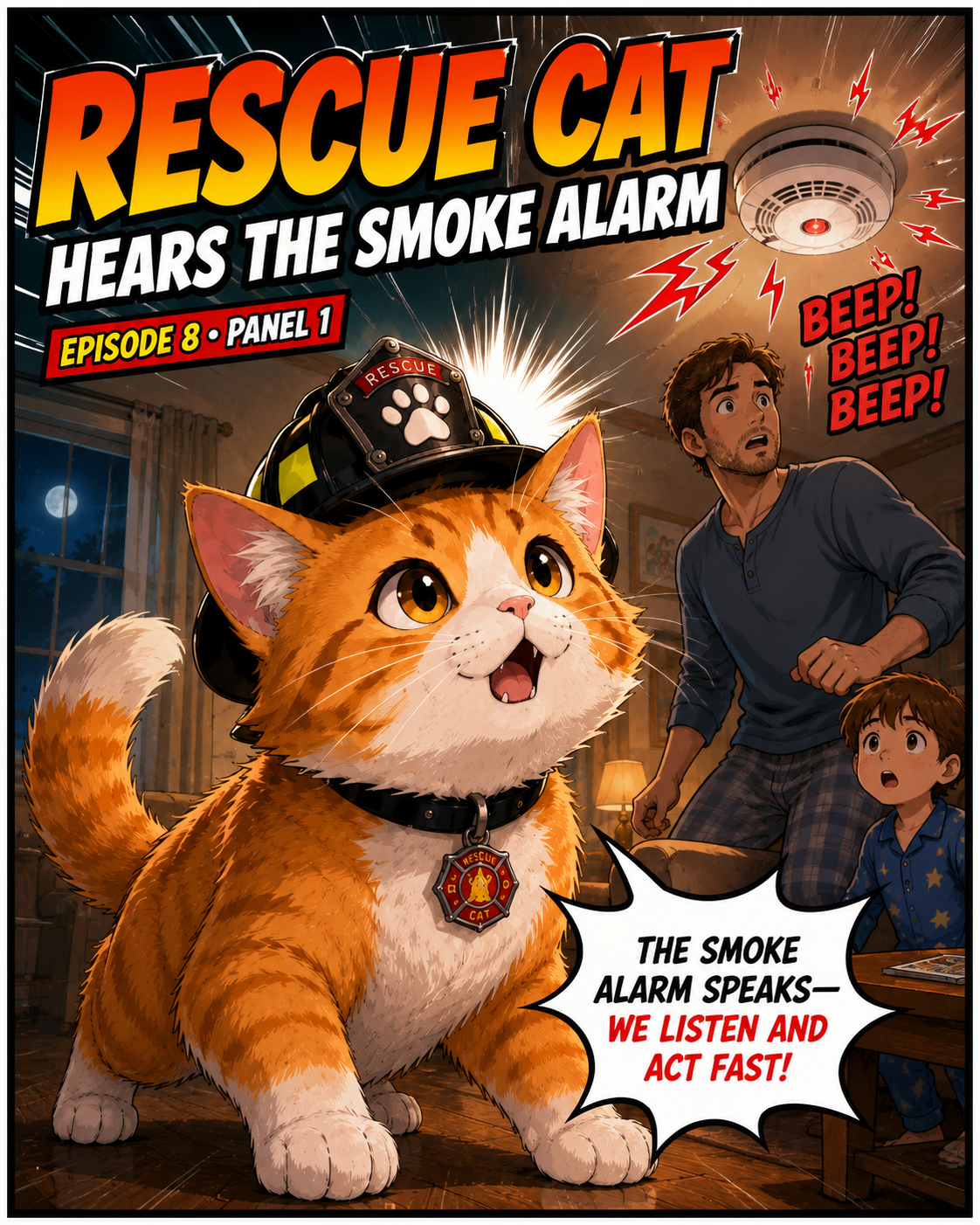
Episode 8 is the fire-alarm story. Rescue Cat hears the alarm, checks the door, follows the second-exit plan, helps the family meet outside, and reminds everyone to stay out.

Rescue Cat Finds the Safe Way Out
A manga lesson about alarms, doors, exits, and meeting outside.
Read episode
Meet Rescue Cat
The safety mascot who turns home fire planning into memorable lessons.
Character pageCaptain Ember’s summary
Fire alarms and smoke alarms are not background noise. They are early-warning tools. When they sound, the safest plan is simple: leave, meet outside, call emergency services, and stay out.