The big idea
A safe home is a practiced home.
Most home fire safety lessons are simple, but they only work if people remember them before an emergency. Smoke alarms need to work. Exits need to be known. Doors matter. Kitchen fires need calm action. Families need a meeting place outside.
Home fire safety is not one device or one rule. It is a system of early warning, fast escape, and smart prevention.
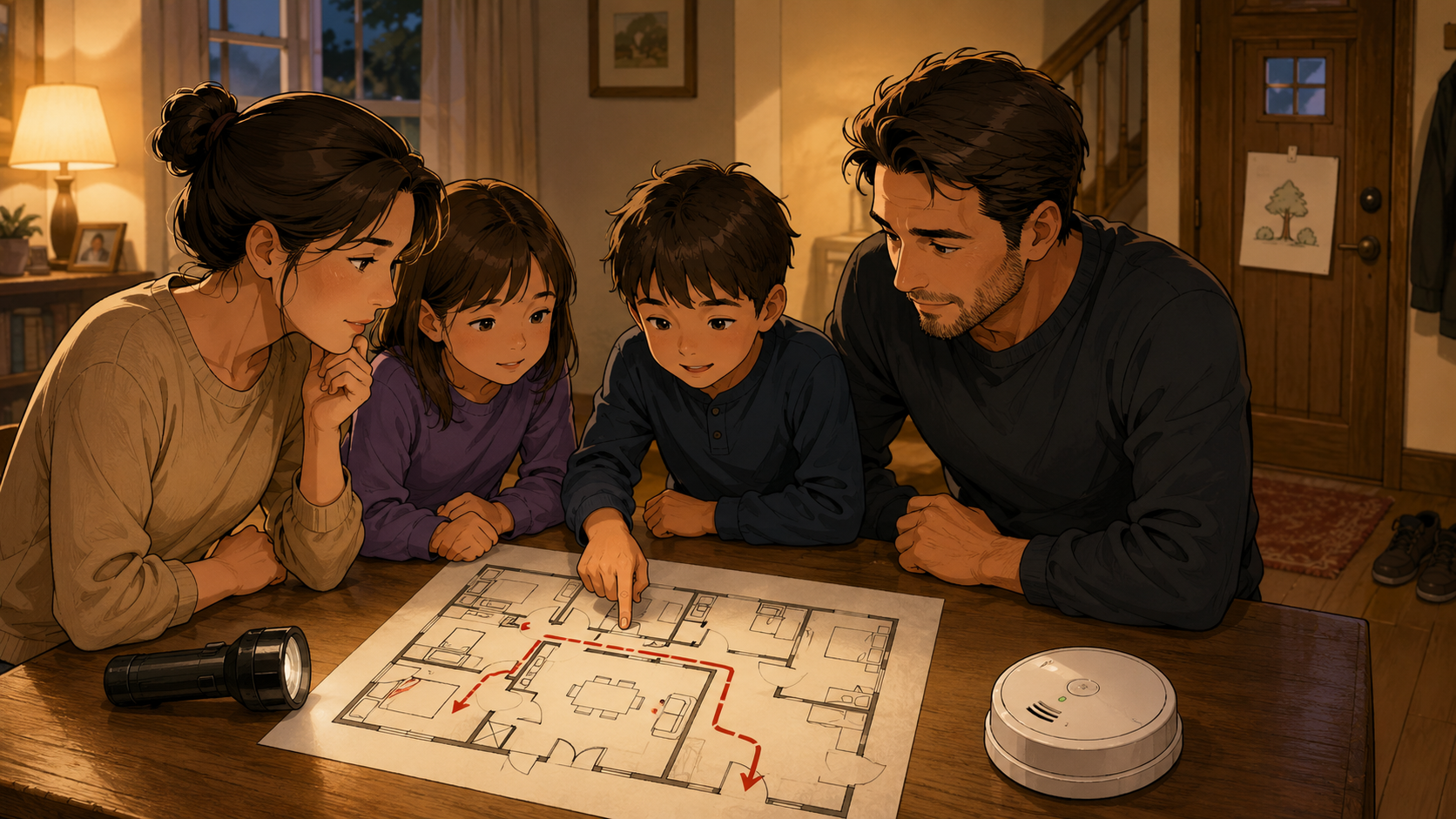
Plan before the alarm.
When smoke is present, you do not want to invent the escape plan for the first time.
1. Working smoke alarms
Smoke alarms are early-warning tools. They help people wake up, react, and leave before smoke fills escape routes. Follow manufacturer instructions and local fire authority guidance for placement, testing, maintenance, battery replacement, and replacement age.
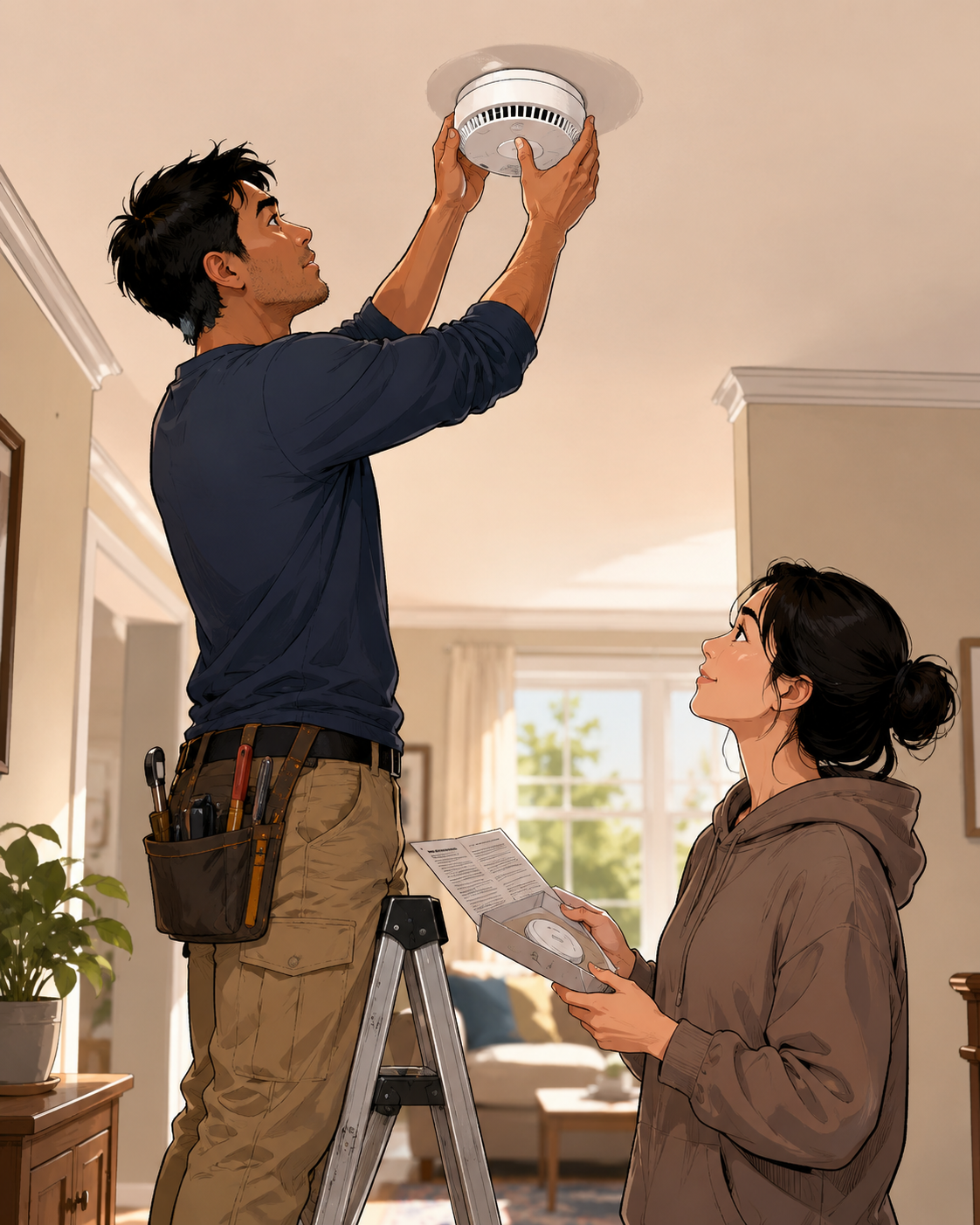
Install and maintain
Placement and maintenance matter. Follow the product instructions and local guidance.
Fire alarms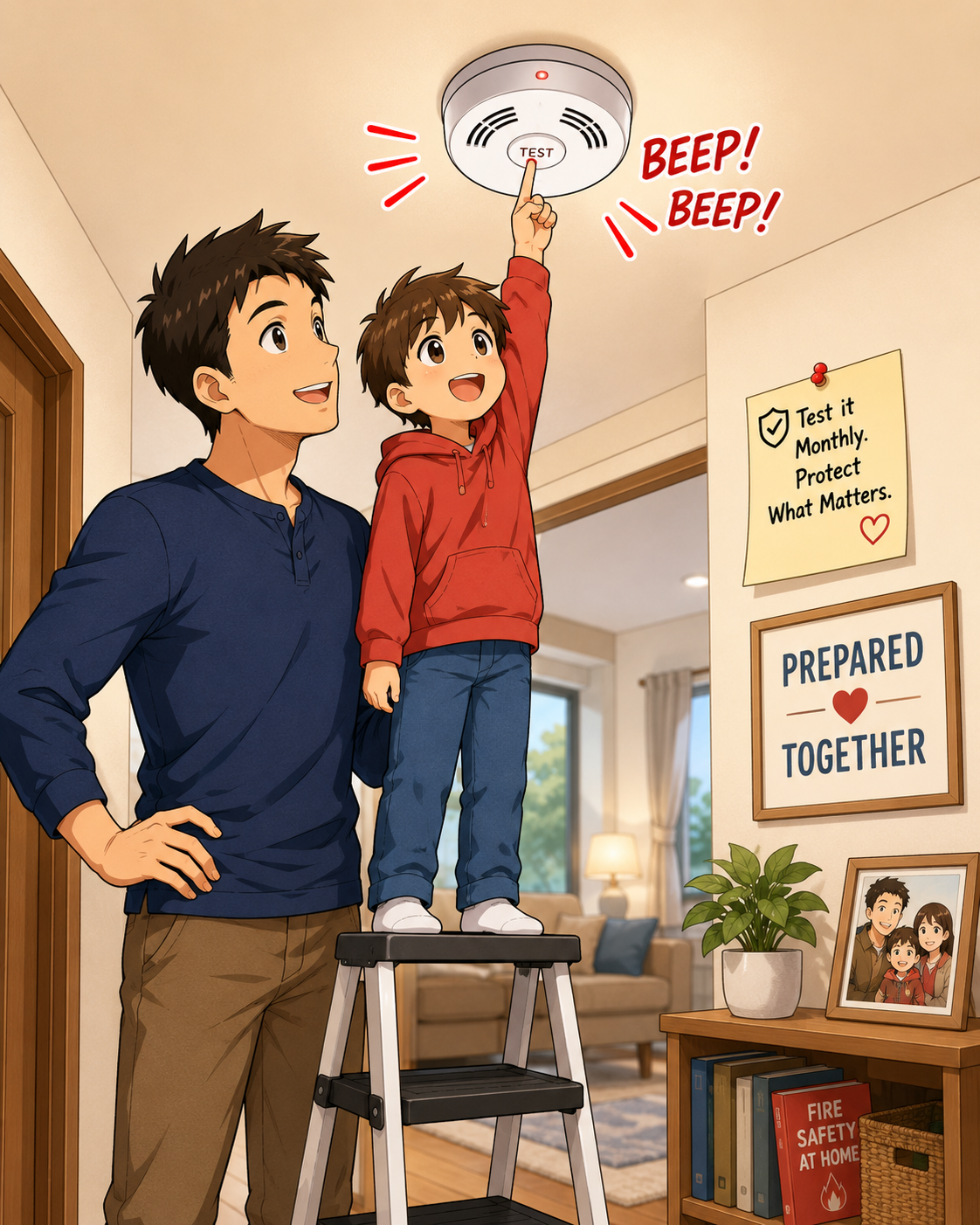
2. Know two ways out when possible
A good escape plan identifies the main way out and a backup when possible. Doors, windows, stairs, hallways, and outside paths should be understood before a fire happens. Children, guests, older adults, and anyone needing help should be part of the plan.
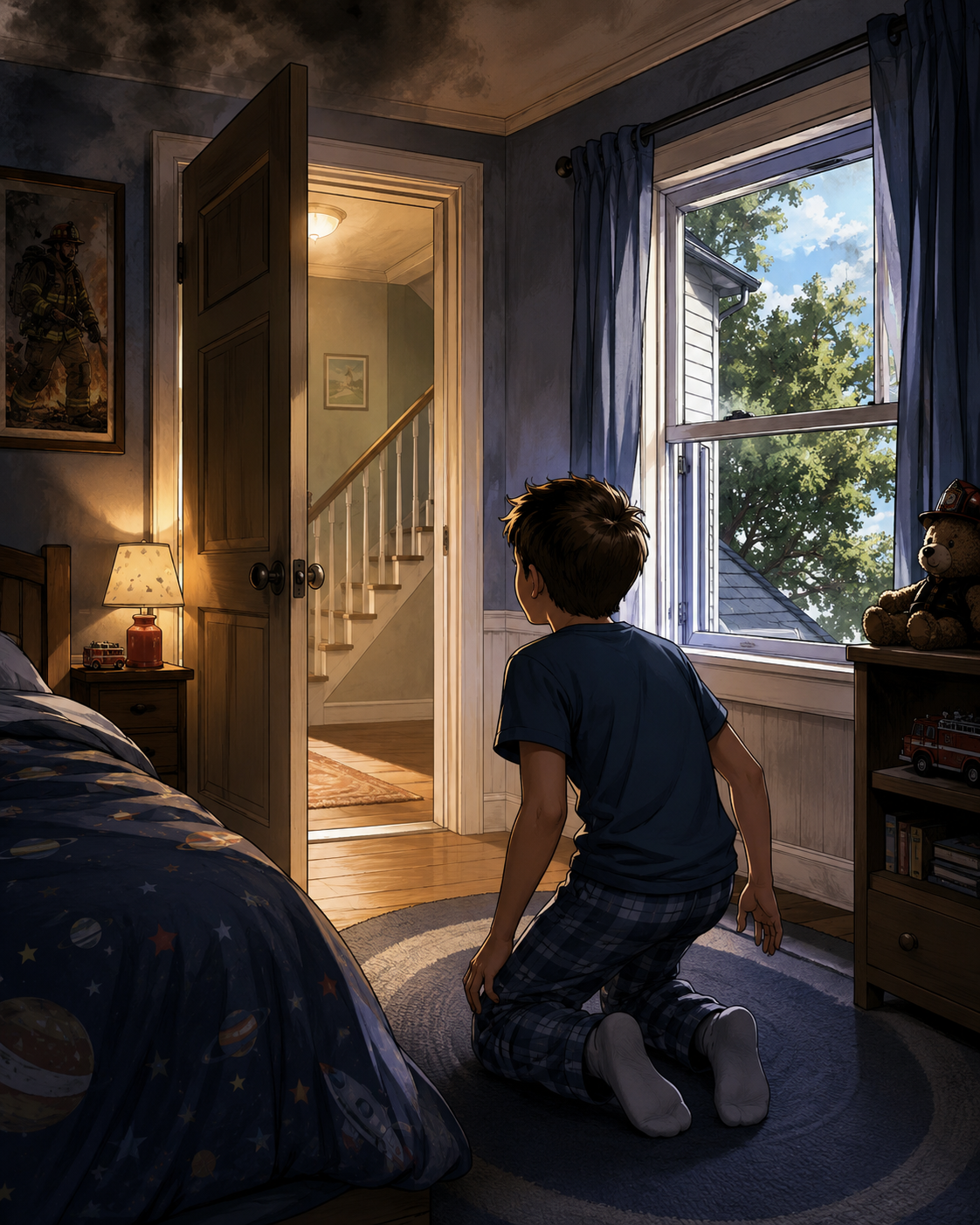
Do not depend on one path.
Smoke, heat, or fire can block the route you expected to use.
3. Pick an outside meeting place
Once people get outside, they should go to a safe meeting place where everyone can be counted. This reduces confusion and helps prevent anyone from going back inside.
Rescue Cat says:
“Outside means outside. Meet there, count everyone, call for help, and stay out.”
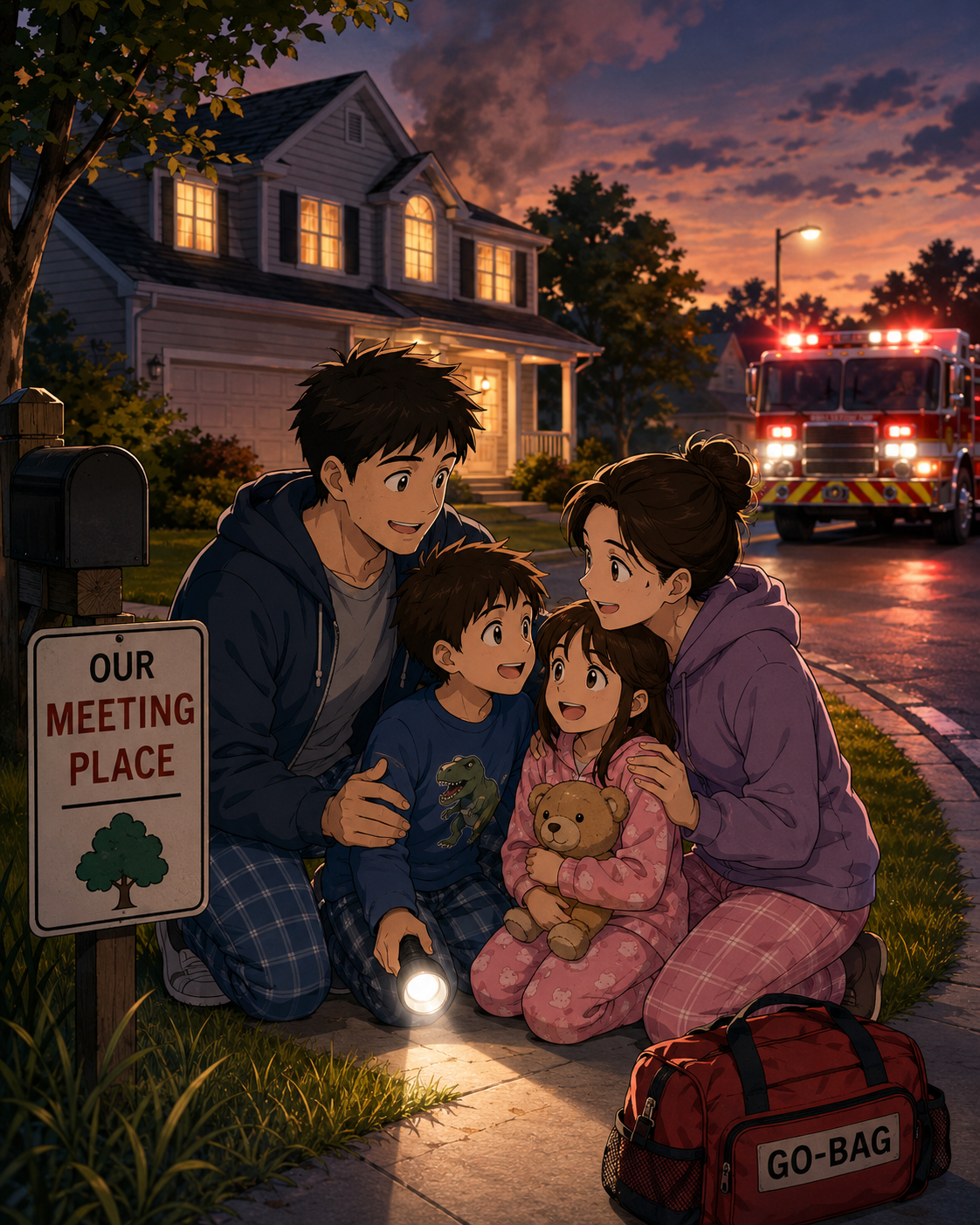
The meeting place finishes the escape plan.
A known gathering spot helps everyone know who is safe.
4. Practice the plan
Practice helps turn a plan into a habit. A drill should be calm, age-appropriate, and realistic enough that everyone knows what to do. The goal is not to scare children. The goal is to make the next step obvious.
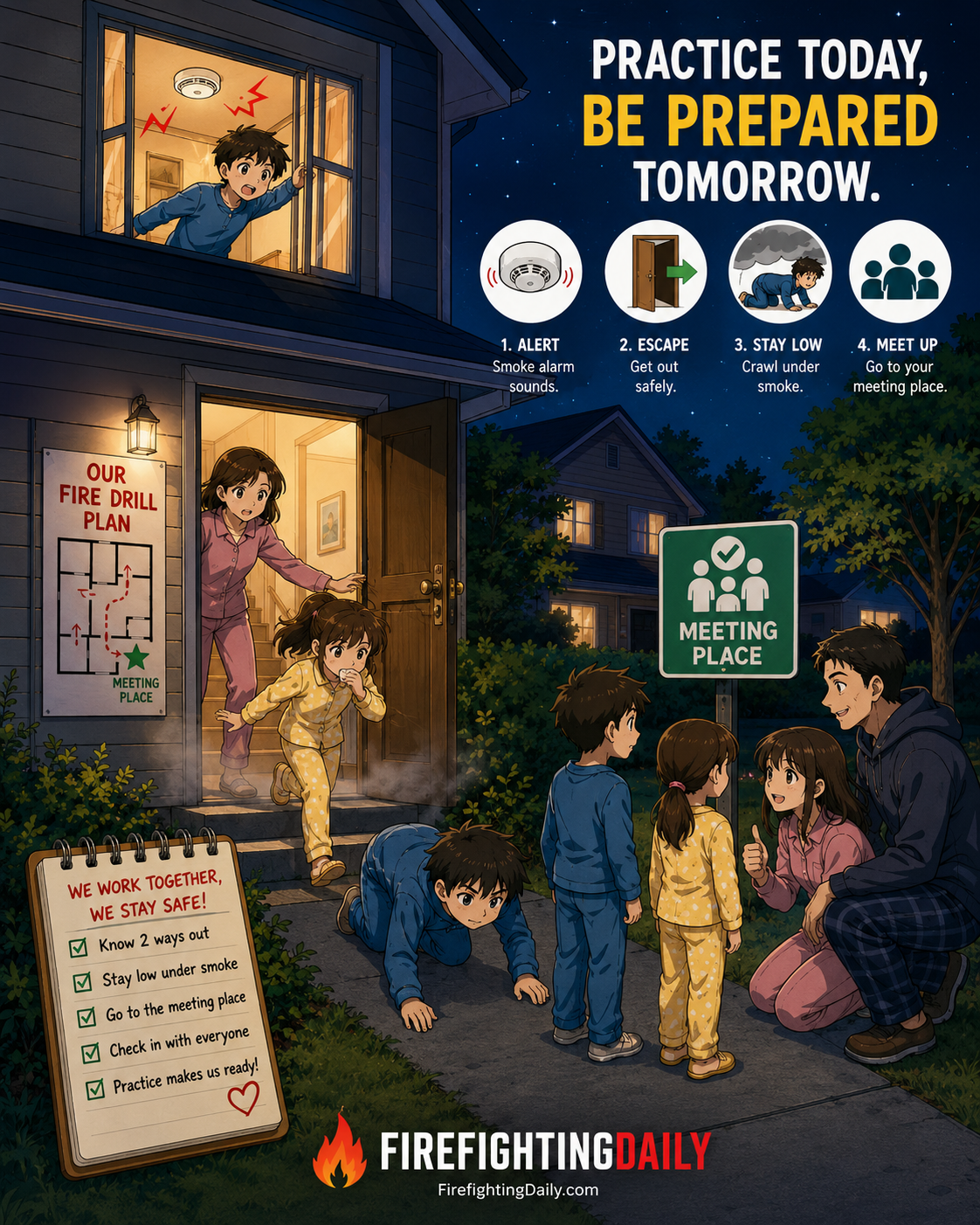
Practice calmly
Children remember better when the lesson is clear, repeated, and not chaotic.
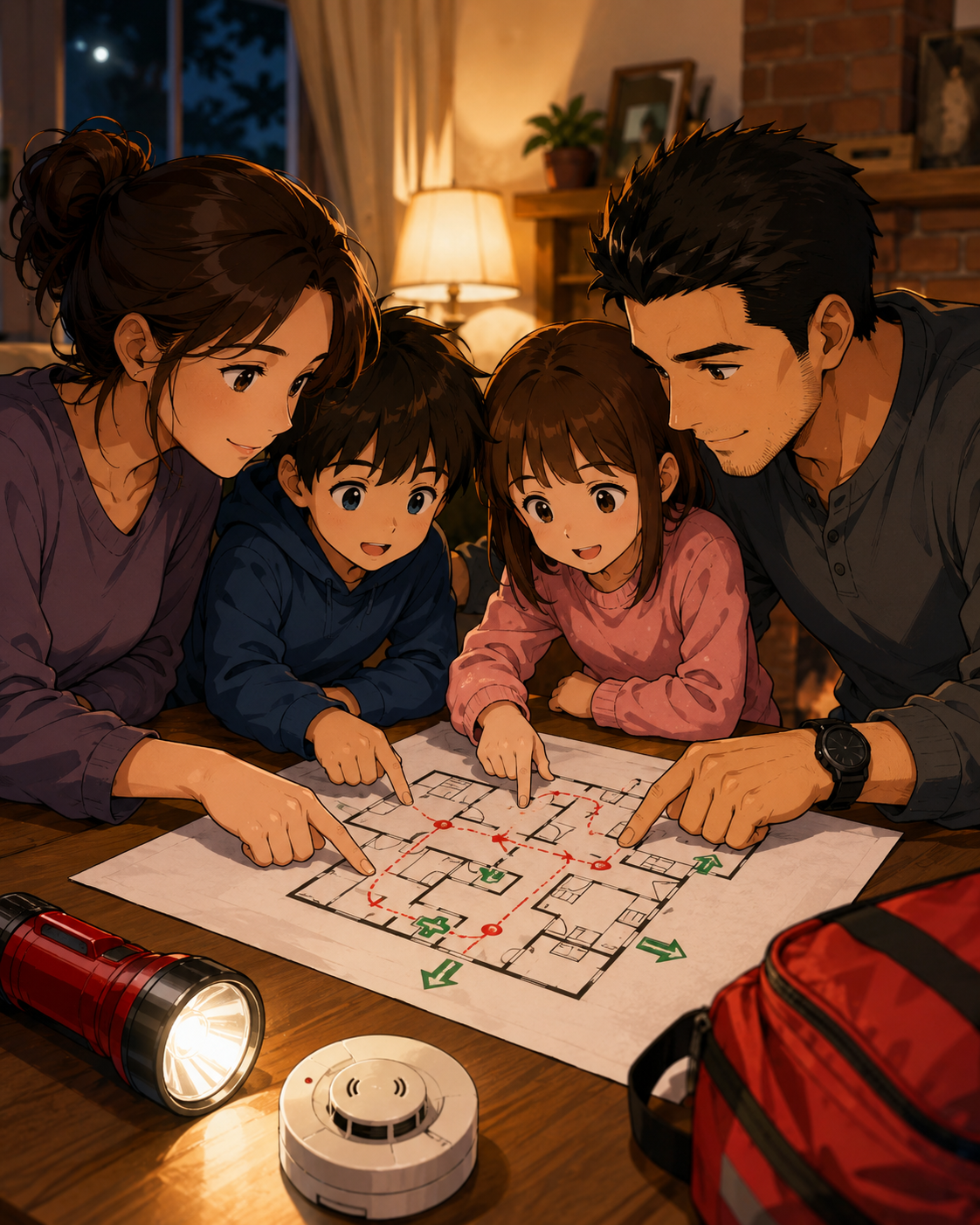
Draw the map
A simple map helps people understand rooms, exits, and the meeting place.
5. Close doors when safe
Closed doors can sometimes slow the movement of smoke, heat, and air. A closed bedroom door may make a meaningful difference compared with an open door. Closing doors behind you as you leave, when safe, may also help slow smoke movement.
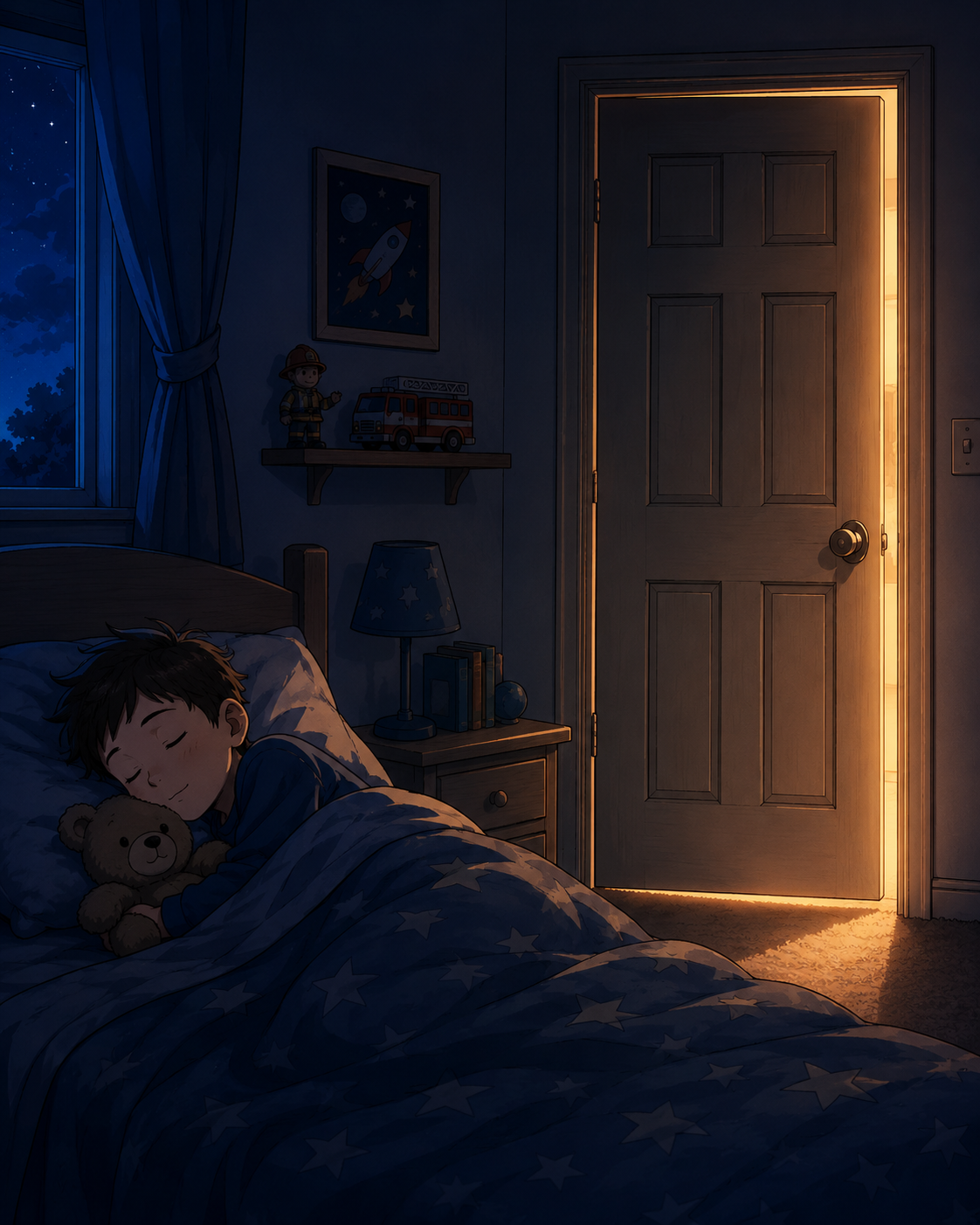
Closed doors can buy time.
A closed door is not a guarantee, but it can be an important barrier.
6. Kitchen fire safety
Cooking is a common place where home fires begin. Stay near active cooking, keep combustibles away from burners, avoid loose sleeves, keep pan handles turned safely, and know that grease fires require special caution. Do not throw water on a grease fire.

Small pan fire
For a small contained pan fire, a lid may help smother flames when it is safe to act.
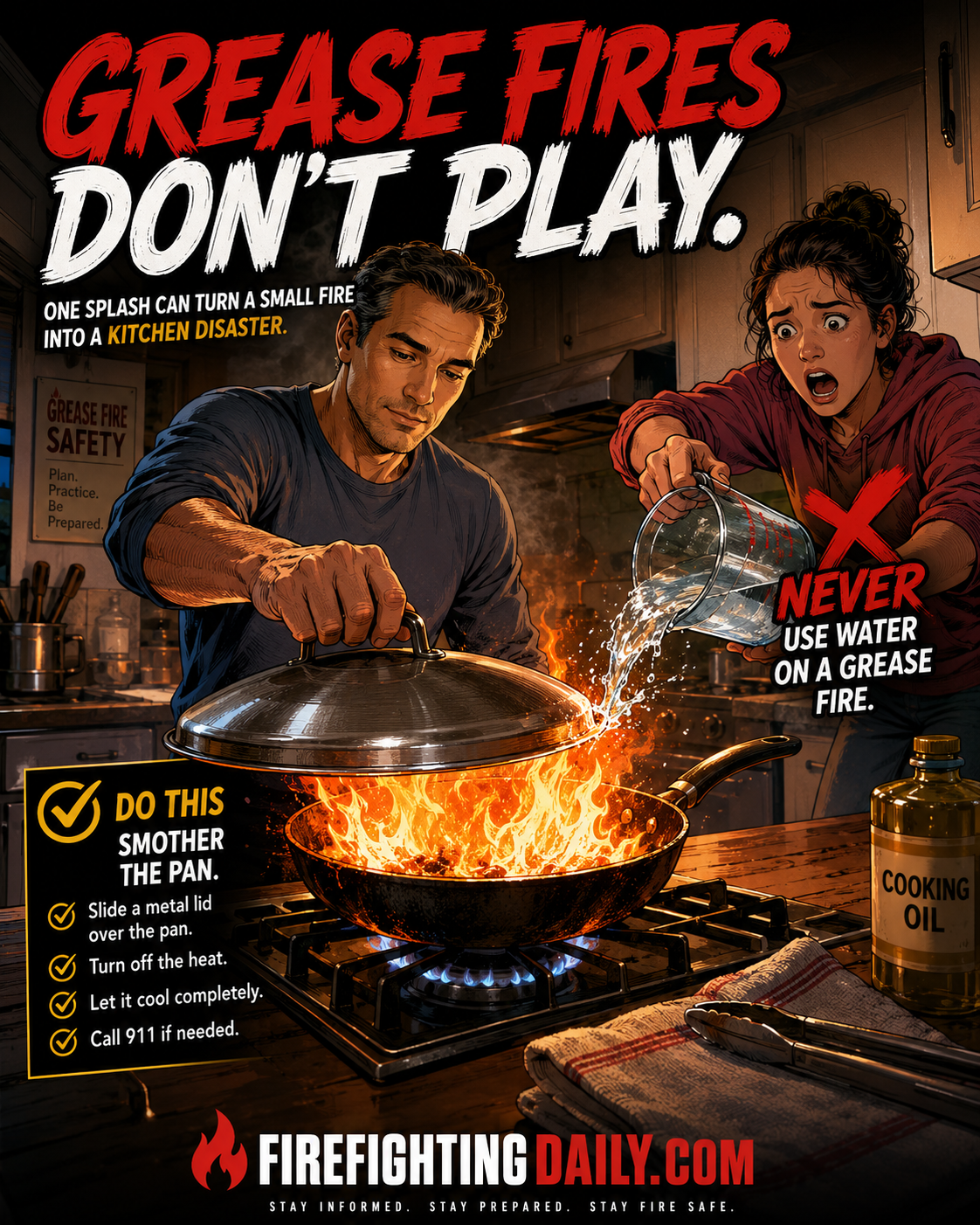
No water on grease
Water can spread burning oil violently. When in doubt, get out and call 911.
7. Fire extinguishers: useful, but limited
A portable fire extinguisher can be helpful for small, contained fires only when the user has been trained, the correct extinguisher is available, the fire is not spreading, and a clear escape path remains behind the user. Extinguishers are not a reason to stay in danger.
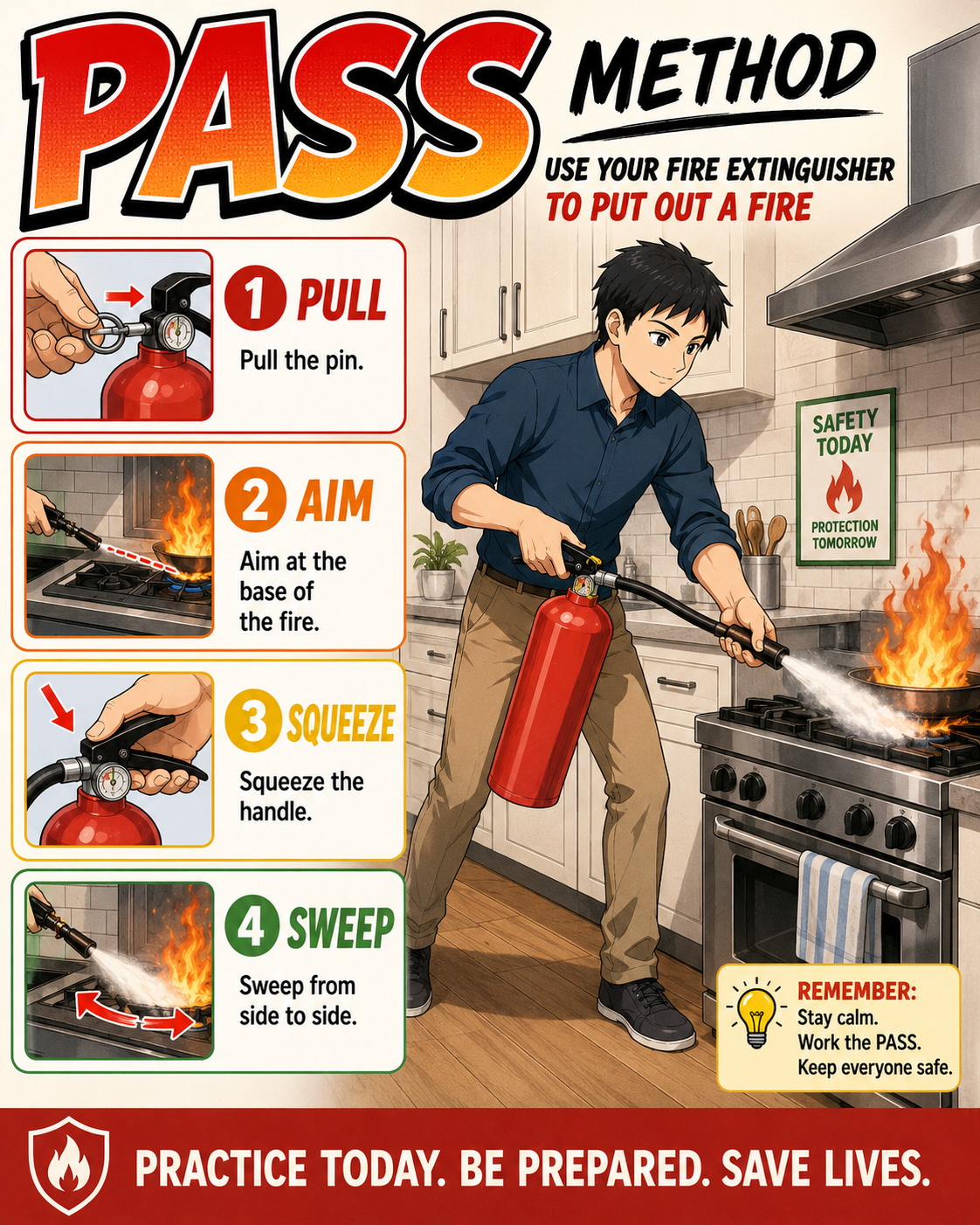
Only for small, contained fires.
If there is any doubt, leave and call emergency services.
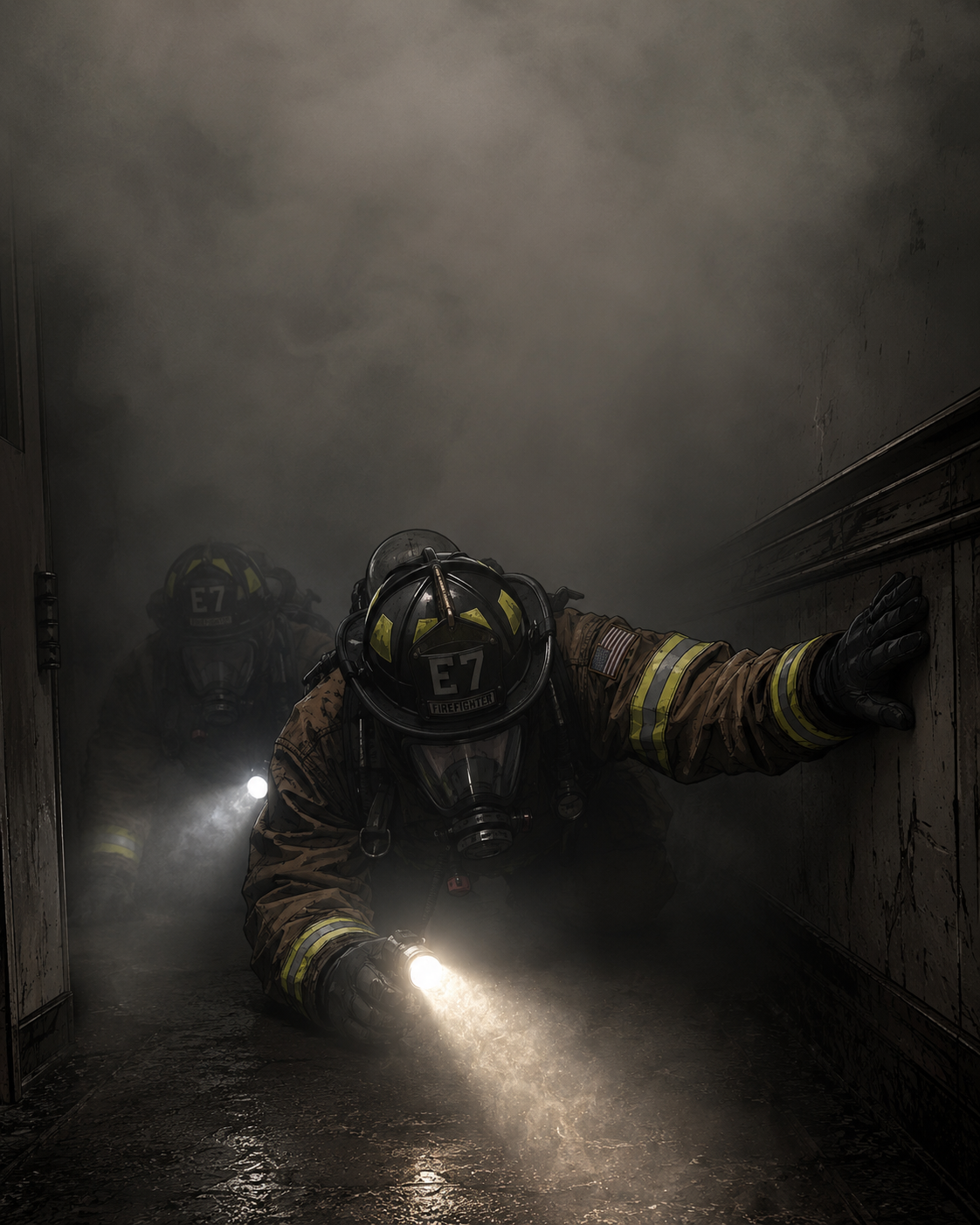
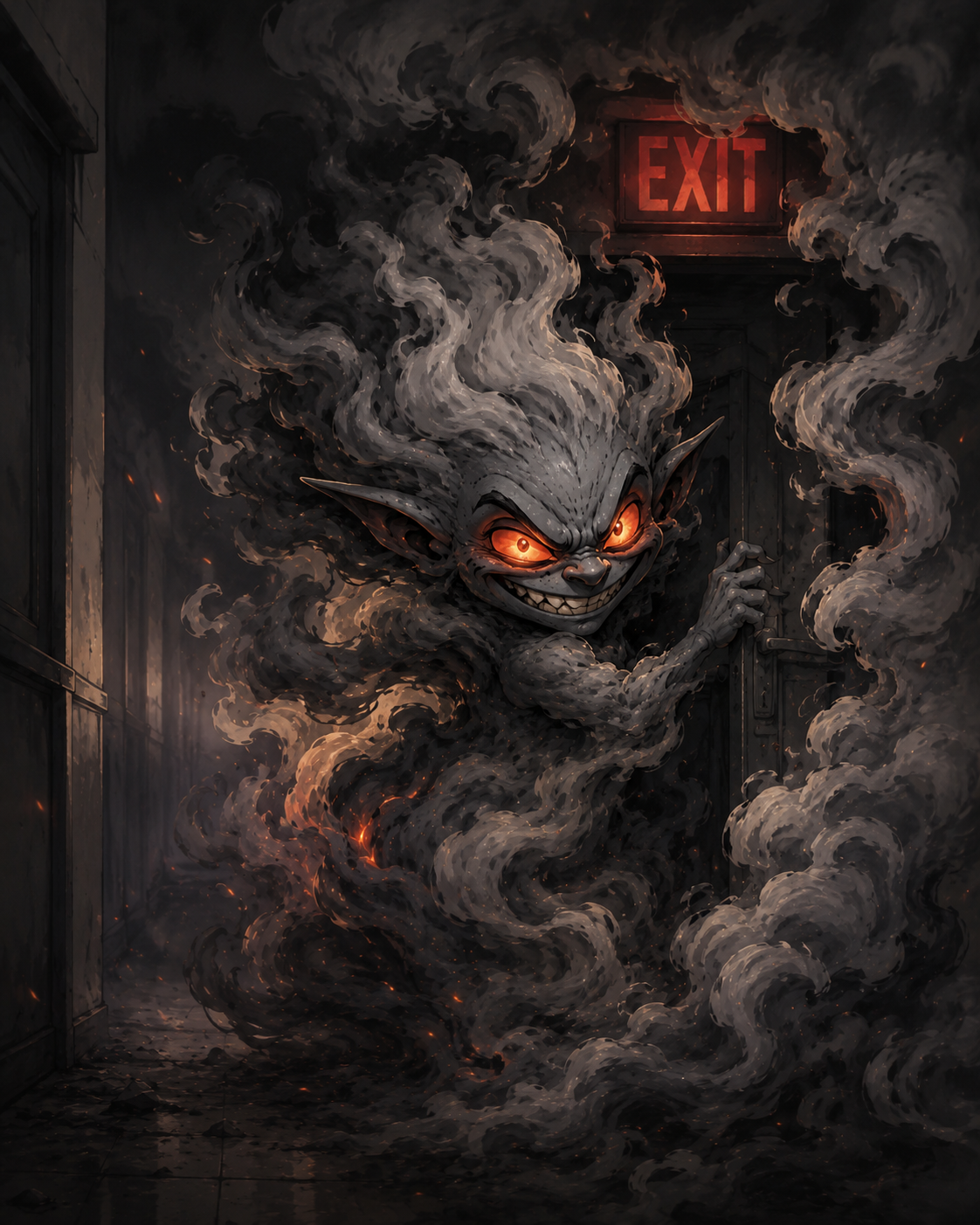
8. Smoke is often the first major threat
Smoke can hide exits, disorient people, and make breathing dangerous. That is why alarms, escape plans, and closed doors matter. If smoke is present, do not investigate. Get outside.
9. Prepare for wildfire if you live in a risk area
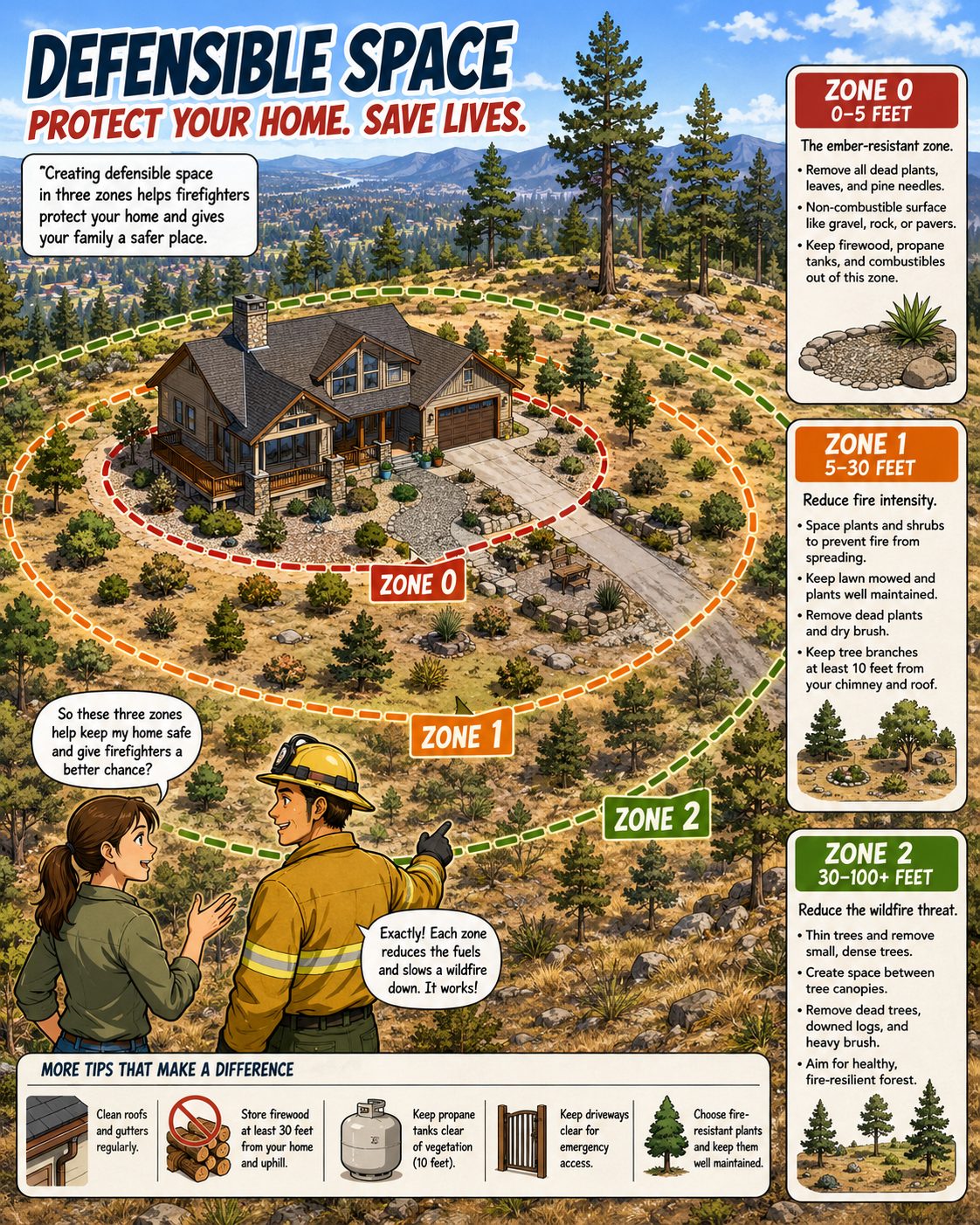
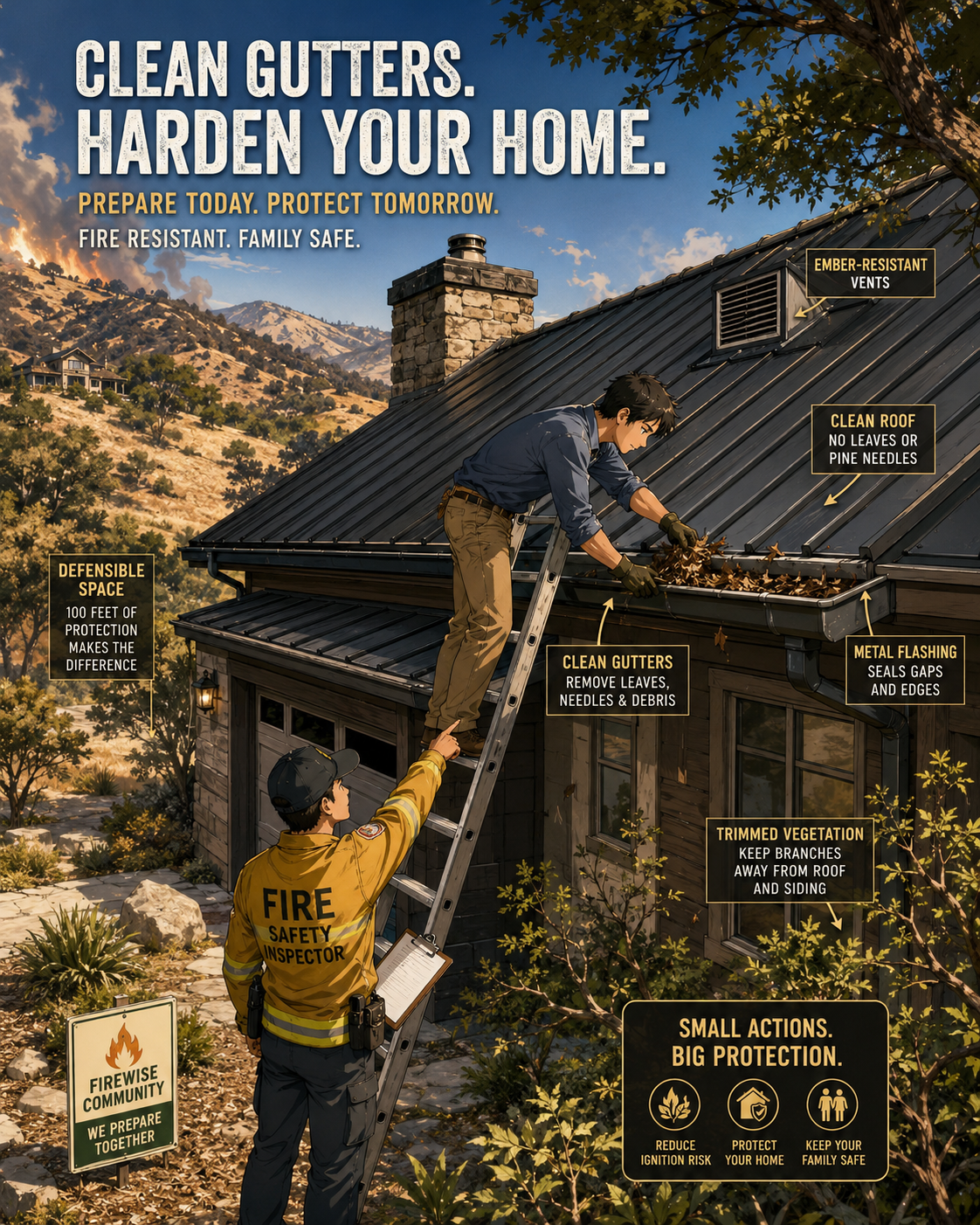
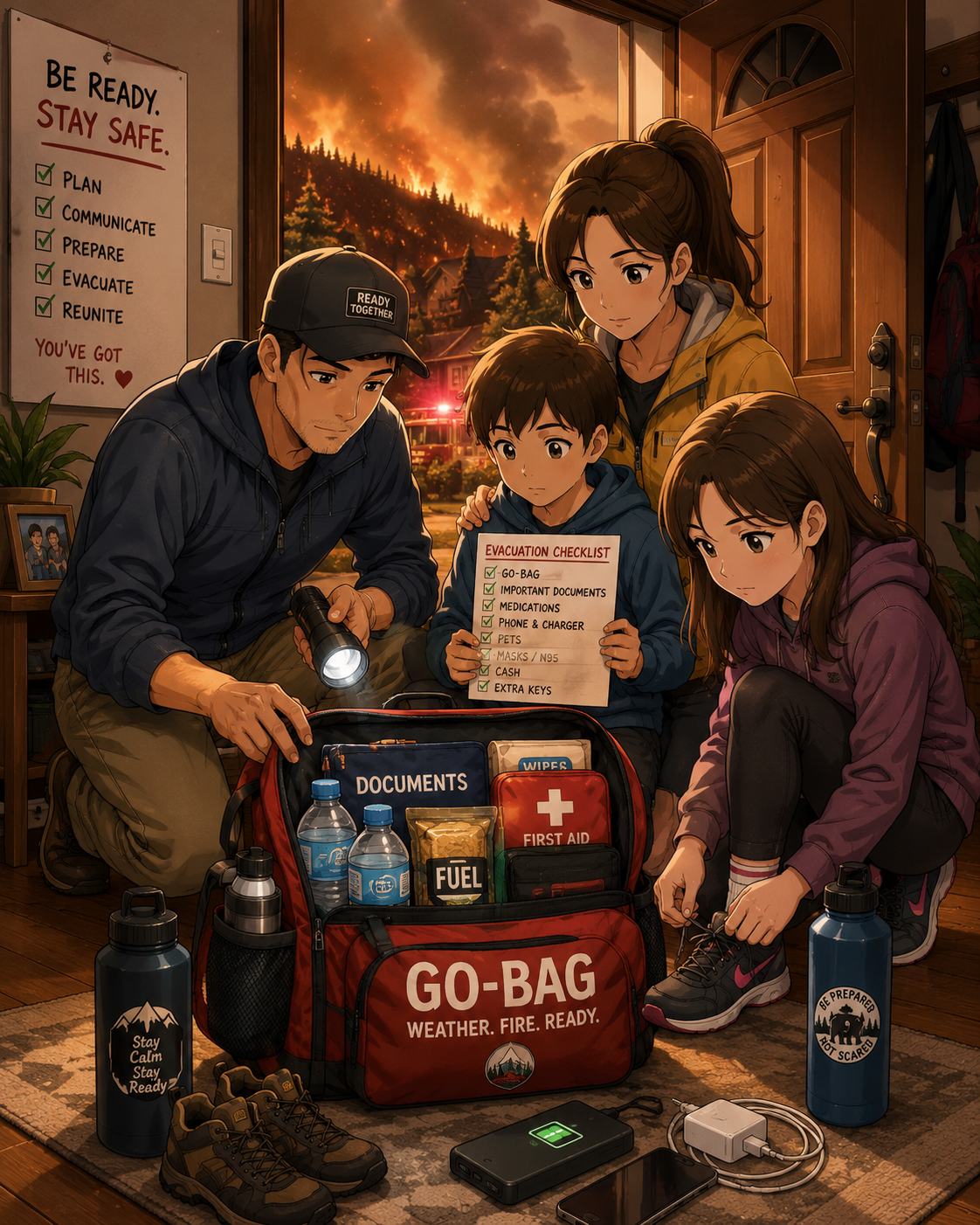
Home fire safety also includes wildfire readiness where wildland fire is possible. Defensible space, clean gutters, ember-resistant details, clear addresses, accessible driveways, go-bags, and evacuation planning can matter before the fire arrives.
10. Solar, batteries, and modern homes
Homes with solar, battery storage, EV charging, backup generators, or microgrid equipment need the same life-safety basics plus clear labels, accessible shutdown equipment, and proper installation. The presence of backup power does not make a smoke or fire situation safe.
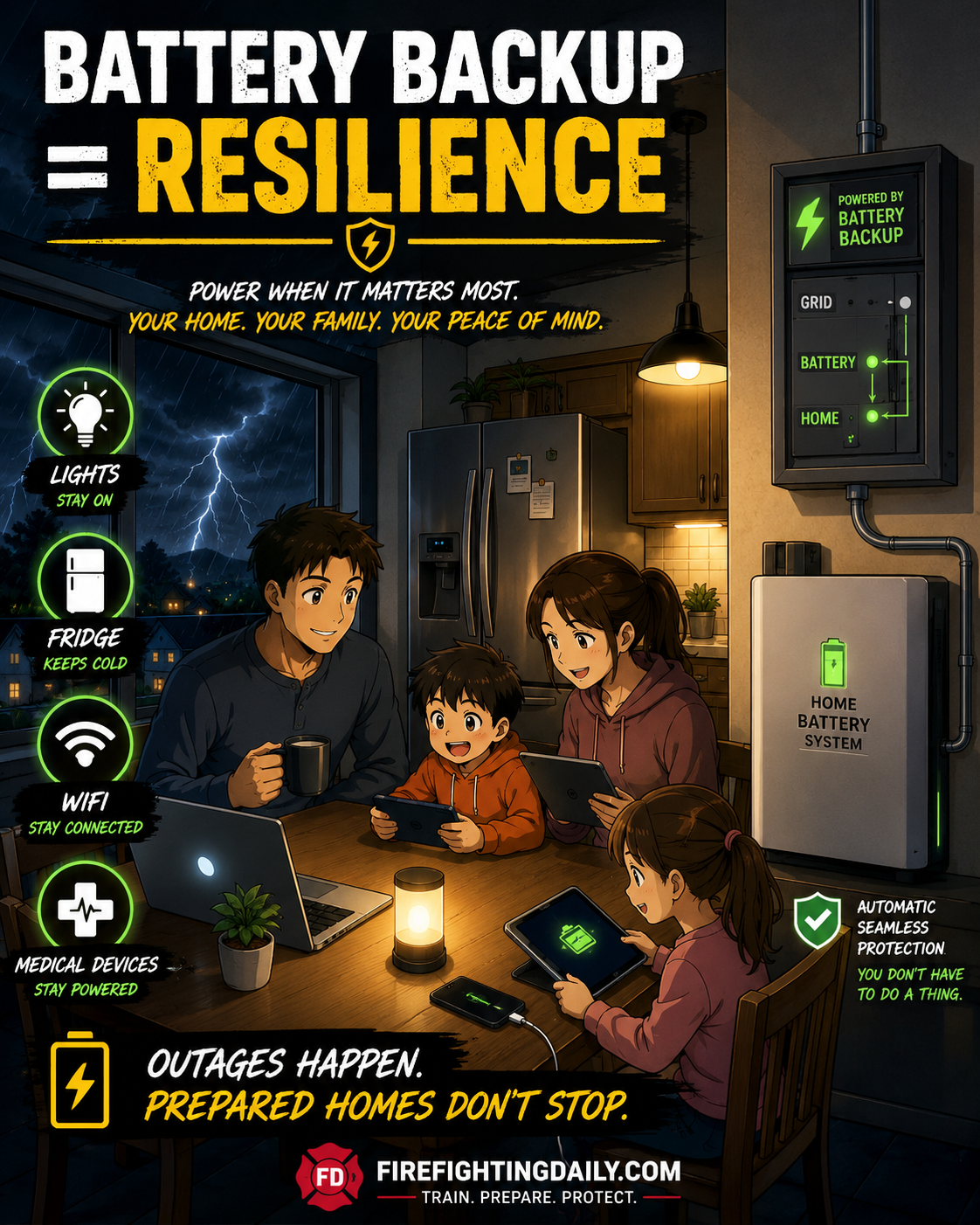
Resilience still needs safety.
Backup power is useful, but emergency planning, clear labels, and safe access still matter.
Home fire safety checklist
- Working smoke alarms are installed and maintained.
- Everyone knows what the alarm means.
- Everyone knows two ways out when possible.
- There is a safe meeting place outside.
- Children and guests understand the plan.
- Bedroom doors are closed at night when practical.
- Kitchen combustibles are kept away from heat.
- Extinguishers are used only for small fires with training and a clear exit.
- Wildfire go-bags and defensible space are prepared where needed.
- Solar/battery equipment has clear labels and access.
Episode connection: Rescue Cat finds the safe way out
Episode 8 turns home fire safety into a story. Rescue Cat hears the smoke alarm, checks the bedroom door, follows the second-exit plan, helps the family meet outside, and reminds everyone to stay out.
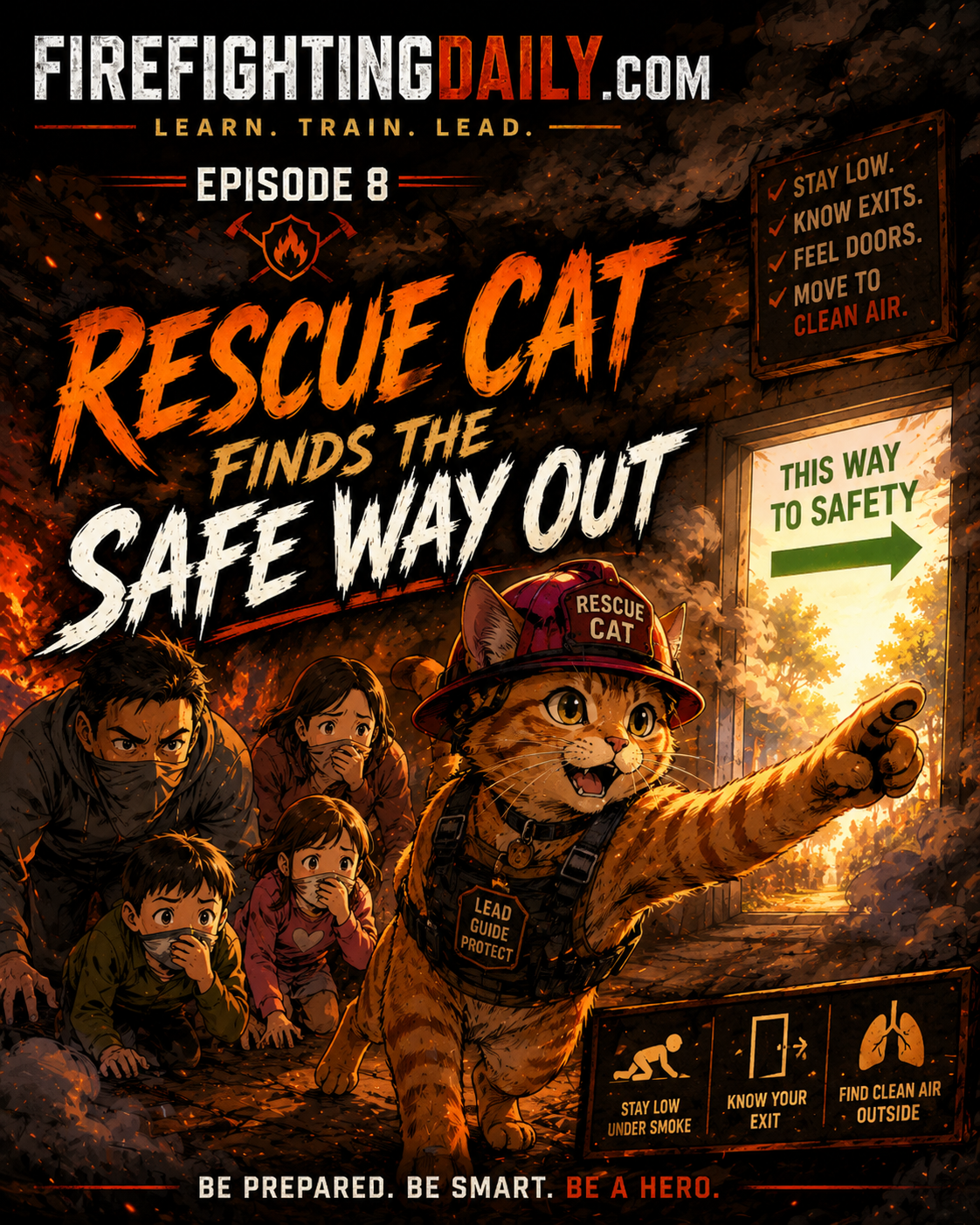
Rescue Cat Finds the Safe Way Out
A manga lesson about alarms, doors, second exits, meeting outside, and staying out.
Read episode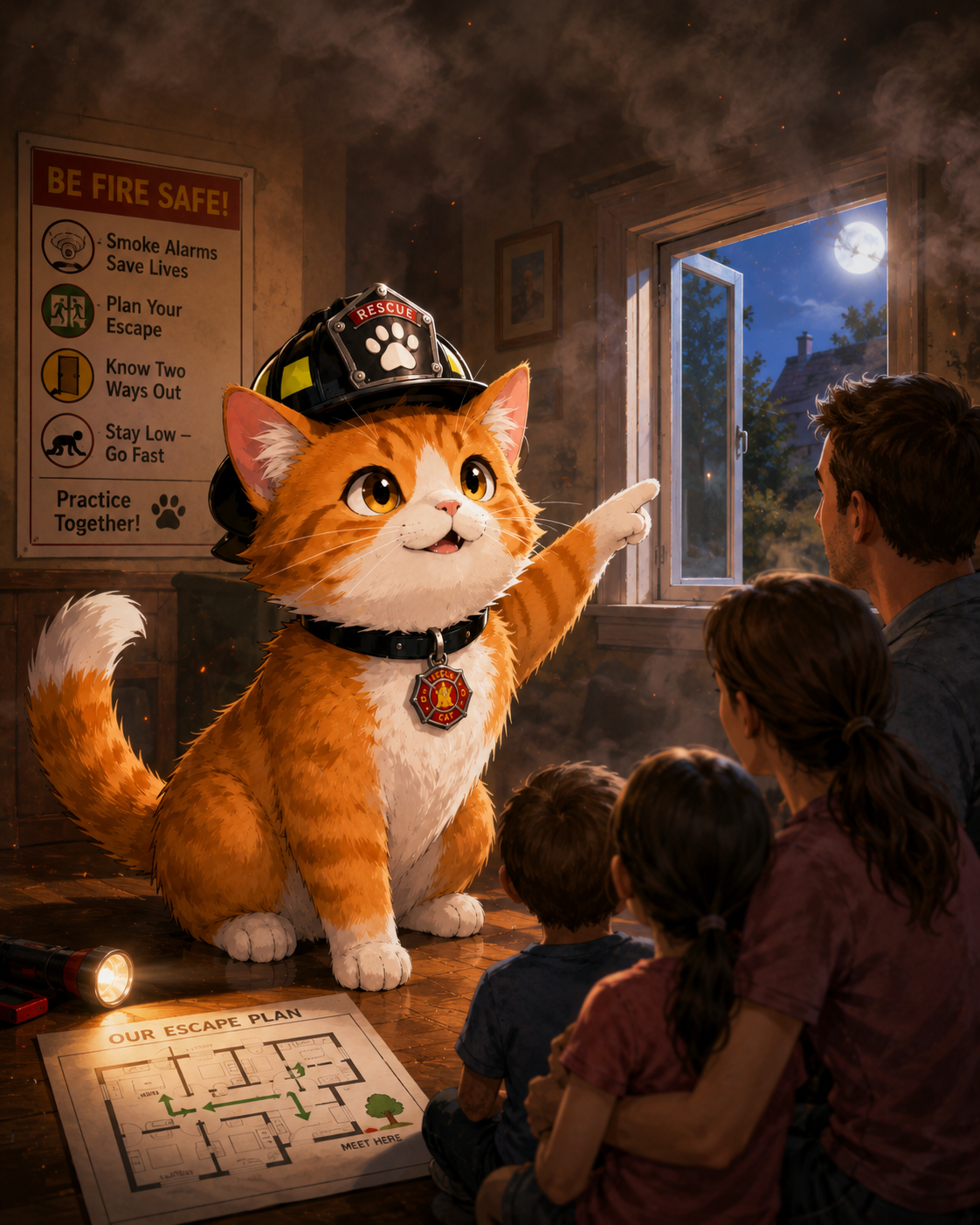
Meet Rescue Cat
The FirefightingDaily mascot for alarms, escape plans, and safe choices.
Character pageCaptain Ember’s summary
Home fire safety is built before the emergency. Working alarms, practiced exits, closed doors, kitchen caution, meeting places, wildfire readiness, and clear equipment access all help people act faster when time matters.