The big idea
Fire spreads because heat travels.
A fire does not need to touch something directly to make it dangerous. Heat can travel through solid materials, rise with hot gases, radiate across open space, move with smoke, and ride the wind as embers. That is why fire can grow from one object, to one room, to one building, to one neighborhood.
Understanding fire spread helps explain why firefighters think about doors, windows, ventilation, water supply, fuel loads, roofs, attics, wind, slope, and evacuation timing.
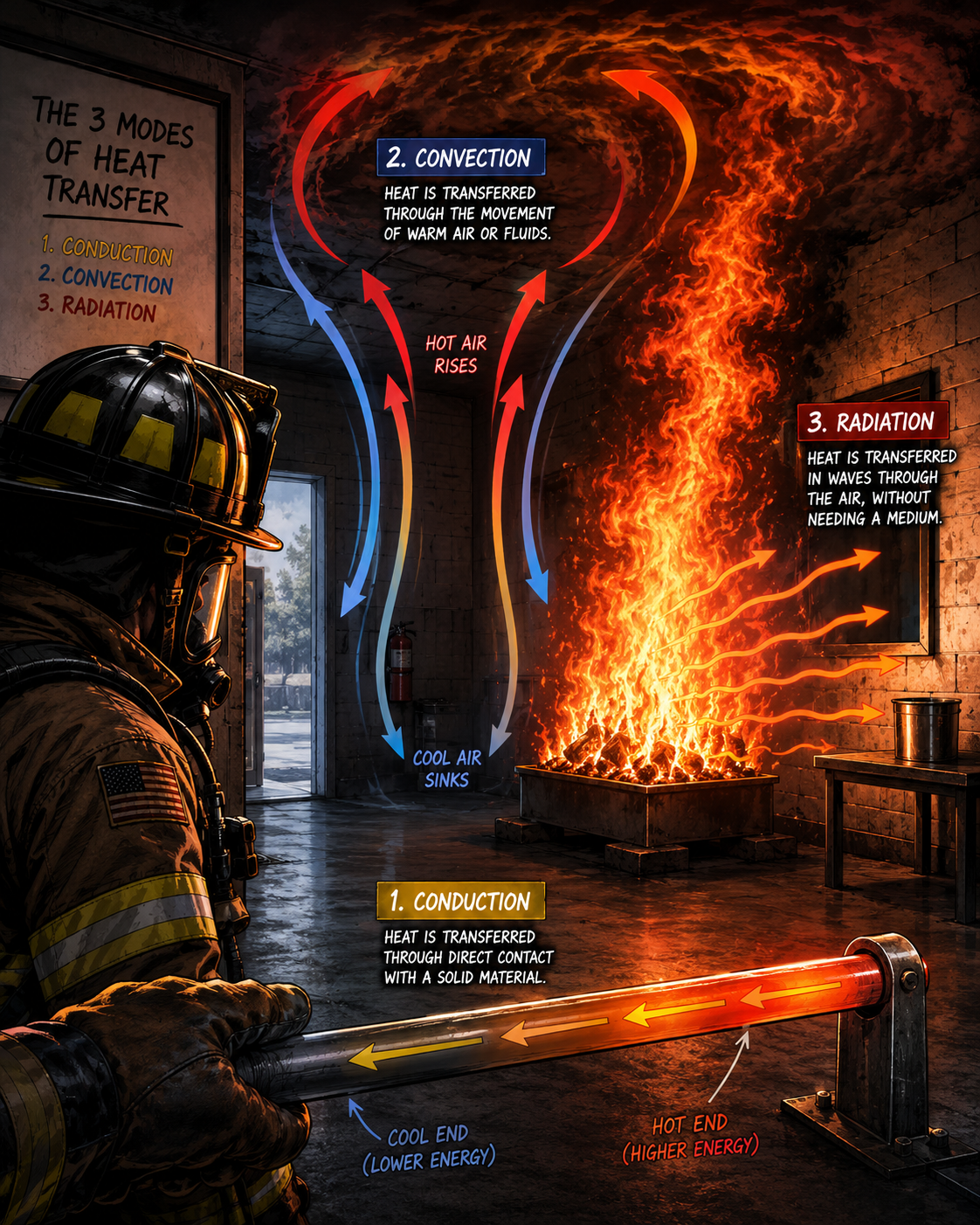
Three classic paths.
Conduction, convection, and radiation are the big heat-transfer ideas behind fire spread.
1. Conduction: heat through solid materials
Conduction is heat moving through a solid object. A hot metal pipe, beam, pan, door hardware, wall assembly, or structural member can transfer heat from one area to another. In a building fire, this can contribute to hidden heating inside walls, ceilings, and connected spaces.
For everyday safety, conduction explains why hot surfaces matter. A heater too close to fabric, a pan left on a stove, or overheated equipment can transfer enough heat to nearby fuel to start a fire.
Manga memory cue
Conduction is the fire ninja sneaking through solid objects.
2. Convection: heat carried by moving gases
Convection is heat carried by hot gases and smoke. Since hot gases rise, fire can move heat upward into ceilings, stairwells, attics, upper floors, hallways, and void spaces. This is why smoke layers can form near the ceiling and bank downward as a fire grows.
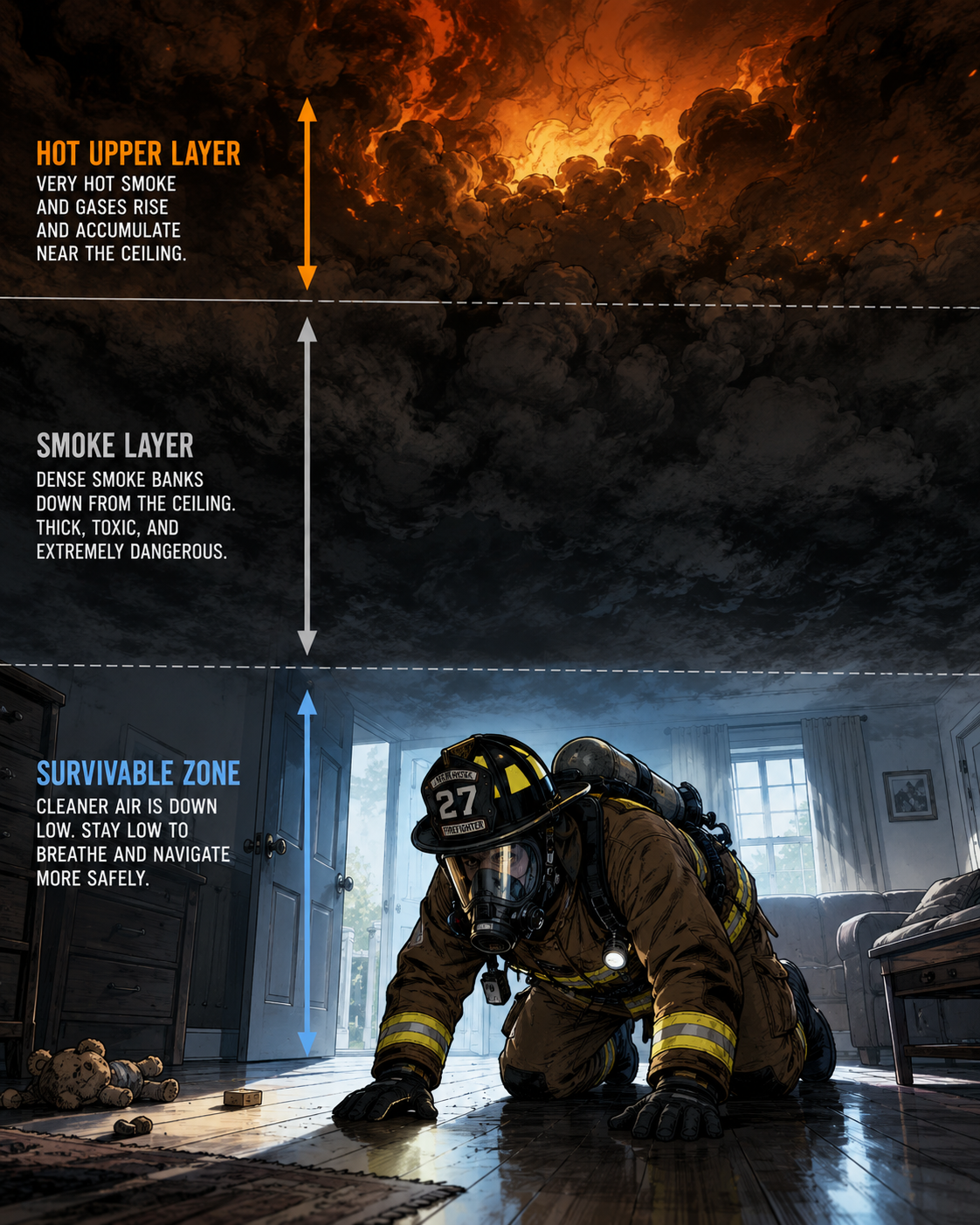
Hot smoke rises
Smoke can carry heat and unburned fuel into upper layers and connected spaces.
Smoke guide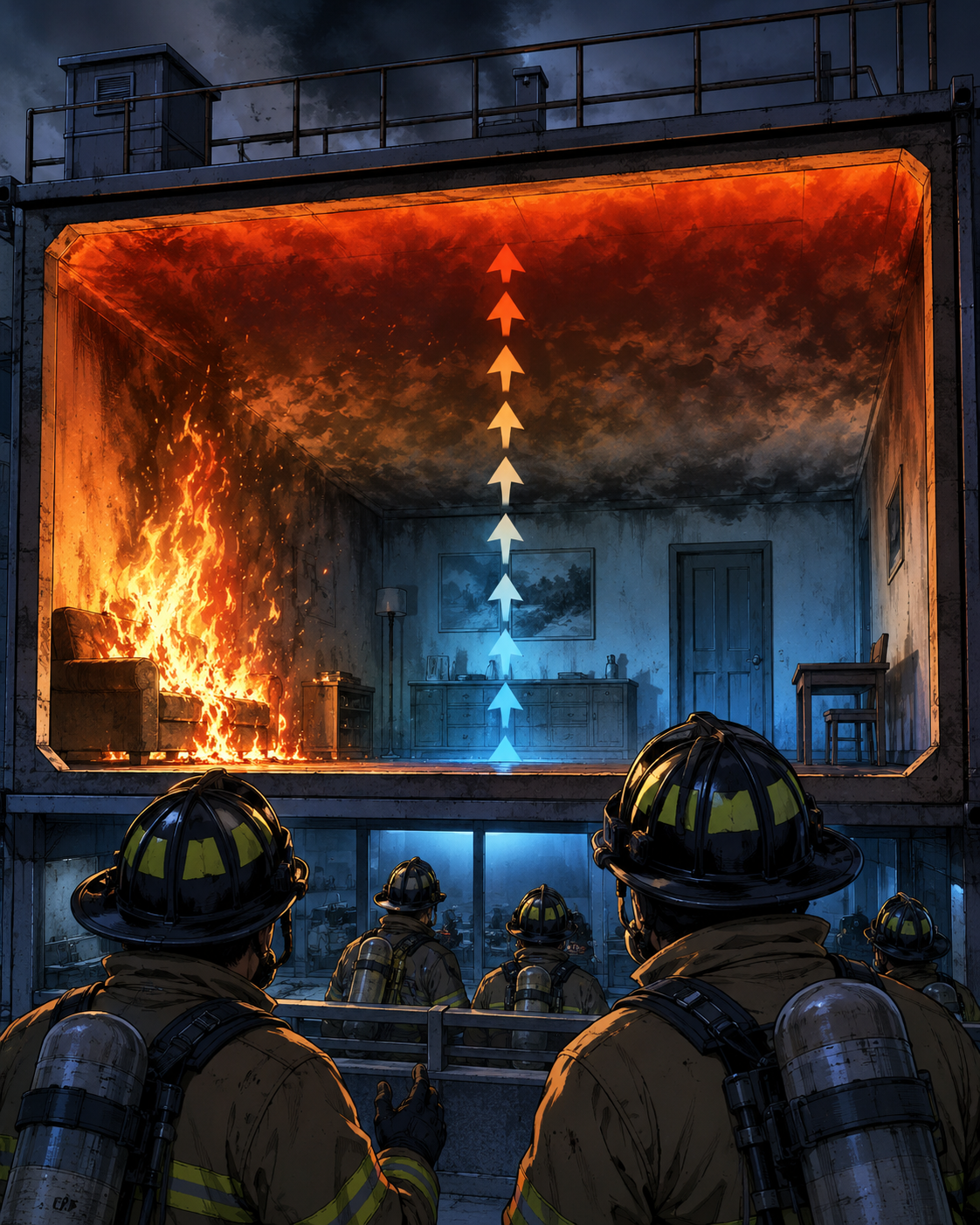
Rooms heat up
As temperature rises, more materials can begin releasing flammable gases.
Fire science3. Radiation: heat across open space
Radiation is heat energy traveling through space. You can feel radiant heat standing near a campfire, even without touching the flame. In a structure fire, radiant heat can warm nearby furniture, walls, curtains, siding, fences, or neighboring buildings. In wildfire, radiant heat can preheat vegetation and building materials before flames arrive.
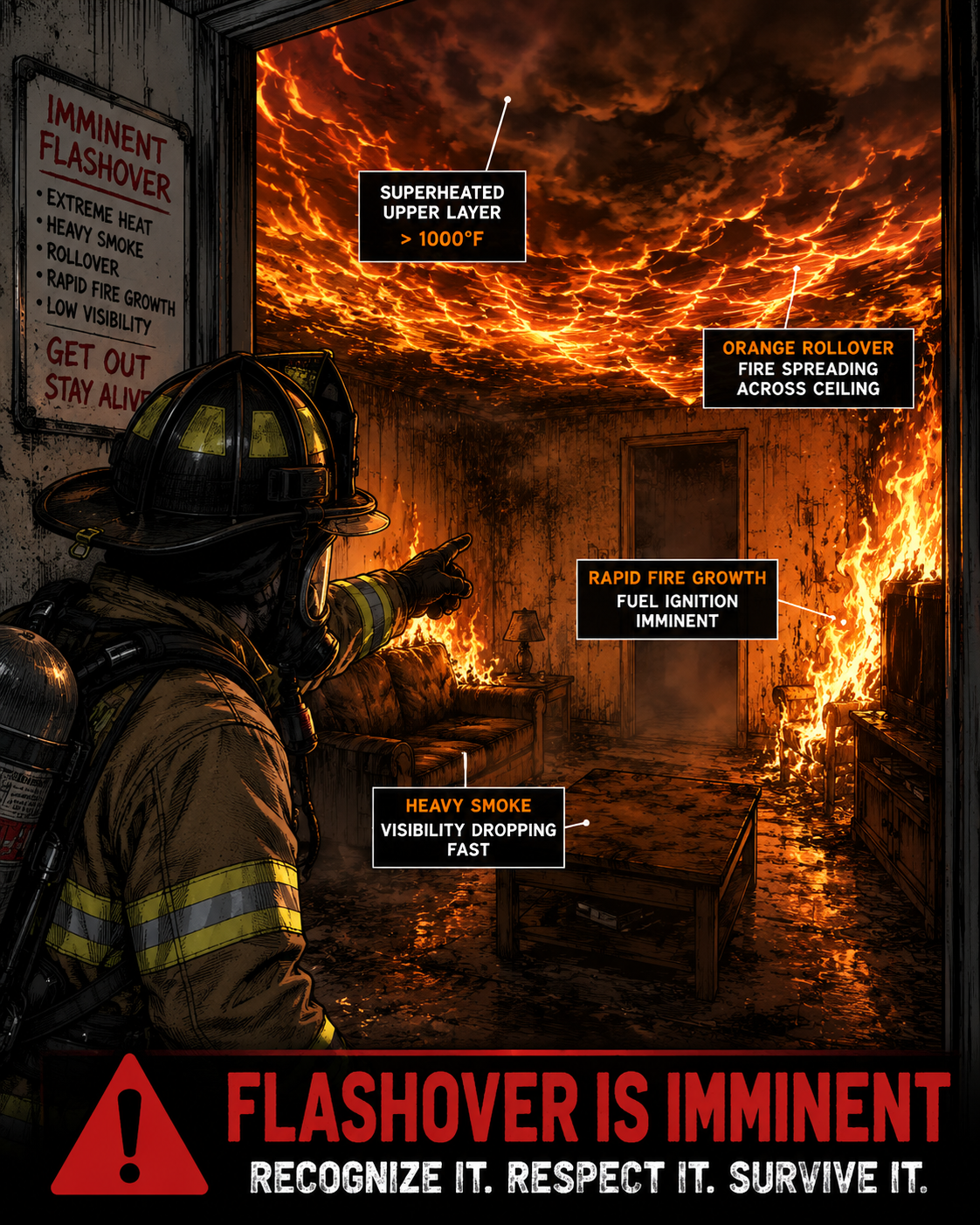
Radiant heat can preheat fuel.
When enough fuel in a room becomes hot enough, fire growth can accelerate dangerously.
Fire spreads through fuel
Heat transfer is only part of the story. Fire also needs fuel. Fuel arrangement matters: a pile of paper, a couch, dry brush, wood siding, curtains, stored boxes, attic contents, mulch, fences, and roof debris can all change how fire grows.
In homes, keeping combustibles away from heat sources helps reduce risk. In wildfire areas, brush clearance, clean gutters, ember-resistant vents, and defensible space are all fuel-management ideas.
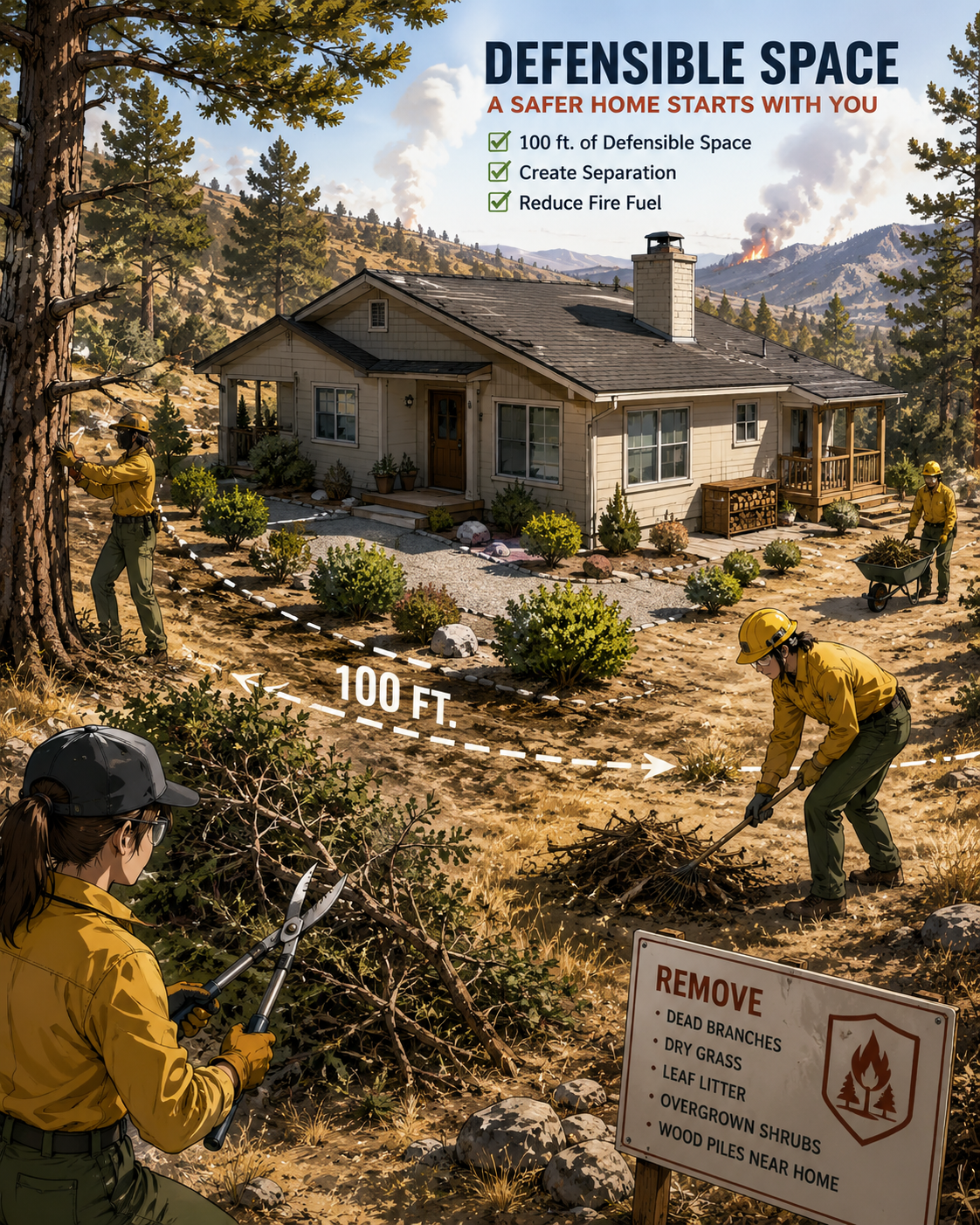
Reduce fuel
Less available fuel can slow ignition and reduce fire intensity near a structure.
Defensible space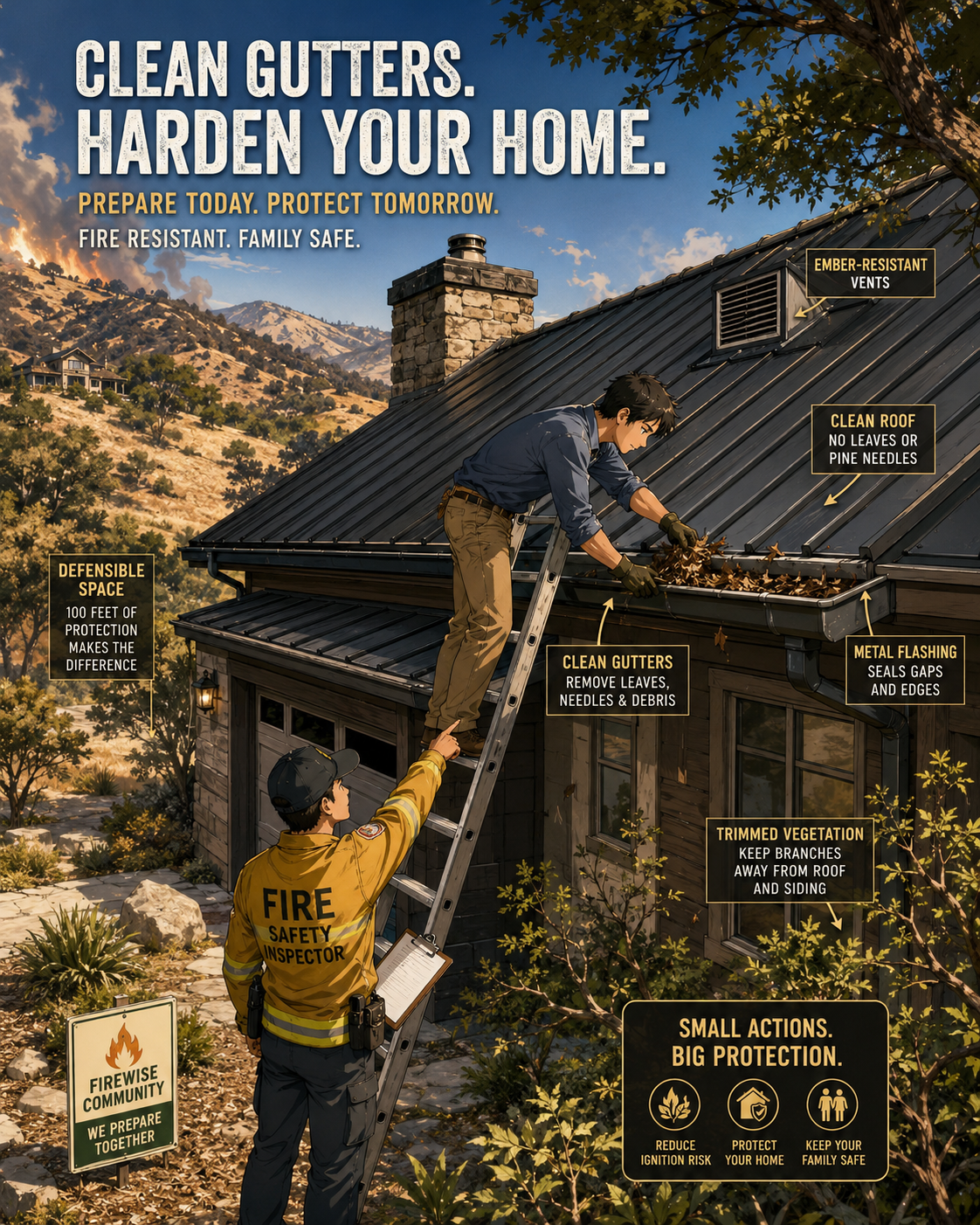
Remove roof fuel
Leaves, needles, and debris in gutters can become ignition points during ember storms.
Ember stormsAirflow can make fire grow faster
Fire uses oxygen. When doors open, windows fail, wind pushes into a building, or ventilation paths are created, fire conditions can change. More air can feed flames and increase heat release. That is why firefighters coordinate ventilation, hose lines, entry, and door control.
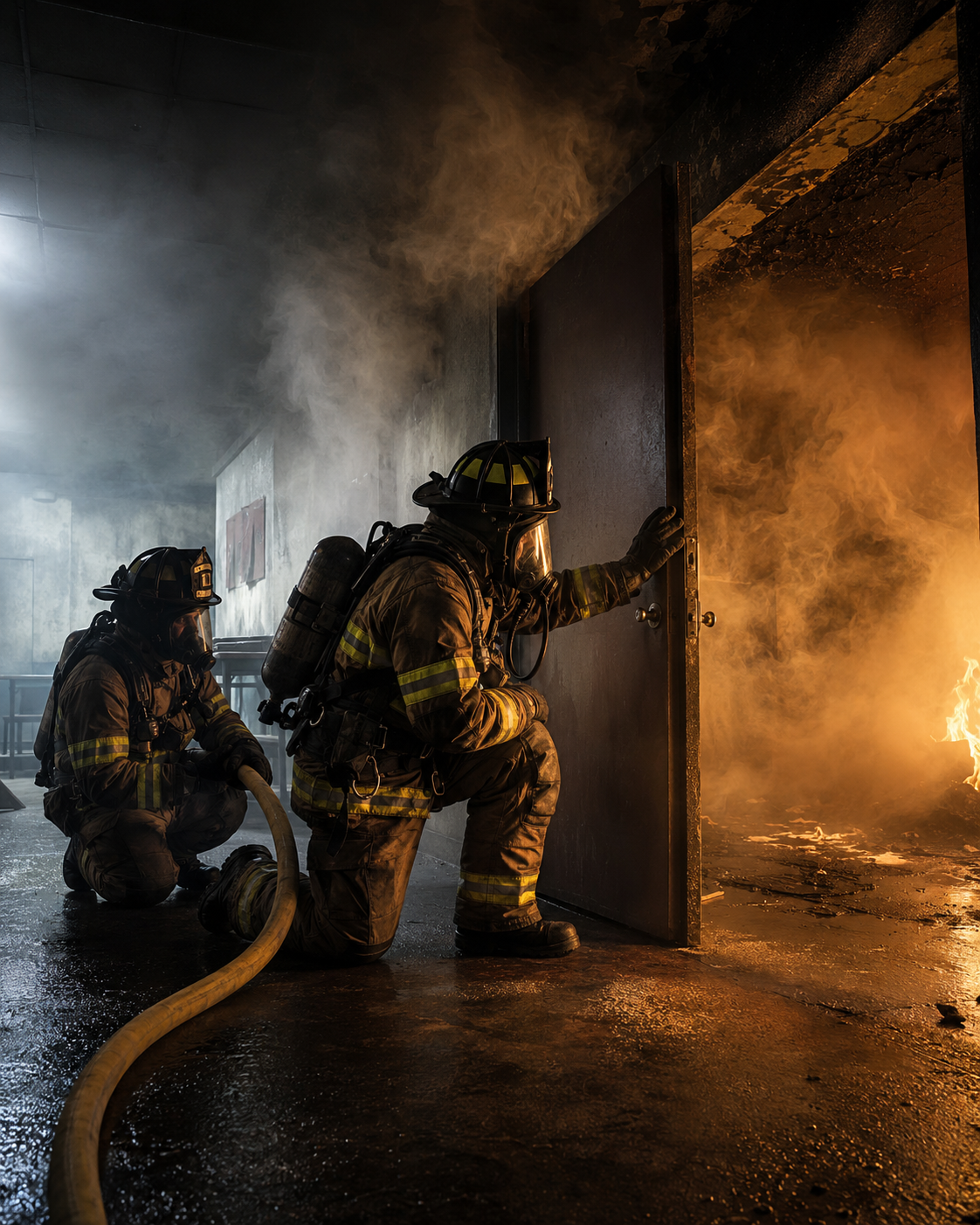
Airflow changes the fire.
A door is not just an opening. It can become a path for oxygen, heat, and smoke movement.
Smoke can spread danger before flames arrive
Smoke can move through hallways, stairwells, vents, cracks, attics, and open doors. It reduces visibility, carries heat, and may contain toxic gases. Smoke can reach people before visible flames do.
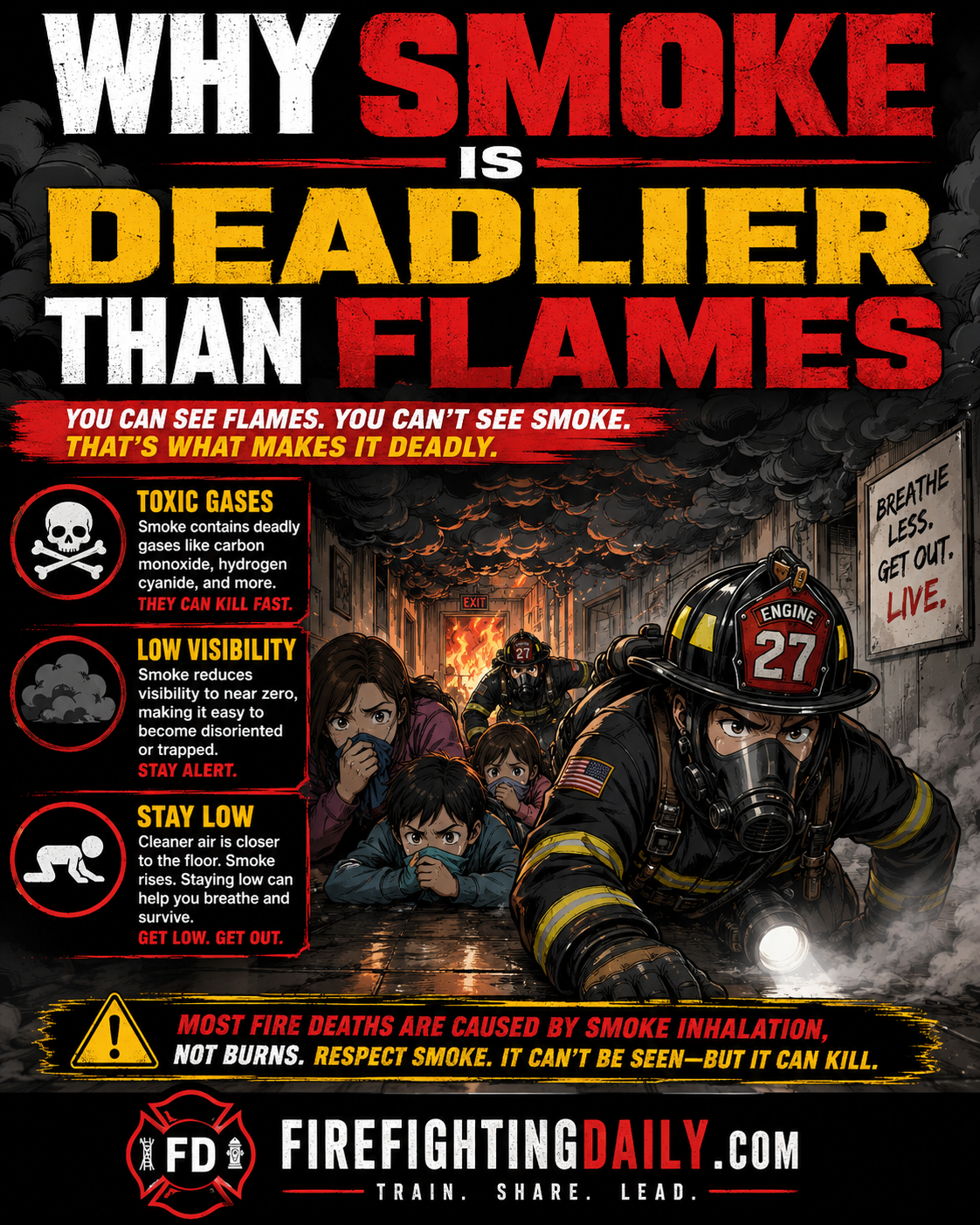
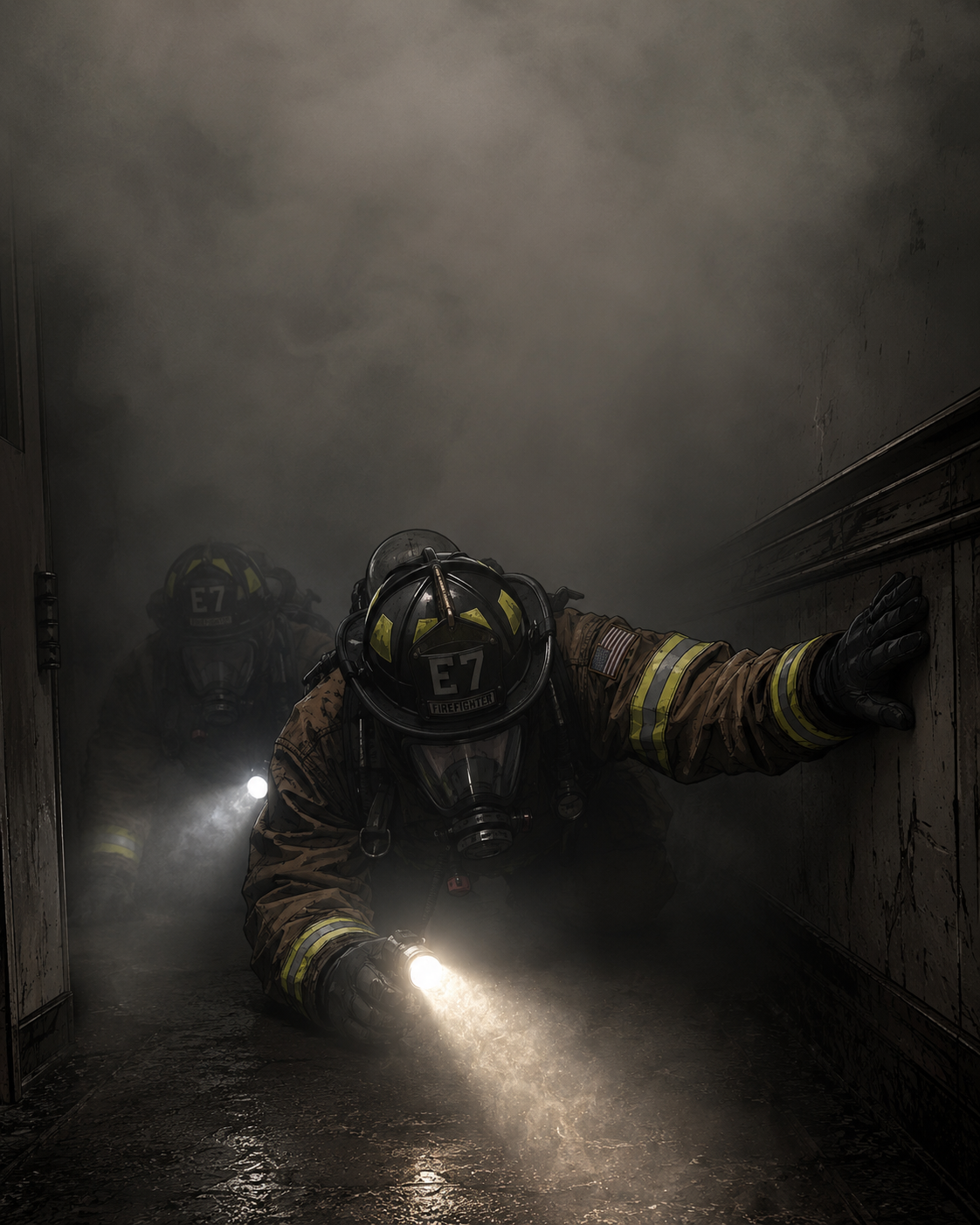
Visibility can vanish
A familiar hallway can become unreadable when smoke drops visibility near zero.
Escape planningRoom-to-room fire spread
Inside a building, fire may spread through open doors, broken windows, hallways, stairways, wall cavities, attics, ceiling spaces, vents, or exterior openings. Firefighters watch for extension: fire moving beyond the original area.
Closed doors can sometimes slow smoke and fire spread. That is why “close before you doze” and closed-door safety messages exist. A closed door is not magic, but it can buy time and limit airflow under some conditions.
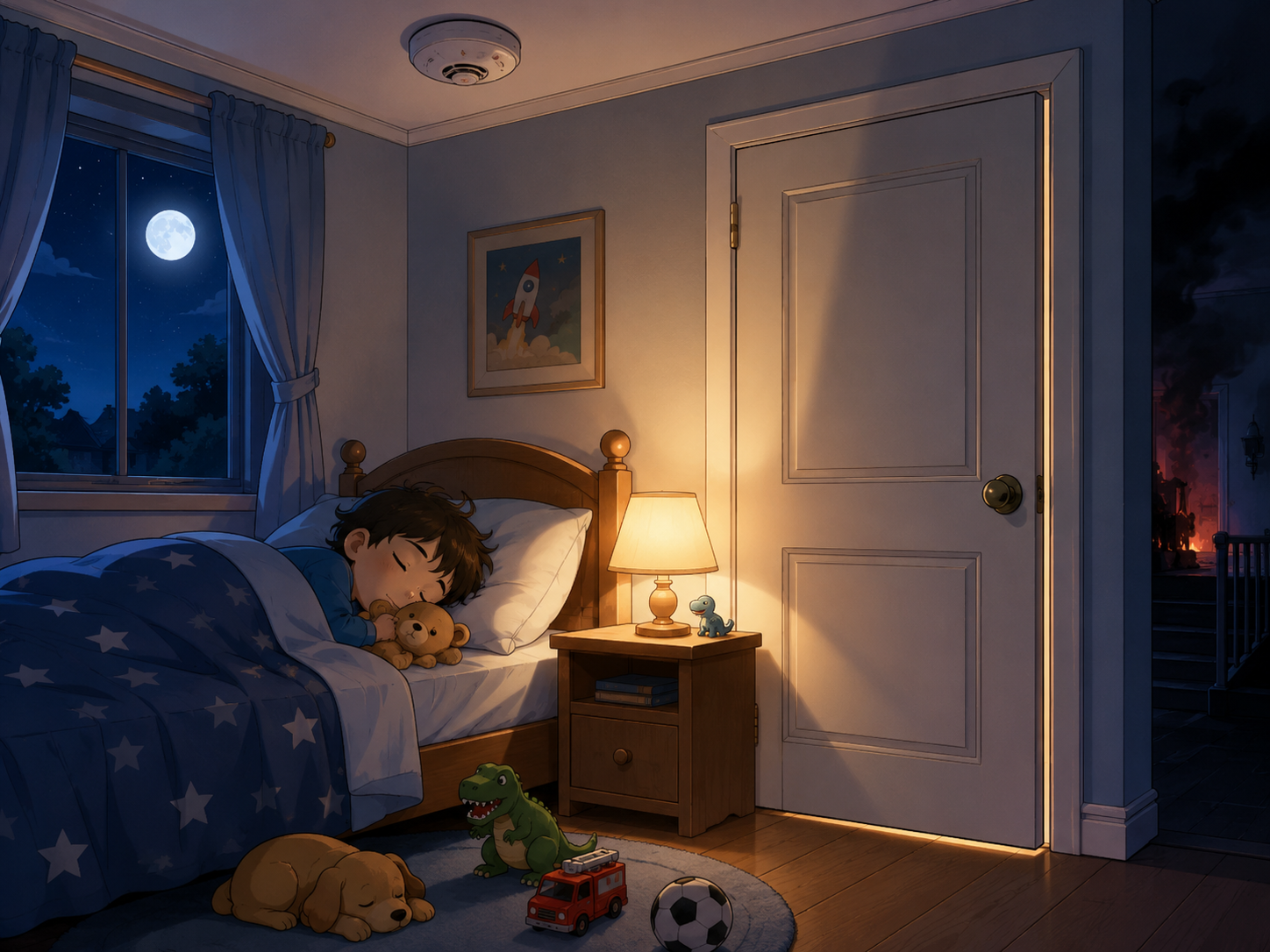
Closed doors can buy time.
A closed bedroom door may slow smoke, heat, and airflow compared with an open door.
Flashover: a dangerous fire-growth stage
When a room heats up enough, many surfaces can ignite nearly at once. This is called flashover. It is a professional firefighter safety concern and one reason public escape time is so important.
Public lesson
Do not wait to see flames. If alarms sound or smoke is present, get out and call emergency services. Never re-enter a burning or smoke-filled building.
Wildfire spread: wind, slope, fuel, and embers
Wildfire spreads differently from a room fire, but the same core ideas appear: heat moves, fuel ignites, oxygen supports combustion, and wind changes everything. Slope can preheat vegetation uphill. Wind can push flames and carry embers across roads, yards, and neighborhoods.
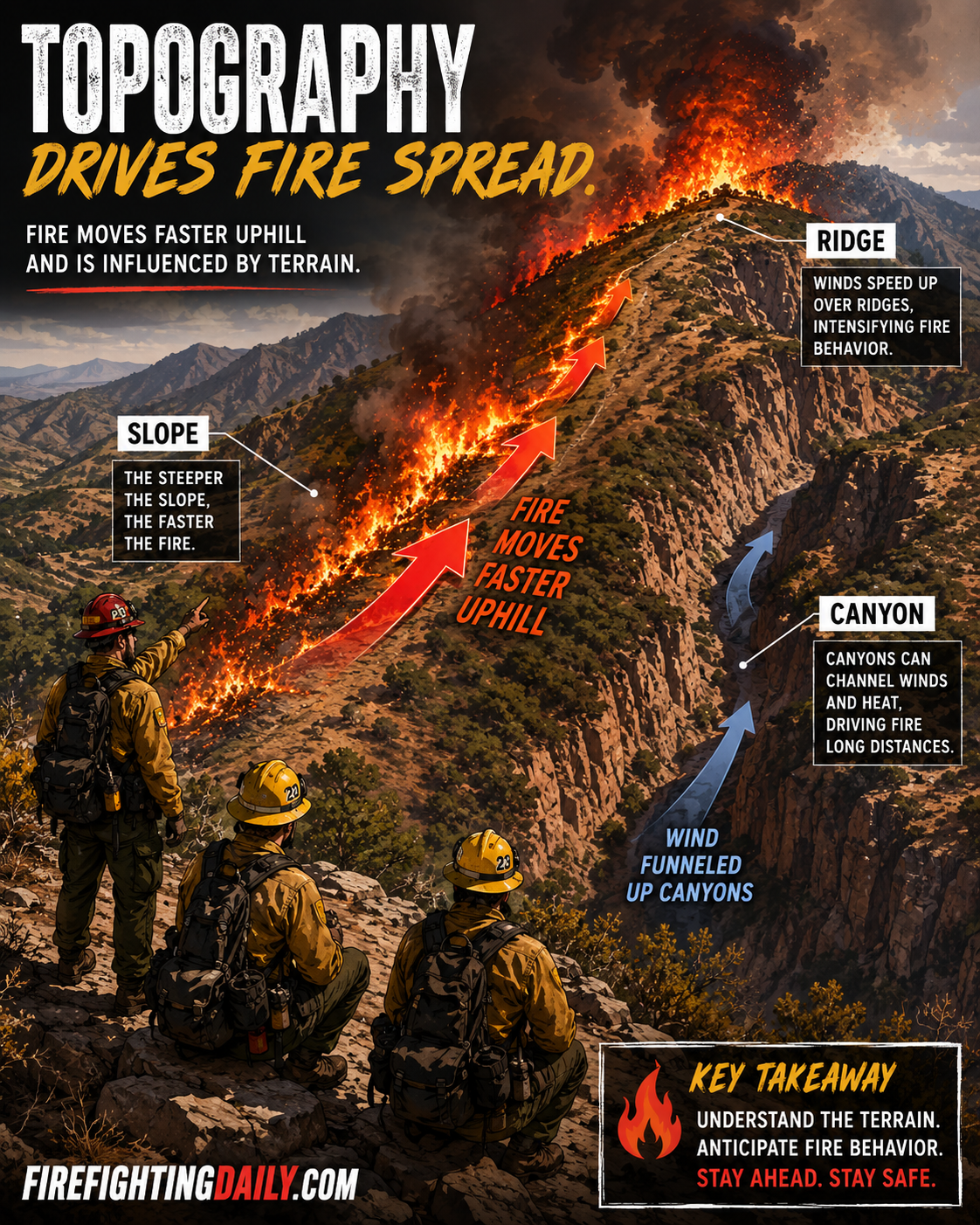
Topography
Terrain shapes how heat, flames, and wind interact with fuel.
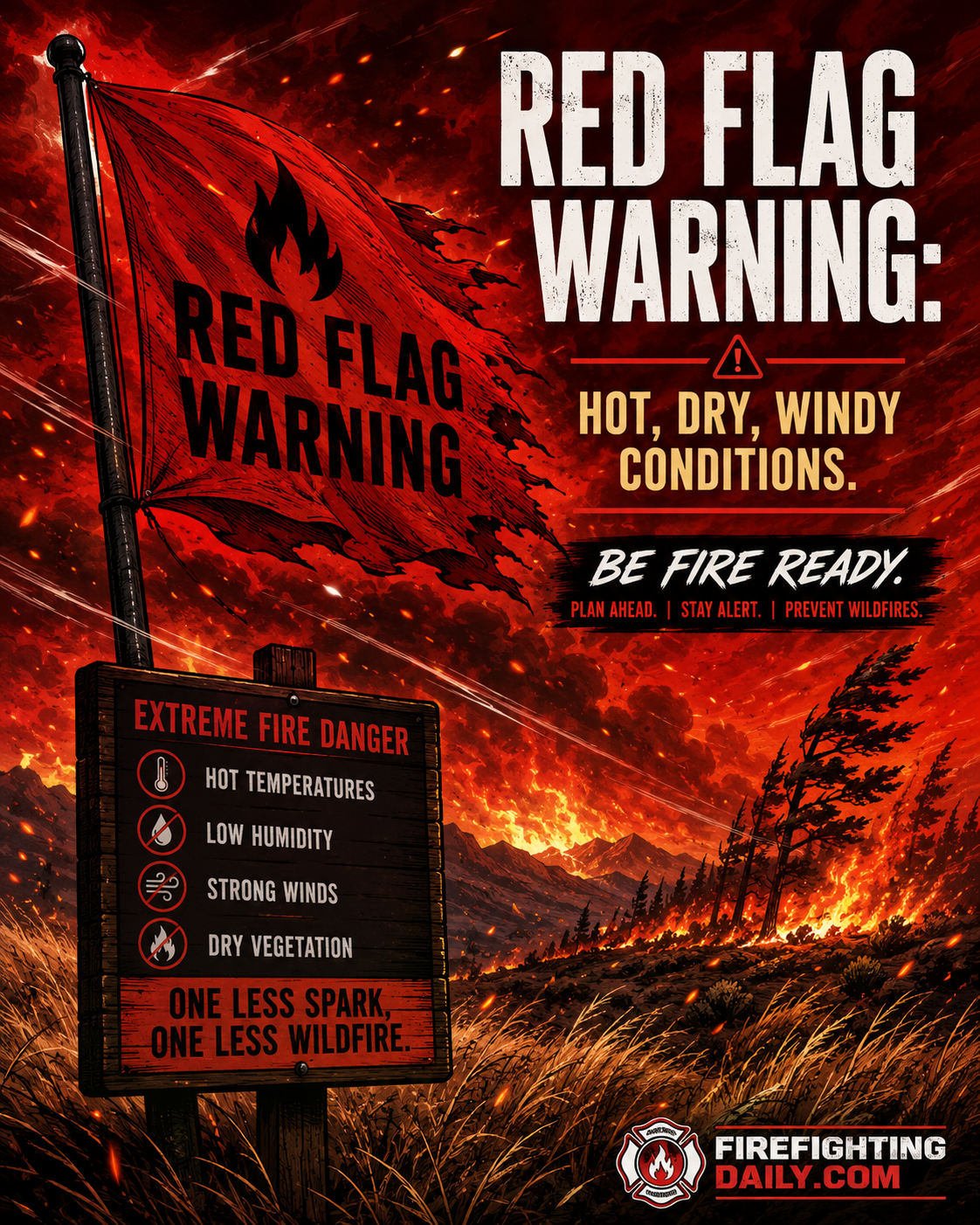
Weather
Hot, dry, windy conditions can make fire spread more aggressively.
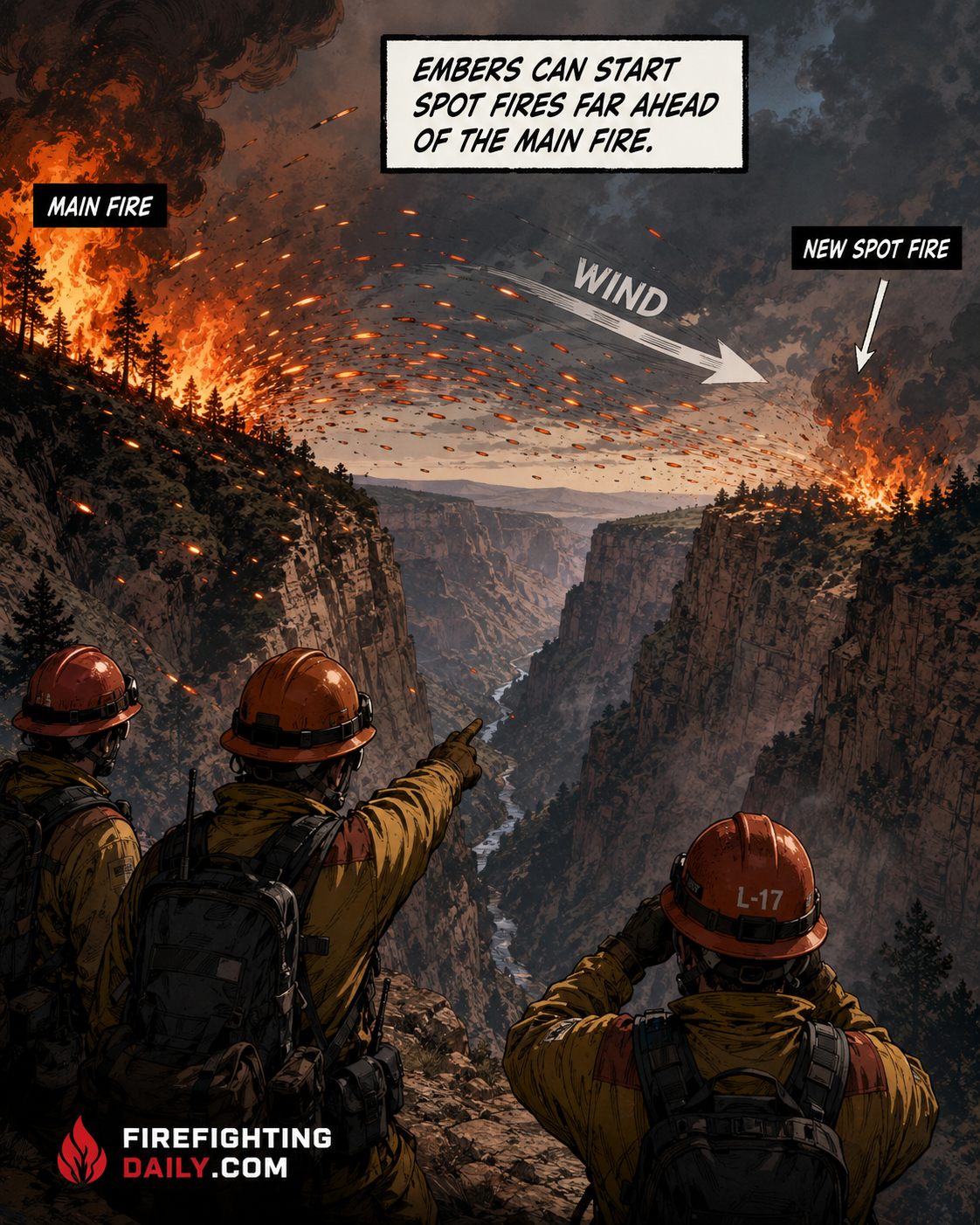
Spot fires
Embers can start new fires ahead of the main fire front.
How firefighters slow spread
Firefighters may slow spread by cooling heat, cutting off fuel, protecting exposures, controlling doors, coordinating ventilation, applying water, using foam where appropriate, creating fireline in wildland settings, and evacuating people from threatened areas.
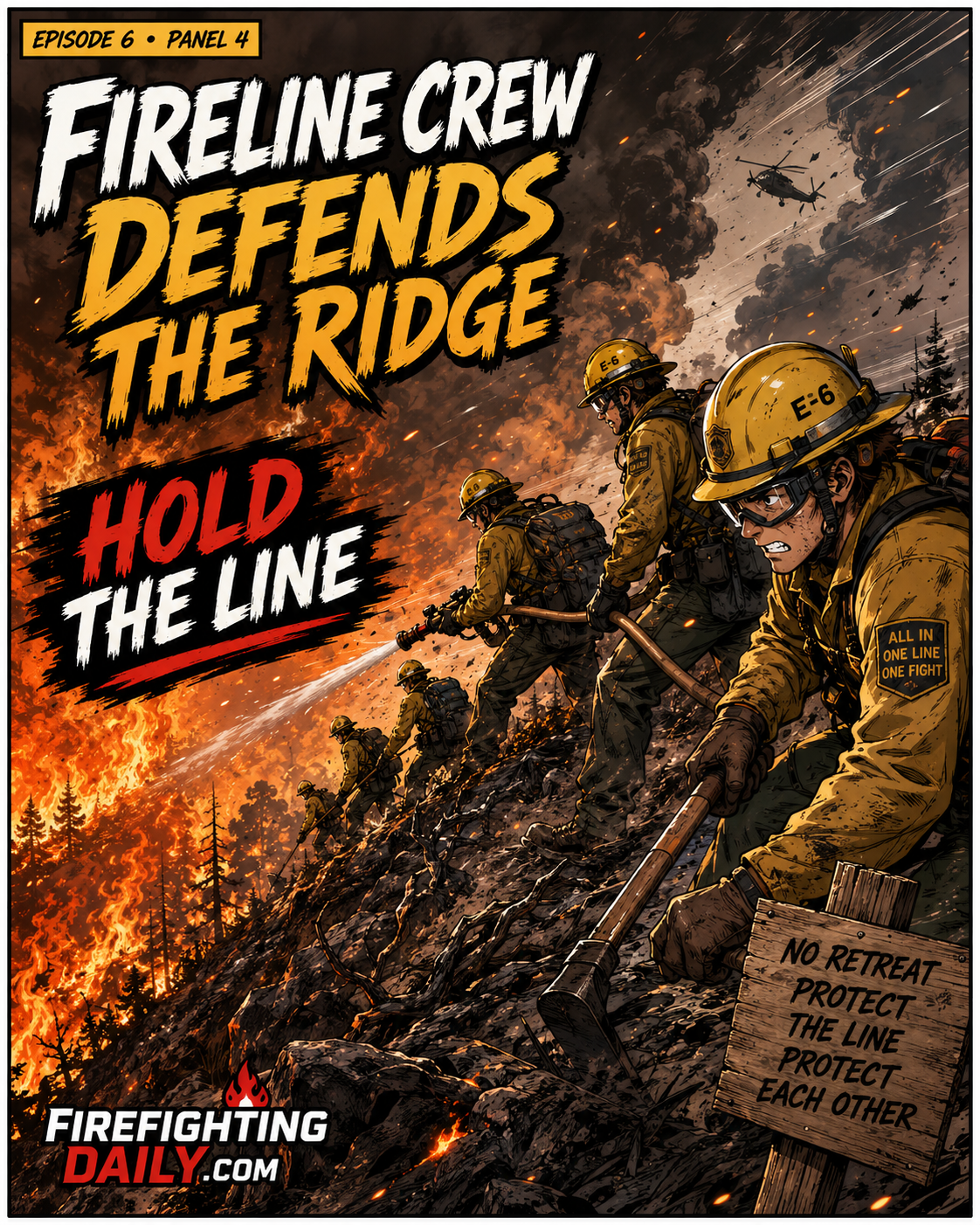
Wildland crews fight spread at landscape scale.
They read wind, terrain, fuel, access, escape routes, and the fire’s likely path.
Why this matters at home
Knowing how fire spreads makes ordinary safety steps make more sense. Smoke alarms warn early. Escape plans reduce hesitation. Closed doors can slow smoke movement. Clear exits help evacuation. Kitchen safety reduces ignition risk. Defensible space reduces wildfire fuel near the home.
Captain Ember’s summary
“Fire spreads when heat finds fuel and air gives it a path. Your job is not to outfight it. Your job is to get out early and let trained crews work.”