Professor Combustion explains
Fire is not one thing. It is a relationship.
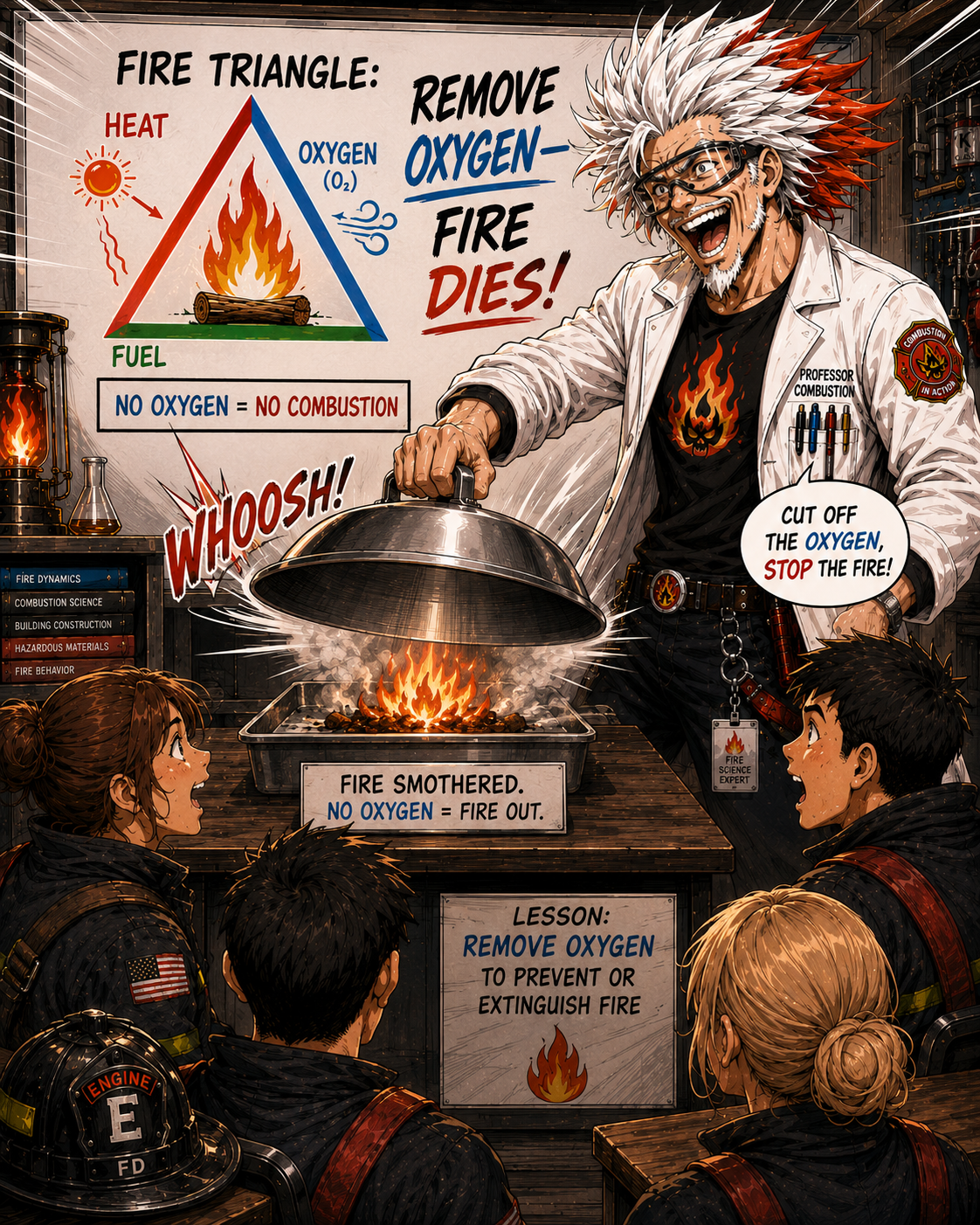
The fire triangle is one of the simplest ways to understand combustion. A fire needs heat, fuel, and oxygen. These three sides support each other. If all three are present in the right conditions, fire can start and continue burning.
If one side is removed or controlled, the reaction can slow, weaken, or stop. That idea sits behind many firefighting tactics, home safety lessons, and fire prevention rules.
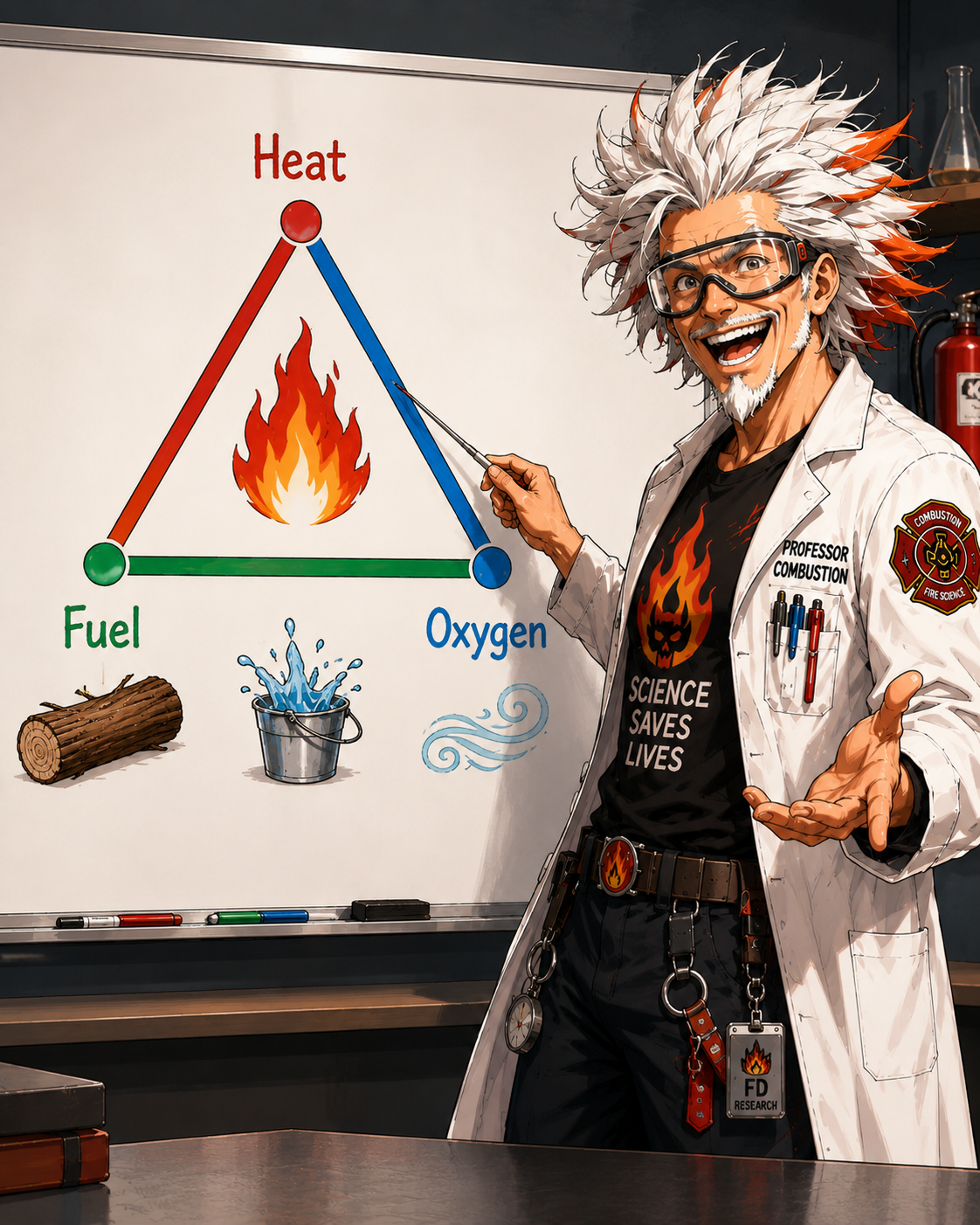
The triangle is the shortcut.
Heat starts the reaction. Fuel feeds it. Oxygen helps it breathe.
Side 1: Heat
Heat raises fuel to the point where it can ignite. Heat can come from open flames, sparks, hot surfaces, electrical faults, lightning, friction, cooking equipment, heaters, embers, or radiant energy from another fire.
Firefighters may control heat by applying water, cooling hot surfaces, protecting nearby fuel, or separating burning material from things that have not yet ignited.
Manga memory cue
Heat is the villain’s starter spell. Without enough heat, the fire monster cannot wake up.
Side 2: Fuel
Fuel is anything that can burn. In a home, fuel can include furniture, curtains, paper, clothing, wood framing, carpets, cooking oil, plastics, gas, and stored materials. In a wildfire, fuel includes grasses, leaves, brush, trees, fences, decks, mulch, and debris in gutters.
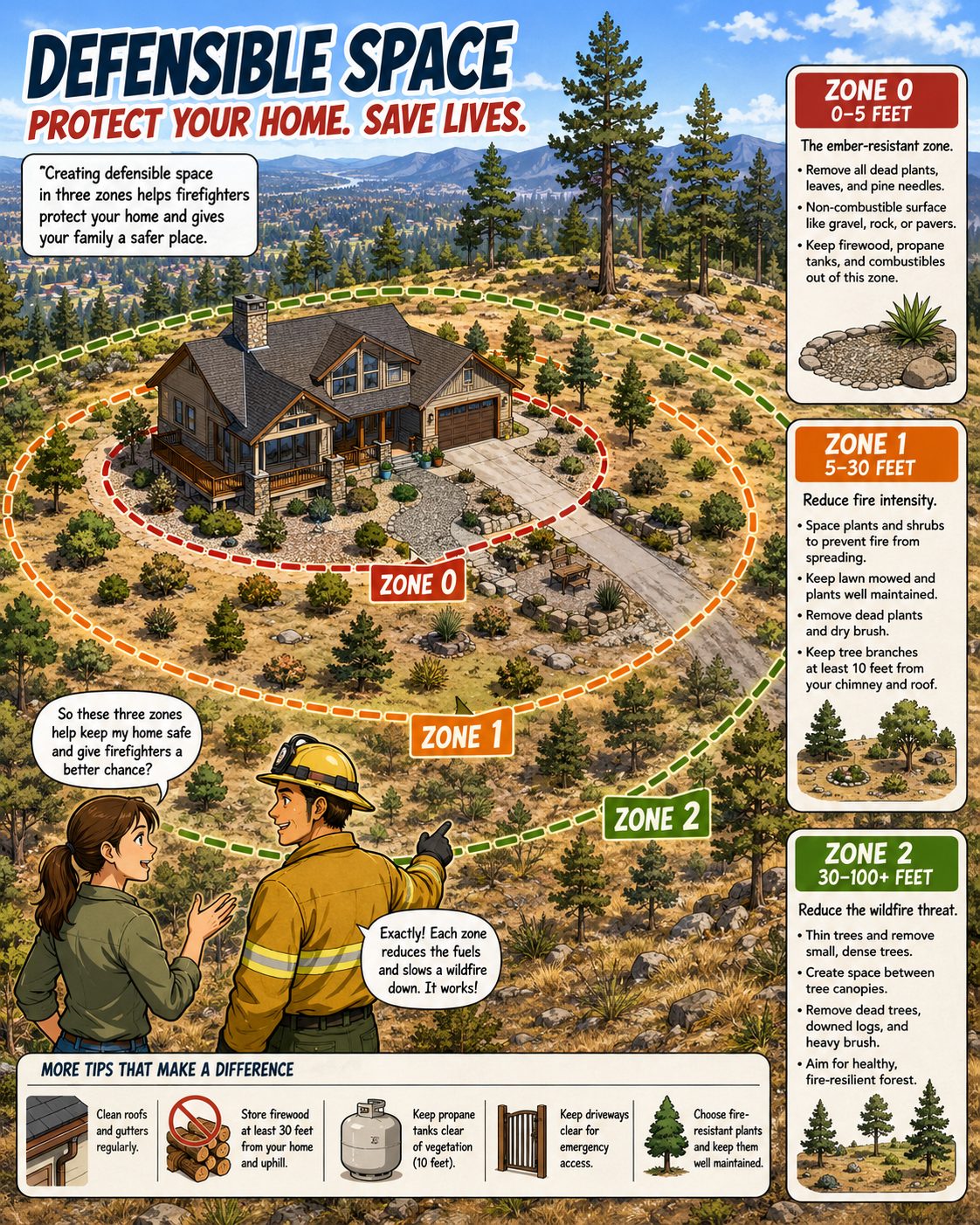
Fire prevention often means fuel control: clear brush, clean gutters, keep combustibles away from heat sources, store chemicals properly, and keep exits clear.
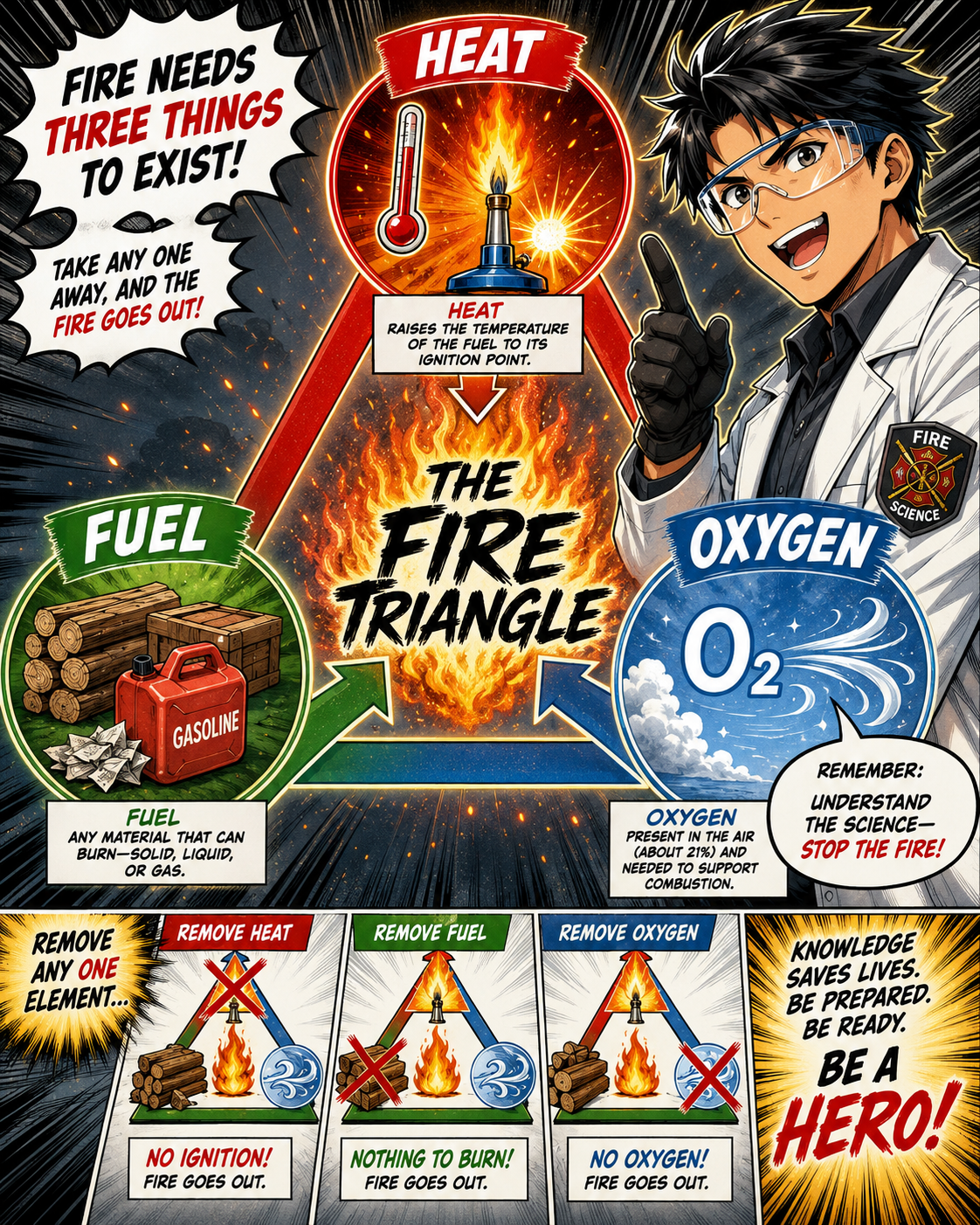
Fuel is the fire’s food.
Less fuel means less for the fire to consume, spread through, or throw embers from.
Side 3: Oxygen
Oxygen is in the air around us. Fire uses oxygen to support combustion. When a door opens, a window breaks, or wind pushes into a structure, the fire may receive more air. That can change conditions quickly.
Firefighters pay attention to oxygen and airflow because ventilation can help or hurt depending on timing, fire location, water application, wind, and building layout.
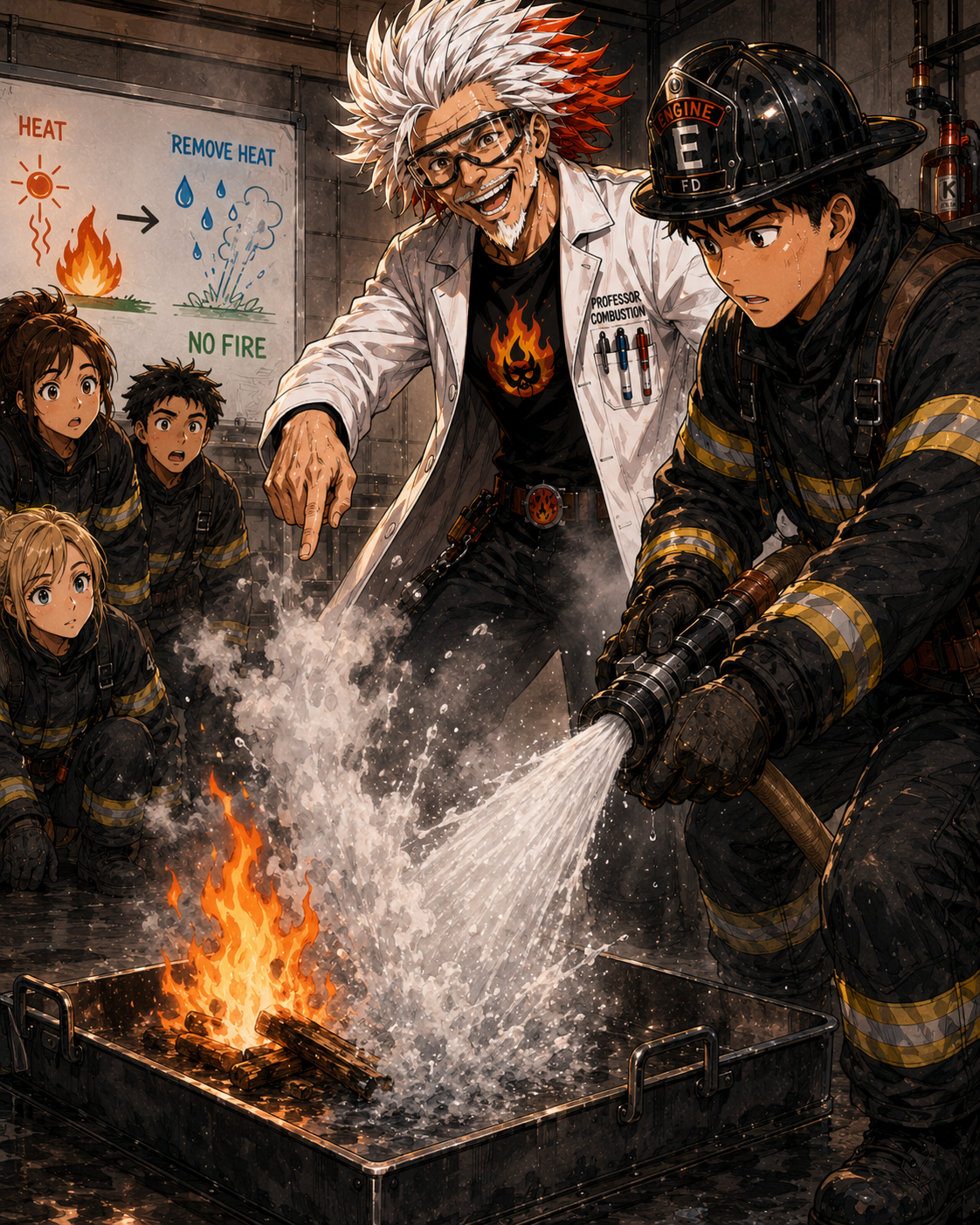
Remove Heat
Cooling with water is one common way firefighters reduce heat.
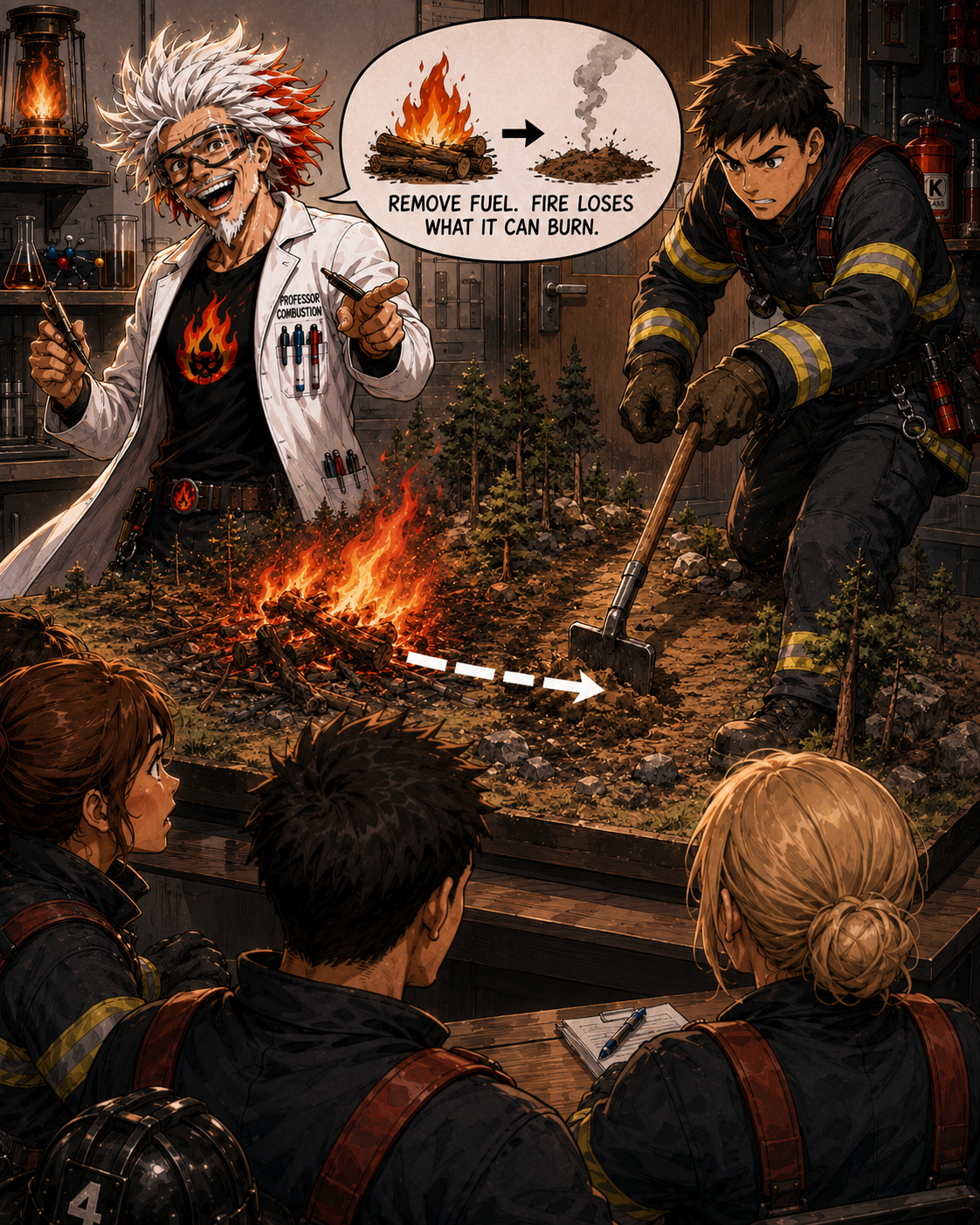
Remove Fuel
Clearing brush, moving combustibles, or creating firebreaks can reduce available fuel.
Limit Oxygen
Some fires can be smothered or controlled by reducing oxygen, but the situation matters.
How firefighters break the triangle
Firefighters do not think of the triangle as a cartoon only. They use the idea in real tactics. Applying water reduces heat. Removing vegetation or combustibles reduces fuel. Controlling doors and openings affects oxygen and airflow. Different fires require different methods, and the wrong method can be dangerous.
Important public note
Not every fire should be fought by a bystander. If a fire is growing, producing heavy smoke, spreading, blocking an exit, or creating any doubt, leave immediately and call emergency services. Small extinguishers are only for small, contained fires when escape is clear and the user has been trained.
Kitchen fire example
A small pan fire shows why the triangle matters. The oil is fuel. The stove provides heat. The air provides oxygen. The safest action depends on the situation, but a common safety lesson is: do not panic and throw water on a grease fire. Water can make burning oil spread violently.
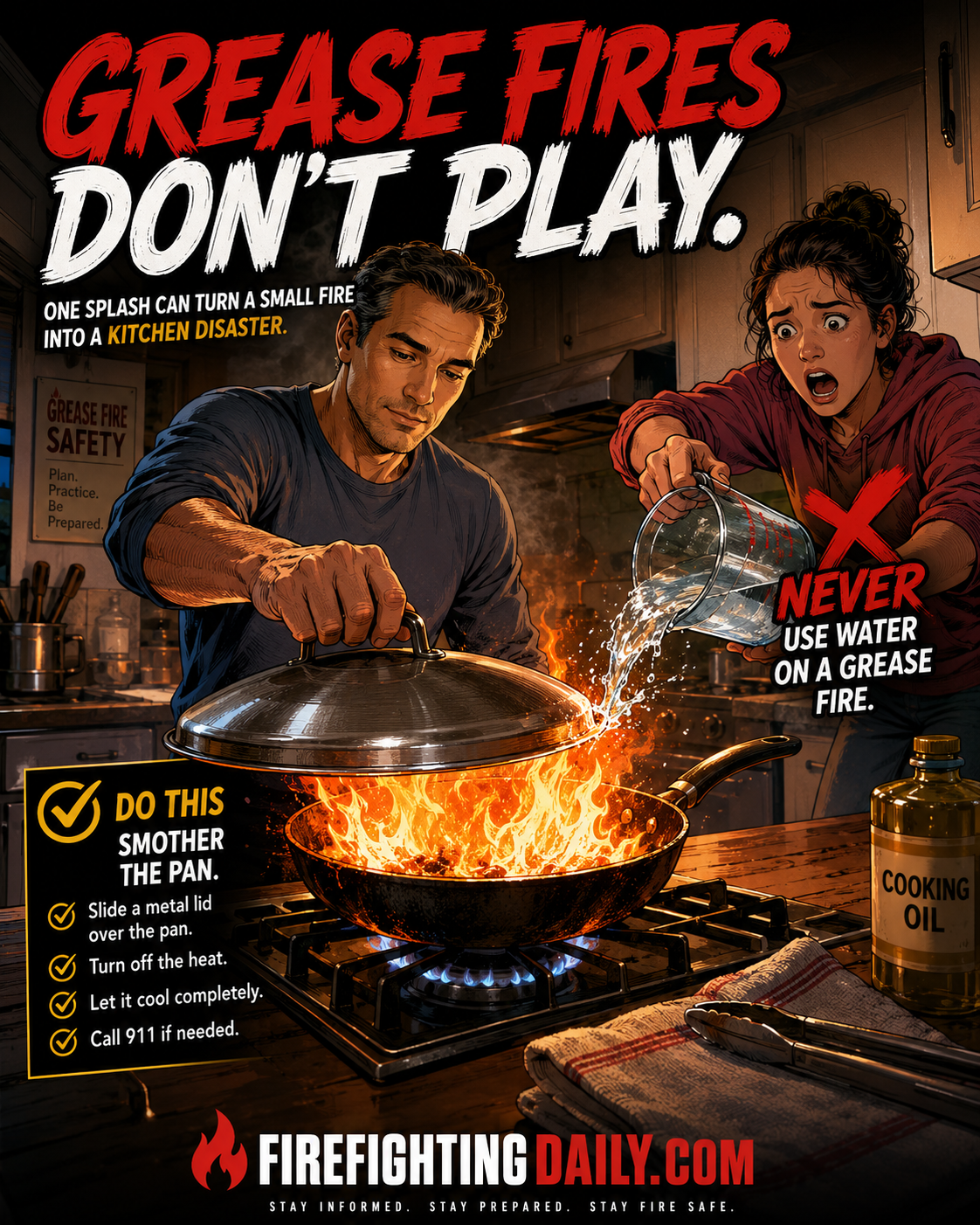
Know the hazard before acting.
Different fuels behave differently. Grease fires, electrical fires, vegetation fires, and structure fires are not the same problem.
Wildfire example
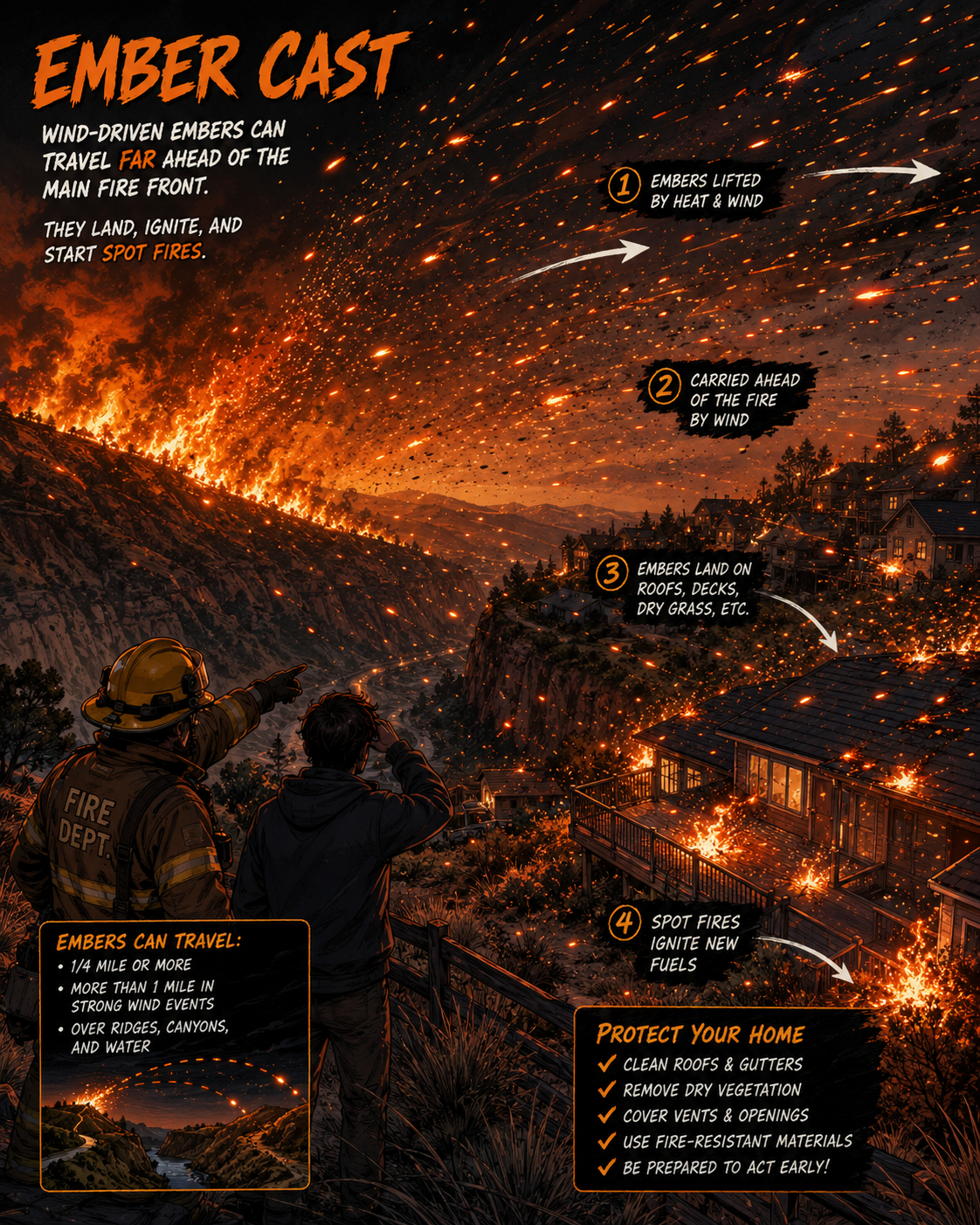
In wildfire, the triangle becomes landscape-sized. Heat may come from flames or embers. Fuel may be dry brush, leaves, grass, fences, decks, or roof debris. Oxygen and wind can drive the fire and carry embers ahead of the flame front.
Why the fire triangle is useful
The triangle gives people a simple mental model. It explains why water helps cool many fires, why clearing brush helps wildfire safety, why closing a door can slow smoke and airflow, why smoke alarms buy escape time, and why different fire types require different responses.
It is not the whole story. Fire behavior also involves chemistry, heat transfer, fuel arrangement, ventilation, pressure, building design, weather, and time. But the triangle is the starting map.
Professor Combustion’s summary
“Fire needs heat, fuel, and oxygen. Safety starts when you learn which side of the triangle is feeding the danger.”
See it in the manga
Episode 4 turns the fire triangle into a classroom adventure. Professor Combustion walks the crew through heat, fuel, oxygen, and the three ways to weaken the fire monster.
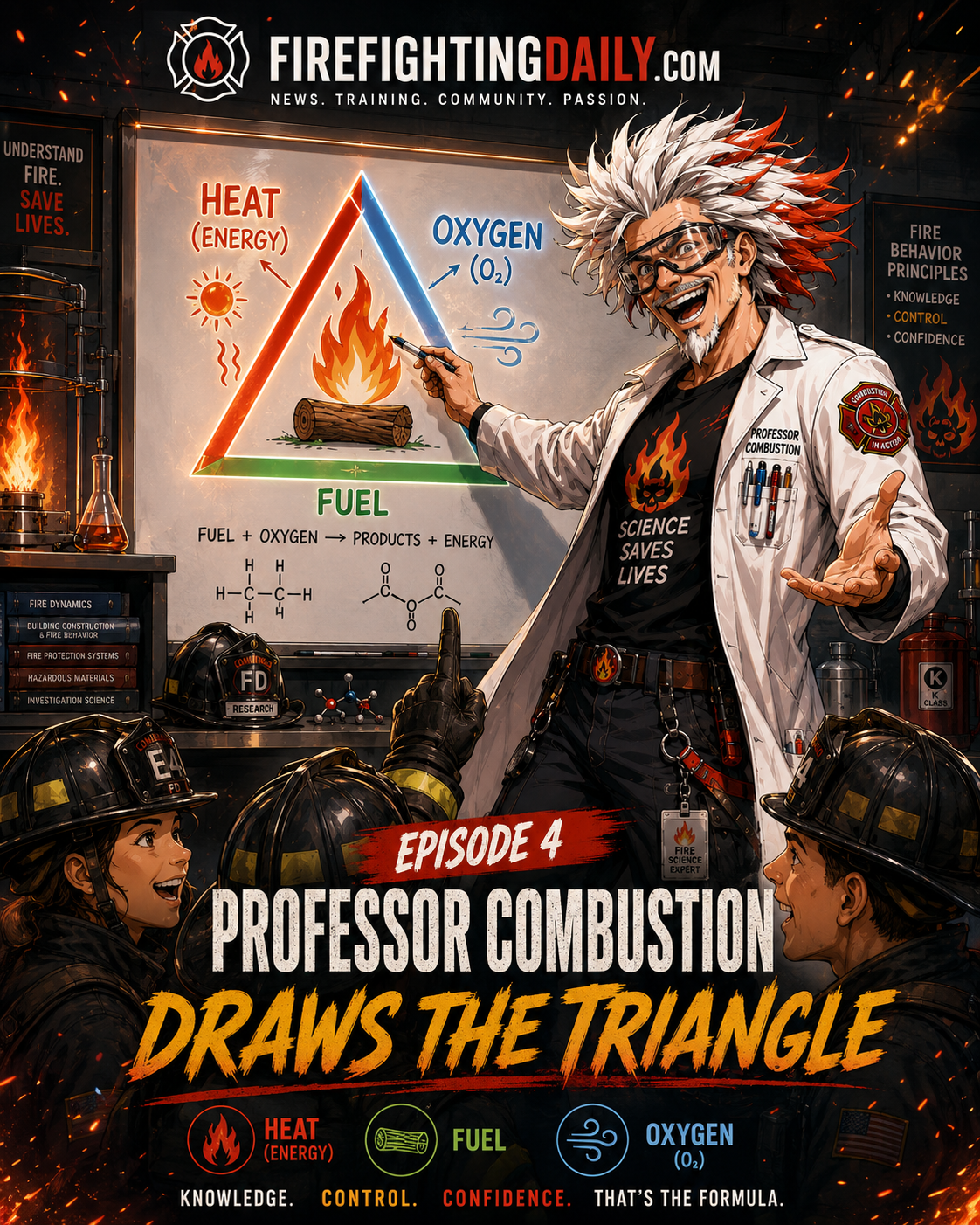
Professor Combustion Draws the Triangle
The class learns why fire needs three sides and why science matters.
Read episode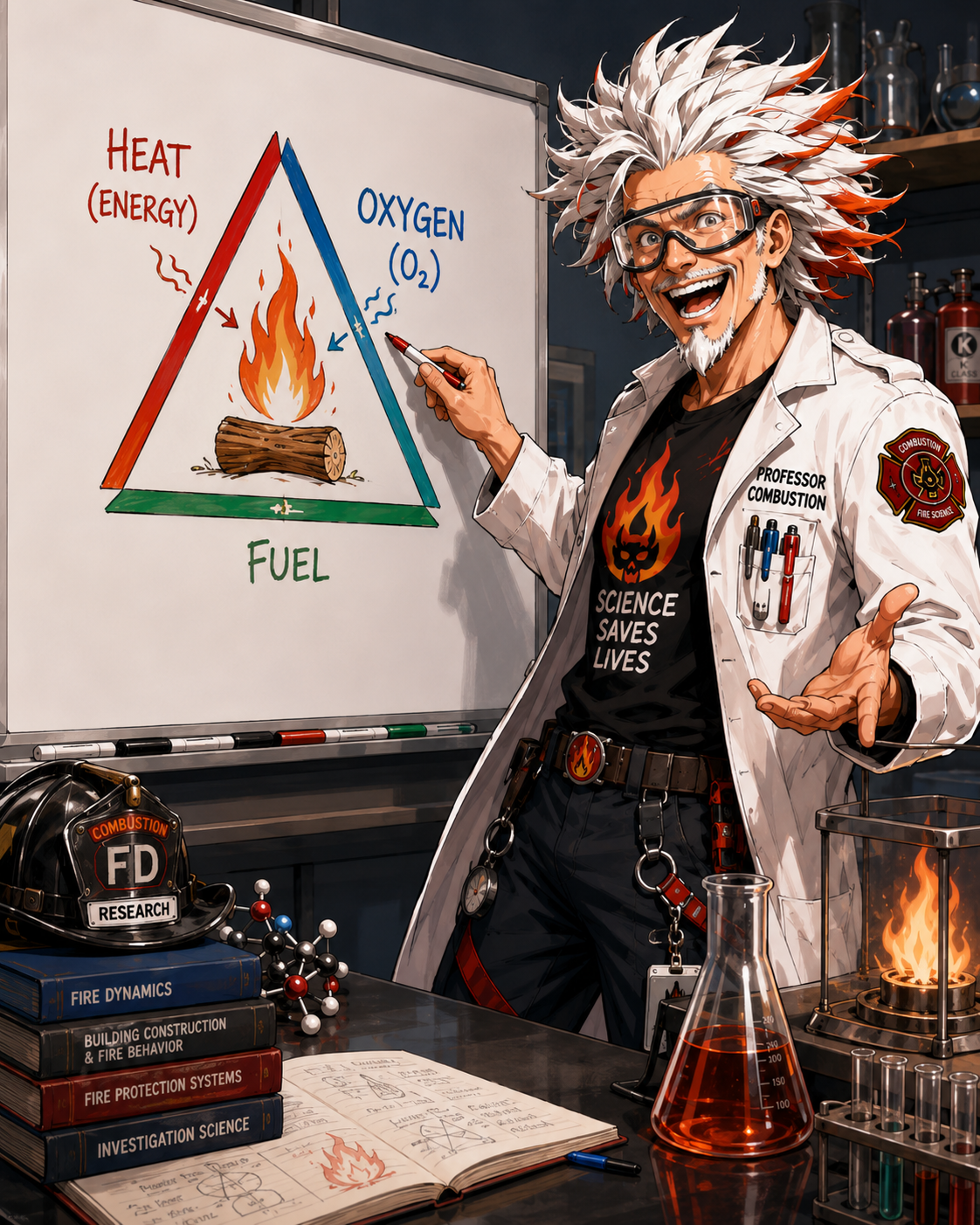
Meet the Professor
The FirefightingDaily science guide who turns dangerous concepts into memorable lessons.
Character page