The big idea
Smoke is not just a warning sign. Smoke is part of the danger.
Many people imagine fire danger as visible flames. In real emergencies, smoke can be the first major threat. Smoke can block vision, irritate eyes, make breathing difficult, carry heat, contain toxic gases, and hide exits that would normally be obvious.
That is why firefighters treat smoke seriously, and why home safety lessons focus on smoke alarms, escape plans, closed doors, and getting outside early.
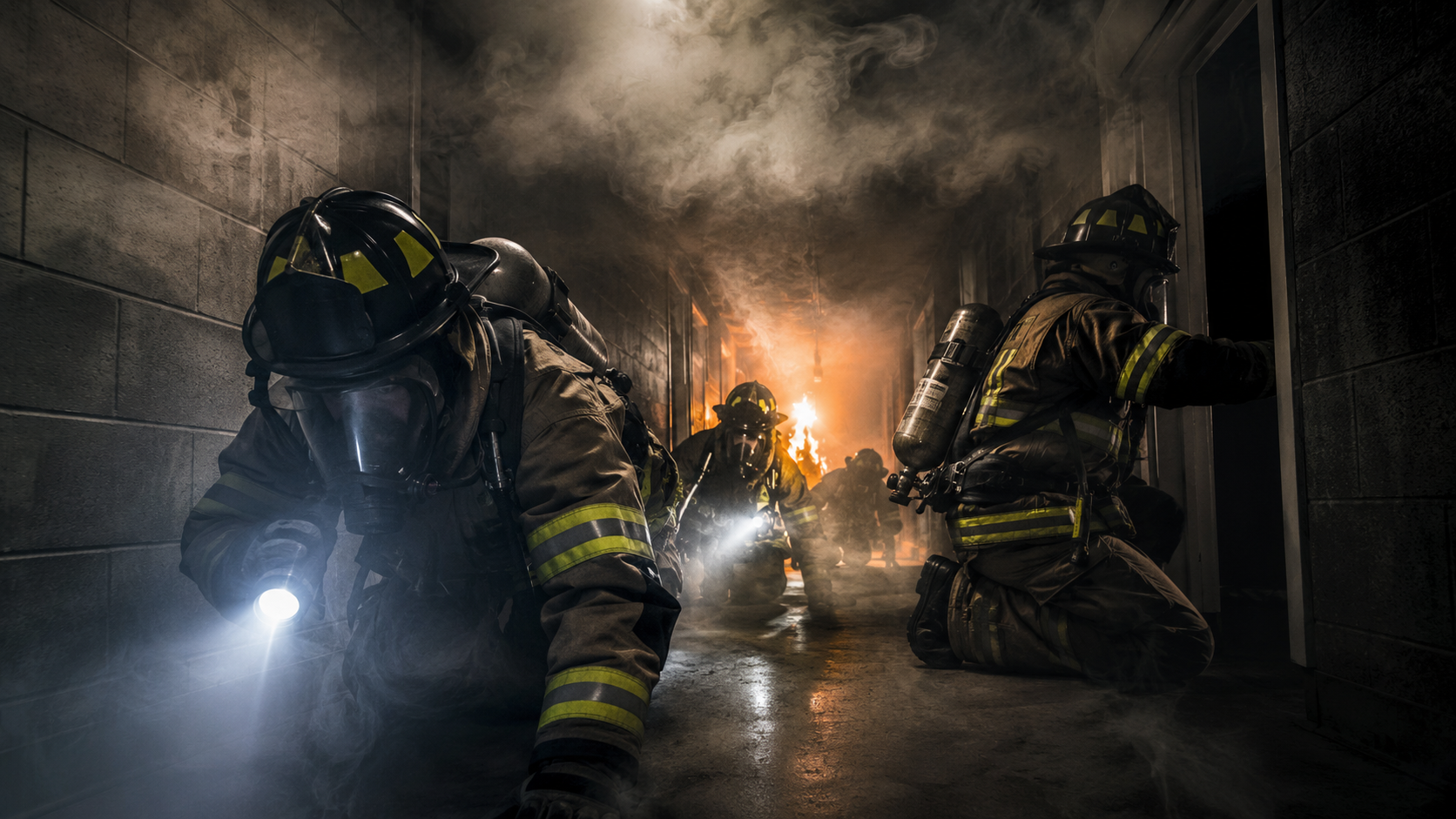
Visibility can disappear fast.
A hallway you know in daylight can become confusing when smoke drops visibility to almost nothing.
What smoke can do
Smoke can create several problems at once. It can reduce visibility so people cannot find doors or windows. It can carry heat into upper areas of a room. It can move through openings and hallways before flames arrive. It can contain gases and particles that make breathing unsafe.
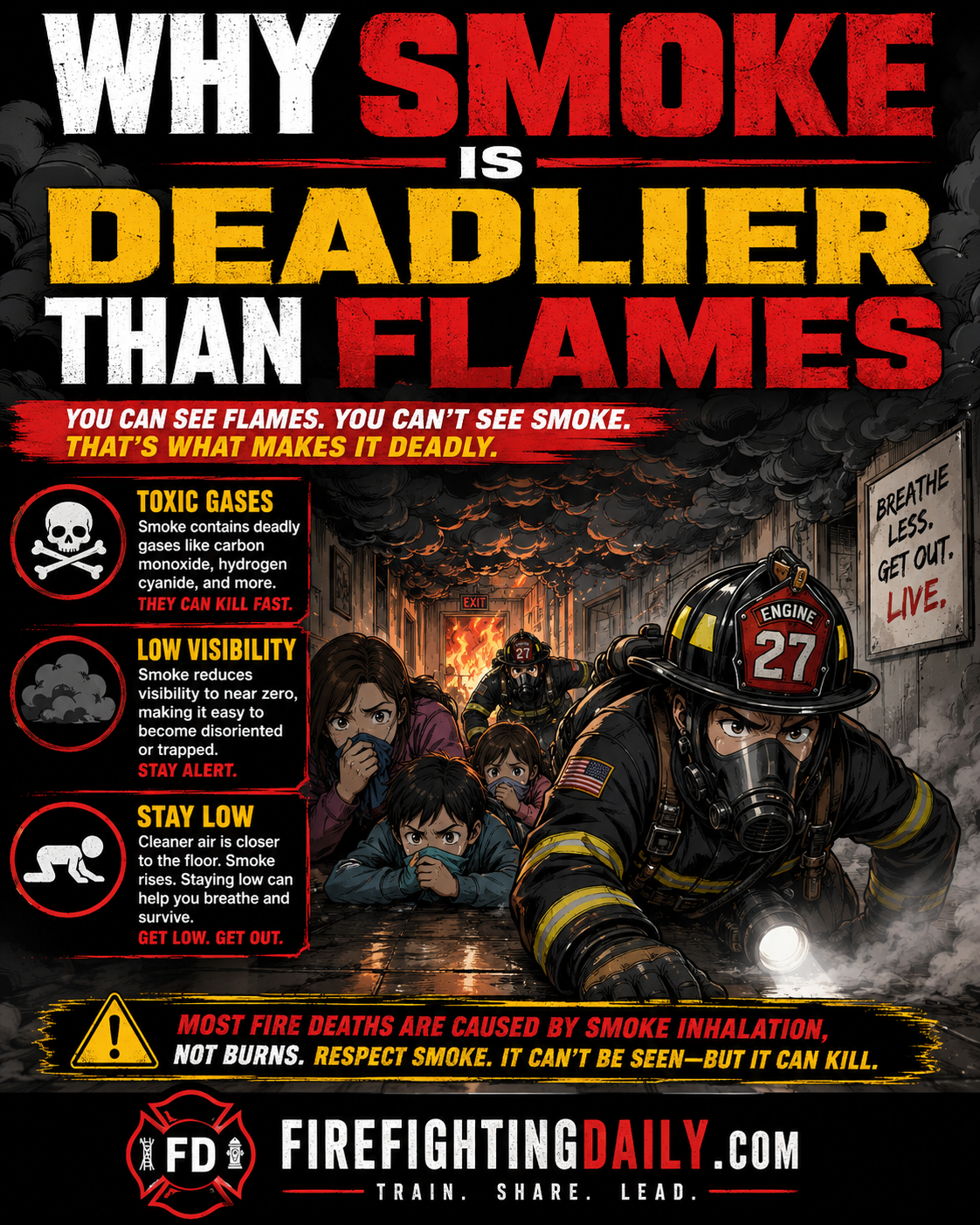
Smoke can arrive first
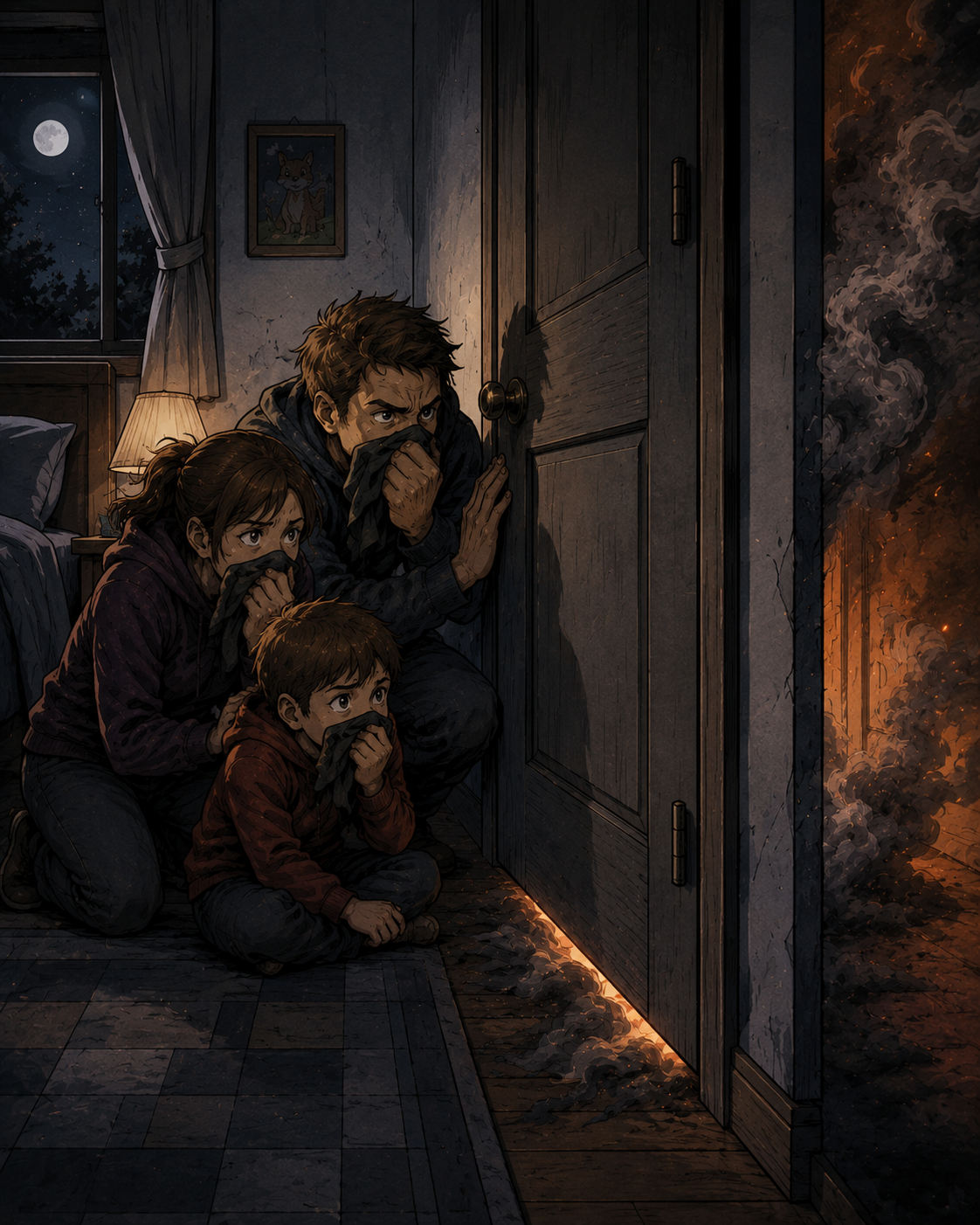
Smoke may reach rooms, stairs, or hallways before visible flames do.
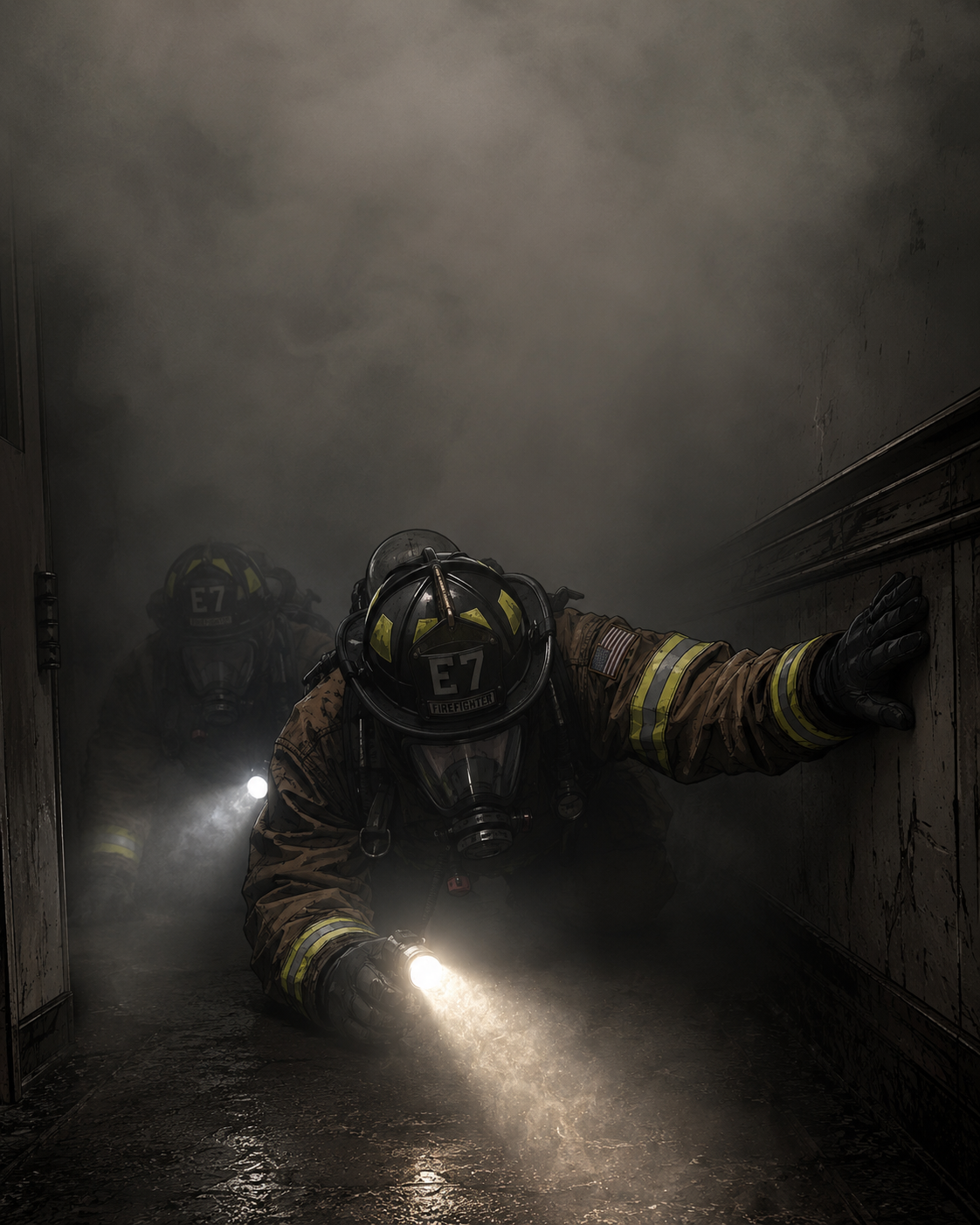
Familiar spaces become confusing
That is why escape planning matters before an emergency happens.
Smoke layers: hot smoke rises first
Hot smoke and gases often collect near the ceiling first. As a fire grows, the smoke layer can thicken and move downward. The upper part of the room may become hotter and more dangerous while the lower part still has better visibility for a short time.
This is one reason public safety messages often say to stay low in smoke when escaping, but the best lesson is still: leave early, do not delay, and do not go back inside.
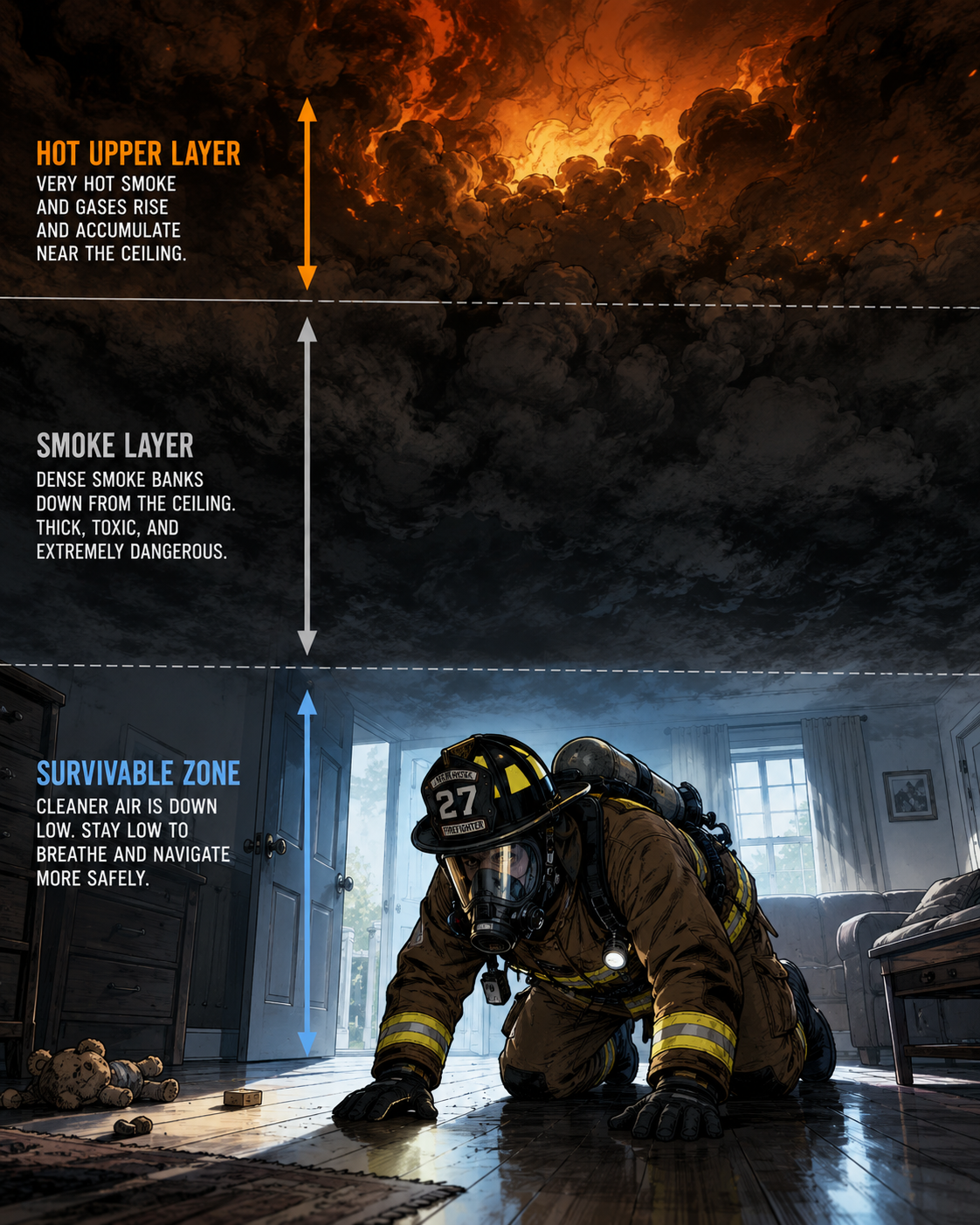
Smoke banks down.
As heat and smoke build, the safe space can shrink quickly.
Why visibility matters
Visibility is not just convenience. Visibility helps people find exits, avoid obstacles, move quickly, and stay oriented. In smoke, people can lose sight of doors, stairways, windows, furniture, pets, and family members. Panic and hesitation can waste time.
Rescue Cat’s memory cue
“Do not wait for the room to look scary. If the alarm sounds or smoke appears, start the escape plan.”
Closed doors can slow smoke movement
A closed door can sometimes slow the movement of smoke, heat, and air. It is not a guarantee, but it can make a meaningful difference in some home fire situations. This is the idea behind “close before you doze” and bedroom door safety messages.
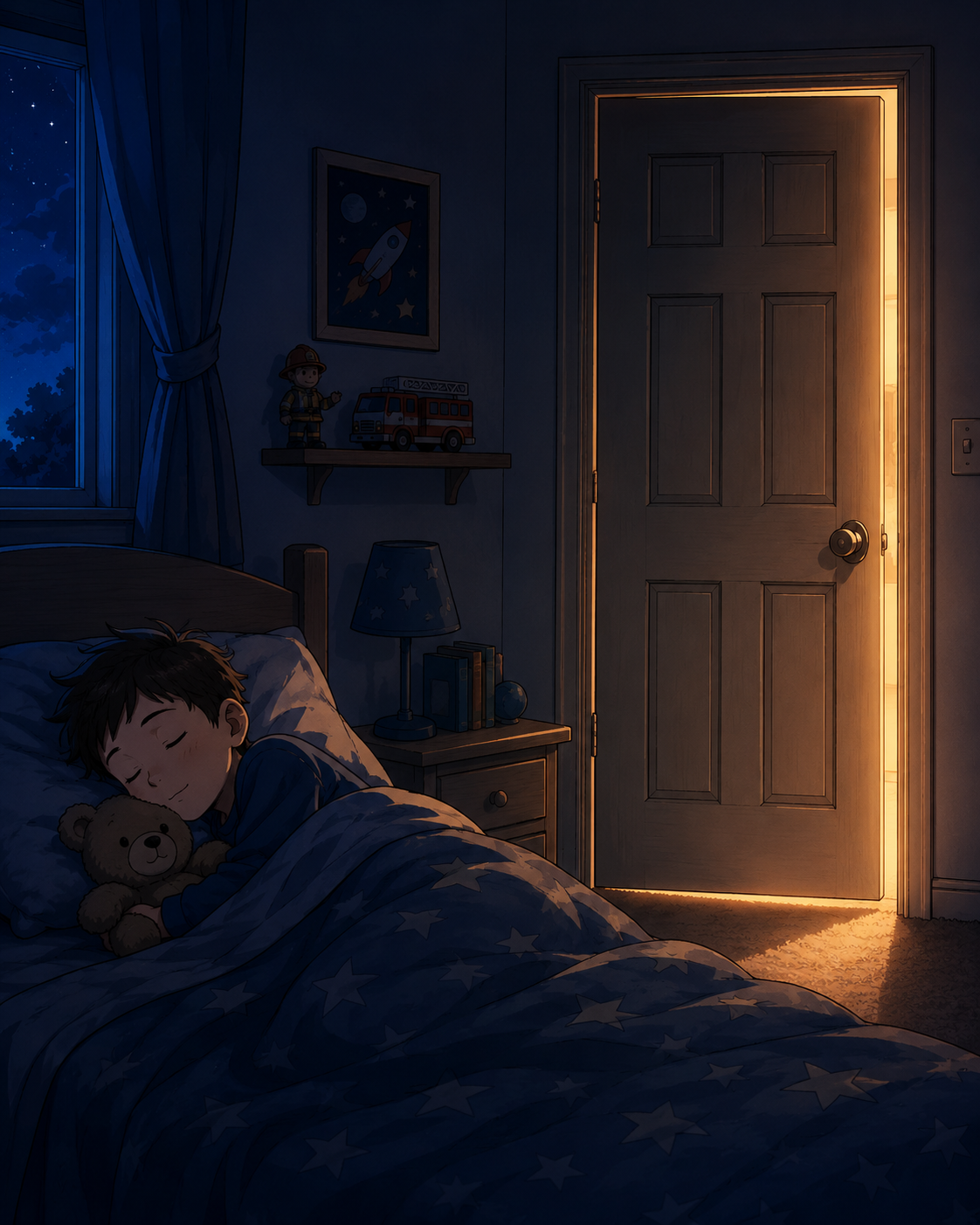
A door can become a barrier.
Closed doors may help slow smoke and heat movement compared with an open door.
Door control matters to firefighters too
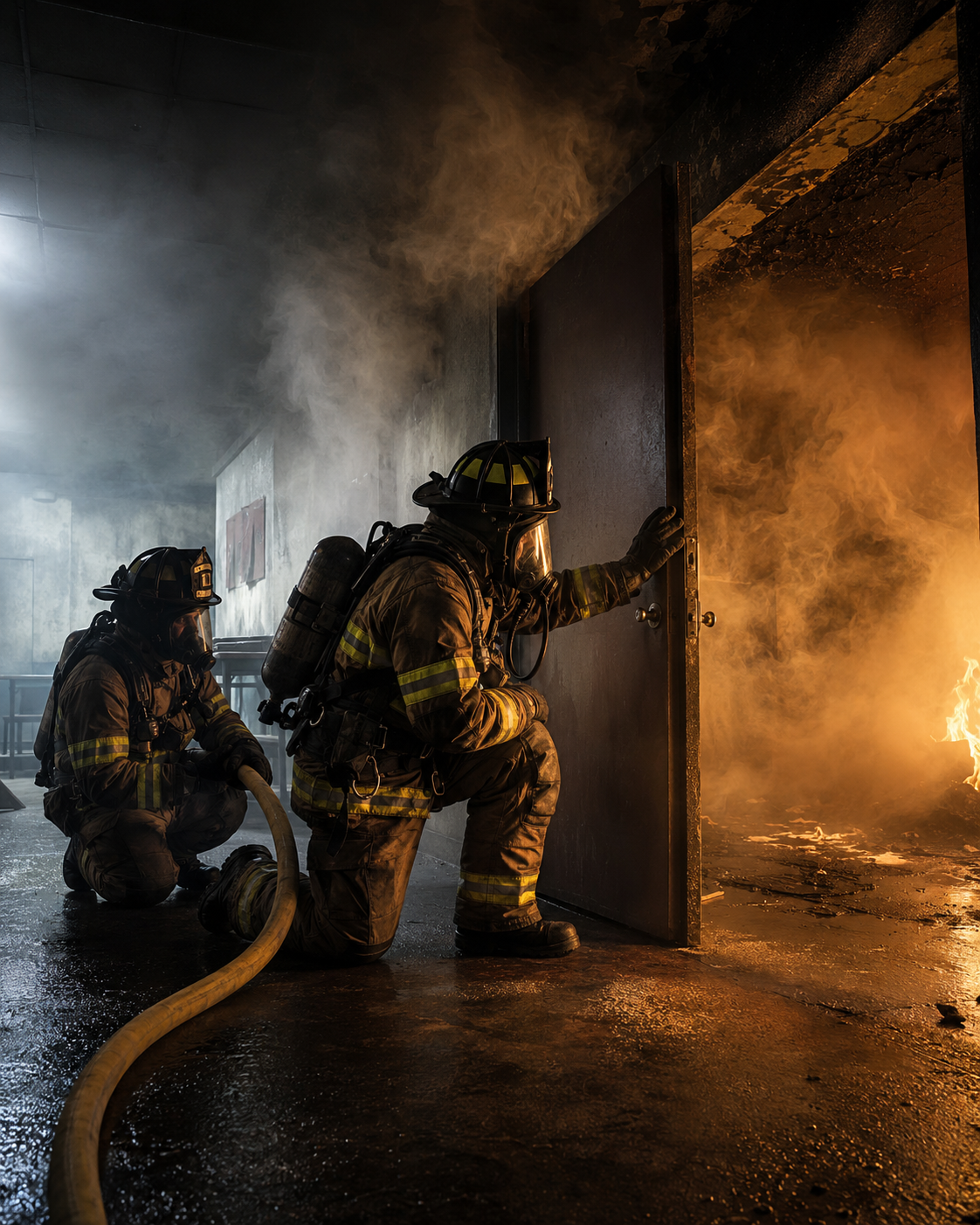
For firefighters, doors affect more than smoke. They can also affect oxygen, airflow, heat release, and fire growth. Opening a door can change fire conditions. That is why trained crews coordinate entry, water application, ventilation, and door control.
Smoke alarms are early-warning tools
Smoke alarms are designed to warn people early so they can escape before conditions become worse. They are especially important at night when people are sleeping and may not notice smoke or fire cues quickly.
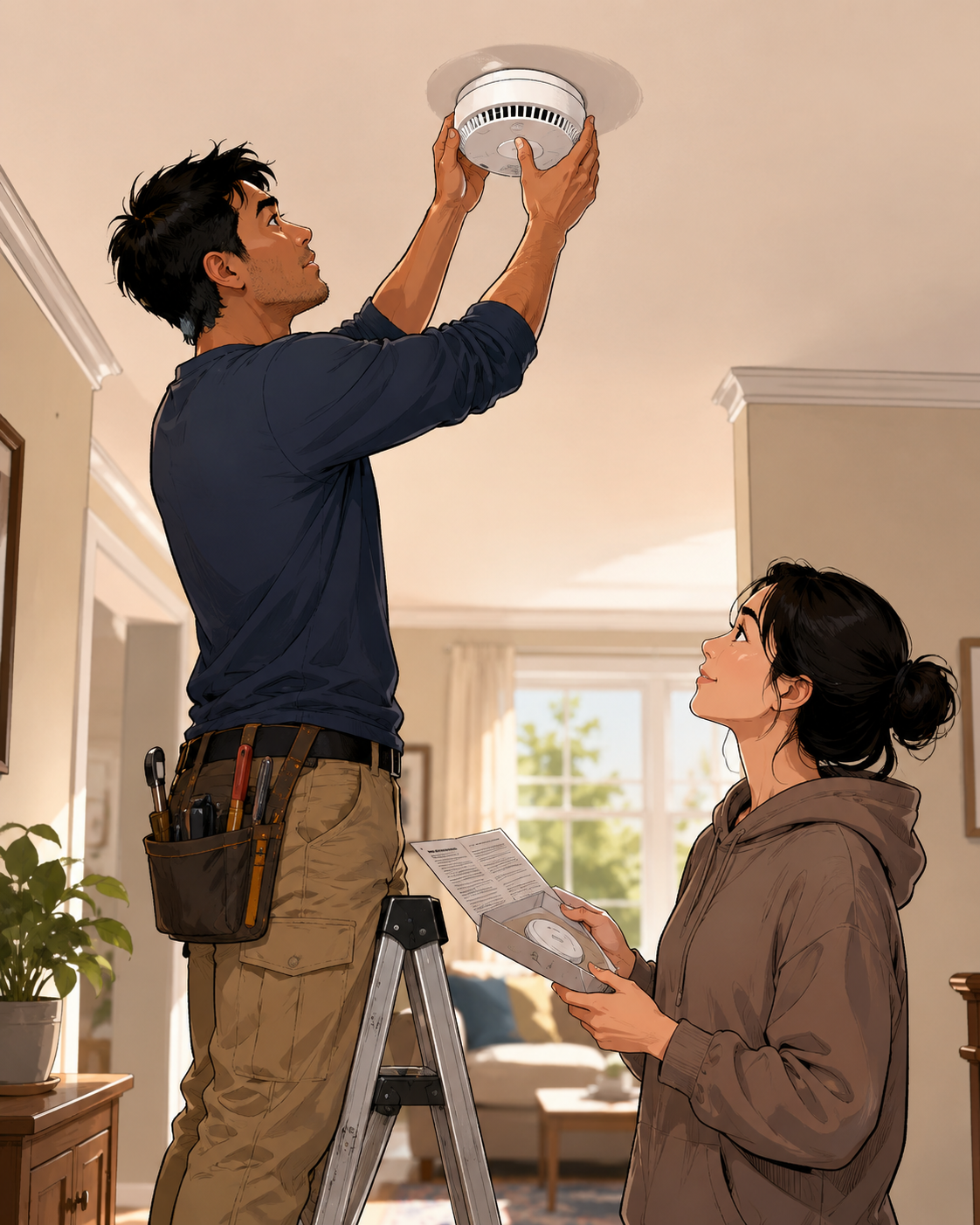
Early warning changes the timeline.
The goal is to leave before smoke fills escape routes.
Home escape plans reduce hesitation
When visibility is poor, people need a plan they already know. A good home fire escape plan identifies exits, backup exits when possible, a meeting place outside, and a rule that no one goes back inside.
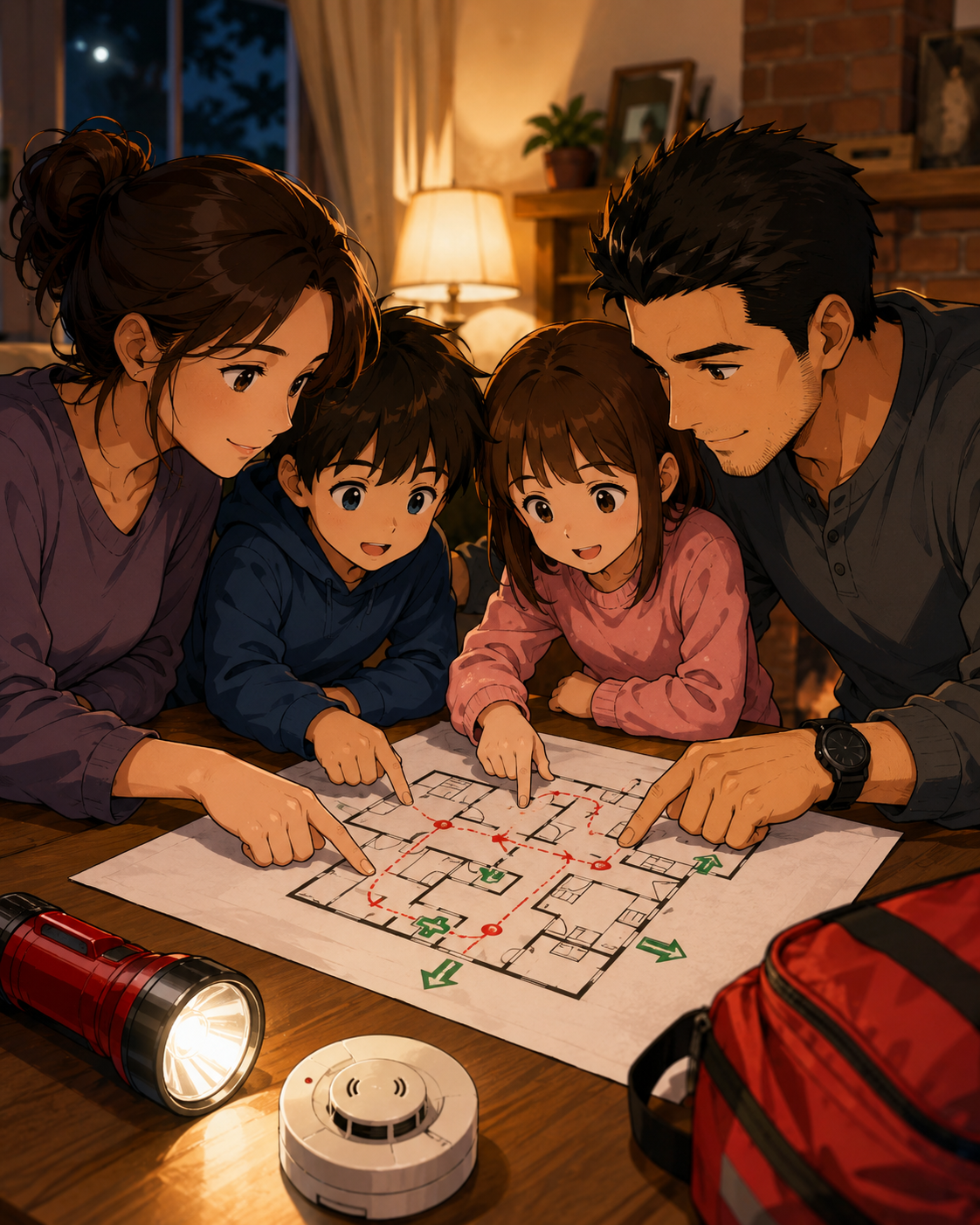
Draw the plan
Know the exits before smoke hides the room.
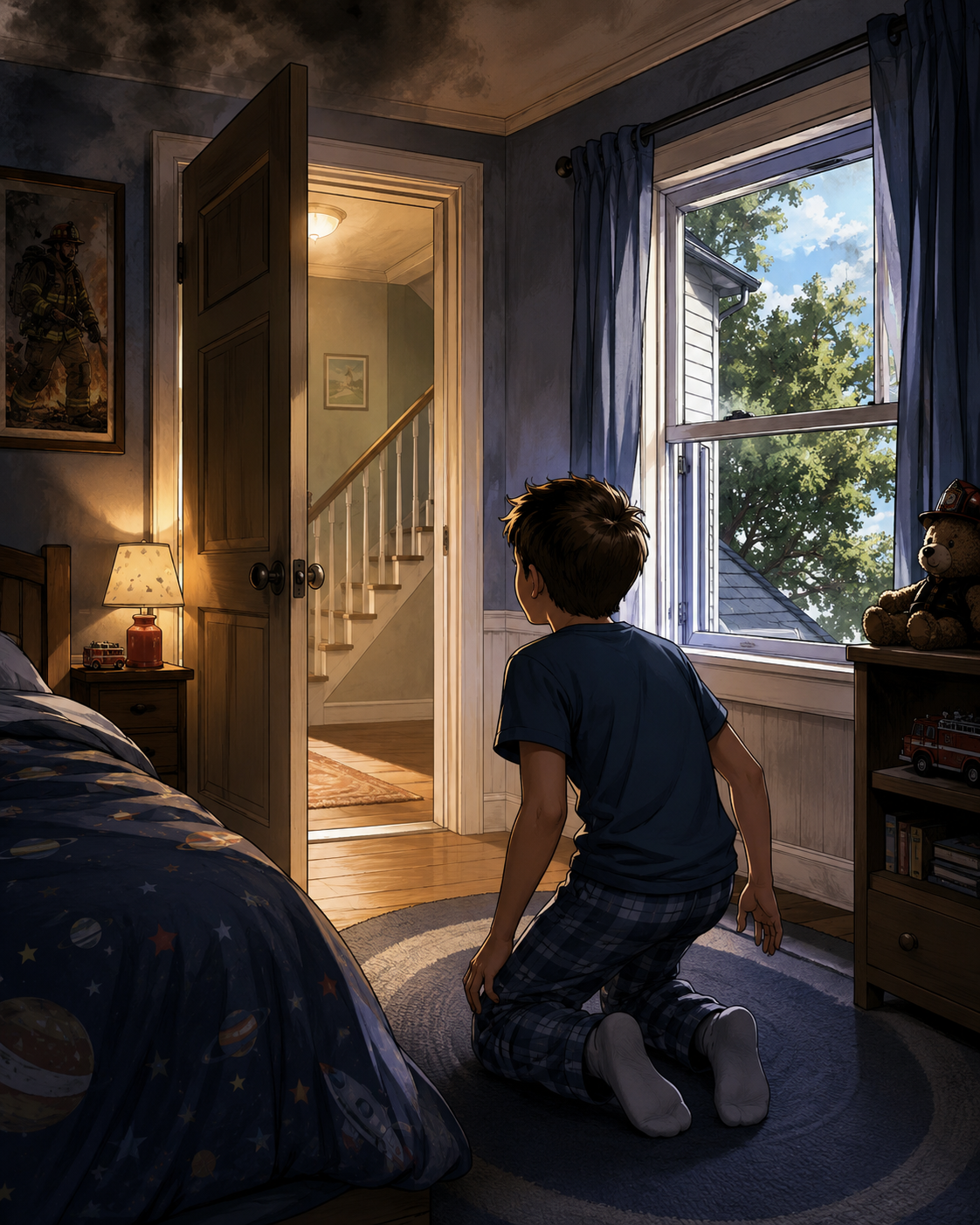
Two ways out
When possible, know a main exit and a backup exit.
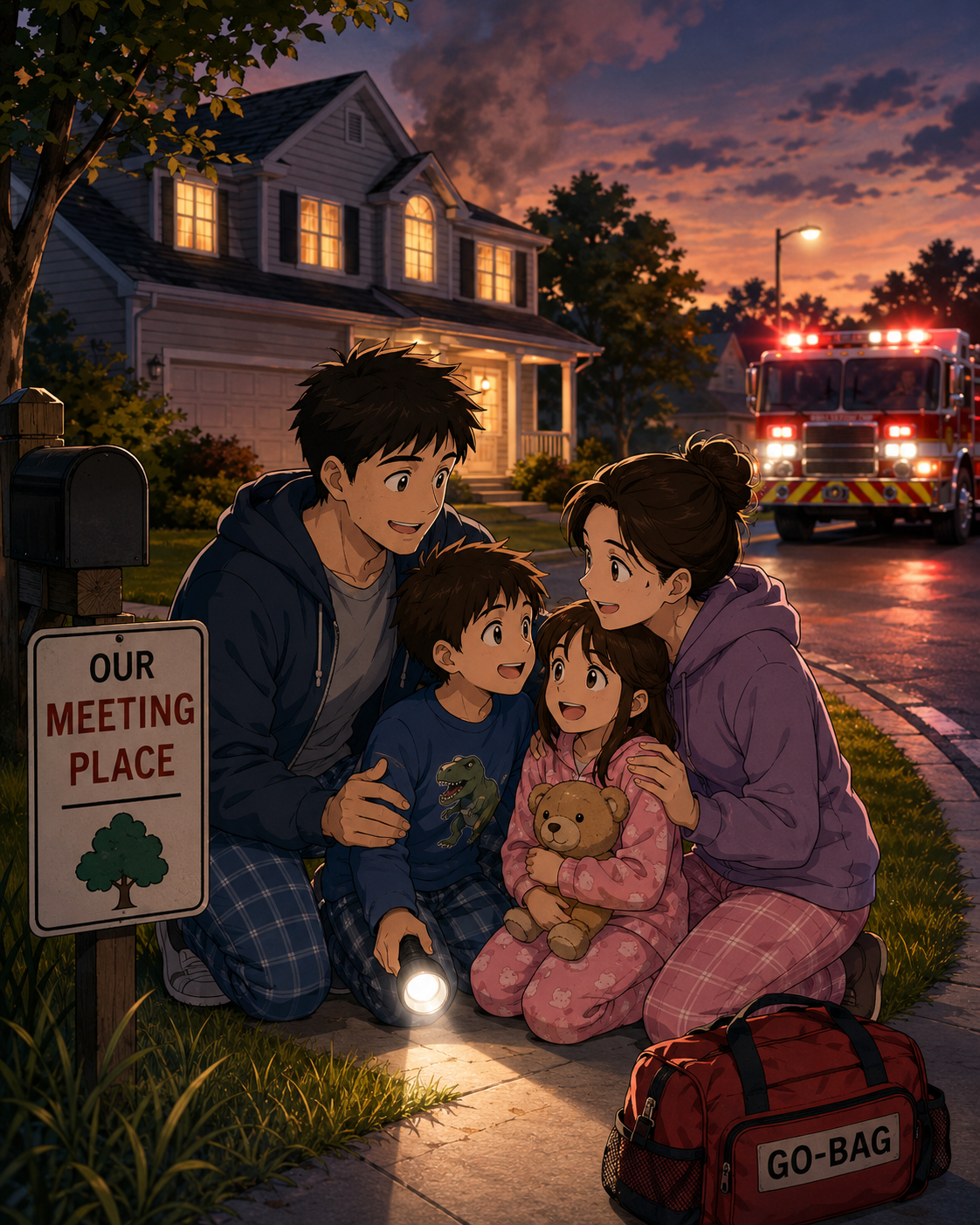
Meet outside
Choose a safe meeting place so everyone can be accounted for.
Smoke Goblin hides the exit
In FirefightingDaily, Smoke Goblin represents confusion, hidden danger, poor assumptions, and the way smoke can make a simple exit hard to find. The character is playful, but the lesson is serious: do not wait until smoke has taken over your path.
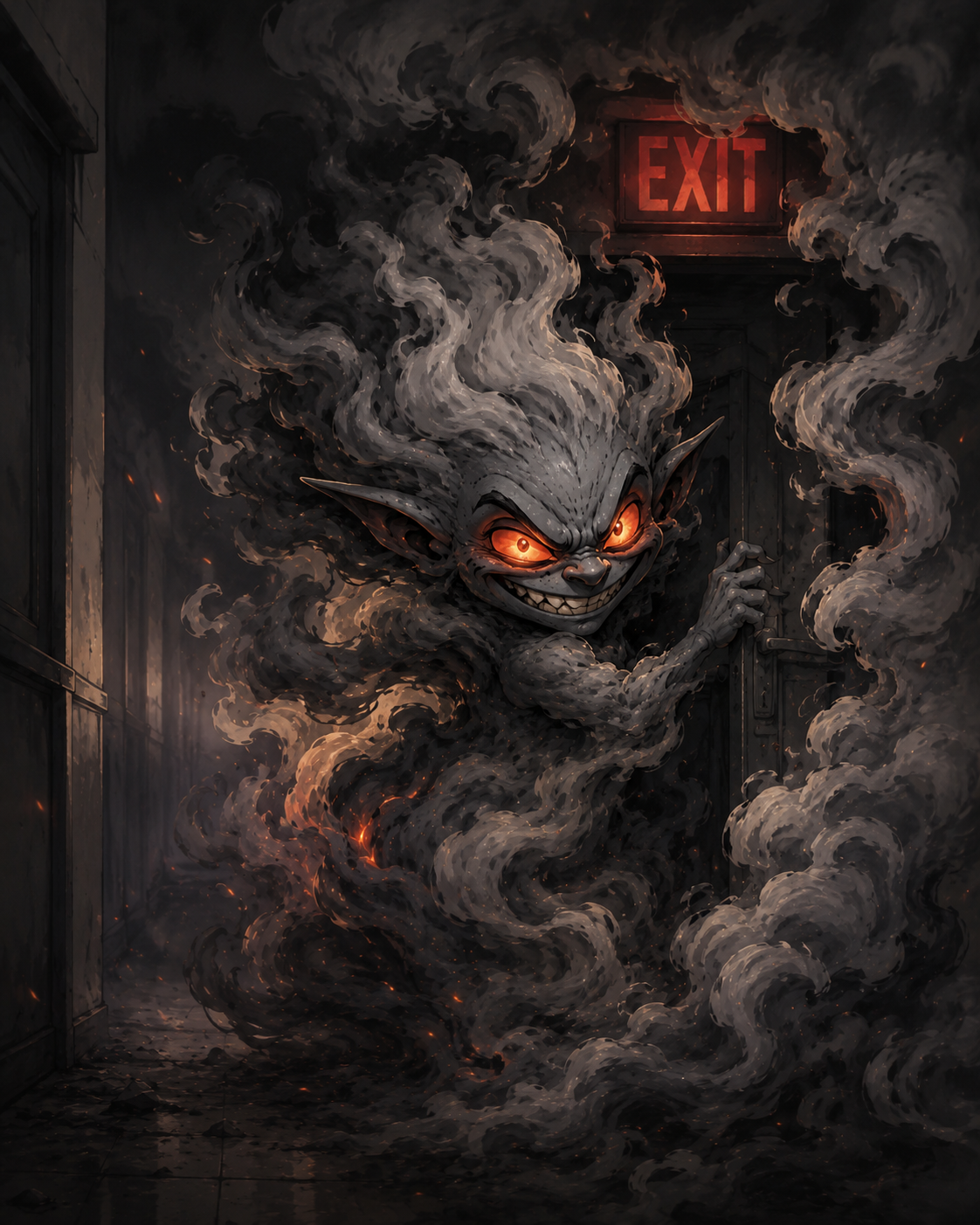
The exit is still there. Smoke makes it harder to find.
Planning and alarms help people act before Smoke Goblin wins the hallway.
What to remember
Smoke safety basics
- Working smoke alarms are essential.
- Get outside when alarms sound or smoke is present.
- Do not investigate a growing smoke condition.
- Stay low if you must move through smoke to escape.
- Close doors behind you when safe to slow smoke movement.
- Meet outside and never go back inside.
- Call 911 or your local emergency number from outside.
Why firefighters train in low visibility
Firefighters practice searching, moving, communicating, and operating in smoke because they may not be able to rely on normal vision. They use training, tools, thermal imaging, hose lines, radios, search patterns, and teamwork to operate in conditions that would be extremely dangerous for the public.

Training is not guessing.
Low-visibility firefighting depends on equipment, communication, and repeated practice.
Captain Ember’s summary
Smoke changes everything. It hides exits, carries heat, reduces visibility, affects breathing, and can move faster than people expect. The public-safety answer is simple: alarms, escape plans, closed doors when safe, and fast evacuation.