The big idea
Hydrants make the city water system available to firefighters.
Fire hydrants are not decorative red posts. They are access points to water mains below the street. When firefighters connect supply hose to a hydrant, they can feed a fire engine with water for hose lines, master streams, exposure protection, or extended operations.
Hydrants matter because engines carry only a limited amount of onboard tank water. A reliable hydrant supply can turn a short initial attack into a sustained firefighting operation.
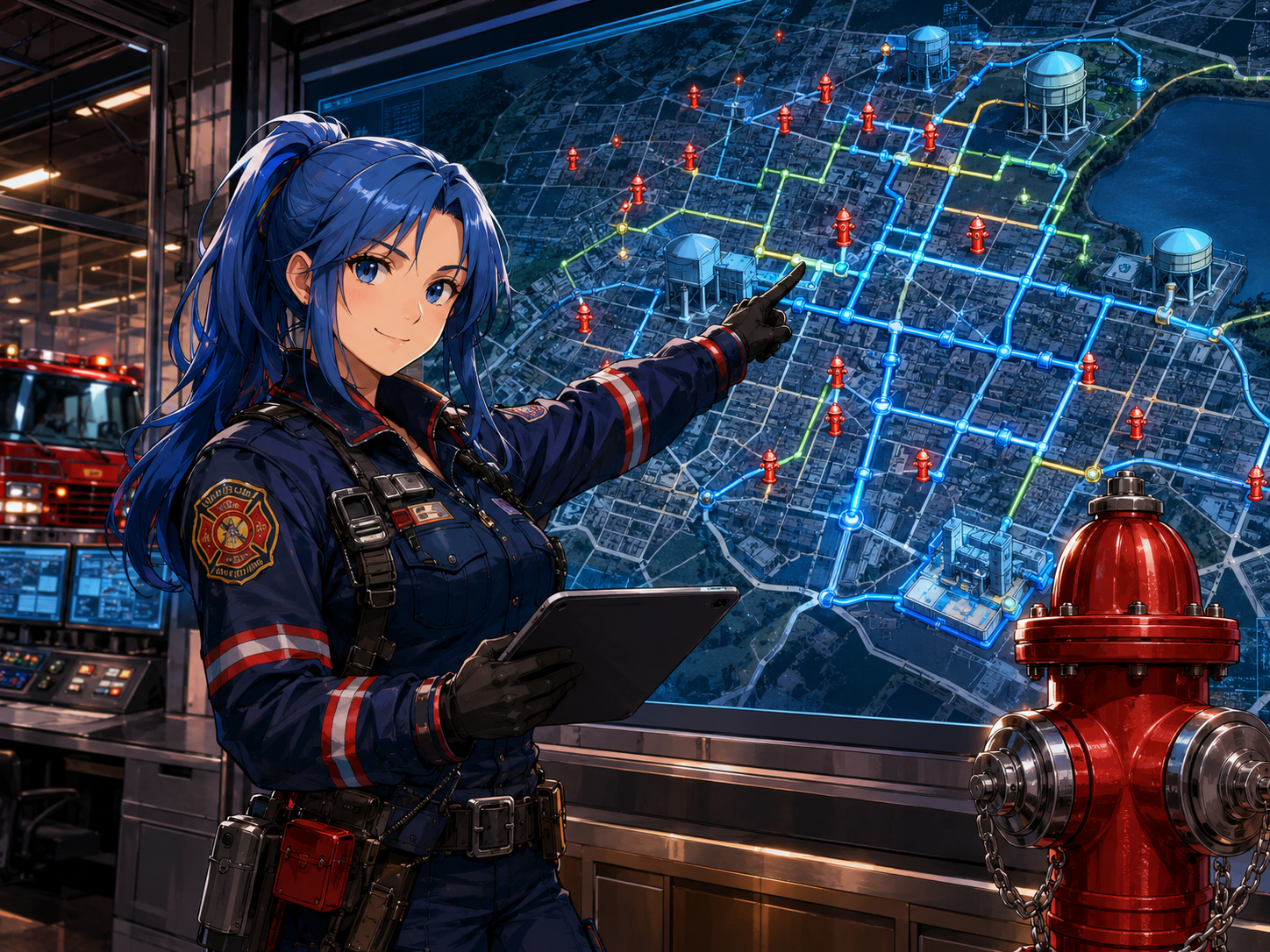
The hydrant is only the visible part.
Behind every hydrant is a water main, valves, pressure, flow limits, and local infrastructure.
How a hydrant feeds an engine
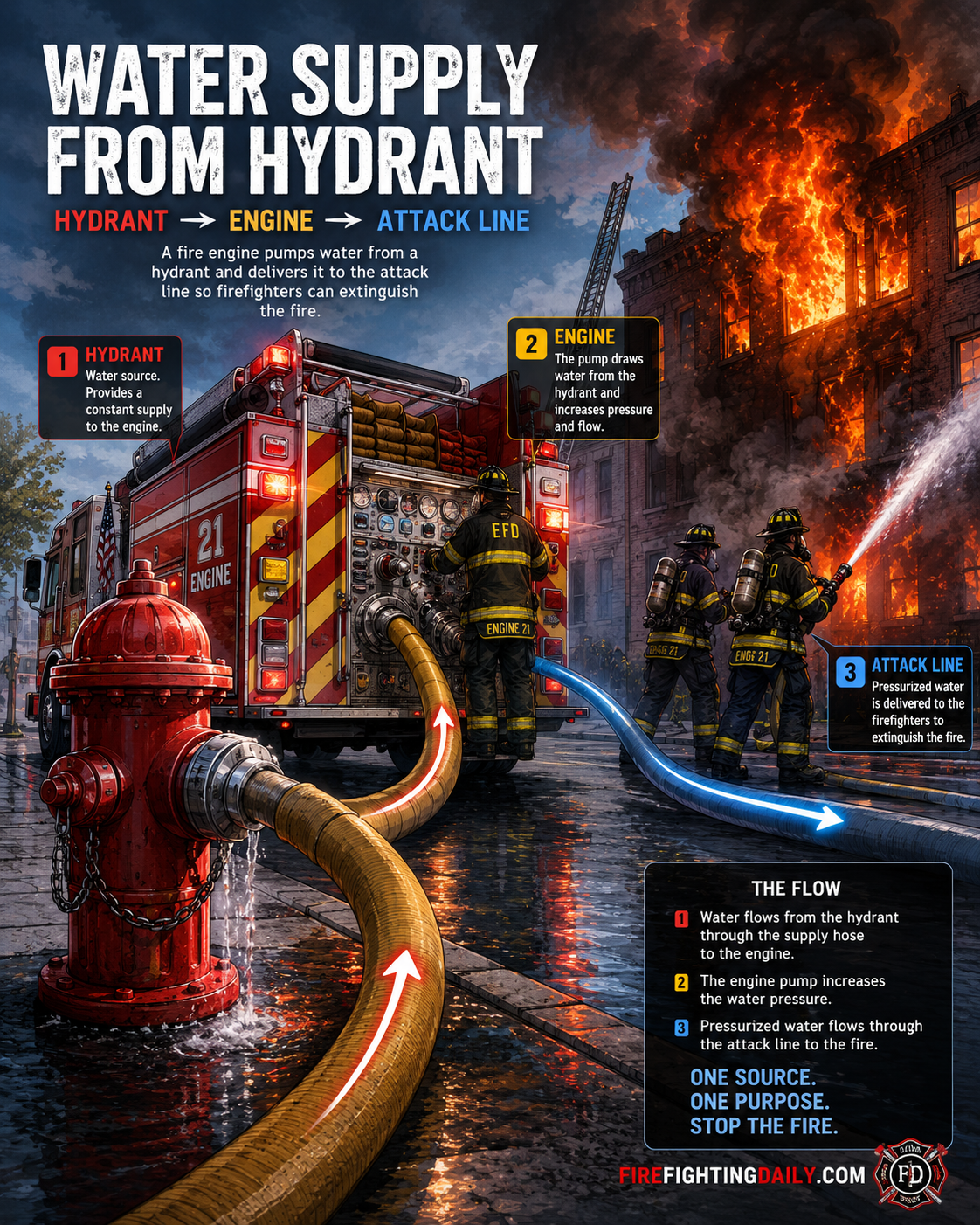
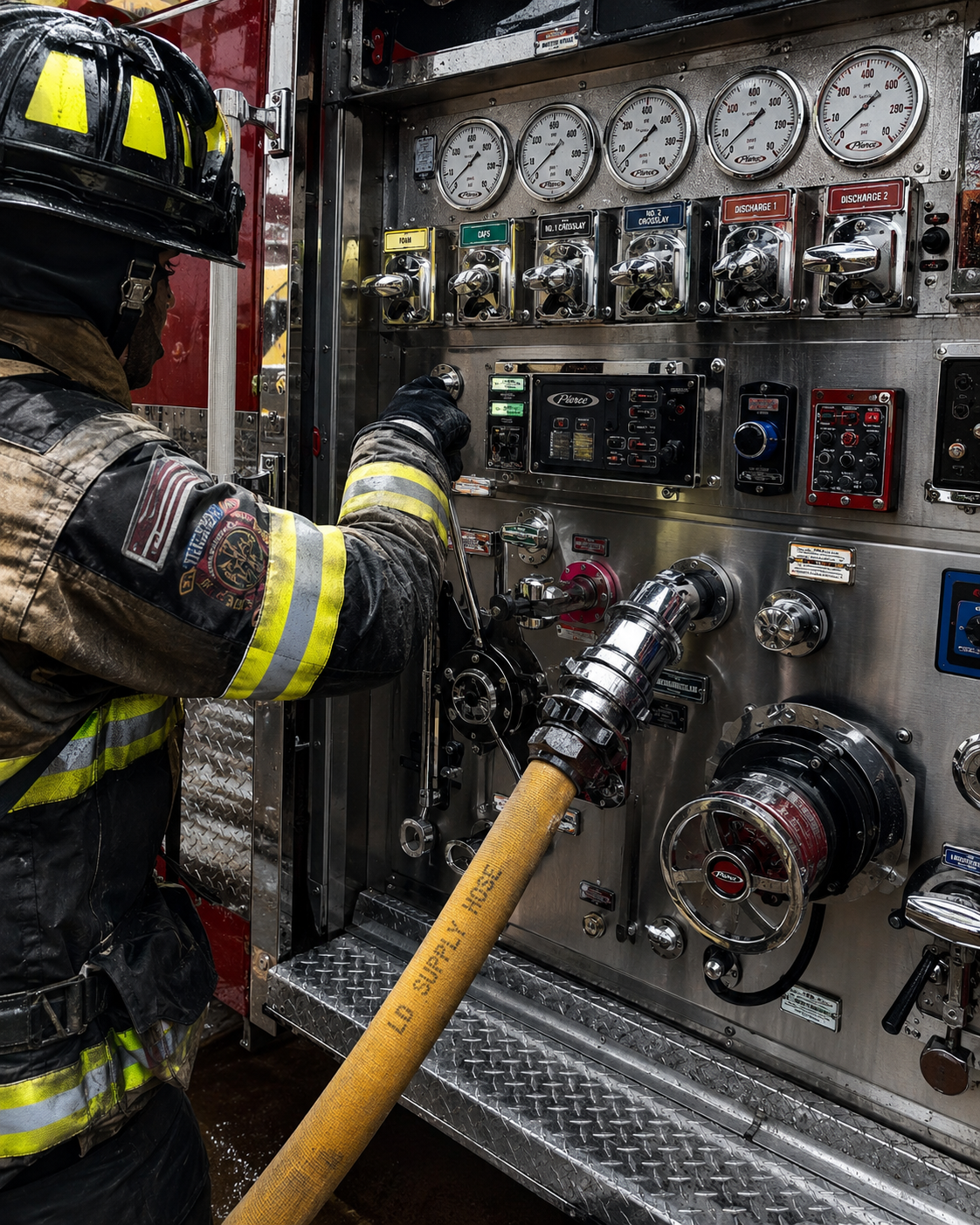
A typical hydrant operation may involve locating the hydrant, removing caps, checking the outlet, connecting supply hose, flushing if appropriate, opening the hydrant, and feeding the engine. The engine pump then sends water through attack lines or other fireground equipment.
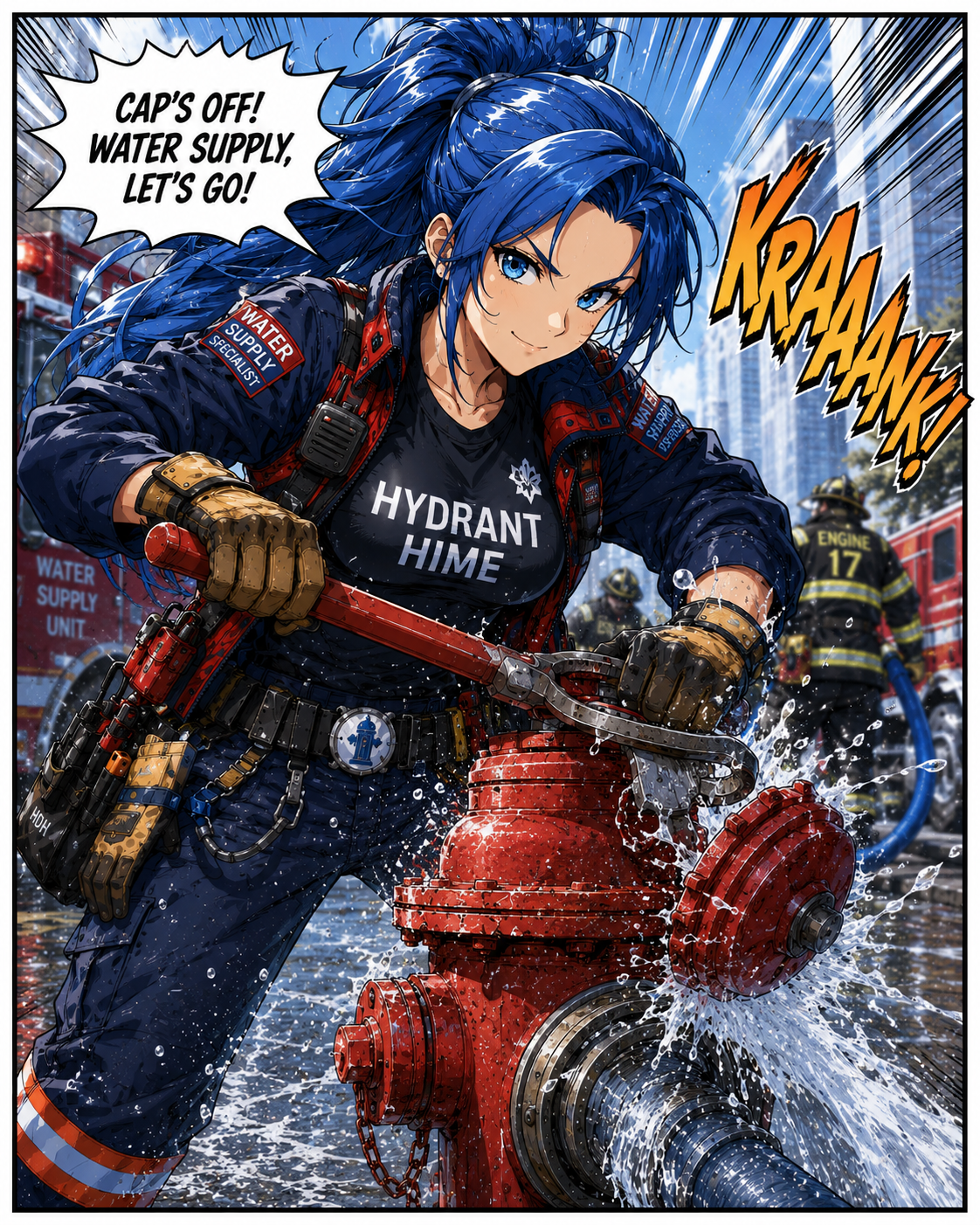
Cap removal
Firefighters access the hydrant outlet and prepare for hose connection.
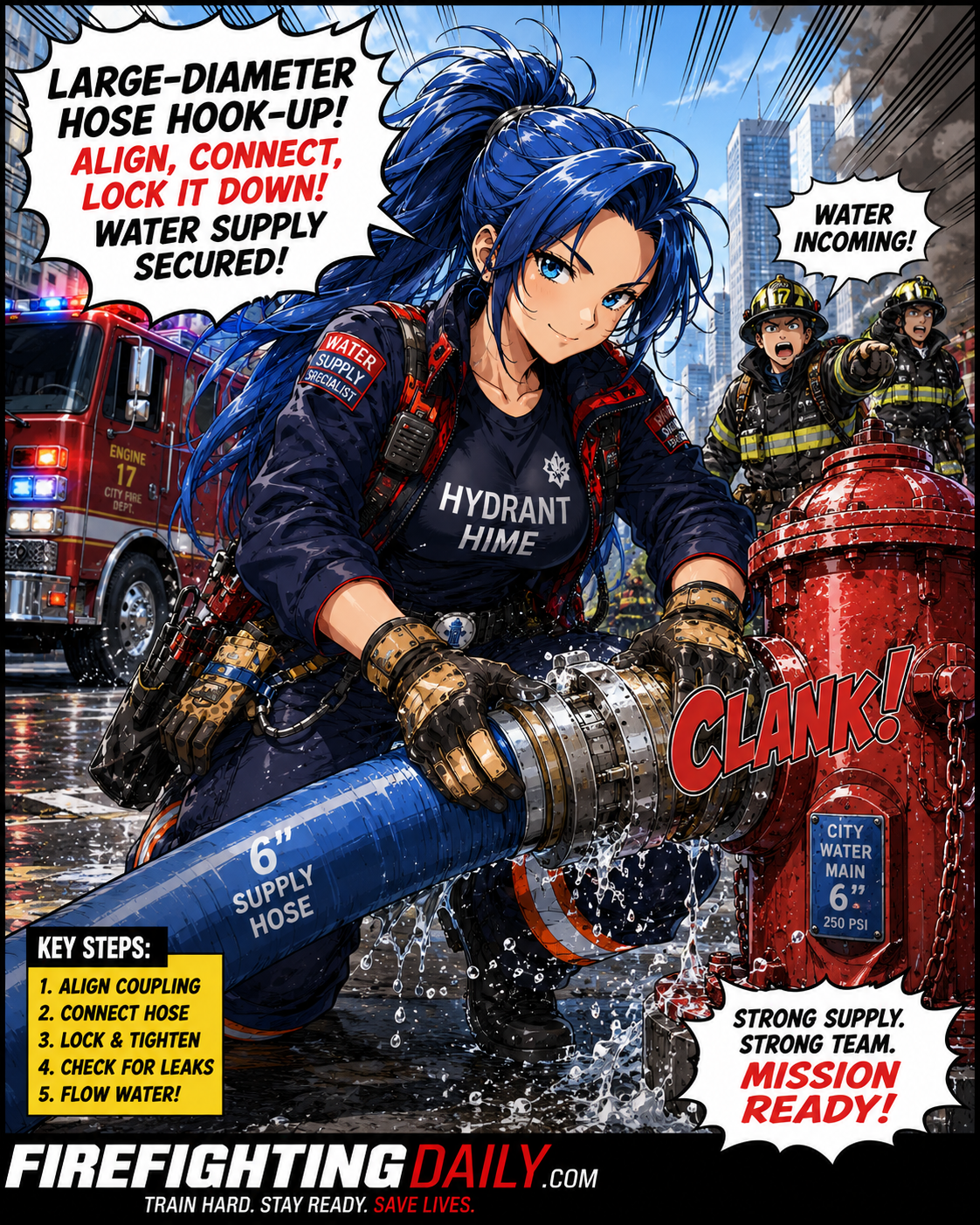
Hose hookup
Supply hose carries water from the hydrant toward the engine.
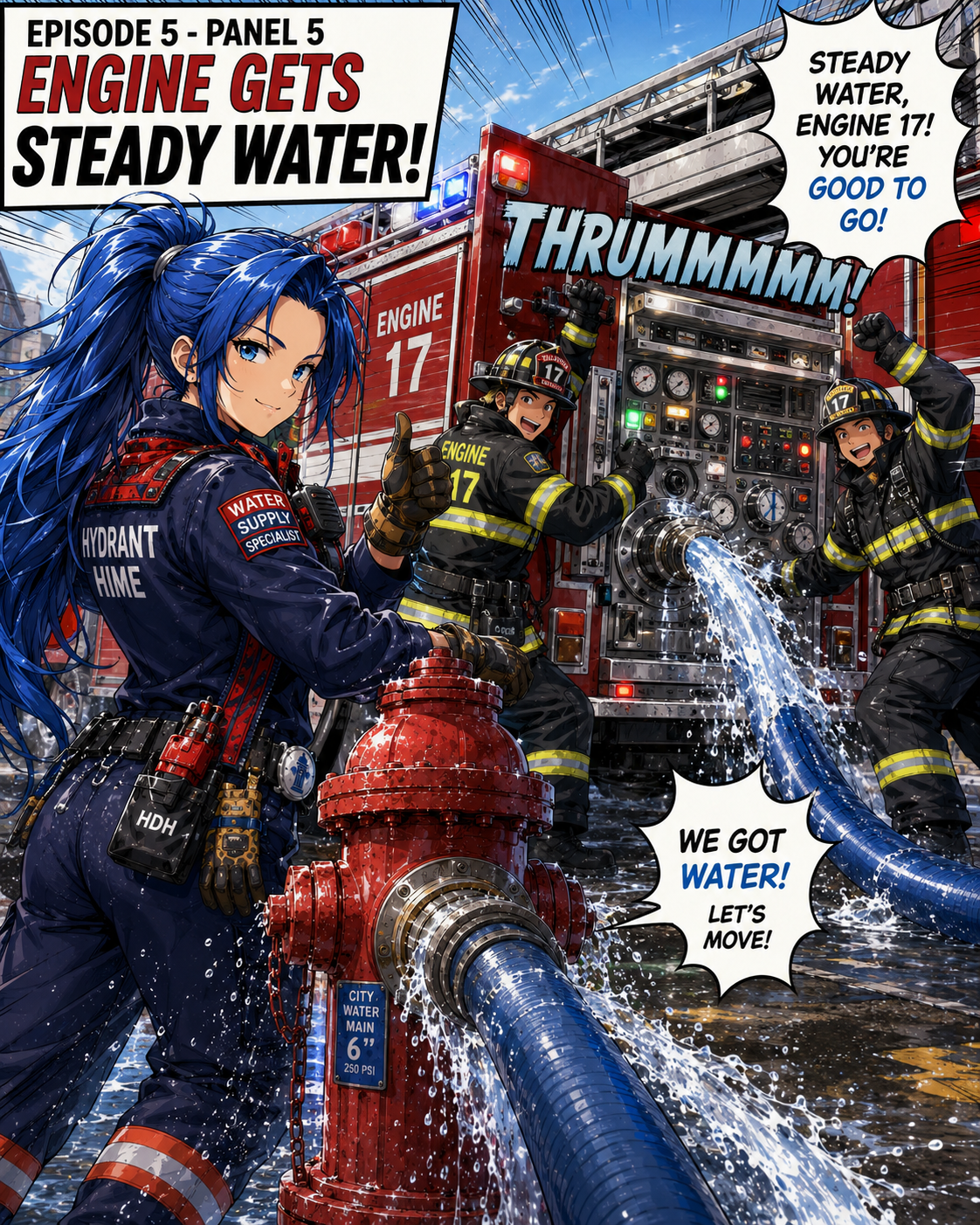
Steady water
The engine uses the hydrant supply to support firefighting operations.
Water mains, pressure, and flow
Hydrant performance depends on the water main, available pressure, pipe size, system condition, elevation, demand elsewhere in the system, and the amount of water being drawn. A hydrant may look simple, but the water behind it is part of a larger engineered network.
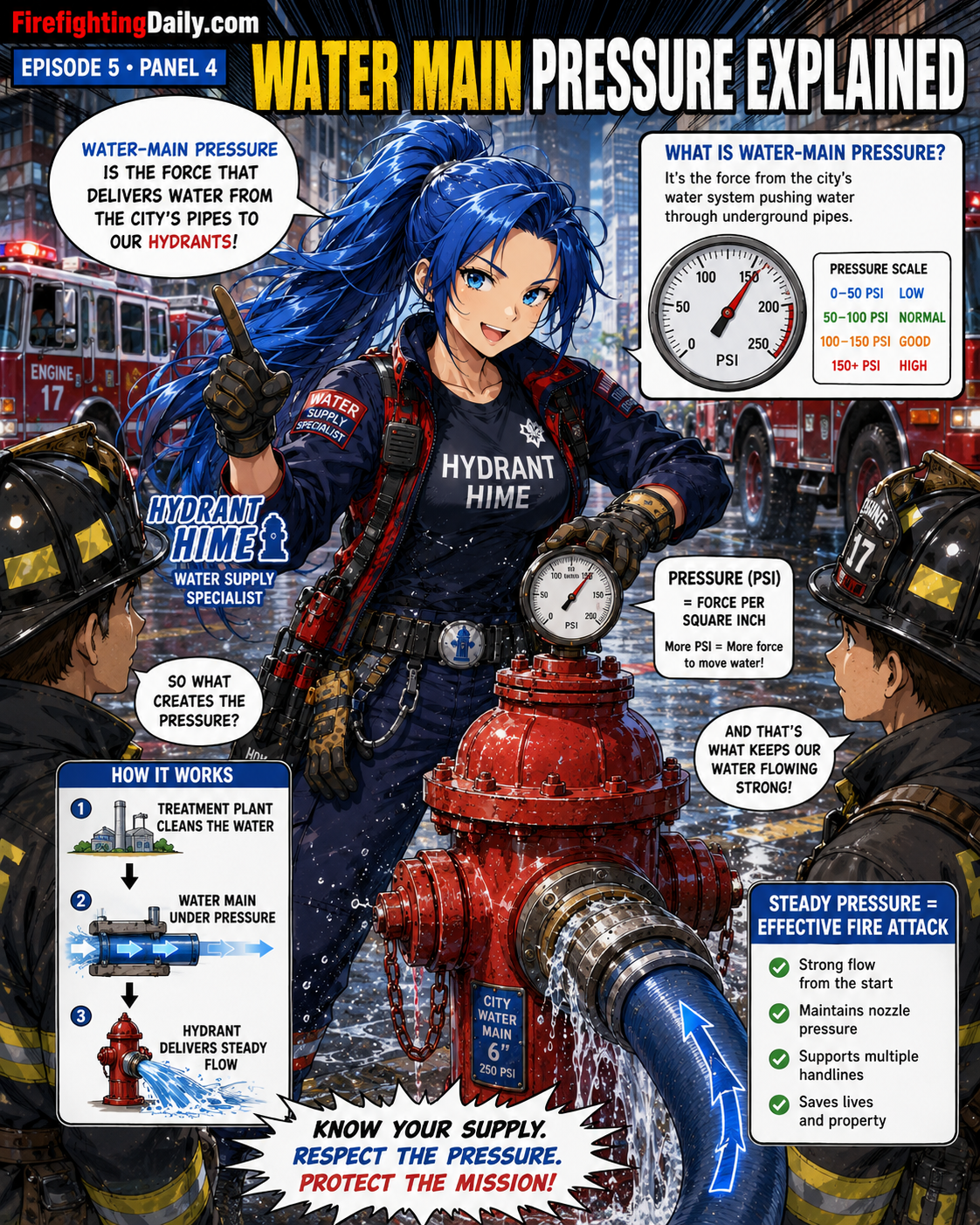
Pressure is not magic.
Water pressure, pipe size, hydrant condition, and pump operation all affect fireground flow.
Why firefighters connect hydrants to engines
Engines can carry water, but tank water can be used quickly during a working fire. Hydrant supply lets the engine keep flowing water longer. This is especially important when crews need multiple hose lines, larger streams, exposure protection, or extended operations.
Hydrant location matters
A hydrant is only useful if firefighters can find it and reach it quickly. Parked cars, landscaping, trash cans, snow, construction barriers, fences, or overgrown brush can slow a hydrant connection. Even a few minutes can matter during a fire.
Hydrant Hime’s public rule
“Do not hide the hydrant. Do not block the hydrant. Do not make firefighters dig for the hydrant while the fire grows.”
What homeowners and businesses can do
Keeping hydrants accessible is one of the simplest ways the public can support fire response. Local clearance rules vary, but the practical idea is universal: the hydrant should be visible, reachable, and not blocked by vehicles, landscaping, stored items, or debris.
Hydrant access reminders
- Do not park in front of a hydrant.
- Keep brush, weeds, and landscaping away from the hydrant.
- Do not place trash bins, signs, decorations, or stored materials around it.
- Keep gates, driveways, and fire lanes clear for apparatus access.
- Make sure building address numbers are visible from the street.
- Report damaged, leaking, buried, or obstructed hydrants to the proper local authority.
Hydrants in wildfire and interface areas
In wildland-urban interface areas, hydrants may support structure defense, neighborhood protection, and engine refill operations. But wildfire response may also depend on water tenders, tanks, drafting sites, portable pumps, aircraft, and pre-planned water points.

Wildfire water supply is complicated.
Hydrants help where they exist, but wind, embers, access, terrain, and evacuation timing still matter.
Hydrants and solar/battery sites
Modern properties may include rooftop solar, battery storage, EV chargers, generators, or microgrid equipment. Hydrant access still matters, but responders also need clear working space, labeled shutdowns, and safe access paths around energy equipment.

Clear labels
Firefighters benefit from clear emergency labels and accessible disconnects.
Solar safety
Access paths
Fire response planning includes roofs, driveways, yards, hydrants, and equipment rooms.
Learn moreEpisode connection: Hydrant Hime opens the main
Episode 5 turns water supply into a story. Hydrant Hime arrives, removes the cap, connects the large hose, explains pressure, and helps the engine receive steady water.
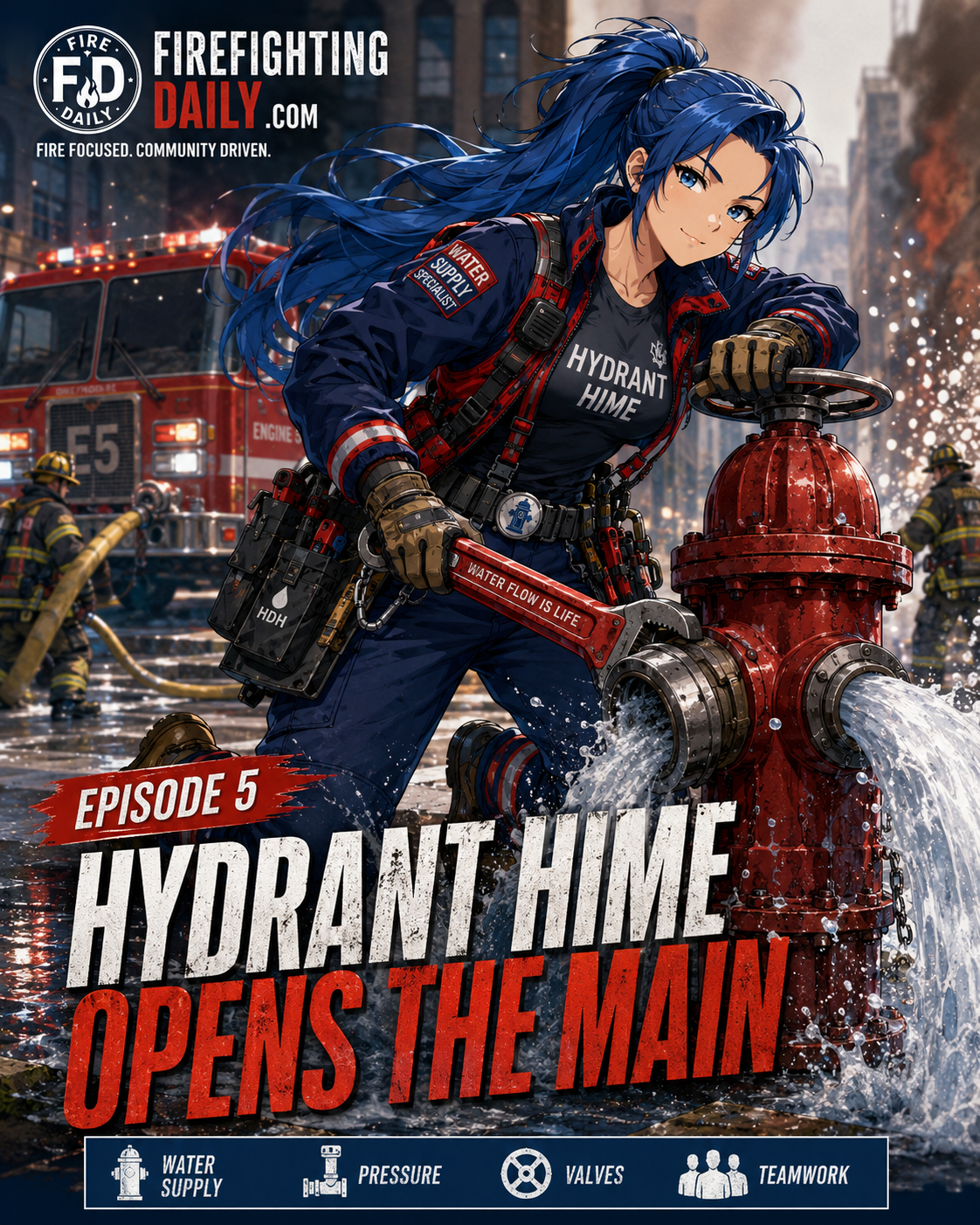
Hydrant Hime Opens the Main
A manga lesson about water supply, hydrants, pressure, and engine flow.
Read episode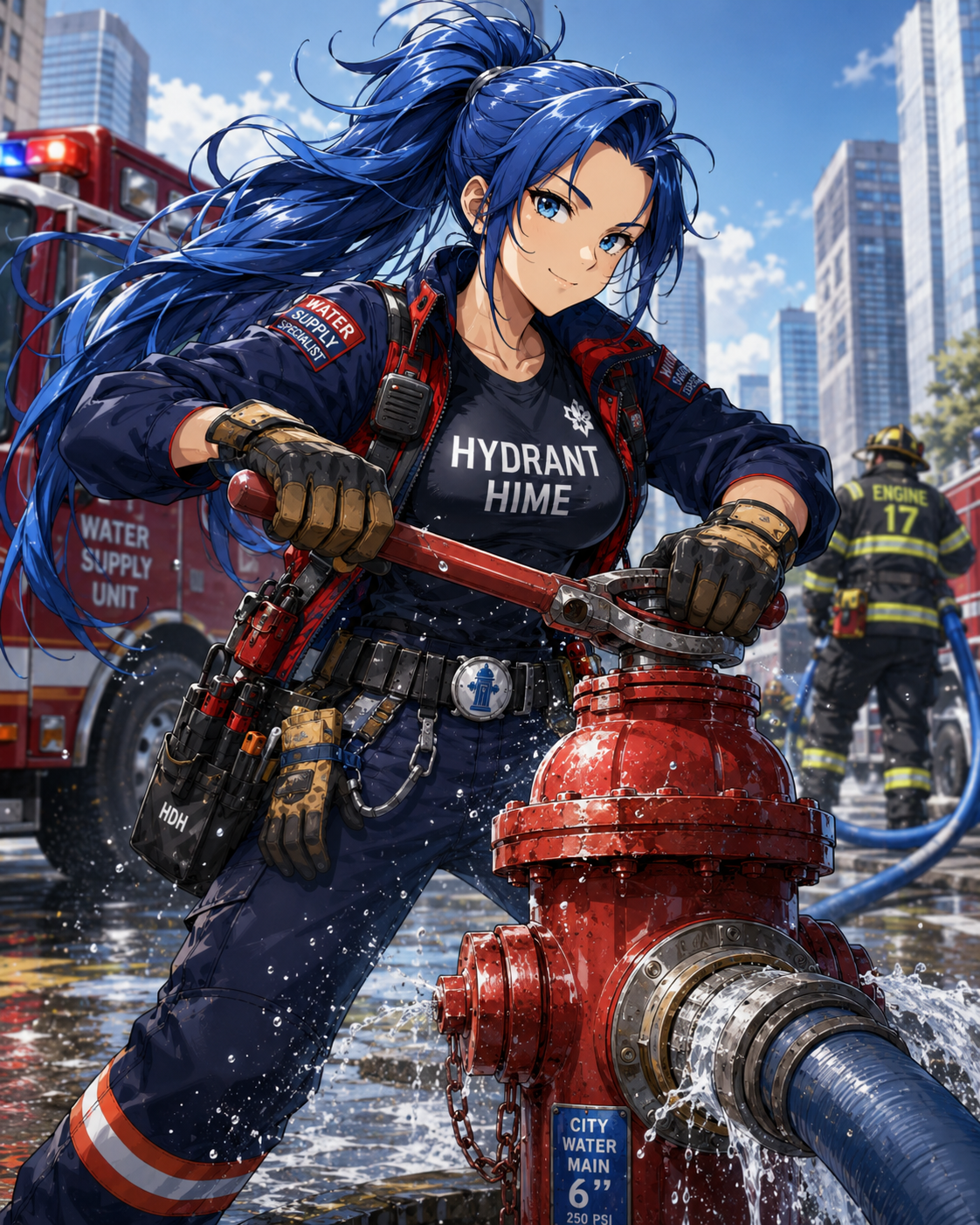
Meet Hydrant Hime
The water-supply expert who knows hydrants, mains, maps, and pressure.
Character pageCaptain Ember’s summary
A hydrant is a small object with a big job. It connects firefighters to the water infrastructure that makes sustained fire attack possible. Keeping hydrants visible and accessible is one of the easiest ways a community can help before the alarm ever rings.