How this page works
Use this page as a reference map, not as final authority.
FirefightingDaily.com simplifies serious subjects into manga-style educational pages. The site’s explanations are general. They do not replace local fire department guidance, building/fire/electrical codes, product manuals, manufacturer instructions, emergency alerts, permits, inspections, or professional training.
For real-world decisions, use the most current official source for your location and situation.
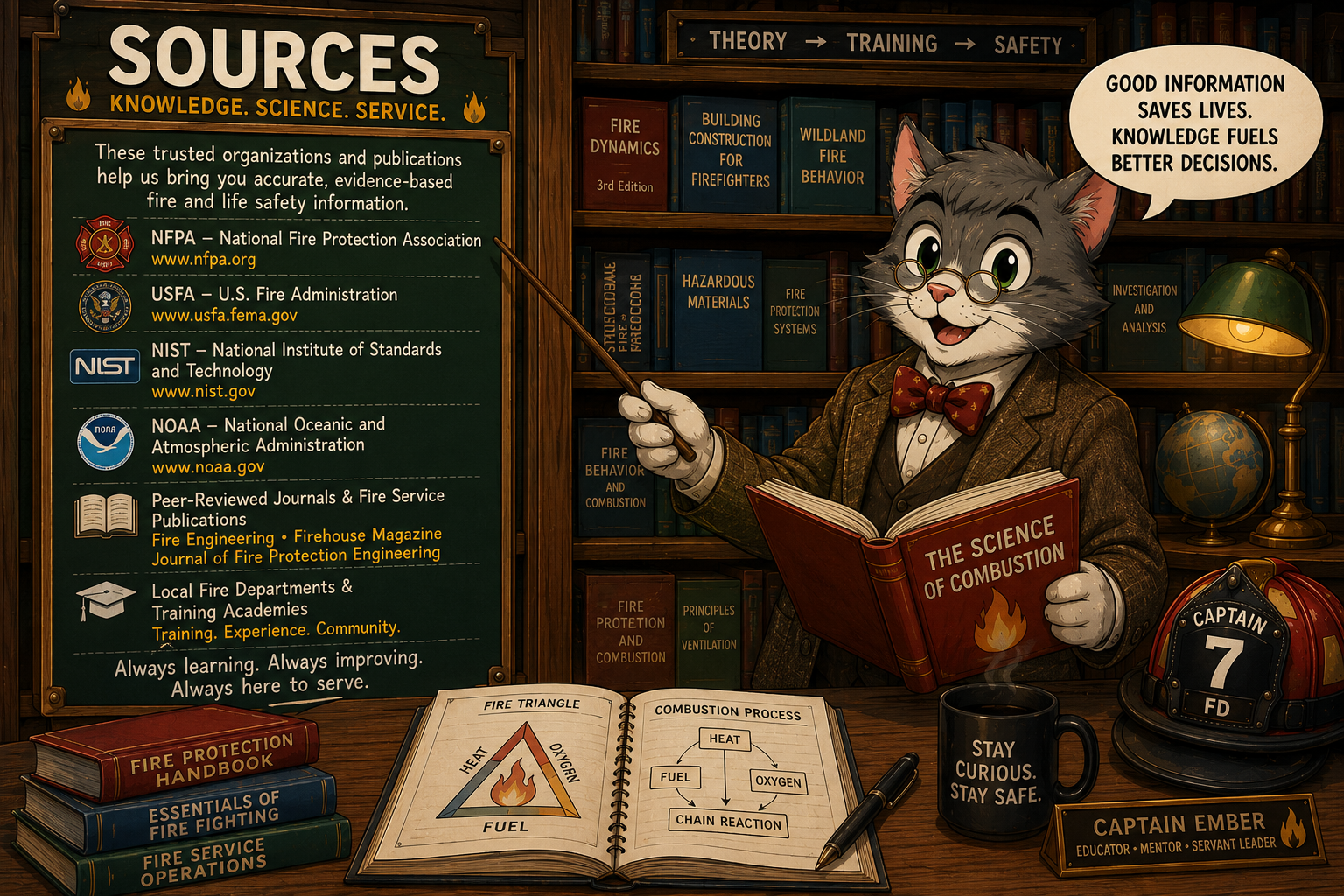
Professor Combustion’s source rule:
Start with official guidance. Then check local rules. Then ask qualified professionals when safety or code compliance matters.
Primary source categories
Emergency and local fire authority sources
For emergencies, evacuation orders, local fire restrictions, wildfire alerts, smoke alarm programs, hydrant rules, defensible-space requirements, inspections, and local safety guidance, use your city, county, state, or regional fire authority.
National public-safety education sources
General public-safety education is commonly supported by national fire-safety organizations, emergency management agencies, and public health agencies. Use those sources for broad concepts, then verify local requirements.
Codes, standards, and official requirements
Fire, building, electrical, solar, battery, EV charger, and energy-storage requirements vary by jurisdiction and code cycle. Use the authority having jurisdiction, adopted codes, product listings, and qualified professionals for actual compliance decisions.
Fire science and firefighting concepts
Pages about the fire triangle, combustion, heat transfer, smoke, visibility, flashover, hose lines, pump panels, hydrants, and apparatus are general public education. These pages are inspired by common fire-science and firefighter-training concepts, but they are simplified for non-professional readers.


Home fire safety sources
For home fire safety, check official fire department guidance, smoke alarm manufacturer instructions, emergency management agencies, and recognized public-safety education resources. Follow local rules for alarm placement, rental property requirements, building type, and special needs.
Topics to verify locally
- Smoke alarm placement, testing, age, and battery requirements.
- Carbon monoxide alarm requirements.
- Rental property and multifamily fire safety requirements.
- Fire extinguisher selection, placement, and training.
- Kitchen fire safety and household escape planning.
- School, workplace, and public-building alarm procedures.
Wildfire and defensible-space sources
Wildfire rules and recommendations vary heavily by location. Defensible-space requirements, vegetation rules, evacuation terminology, alert systems, road closures, utility shutoff programs, and home-hardening expectations can vary by state, county, city, district, and fire hazard zone.
Wildfire Basics
Wind, slope, fuels, embers, evacuation, go-bags, and firefighter response.
Read guide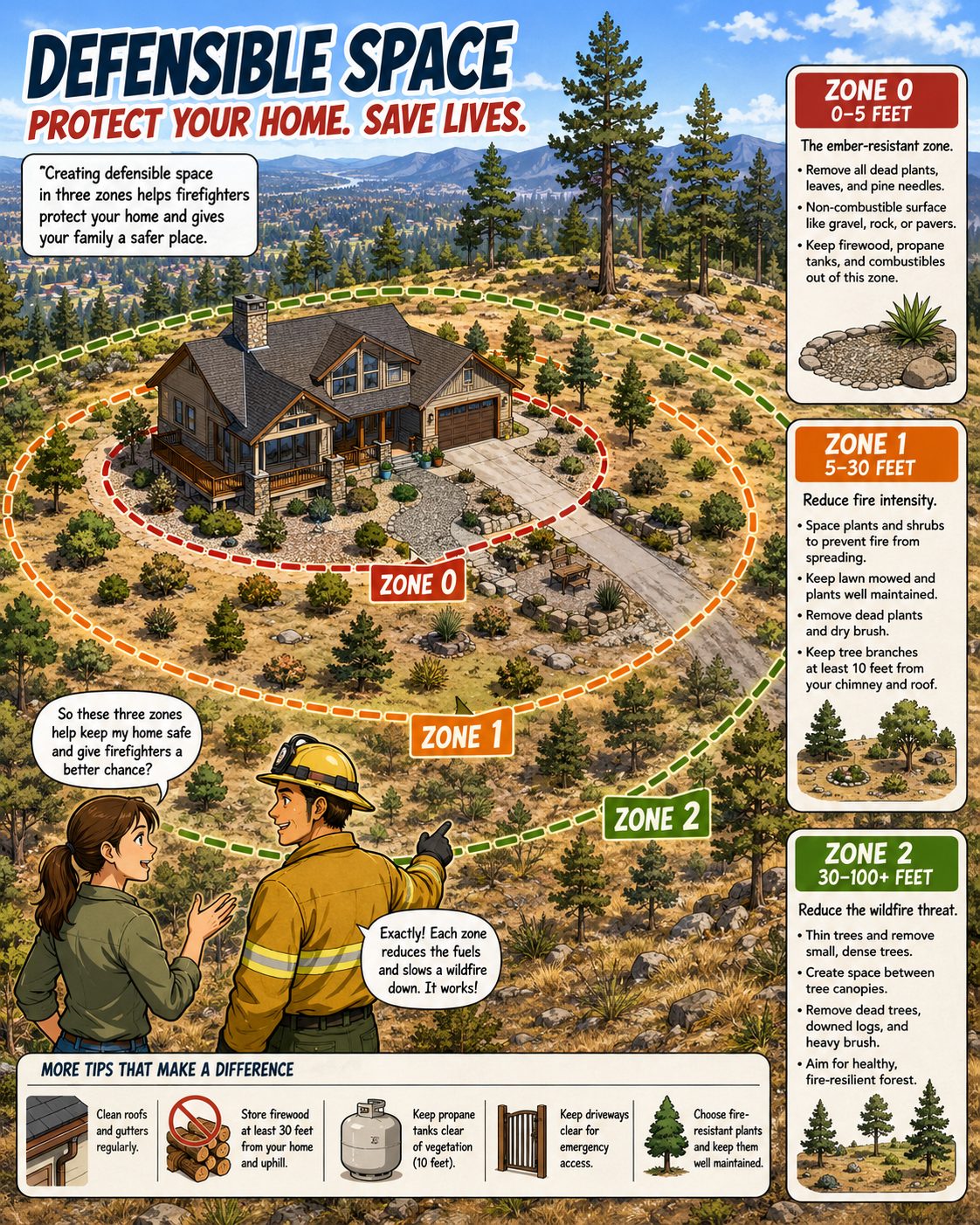
Defensible Space
Fuel reduction, clean gutters, home hardening, access, and evacuation readiness.
Read guideSolar, battery, EV, and energy-storage sources
Solar, battery, EV charger, generator, and microgrid safety can involve electrical codes, fire codes, product listings, manufacturer installation manuals, utility rules, local inspection requirements, and emergency-response guidance.
FirefightingDaily.com explains general concepts such as rapid shutdown, labels, access pathways, battery storage, disconnects, and responder awareness. It does not provide installation instructions or code compliance advice.
Use qualified sources for:
- PV system design, permitting, installation, rapid shutdown, and labeling.
- Battery energy storage installation, spacing, protection, and disconnect requirements.
- EV charger installation and electrical load calculations.
- Utility interconnection and service equipment rules.
- Fire department access pathways and local solar/battery requirements.
- Manufacturer-specific emergency response guides.
Recommended source types to consult
For emergency instructions
Local fire department, emergency management agency, 911 dispatch, law enforcement, public alert system, and official evacuation notices.
For public fire safety education
Local fire departments, national fire-safety education organizations, emergency management agencies, and public health agencies.
For codes and inspections
Authority having jurisdiction, building department, fire marshal, adopted code books, permitted plans, inspection records, and qualified professionals.
For products and equipment
Manufacturer instructions, product listings, installation manuals, safety data sheets, technical bulletins, and qualified installers.
For wildfire preparedness
Local fire authority, state wildfire agency, county emergency management, utility public-safety notices, local evacuation maps, and official alert systems.
Why the pages do not cite every sentence
FirefightingDaily is built as an educational magazine, not an academic paper. Pages use simplified public-facing explanations and manga storytelling. This Sources page gives readers the proper direction: when safety matters, go to official current sources and local authorities.
Because fire safety, solar safety, battery safety, EV response, wildfire rules, and building requirements can change by location and over time, readers should not treat any general page as the final source for local action.
Corrections and updates
If you see a page that appears unclear, outdated, or too broad, contact ABC Solar Incorporated. FirefightingDaily.com can update educational wording, clarify limitations, or improve links as the site grows.
Contact for source questions
Email: solar@abcsolar.com
Phone: 1-310-373-3169
Publisher: ABC Solar Incorporated · CCL #914346
Final source rule
When in doubt:
Use the local fire department, the authority having jurisdiction, official emergency alerts, manufacturer instructions, and qualified professionals. FirefightingDaily.com is the starting classroom, not the final authority.