The big idea
EV battery fires are different from ordinary car fires.
An electric vehicle can burn for familiar reasons such as collision damage, nearby fire exposure, electrical faults, mechanical damage, charging problems, or severe battery failure. But high-voltage lithium-ion battery packs introduce special hazards that require trained responders and manufacturer-specific guidance.
The public should not try to open, cool, move, disconnect, or inspect a damaged EV battery. Smoke, popping sounds, heat, leaking fluids, unusual odors, or visible flame are warning signs to leave the area and call emergency services.
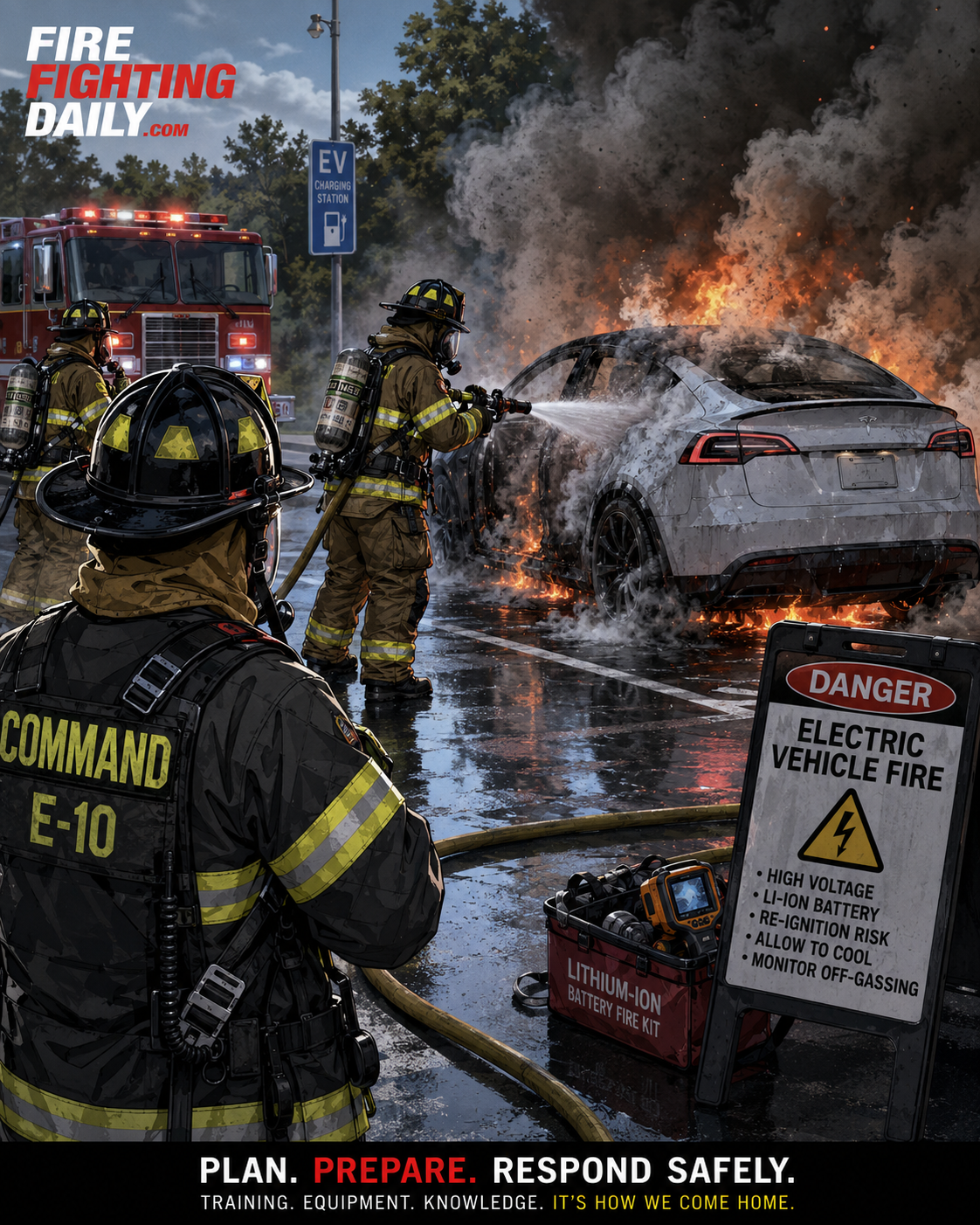
Distance is part of safety.
EV incidents can involve high voltage, toxic smoke, reignition risk, and difficult access to the battery pack.
What makes lithium-ion batteries complicated?
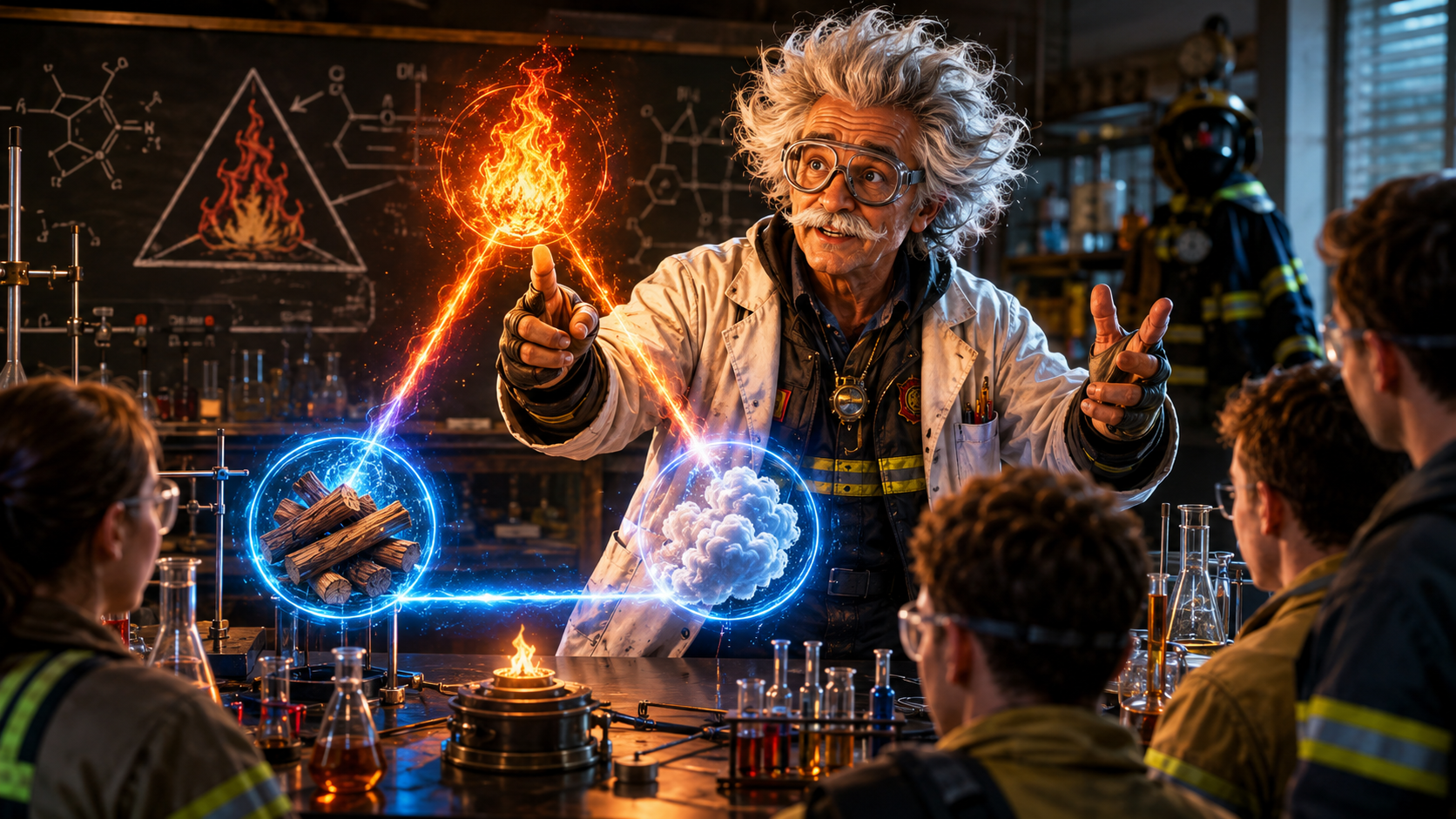
Lithium-ion battery packs store a large amount of energy. Cells are packaged together inside modules and packs, often beneath the vehicle floor. If a cell or section of the pack is damaged or overheats, heat may spread to nearby cells. This can create a chain reaction called thermal runaway.
Thermal runaway is one reason EV battery incidents are treated cautiously. The fire may be hard to reach, smoke may be hazardous, and the battery may remain hot or unstable after visible flames are reduced.
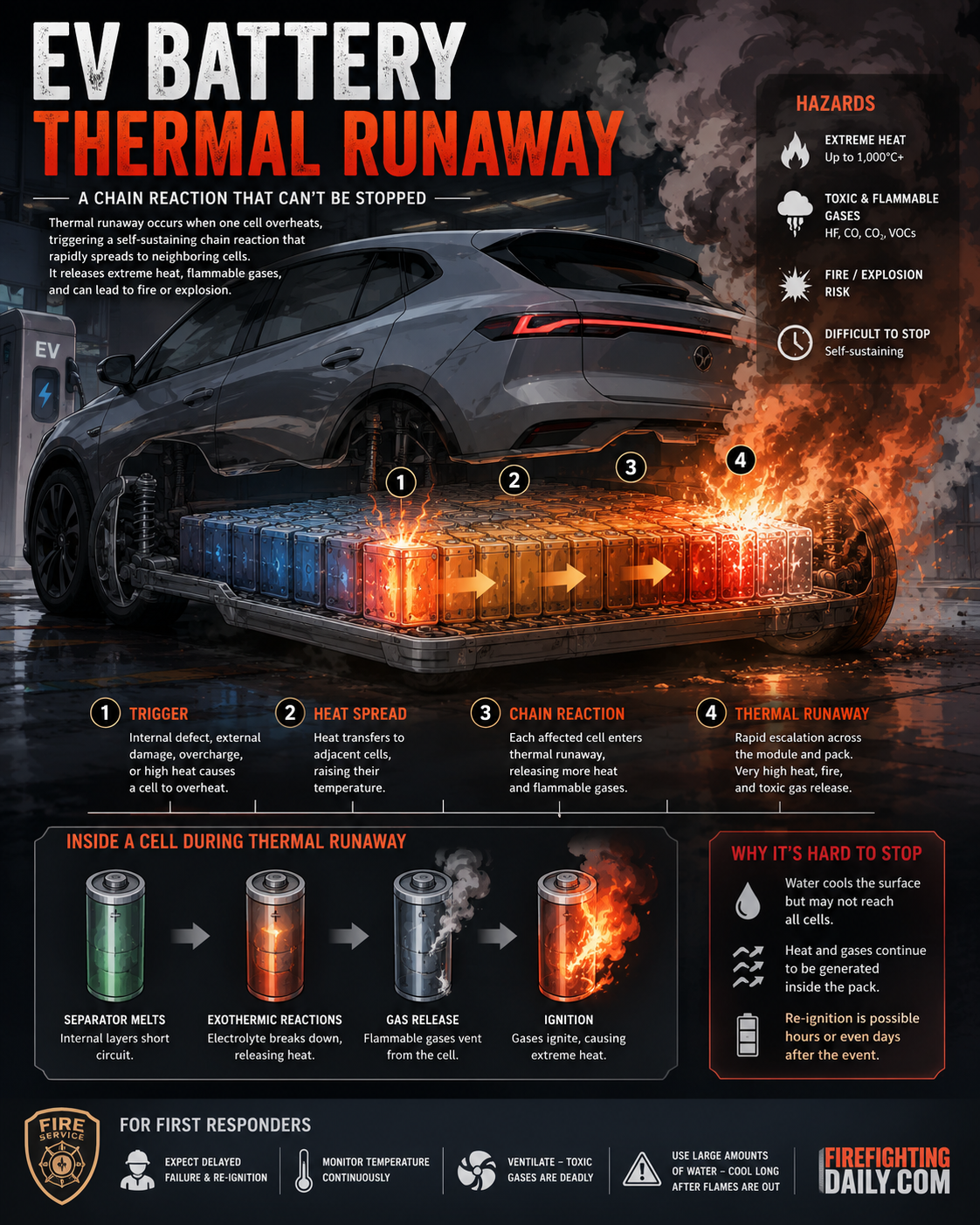
Thermal runaway is a chain reaction.
Heat in one part of a battery pack can spread to other cells if conditions allow.
Warning signs after a crash or damage
An EV may look mostly intact and still have a battery concern. Warning signs can include smoke, vapor, hissing, popping, crackling, unusual heat, burning odor, leaking fluids, damaged battery area, repeated alarms, or fire restarting after it seemed out.
Public response
- Move away from the vehicle.
- Keep bystanders away.
- Call 911 or the local emergency number.
- Tell dispatch it is an electric vehicle or hybrid if known.
- Do not touch high-voltage components.
- Do not attempt to open or inspect the battery pack.
- Do not stand in smoke or vapor.
- Follow responder directions.
Smoke and vapor hazards
Smoke from battery incidents can be hazardous and should not be inhaled. It may contain irritating, toxic, or corrosive byproducts depending on chemistry, fire conditions, and materials involved. The safest public action is to move upwind when possible, avoid smoke, and let trained responders manage the incident.
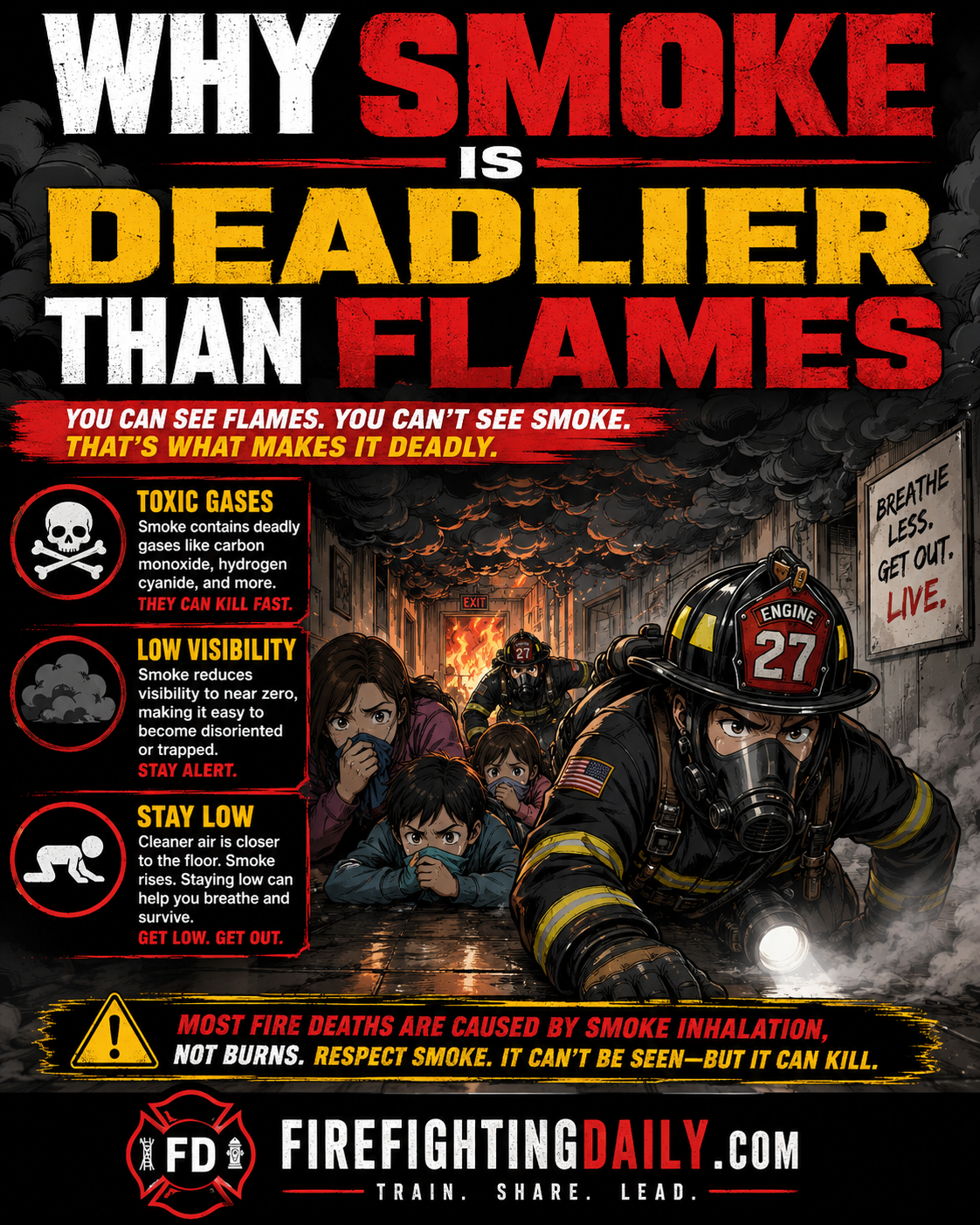
Smoke is a hazard
Do not stand in smoke or vapor from any vehicle fire or battery incident.
Smoke guide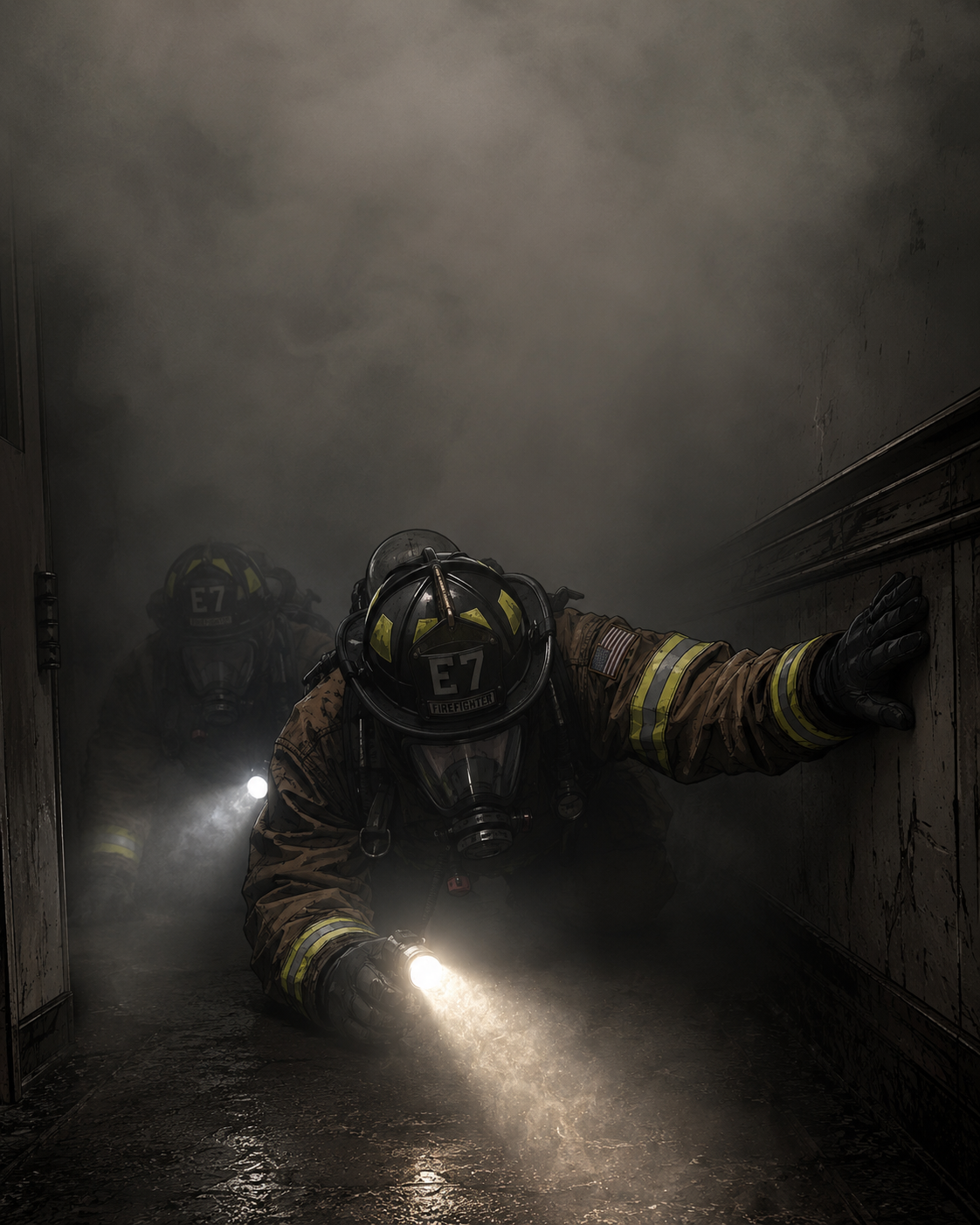
Why first responders need specific information
First responders may need to identify the vehicle type, battery location, shutdown information, high-voltage components, isolation points, and manufacturer guidance. EV designs vary. A damaged vehicle may also have airbags, seatbelt pretensioners, high-voltage cables, stored energy, sharp metal, traffic hazards, and ordinary fuel or fluid hazards from other vehicles involved.

Scene information matters.
Vehicle type, battery location, damage, smoke, and charging status can all affect response decisions.
Charging areas and garages
EV charging usually happens safely when equipment is properly installed, listed, maintained, and used according to instructions. Problems can arise from damaged cables, improper equipment, poor installation, water intrusion, physical damage, overloaded circuits, or failing components.
Garage safety should include working smoke alarms, clear exits, proper electrical installation, clear access to equipment, and no storage piled against chargers, batteries, panels, or disconnects.
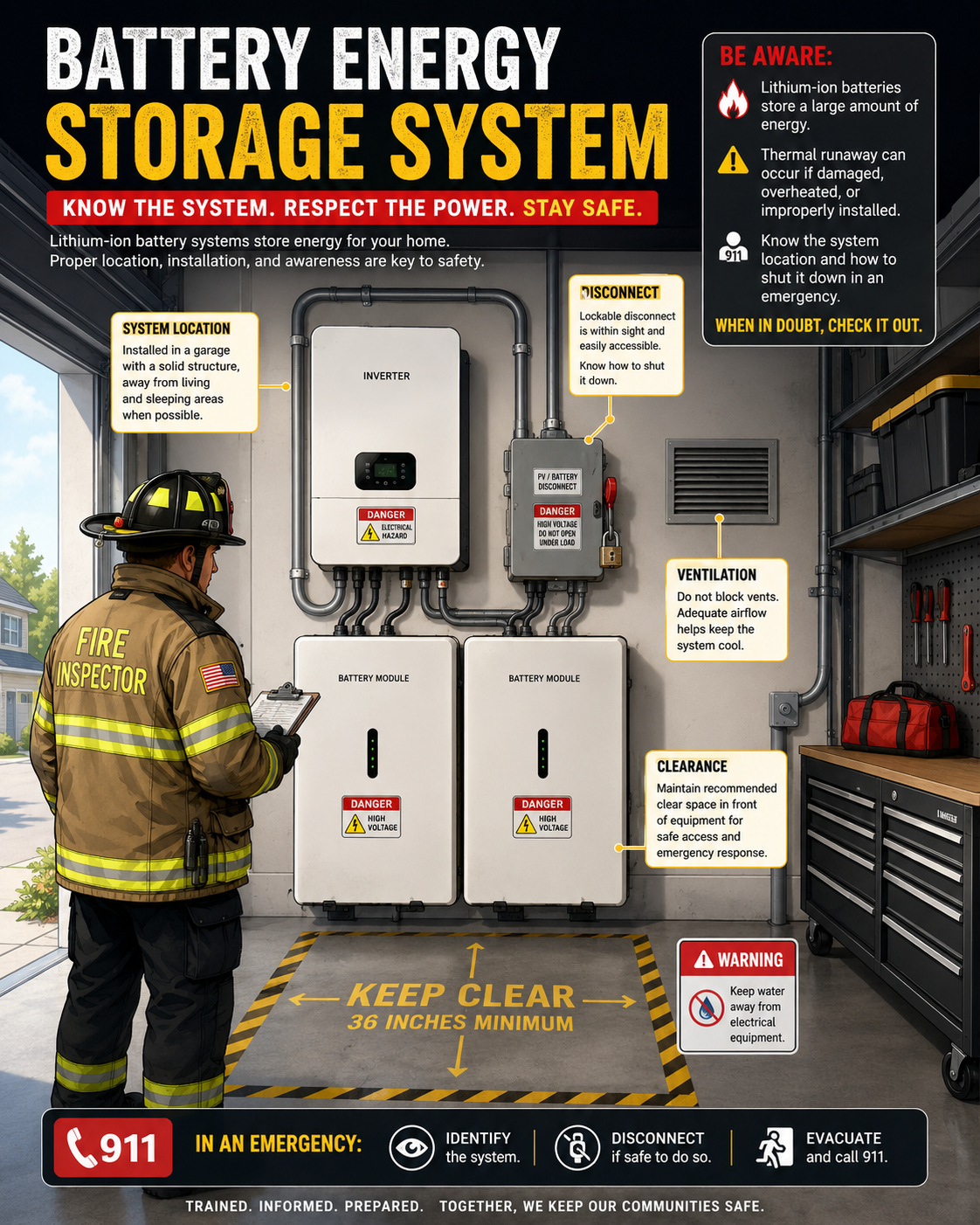
Garage energy systems
Keep equipment clear, labeled, and installed according to applicable requirements.
Solar + batteries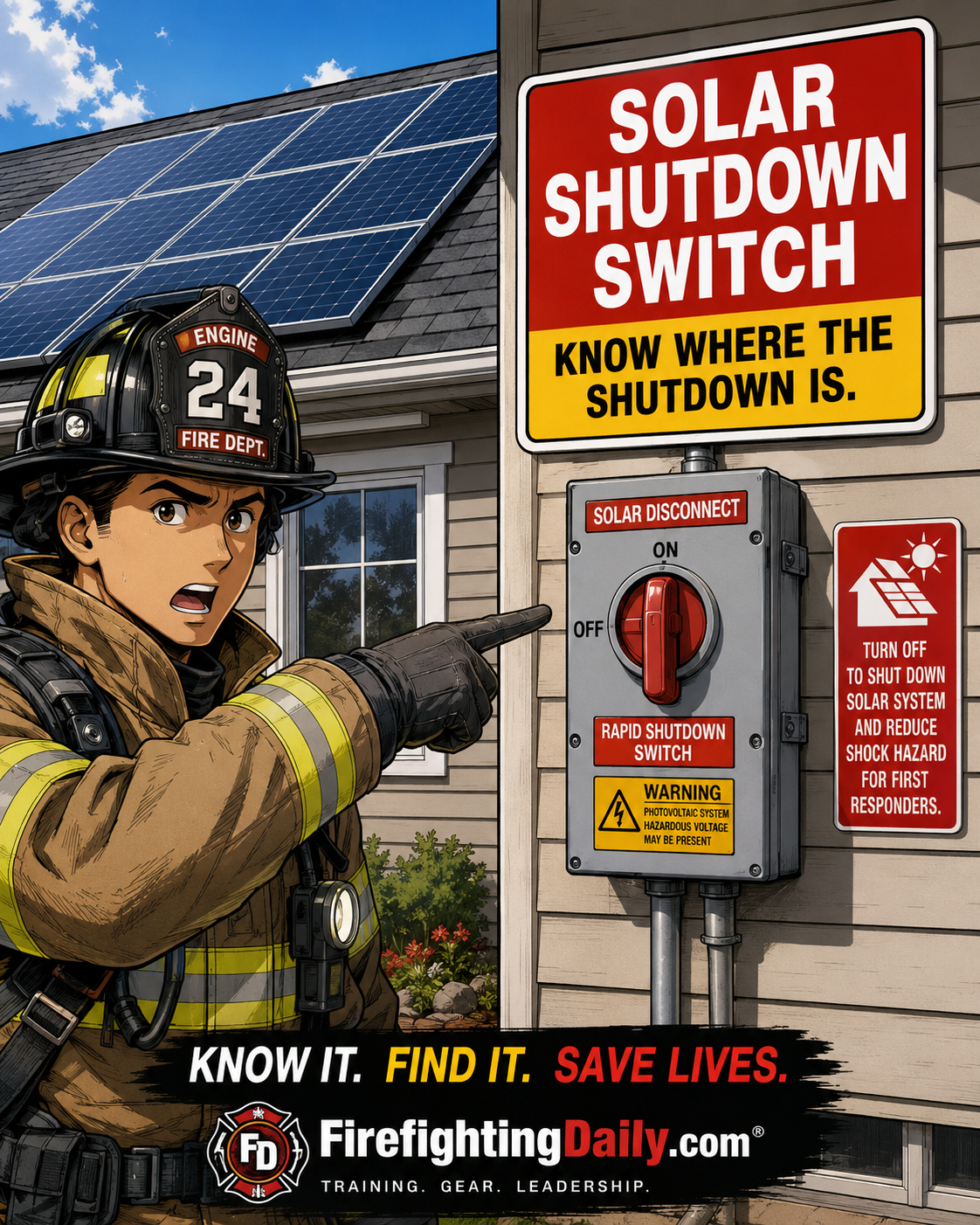
Clear labels
Labels and accessible disconnects help responders identify energy equipment.
Learn moreEVs exposed to floodwater or wildfire
EVs exposed to floodwater, severe collision damage, or wildfire heat should be treated cautiously. A vehicle may have hidden damage, delayed heating, or reignition risk. Do not try to drive, charge, or inspect a suspect vehicle without qualified guidance.
Captain Ember says:
“If the battery may be damaged, the safest public job is distance, information, and calling trained responders.”
Reignition and post-incident caution
Some battery incidents may require extended monitoring after visible flames are controlled. Heat can remain inside the pack, and damaged cells may create renewed hazard. Responders, tow operators, storage yards, insurers, and repair facilities may use special handling procedures after the incident.
The public should not assume a vehicle is safe because smoke has stopped or flames are no longer visible.
Water and EV battery fires
Fire departments may use water in EV incidents, but tactics depend on training, vehicle design, access, exposure hazards, available water, battery involvement, and department procedures. This is not a public DIY instruction. Do not attempt to cool, flood, open, or move a smoking or damaged EV battery yourself.
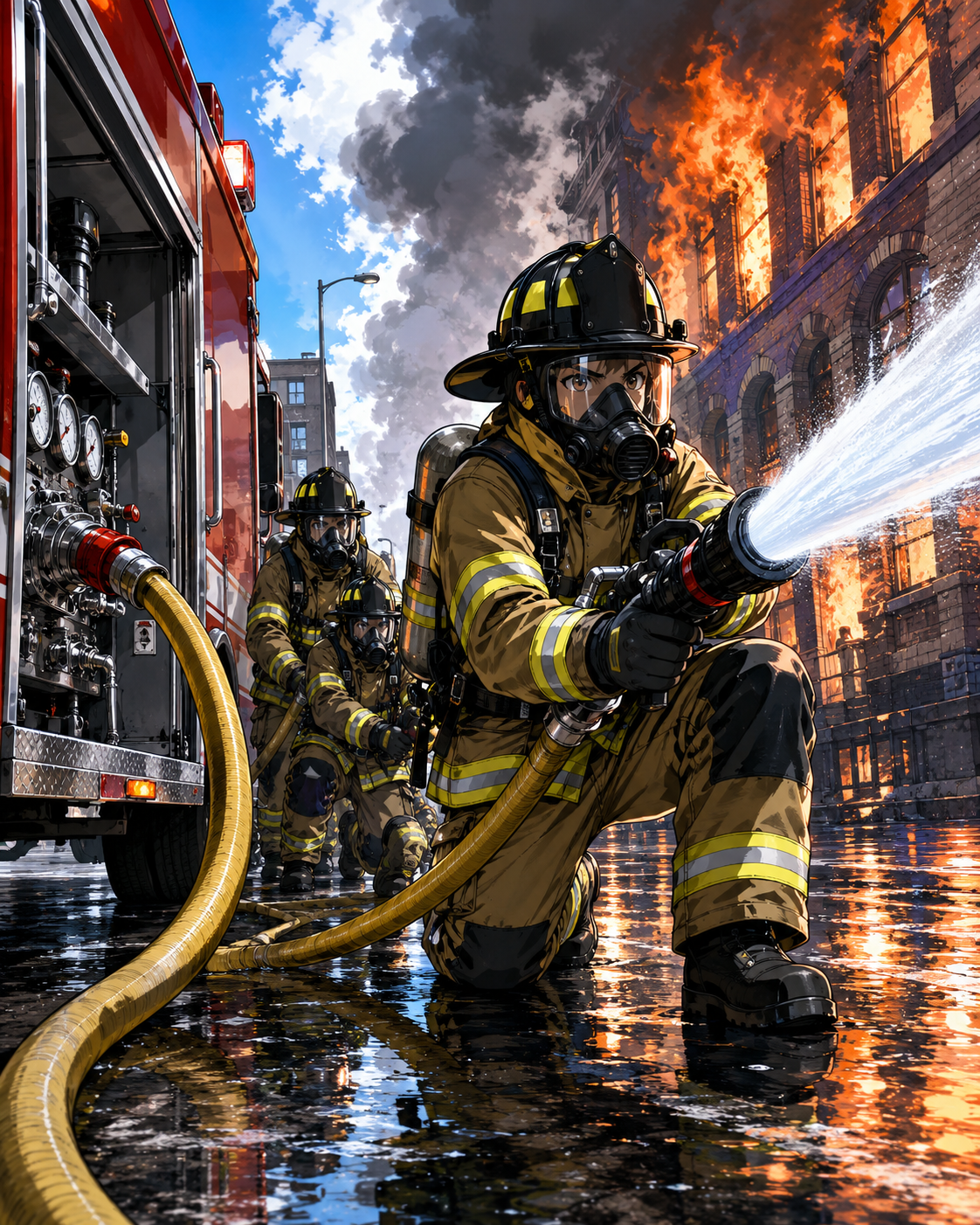
Water tactics belong to trained crews.
Battery fire response depends on training, equipment, vehicle information, and scene conditions.
EV fire myths
Myth: all EV smoke is harmless
Wrong. Avoid smoke and vapor from any vehicle or battery incident.
Myth: I can inspect it myself
Wrong. Damaged high-voltage battery systems require qualified handling.
How EV battery fires connect to solar and home batteries
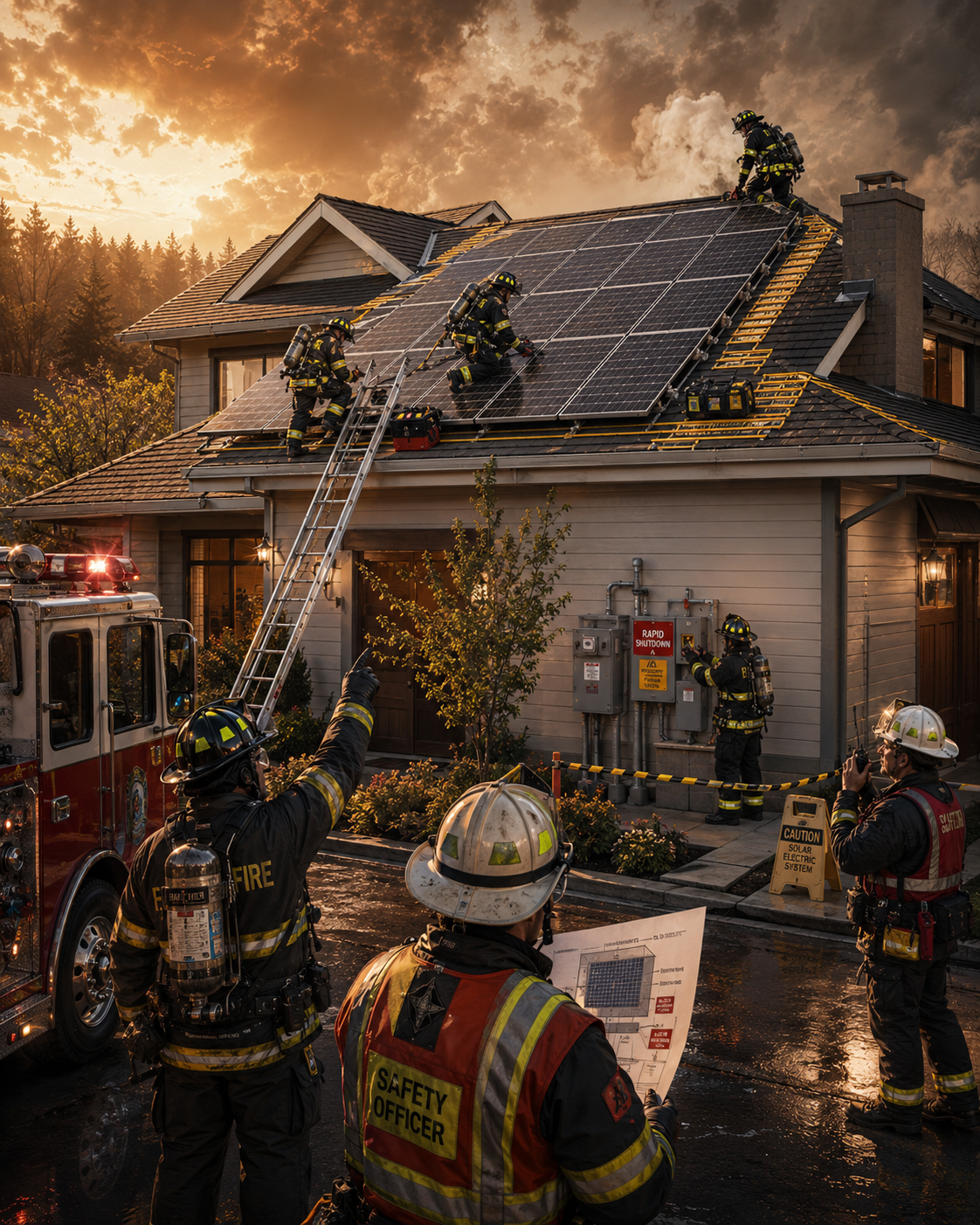
EVs, home batteries, solar inverters, and energy storage systems all belong to the larger world of modern energy safety. They are not the same equipment, but they share important response themes: clear labels, proper installation, adequate working space, emergency shutdown information, battery chemistry awareness, and trained responders.
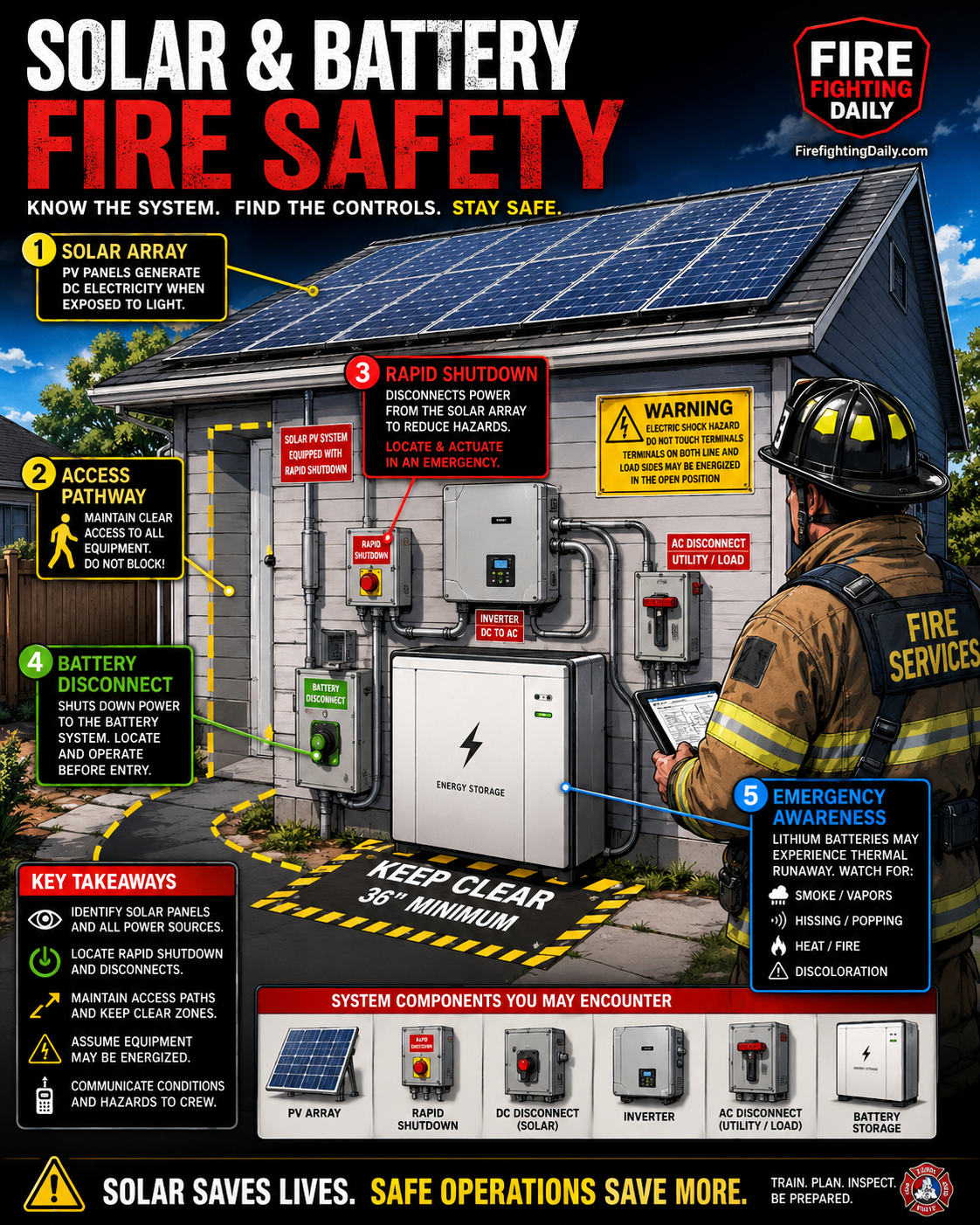
Solar + battery safety
Energy systems need labels, access, shutdowns, and proper installation.
Read guide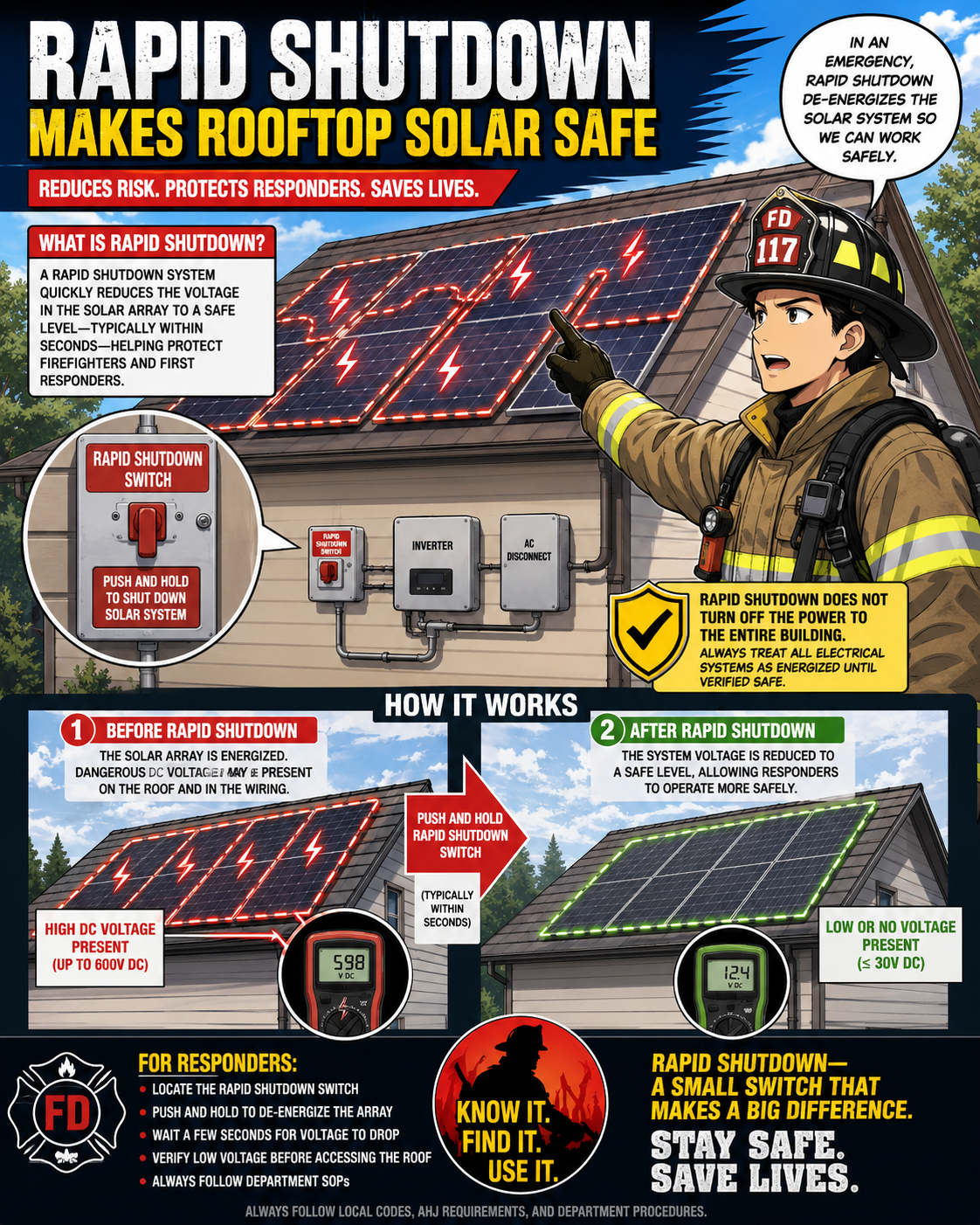
Rapid shutdown
Solar systems may include emergency functions that responders need to identify.
Learn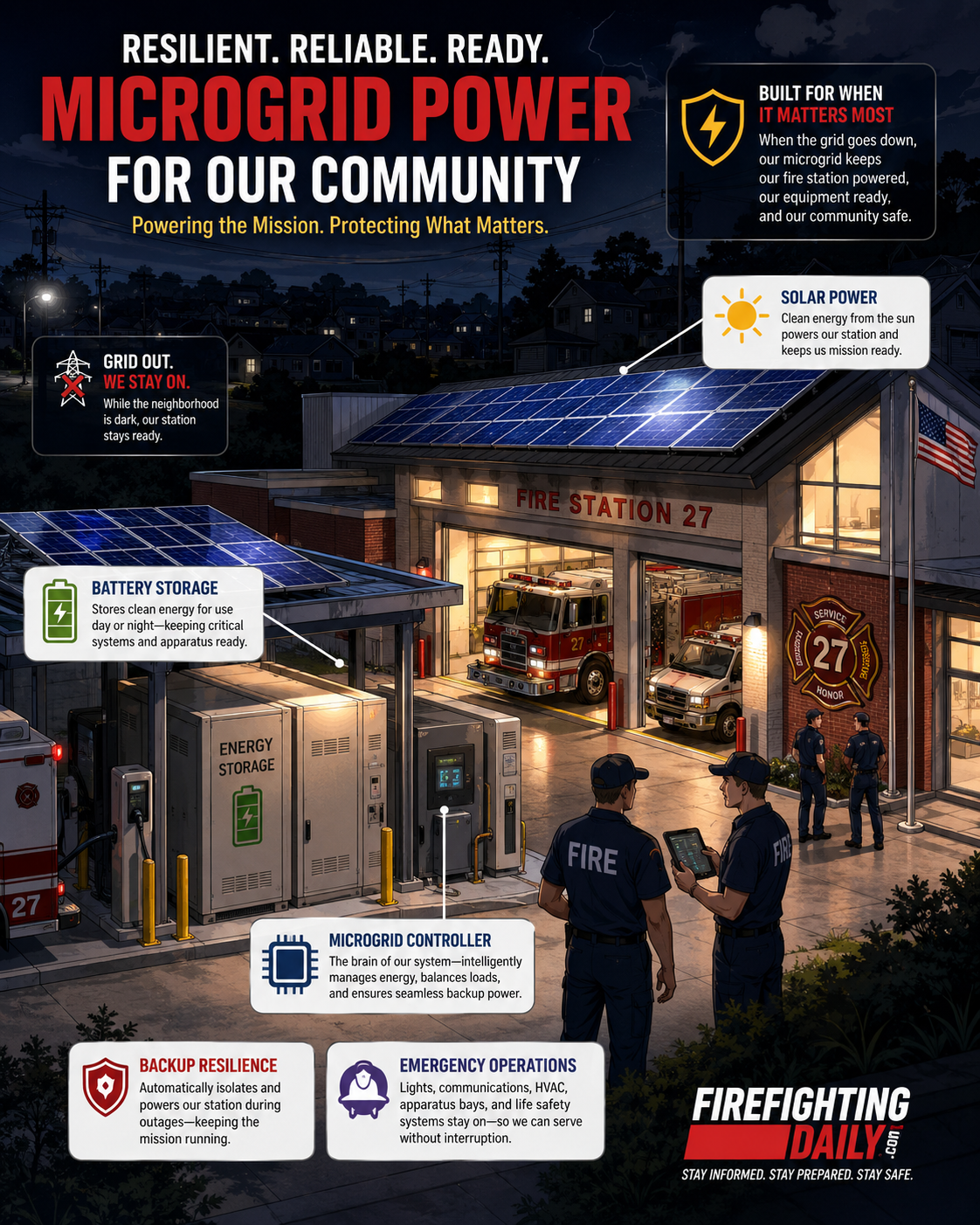
Public EV battery safety checklist
If an EV is damaged, smoking, overheating, or burning
- Move away from the vehicle.
- Keep others away.
- Call 911 or the local emergency number.
- Tell dispatch it is an EV or hybrid if you know.
- Avoid smoke, vapor, leaking fluids, and heat.
- Do not touch orange high-voltage cables or damaged components.
- Do not attempt DIY cooling, towing, charging, or repair.
- Follow instructions from emergency responders.
Episode connection: modern hazards need modern labels
FirefightingDaily treats EVs, batteries, and solar equipment as part of the modern fireground. The story lesson is not anti-technology. It is pro-clarity: identify the equipment, keep distance, label systems, call trained responders, and respect stored energy.
Responder caution
High-voltage battery incidents require trained crews and proper information.
Next guide
Solar and battery safety connects EVs, home energy storage, rapid shutdown, and labels.
Solar + fire safetyCaptain Ember’s summary
EV battery fires are not ordinary car-fire situations. The safest public action is to keep distance, avoid smoke, call 911, share vehicle information, and let trained responders handle the incident.